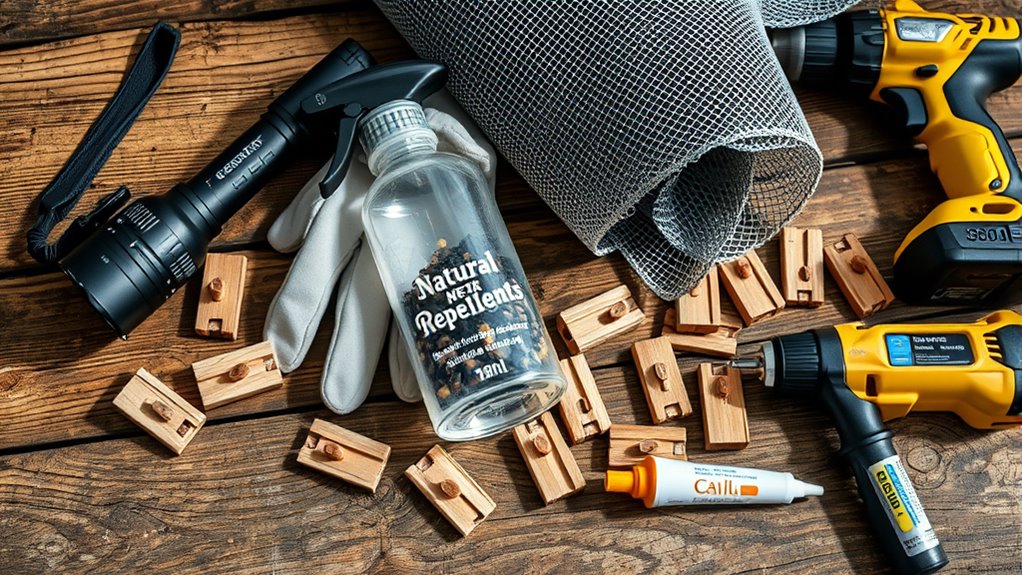

To keep critters at bay, gather essential tools like caulk or weatherstripping for sealing cracks, door sweeps, and screens to block entry points. Use a vacuum or trash bags for removing nests or debris, and keep outdoor areas tidy with gloves and trash bins to eliminate attractants. Natural repellents like peppermint oil and vinegar sprays can also help. For more effective tips on DIY pest control gear, continue exploring ways to protect your home.
Open a free Amazon Business account
Business pricing, bulk buying and tax-exempt orders.
As an affiliate, we earn on qualifying purchases.
Key Takeaways
- Use sealants like caulk and weatherstripping to block pests’ entry points around doors, windows, and walls.
- Install door sweeps and screen repairs to create physical barriers against insects and rodents.
- Employ natural repellents such as peppermint oil-soaked cotton balls and vinegar sprays for targeted pest deterrence.
- Utilize tools like vacuum cleaners and baits for quick removal and control of pests indoors.
- Maintain outdoor pest-proofing tools like sealed trash bins, standing water removal, and outdoor barriers for comprehensive protection.
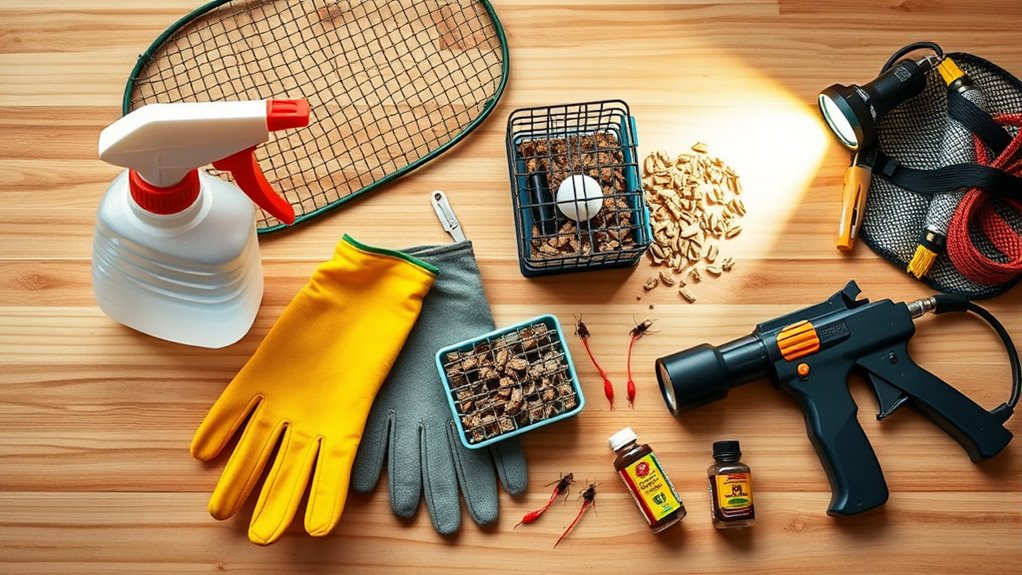
Dealing with pests doesn’t have to mean calling in professional exterminators. In fact, you can take control of your home’s pest problems with some simple tools and effective strategies. The first step is understanding that prevention is your best defense, and that’s where natural remedies and pest proofing techniques come into play. You don’t need harsh chemicals to keep critters at bay; many pests respond well to natural repellents and preventative measures that you can easily implement yourself.
Start by identifying common entry points around your home—cracks in walls, gaps around windows and doors, and holes in screens. Pest proofing techniques involve sealing these vulnerabilities to block pests from sneaking inside. Use caulk or weatherstripping to close gaps, ensuring your home becomes less inviting. Additionally, installing door sweeps can prevent insects and rodents from slipping underneath doors. These small updates are simple but highly effective in creating a barrier that pests find difficult to penetrate.
Seal cracks, gaps, and holes to keep pests out of your home effectively.
Natural remedies are your allies in pest control because they’re safe, affordable, and environmentally friendly. For example, peppermint oil is a powerful repellent against ants and spiders. You can soak cotton balls in peppermint oil and place them near entry points or problem areas. Vinegar solutions also work well for deterring pests like fruit flies and ants when sprayed around countertops and trash cans. Diatomaceous earth, a natural powder made from fossilized algae, acts as a mechanical barrier that damages pests’ exoskeletons when they crawl over it. Sprinkle it along baseboards, window sills, and other common pest pathways. Implementing smart design principles—such as proper ventilation and lighting—can also make your home less attractive to pests by reducing damp and dark areas.
In addition to these remedies, keeping your home clean and clutter-free is essential. Pests thrive in messes, so regularly sweeping, vacuuming, and clearing out clutter reduces hiding spots. Proper food storage in airtight containers prevents attracting pests like pantry moths and ants. For outdoor pest proofing, make sure trash bins are sealed, and remove standing water where mosquitoes breed.
As an affiliate, we earn on qualifying purchases.
Frequently Asked Questions
Are DIY Pest Control Methods Safe for Pets and Children?
DIY pest control methods can be safe for pets and children if you prioritize pet safety and avoid chemical risks. Always opt for non-toxic, natural solutions and read labels carefully. Keep pets and kids away from treated areas until it’s safe to re-enter. Using gentle, chemical-free remedies minimizes health hazards, making your pest control efforts safer for everyone in your home.
How Often Should I Reapply Pest Control Treatments?
Your pest treatment schedule isn’t a one-and-done deal; it’s a vital plan to keep critters at bay! Reapplication frequency depends on the pest and product, but typically, you should reapply every 2-4 weeks for ongoing protection. Always follow the instructions on your pest control products, and monitor the treated area. Overdoing it can be harmful, so stick to the recommended schedule for safe, effective results.
What Natural Remedies Are Effective Against Common Pests?
You can use herbal repellents like peppermint or citronella to deter pests naturally. Homemade traps, such as sugar and yeast for fruit flies or sticky traps for insects, are also effective. Regularly applying herbal repellents around entry points and setting up these traps helps keep critters at bay. Remember to reapply herbal repellents every few days and check traps frequently to make sure they work effectively.
Can DIY Methods Eliminate All Types of Pests Completely?
Trying to eliminate all pests with DIY methods is like chasing a ghost — challenging and often incomplete. While you can set chemical barriers and use pest monitoring to reduce infestations, some pests may still slip through the cracks. Complete eradication usually requires professional intervention, especially for stubborn or widespread problems. Relying solely on DIY tactics might not keep every pest at bay, but it’s a good start to managing your home’s safety.
How Do I Identify the Specific Pest Invading My Home?
To identify the specific pest invading your home, start by observing infestation signs like droppings, damage, or nests. Look closely at any pests you see, noting their size, shape, color, and behavior. Take clear photos and compare them with online pest identification guides or consult a local pest control expert. Accurate pest identification helps you choose the most effective DIY methods and prevents unnecessary treatments.
As an affiliate, we earn on qualifying purchases.
Conclusion
With the right tools and a little DIY determination, you’re the knight guarding your castle against unwelcome critters. Think of your pest control efforts as a symphony, each tool playing its part in a harmonious defense. When you stay vigilant and proactive, you’re weaving a resilient web that critters can’t break through. Remember, your home is your sanctuary—fortify it with confidence, and let your DIY spirit be the shield that keeps pests at bay.
natural pest repellent peppermint oil
As an affiliate, we earn on qualifying purchases.
As an affiliate, we earn on qualifying purchases.
As an affiliate, we earn on qualifying purchases.
NFL season / tailgating Picks
team gear
As an affiliate, we earn on qualifying purchases.