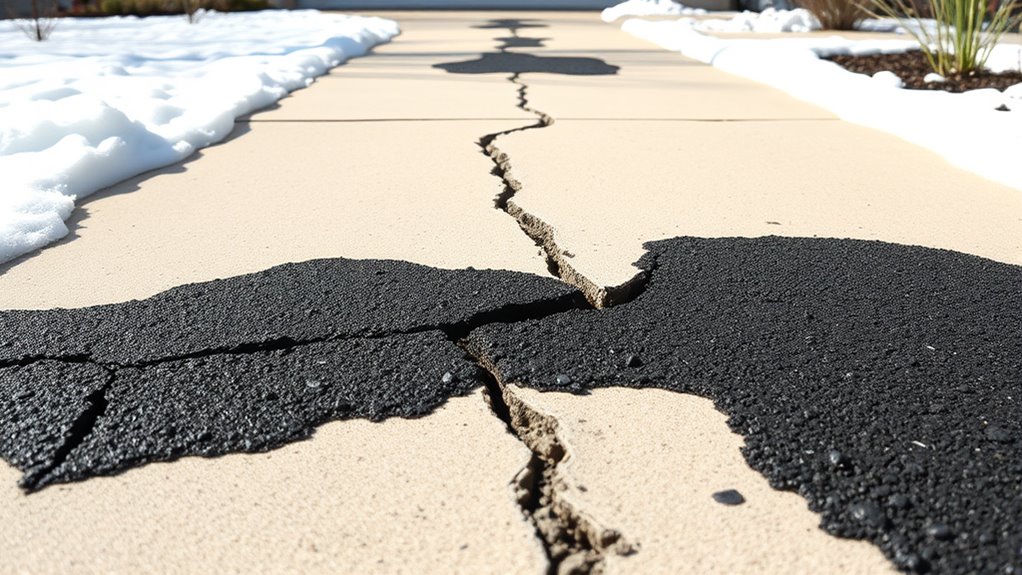

Spring is the perfect time to repair winter damage by fixing driveway cracks before warmer weather worsens the issues. Start by cleaning out loose debris, dirt, and vegetation from the cracks using a wire brush or high-pressure hose. Then, fill small cracks with liquid filler and larger ones with patching compounds. Finish by sealing the driveway’s surface to protect against future damage. Continue exploring for detailed steps to guarantee your driveway stays durable through seasonal changes.

Get business pricing on tools and workshop supplies
- Business-only prices and quantity discounts
- Tax-exempt purchasing
- Multiple users, one account, clear invoices
Key Takeaways
- Spring is ideal for repairing winter-induced driveway cracks before warmer months worsen damage.
- Clean cracks thoroughly by removing debris and moisture to ensure proper adhesion of repair materials.
- Use appropriate repair techniques: liquid filler for small cracks, patching compounds for larger ones.
- Seal the entire driveway surface after repairs to protect against moisture and future freeze-thaw cycles.
- Follow manufacturer instructions and smooth repairs to enhance durability and extend driveway lifespan.
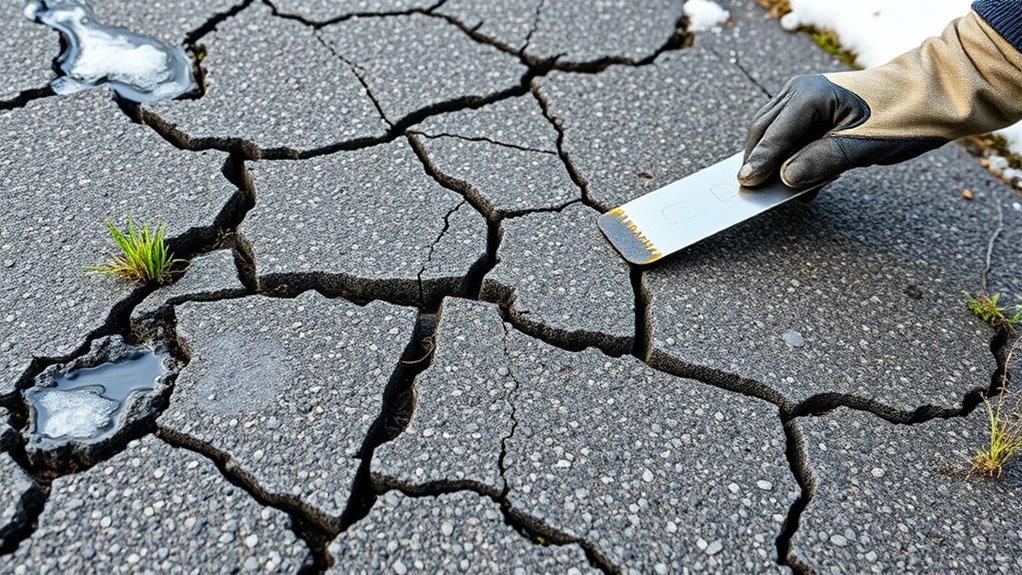
Spring is the perfect time to repair driveway cracks before they worsen with the warmer months. After winter’s freeze-thaw cycles, your driveway likely has cracks that need attention. Addressing these early prevents further damage and costly repairs down the line. The key to successful crack repair lies in choosing the right materials and techniques. Using an asphalt sealant combined with a quality crack filler can make a significant difference in the durability of your driveway.
Start by thoroughly cleaning the cracks. Remove loose debris, dirt, and any vegetation growing inside them. You can use a wire brush or a high-pressure hose to ensure the cracks are clear and dry. Proper cleaning ensures the filler and sealant adhere well, providing a long-lasting fix. Once the cracks are clean, decide on the best repair approach. For small cracks, a liquid crack filler works effectively. It’s easy to pour or squeeze into the crack, then level it off with a putty knife. For larger or deeper cracks, you might need a patching compound or asphalt cold patch. These materials fill the voids and provide a solid base for sealing.
Start by cleaning cracks thoroughly with a wire brush or high-pressure hose for better adhesion.
Next, apply an asphalt sealant over the entire driveway surface. This creates a protective barrier against moisture and weather-related damage. Pay special attention to the edges of the cracks, ensuring the sealant penetrates deeply for maximum adhesion. The sealant also helps prevent new cracks from forming and keeps water from seeping into existing ones, which could cause further expansion during freeze-thaw cycles. For cracks that are wider or more severe, consider using a crack filler designed specifically for asphalt. Crack fillers are formulated to expand and contract with temperature changes, maintaining a tight seal over time.
When applying the crack filler, follow the manufacturer’s instructions carefully. Use a caulking gun or a trowel to ensure the filler is pressed deeply into the crack. Smooth out excess material to create a flat surface. Once the crack filler has dried, apply an additional layer of asphalt sealant over the entire driveway for extra protection. This combination of crack filler and sealant enhances the driveway’s resilience and extends its lifespan. Proper crack preparation and timely maintenance are crucial for long-term durability and avoiding costly repairs later.
As an affiliate, we earn on qualifying purchases.
Frequently Asked Questions
How Long Should I Wait Before Driving on a Repaired Driveway?
You should wait at least 24 to 48 hours before driving on your repaired driveway, depending on the repair materials used. Proper driveway maintenance guarantees the cracks set properly, especially after winter weather caused expansion and contraction. Avoid heavy vehicles during this curing period to prevent damage. Giving the repairs time to cure helps maintain your driveway’s integrity and prevents future cracks, making your spring driveway maintenance more effective.
Can I Repair Cracks Myself or Should I Hire a Professional?
Think of your driveway as a canvas; DIY repairs can be a satisfying brushstroke if you have the skills. For small cracks, you might handle it yourself with proper tools and patience. However, for larger or persistent damage, hiring professional contractors ensures a durable fix. They bring expertise and the right materials, saving you time and preventing future issues. Trust your judgment to determine when to DIY and when to call in the pros.
What Type of Sealant Is Best for Winter-Damaged Driveways?
You should opt for a high-quality asphalt sealer for winter-damaged driveways, focusing on sealant durability to withstand harsh conditions. Look for eco-friendly options that protect the environment while providing long-lasting protection. These sealants penetrate cracks effectively and resist water, ice, and UV damage. Applying the right type guarantees your driveway remains intact through winter’s challenges, saving you time and money on future repairs.
How Often Should I Inspect My Driveway for Cracks?
Spot cracks swiftly to stay ahead of serious surface setbacks. You should inspect your driveway at least every season—spring, summer, fall, and winter—to catch issues early. Regular, routine checks promote proactive seasonal maintenance, preserving driveway aesthetics and preventing costly repairs. By staying vigilant and inspecting often, you guarantee your driveway remains durable, attractive, and safe, making seasonal inspections a simple yet essential part of your upkeep routine.
Are There Any Eco-Friendly Options for Driveway Repair?
Yes, you can choose eco-friendly options for driveway repair. Look for sustainable materials like recycled asphalt or concrete, which reduce environmental impact. Additionally, eco-friendly sealants made from natural or non-toxic ingredients help safeguard your driveway without harmful chemicals. These options are not only better for the environment but also promote a healthier outdoor space. Using sustainable materials and eco-friendly sealants ensures your driveway stays durable while supporting eco-conscious practices.
As an affiliate, we earn on qualifying purchases.
Conclusion
Spring is the perfect time to repair winter driveway damage, preventing costly repairs later. By fixing cracks early, you can extend your driveway’s lifespan and avoid water damage from melting snow. Did you know that poorly maintained driveways can decrease property value by up to 10%? Taking these simple steps now not only improves your home’s curb appeal but also saves you money in the long run. Don’t wait—act now and keep your driveway in top shape all year round.
high pressure hose for driveway cleaning
As an affiliate, we earn on qualifying purchases.
As an affiliate, we earn on qualifying purchases.
As an affiliate, we earn on qualifying purchases.
Fall yard work Picks
leaf blowers
As an affiliate, we earn on qualifying purchases.