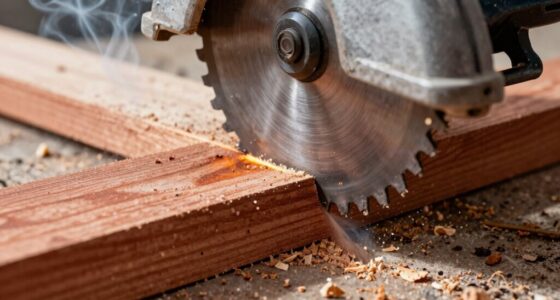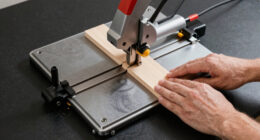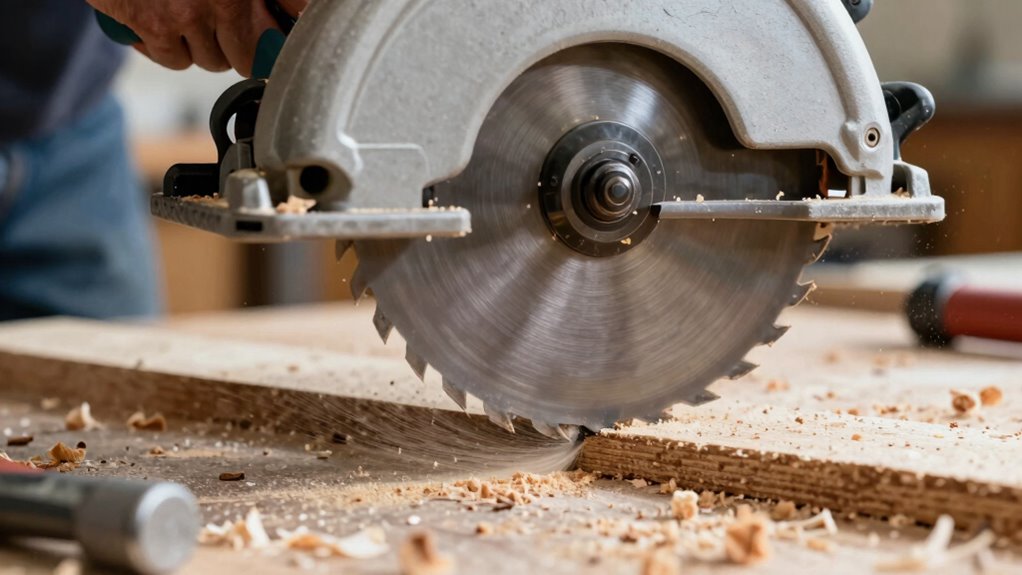

Crooked cuts usually happen because the blade isn’t perfectly aligned, the blade is dull, or your guiding technique isn’t consistent. If the blade isn’t parallel to the saw’s base or fence, it can drift off course. A worn or loose blade causes wobbling, and uneven pressure or slipping during the cut can lead to crooked lines. By checking these factors and making adjustments, you’ll get cleaner, straighter cuts—and there’s even more tips to improve your results ahead.
Key Takeaways
- Misaligned blades cause crooked cuts and can be fixed by checking and adjusting blade parallelism to the saw’s base or fence.
- Insufficient motor torque or dull blades can lead to wobbling and uneven cuts, especially through dense materials.
- Inconsistent guiding pressure or slipping during cutting results in deviation from the intended line.
- Using a blade incompatible with the material or with dull teeth impairs cut accuracy and cleanliness.
- Lack of regular maintenance, including tightening components and proper setup, contributes to crooked, imprecise cuts.

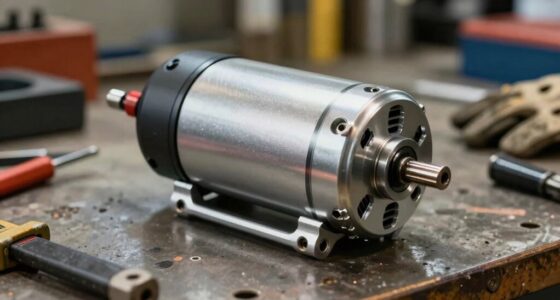
If your circular saw cuts aren’t as straight as they should be, the problem often isn’t the blade itself but how you’re guiding the tool. One common mistake is neglecting proper blade alignment. When the blade isn’t perfectly aligned with the saw’s base or fence, it can drift during cuts, causing crooked lines. Before starting your project, double-check that the blade is parallel to the cutting guide or rip fence. Misaligned blades can be a result of a loose arbor nut or worn-out adjustment mechanisms, so ensure everything’s tight and properly set. Proper blade alignment isn’t just about accuracy; it also reduces stress on the saw’s motor and prolongs its lifespan. Additionally, check that your saw’s blade alignment regularly to prevent drifting during cuts. Speaking of the motor, motor torque plays a vital role in maintaining clean, straight cuts. If your saw struggles to cut through thick or dense material, the motor may lack sufficient torque, causing the blade to wobble or veer off course. When the motor isn’t delivering enough power, you’ll notice the blade fighting against the material, especially at the beginning of a cut or when pushing hard. This uneven power distribution can lead to crooked cuts because the blade isn’t spinning smoothly or consistently. To fix this, check that your saw’s motor is in good condition, and consider whether the blade is dull or if the saw is overloaded. Using a blade suited for the material and ensuring your saw’s motor is functioning correctly can make a significant difference in cut accuracy.
Another factor often overlooked is how you guide the saw. If you’re not applying steady, even pressure, or if your hand slips during the cut, the saw will veer off course. Keep a firm grip, and use a straight edge or guide whenever possible to maintain a consistent cutting line. Properly supporting the workpiece also helps prevent unwanted movement that can throw off your cut. Remember, even the best blade alignment and motor torque won’t produce straight cuts if you’re not guiding the saw properly. Practice smooth, controlled movements, and let the saw do the work. Additionally, mastering proper guiding techniques can significantly improve your cutting accuracy and overall safety.
In essence, ensuring your circular saw cuts straight involves more than just a sharp blade. It’s about aligning the blade correctly, maintaining your saw’s motor torque, and guiding the tool with precision. When all these elements work together, you’ll achieve cleaner, straighter cuts every time, making your projects look professional and saving you time and frustration in the long run.

TIANMEIYI 10-Inch Table Saw Blade Balancer, with 5/8’’Arbor Hole, Calibration Blade for Wood Working -1PC
【Function】The table saw blade balancer is used for aligning the table saw.
As an affiliate, we earn on qualifying purchases.
As an affiliate, we earn on qualifying purchases.
Frequently Asked Questions
Can Blade Type Affect the Saw’s Cut Accuracy?
Yes, blade type affects your saw’s cut accuracy. Blade material influences how well it maintains sharpness and resists wear, leading to cleaner cuts. A high-quality blade ensures consistent cutting speed, reducing wobbling or uneven cuts. Cheaper blades may dull quickly, causing inaccuracies. Choose a blade suited for your material and keep it sharp for precise, straight cuts. Proper blade selection and maintenance are key to avoiding crooked cuts.
How Does Saw Blade Sharpness Impact Crooked Cuts?
Think of your saw blade as a sharp sword in a knight’s hand—if it’s dull, the cut becomes a battle lost. When your blade isn’t sharp, it struggles during cutting, causing crooked lines. Proper blade maintenance keeps it sharp, ensuring cleaner cuts. Using good cutting techniques also helps. Dull blades and poor technique work together to produce crooked cuts, but sharpening and careful handling turn your saw into a precise tool, like a master’s sword.
Does Saw Horsepower Influence Cut Straightness?
Yes, saw horsepower influences cut straightness because higher horsepower provides better motor torque stability, helping the saw blade stay steady during cuts. When your saw has good saw blade alignment and sufficient motor torque, it resists wobbling or drifting, resulting in straighter cuts. Low horsepower can cause the motor to struggle, leading to unstable cuts. So, choosing a saw with adequate horsepower guarantees your cuts remain precise and straight.
Can Environmental Factors Cause Crooked Cuts?
Yes, environmental factors can cause crooked cuts. Environmental impacts like humidity and moisture effects can affect the material you’re cutting, making it swell or warp, which leads to uneven cuts. Additionally, changes in temperature can cause slight expansions or contractions in the wood or other materials. These environmental influences can challenge your accuracy, so it’s best to work in a controlled environment or allow materials to acclimate before cutting.
How Often Should I Calibrate My Circular Saw?
You should calibrate your circular saw every few projects or monthly, whichever comes first. Think of it like tuning a musical instrument—you want perfect blade alignment and motor stability for smooth cuts. I once ignored calibration, and my crooked cuts wasted wood and time. Regular calibration guarantees your blade stays aligned, preventing crooked cuts, and keeping your motor stable, so you get precise, clean results every time.

ENERTWIST 4-1/2 Inch Compact Circular Saw Blade Set, Pack of 4-Pieces TCT/HSS/Diamond Saw Blades Assorted for Wood/Plastic/Metal/Tile Cutting, 3/8in Arbor, ET-CSA-4
4-1/2" (115mm) Compact circular saw blades, with 3/8" arbor, max 7000 rpm setting. 4-pieces assorted with 2x TCT…
As an affiliate, we earn on qualifying purchases.
As an affiliate, we earn on qualifying purchases.
Conclusion
Next time your circular saw cuts crooked, remember it’s often due to blade alignment or uneven pressure. For example, imagine you’re building a bookshelf and notice your cuts veering off. By checking the blade’s alignment and applying steady pressure, you can fix the problem. Don’t let crooked cuts ruin your project—focus on proper setup and technique. With a little attention, you’ll make straight, precise cuts every time and impress everyone with your craftsmanship.

Kreg KMA2400 Rip-Cut Circular Saw Guide – Cutting Tool – Guide is Best for Regular (Side-Blade) Circular Saw – Ensure Compatibility Before Use – Woodworking Tools for Home Improvement
Saw Guide Compatibility: This saw guide turns your circular saw into a precision edge-guided tool; works best with…
As an affiliate, we earn on qualifying purchases.
As an affiliate, we earn on qualifying purchases.

0101010312 0101010313 Table Saw Wrench Set for Ryobi 10" able Saw RTS10, BTS10, BTS10S, BTS12S, RTS10, RTS21 Replace Blade, fits Craftsman Delta Table Saw Blade Replacement
Table Saw Accessories For Ryobi: Package Includes 0101010312 Table Saw Wrench * 1 Pcs.0101010313 Table Saw Wrench *…
As an affiliate, we earn on qualifying purchases.
As an affiliate, we earn on qualifying purchases.