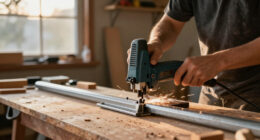
For home use, a MIG welder is usually the best choice, especially if you’re a beginner. It’s easy to operate, quick for various projects, and requires less maintenance. TIG welders offer more precision but are more complex and better for detailed work. Stick welders are durable and great for outdoor or rougher jobs. If you’re just starting out, a MIG welder combines simplicity and versatility—continue exploring to find the perfect fit for your projects.

Get business pricing on tools and workshop supplies
- Business-only prices and quantity discounts
- Tax-exempt purchasing
- Multiple users, one account, clear invoices
Key Takeaways
- MIG welders are user-friendly, making them ideal for beginners working on home projects.
- TIG welders offer precise, clean welds but require more skill and are better for detailed work.
- Stick welders are cost-effective and versatile, suitable for outdoor or rusty material repairs.
- Consider project types and material thickness when choosing between MIG, TIG, or Stick welders.
- Regular maintenance and safety practices are essential regardless of the welder type for optimal results.

MIG welders are often the go-to choice for beginners because they’re easy to operate and versatile. They use a wire feed system that makes welding quicker and cleaner, which is especially helpful for home projects like repairing fences, trailers, or metal furniture. Because of their simplicity, MIG welders require less maintenance, but you still need to regularly check your equipment. Maintenance tips include cleaning the wire feed system, inspecting and replacing worn-out nozzles, and ensuring the gas flow is steady. Regularly cleaning your welder prevents buildup of dirt and debris that can compromise weld quality and safety. Also, keep the cables free of damage, and store your welder in a dry, safe place when not in use. Understanding welding safety is crucial to avoid accidents, injuries, and ensuring the longevity of your equipment. Additionally, familiarizing yourself with weld quality standards will help you achieve stronger, more reliable welds for your projects. Proper equipment maintenance not only extends the lifespan of your welder but also ensures consistent, high-quality results. To maximize performance, it’s important to understand the different welding methods and choose the right one for your specific needs. Knowing proper technique can significantly improve your welding outcomes and safety practices.
Products Worth Considering

Arlo Pro Wireless Security Camera, 2K HDR, 6th Gen, 4-Camera Kit

Shark Cordless Anti-Allergen Pet Power Stick Vacuum, Blue, IZ363HT

Shark IY143H Cordless Pet Stick Vacuum
As an affiliate, we earn on qualifying purchases.
Frequently Asked Questions
Which Welder Is Best for Outdoor Projects?
For outdoor projects, a stick welder is your best choice because it handles welding safety well in windy or damp conditions. Its portability makes it easy to move around your site, and it works efficiently on thick metals. Just make certain you use proper safety gear and set up a stable workspace. With a stick welder, you get reliable, portable welding power that’s perfect for outdoor DIY projects.
Can I Weld Aluminum With These Welders?
You can weld aluminum with certain welders, but it depends on the welder’s compatibility. For aluminum welding, a TIG welder is ideal because it offers precise control and clean welds. Some MIG welders can handle aluminum if they have a spool gun attachment, but stick welders are generally not suitable for aluminum. Check your welder’s specifications to confirm it’s compatible with aluminum before starting your project.
How Loud Are These Welding Machines?
You’ll find that noise levels vary among welding machines, but generally, they produce moderate sound. Compared to household appliances, welders are louder, similar to a loud vacuum or power tool, with sound comparison showing they can reach around 70-85 decibels. While they’re not painfully loud, you should wear hearing protection if you’ll be welding for extended periods. Proper ventilation and safety measures help minimize noise impact and guarantee a safer workspace.
What Safety Gear Is Recommended for Beginners?
Did you know that proper safety gear can reduce welding-related injuries by up to 80%? As a beginner, you should prioritize protective clothing and eye protection. Wear a flame-resistant jacket, gloves, and long pants to shield your skin. Always use a welding helmet with the right shade to protect your eyes from sparks and UV rays. Staying protected helps make certain your safety as you develop your welding skills.
Do These Welders Require Regular Maintenance?
Yes, these welders require regular maintenance to guarantee safety and peak performance. You should follow a maintenance schedule that includes cleaning the machine, inspecting cables and connections, and replacing worn parts. Proper welding safety involves checking for any damage before use and keeping the equipment in good condition. Regular upkeep prevents malfunctions, extends the lifespan of your welder, and keeps your work safe. Prioritize maintenance for dependable, safe welding sessions.
Conclusion
Choosing the right welder depends on your projects and skill level. Whether you opt for MIG, TIG, or Stick, remember that “practice makes perfect.” Start with a machine that matches your needs and take the time to learn its ins and outs. With patience and dedication, you’ll turn your home projects into impressive creations. So, pick wisely, stay persistent, and soon you’ll be welding like a pro in your own garage.