To set up workbench casters without sacrificing stability, make certain you select heavy-duty, locking casters suited for your weight needs, and install them on a flat, sturdy surface using proper hardware. Distribute the weight evenly across all wheels and tighten each bolt securely. Engage the locks after moving to prevent rolling. Regularly inspecting and maintaining your casters keeps your setup safe and stable—stay with us to explore more tips for a perfect setup.

Get business pricing on tools and workshop supplies
- Business-only prices and quantity discounts
- Tax-exempt purchasing
- Multiple users, one account, clear invoices
Key Takeaways
- Select heavy-duty casters with locking mechanisms and appropriate load capacity for stability and safety.
- Install casters on a flat, level surface using proper hardware and ensure correct alignment.
- Distribute workbench weight evenly across all casters to maintain balance during movement and stationary use.
- Engage locking mechanisms after repositioning to prevent unintended rolling or tipping.
- Regularly inspect and maintain casters to ensure smooth operation and long-term stability.
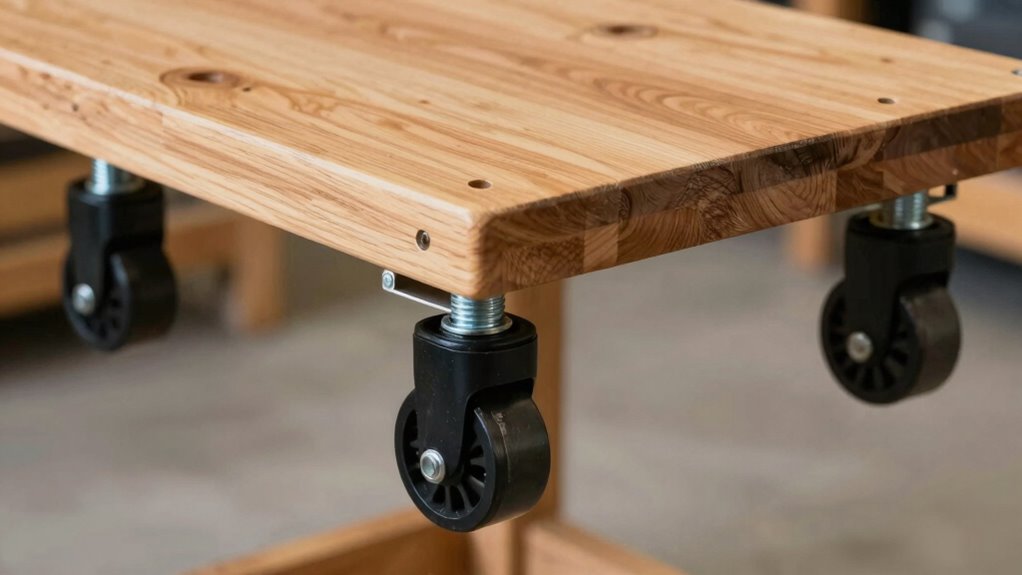
When setting up your workbench with casters, start by choosing the right type for your needs. Heavy-duty caster wheels with locking mechanisms are ideal for workbenches that need to remain stationary during use but move easily when repositioning. Locking casters give you control over stability once you’ve moved the workbench to its desired location. Make sure to install casters on a flat, sturdy surface, and use a level to guarantee the workbench remains even. Proper alignment prevents wobbling or tipping, especially when working with heavy or uneven loads. Securely fasten each caster with the correct hardware, tightening bolts firmly to avoid any looseness that could compromise stability over time. Incorporate workbench mobility tips that prevent accidents or damage. Distribute the weight evenly across all casters to avoid undue stress on any single wheel. When moving your workbench, do so slowly and carefully, especially on uneven floors or cluttered areas. Always engage the locking mechanisms once the workbench is in position; this keeps it from rolling unexpectedly during use, maintaining its stability. If you need to frequently reposition your workbench, consider installing additional locking casters or swapping out wheels for ones with better grip. Regular inspection and maintenance of caster wheels are essential to prevent issues such as squeaking, uneven movement, or total wheel failure, which could jeopardize both safety and stability. Proper caster maintenance ensures your workbench remains safe and functional over time. Additionally, choosing casters with suitable load capacity is crucial for maintaining long-term stability, especially when working with heavy tools or materials. To maximize the lifespan of your casters, it’s also important to understand caster material compatibility with your flooring surface. Understanding caster wheel design can help you select the most appropriate wheels for your specific application, further enhancing stability and ease of movement. Being aware of caster installation best practices can also contribute significantly to your workbench’s overall stability and safety. By following these workbench mobility tips and prioritizing maintenance, you’ll create a versatile workspace that’s easy to move without sacrificing the stability you need for safe, efficient work.
heavy-duty locking workbench casters
As an affiliate, we earn on qualifying purchases.
As an affiliate, we earn on qualifying purchases.
Frequently Asked Questions
Can Casters Be Installed on Any Workbench Material?
Casters can be installed on various workbench materials, but you need to take into account casters material and workbench compatibility. For wooden or metal benches, most casters work well, especially heavy-duty ones for added stability. However, avoid installing casters on delicate or thin materials that may not support the weight or stress. Always check the load capacity and mounting options to ensure your workbench remains stable and safe during use.
What Is the Maximum Weight Capacity per Caster?
The maximum weight capacity per caster varies widely, with heavy-duty options supporting up to 1,000 pounds each. Different caster types, like swivel or fixed, influence load distribution and stability. To avoid tipping or uneven wear, make sure your workbench’s total weight is evenly distributed across all casters. Always check manufacturer specifications for each caster’s weight limit, and select the right type based on your workbench’s materials and usage needs.
How Do I Prevent Casters From Damaging the Floor?
To prevent casters from damaging the floor, you should focus on regular caster maintenance and floor protection. Use caster wheels with soft rubber or polyurethane material to minimize scratches. Regularly clean and inspect the casters for debris that can cause damage. Additionally, consider applying floor mats or protective pads beneath the casters, especially on delicate surfaces, and guarantee the casters are properly lubricated to maintain smooth movement.
Are Lockable Casters Necessary for Stability?
Yes, lockable casters are essential for stability, especially when you need the workbench to stay put. They feature locking mechanisms that prevent movement when engaged, providing a secure workspace. Regular caster maintenance guarantees the locking mechanisms work smoothly and reliably. Without lockable casters, your workbench may shift or wobble, risking safety and accuracy. Locking mechanisms are a simple, effective way to keep your work surface steady during use.
How Often Should I Check Caster Screws for Tightness?
You should check your caster screws for tightness every few months as part of regular caster maintenance. Regular screw inspection guarantees the casters stay securely attached, preventing wobbling or instability. If you notice any looseness, tighten the screws promptly to maintain stability. Consistent maintenance helps avoid accidents and prolongs the lifespan of your workbench casters, keeping your workspace safe and functional.
sturdy caster wheels for workbenches
As an affiliate, we earn on qualifying purchases.
As an affiliate, we earn on qualifying purchases.
Conclusion
Now that you know how to set up your workbench casters without sacrificing stability, you’re all set to roll with confidence. Just remember, a well-balanced work surface is like a steady ship in choppy waters—smooth sailing ahead. Keep an eye on those casters, tighten as needed, and you’ll have a mobile workbench that’s both steady and agile. With a little care, your workspace will stay on solid ground while you move forward with your projects.
workbench caster installation hardware
As an affiliate, we earn on qualifying purchases.
As an affiliate, we earn on qualifying purchases.
As an affiliate, we earn on qualifying purchases.
Fall yard work Picks
leaf blowers
As an affiliate, we earn on qualifying purchases.