
Start by clearing debris like rocks, roots, and trash to create a safe workspace and protect your equipment. Slightly moisten the soil, then use a plate compactor or tamper to firm the ground, making sure it’s level with a level or string line. Conduct soil tests to identify drainage issues, and fix them before proceeding. Always double-check safety gear and maintain your tools for smooth progress. Keep going to find out more tips for a successful site prep.

Get business pricing on tools and workshop supplies
- Business-only prices and quantity discounts
- Tax-exempt purchasing
- Multiple users, one account, clear invoices
Key Takeaways
- Remove debris, rocks, and roots using a rake or tiller to create a clean workspace.
- Moisten soil and use a plate compactor or tamper to ensure firm, stable ground.
- Use a level or string line to verify the surface is even and properly graded.
- Conduct soil testing to address drainage issues or soil deficiencies before proceeding.
- Check safety gear, inspect equipment, and perform maintenance for safe and efficient operation.
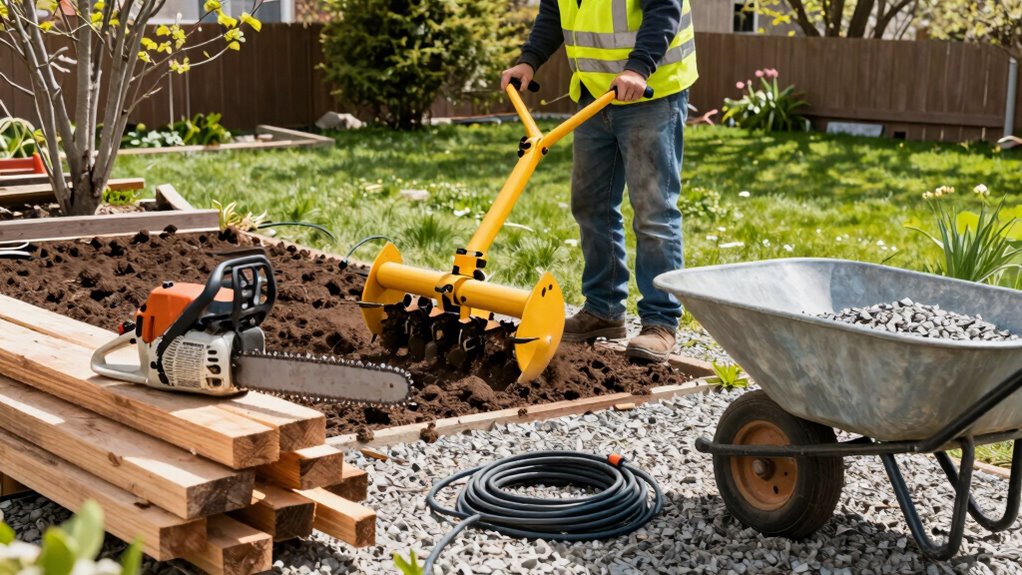
Preparing a backyard project site with power equipment is an essential first step to guarantee your project goes smoothly. Before you break out your tools, take the time to clear the area of any debris and confirm the soil is properly prepared. Removing debris like rocks, old roots, and trash not only makes your work easier but also helps prevent damage to your equipment. Use a rake or a tiller to clear away loose leaves, sticks, and other obstacles. This initial cleanup creates a safe, level workspace, reducing the risk of accidents or equipment jams during your project.
Start your backyard project right by clearing debris and preparing the soil for a smooth, safe build.
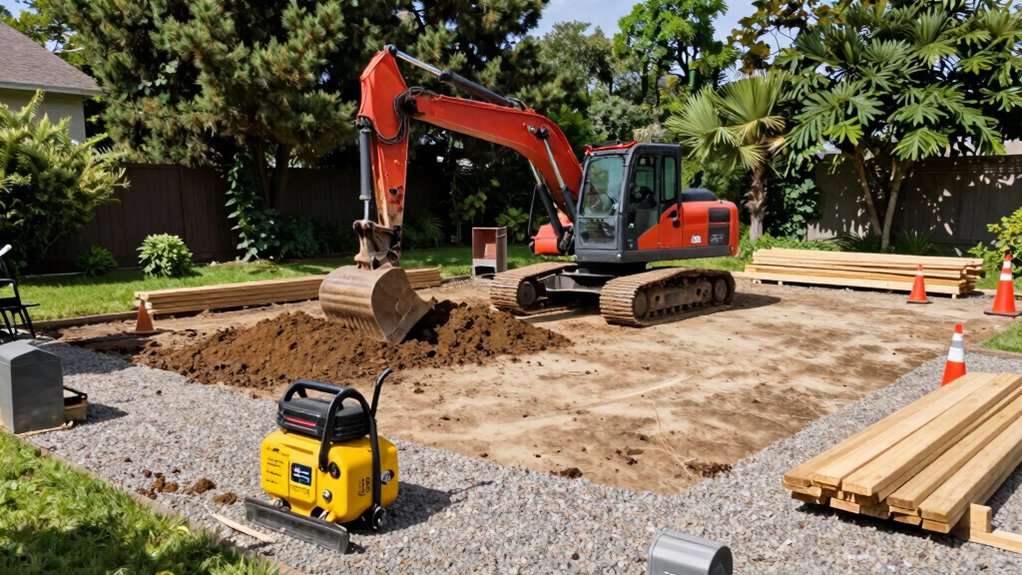
Once the debris is out of the way, focus on soil compaction, which is indispensable for a stable foundation. Properly compacted soil prevents settling or shifting once you lay down mulch, sod, or other materials. You can use a plate compactor or a manual tamper, depending on your project size. Start by moistening the soil slightly; dry soil can be difficult to compact effectively. Run the power equipment over the soil in overlapping passes, applying even pressure to achieve consistent compaction. You’ll notice the soil becomes firmer and more solid, providing a reliable base for whatever you plan to install. Compacting the soil also helps prevent weeds from pushing through in the future and reduces uneven settling that could cause damage or uneven surfaces.
As you work, keep an eye on the overall level of your site. Use a level or a string line to confirm you’re creating a flat, even surface. This step is especially important if you plan to lay pavers, install a deck, or lay sod. Uneven ground can lead to drainage problems or unstable structures later on. After compacting, double-check for any remaining debris or uneven patches and clear or level them as needed. Power equipment makes this process faster and more effective, but your careful attention ensures your project starts on the right footing. Incorporating soil testing can also help identify any underlying issues with drainage or soil quality that need to be addressed before moving forward.
Finally, don’t forget to double-check your safety gear and familiarize yourself with the operation of your power equipment. Making sure your power tools are well-maintained reduces the risk of malfunctions and accidents. Proper preparation minimizes risks and sets a strong foundation for your backyard project. Additionally, understanding soil composition can provide insights into how to better prepare your site for optimal results. Conducting a soil analysis can reveal specific deficiencies or concerns that may influence your landscaping decisions. With debris cleared and soil properly compacted, you’re ready to proceed with confidence, knowing your site is primed for success. Taking these steps early saves time and effort down the line, so invest the necessary effort now to confirm a smooth, efficient project from start to finish.
Frequently Asked Questions
What Safety Gear Is Essential When Using Power Equipment?
When using power equipment, you need personal protective gear like safety glasses, ear protection, gloves, and sturdy boots to stay safe. Always wear a dust mask or respirator if you’re cutting or sanding materials. Before starting, check your equipment for proper maintenance to prevent accidents. Using the right safety gear and maintaining your equipment helps protect you from injury and guarantees your project goes smoothly.
How Do I Choose the Right Power Tools for My Project?
Choosing the right power tools starts with evaluating your project needs and your experience level. Don’t overlook tool maintenance, which guarantees longevity and safety. Consider the power source—cordless for mobility or corded for consistent power. Think about the project size; smaller tools work best for detailed work, while larger ones handle heavy-duty tasks. Selecting the right tools guarantees efficiency, safety, and a successful backyard transformation.
What Are Common Mistakes to Avoid During Site Prep?
When prepping your site, avoid rushing through site cleanup, which can leave debris and create hazards. Always check and maintain your equipment regularly to prevent breakdowns and guarantee safety. Don’t overlook clearing roots or uneven ground, as it can cause accidents or damage your tools. Keep your workspace organized and tidy, and double-check power cords and safety features. These steps help you work efficiently and safely during your project.
How Can I Minimize Environmental Impact While Working?
To minimize environmental impact, you should use eco-friendly techniques like selecting quieter power tools and avoiding unnecessary fuel consumption. Protect wildlife by clearly marking your work area, avoiding nesting sites, and timing your work to avoid sensitive periods. You can also implement erosion control measures and dispose of waste responsibly. These steps help safeguard local ecosystems while you complete your project efficiently and safely.
What Should I Do if I Encounter Underground Utilities?
Don’t put the cart before the horse; always identify underground utilities first. When you encounter underground utilities, stop excavation immediately. Use utility detection tools to locate them accurately and contact local utility companies for precise info. This guarantees excavation safety and prevents accidents. Always follow safety protocols and guidelines, so you avoid damaging utilities or risking injury. Proper planning and caution keep your project safe and efficient from start to finish.
Conclusion
Think of your backyard project as a garden waiting to bloom—you’re the gardener tending to its foundation. By properly prepping your site with the right power equipment, you’re laying a solid groundwork for success. With each cut, clear, and level, you’re shaping the landscape of your dreams. Stay patient, stay precise, and soon you’ll watch your vision blossom into a beautiful reality. Your backyard masterpiece is just a well-prepped plot away.
Fall yard work Picks
leaf blowers
As an affiliate, we earn on qualifying purchases.