Many dust masks focus on the filter material but neglect fit and seal, which are vital for blocking fine particles. Even high-quality filters can’t protect you if gaps allow unfiltered air to bypass them. The mask must fit snugly against your face to guarantee all inhaled air passes through the filter. Without a proper seal, your protection drops considerably. Keep exploring to understand how to choose masks that truly guard against tiny, dangerous particles.
Key Takeaways
- Many dust masks focus on larger particles, neglecting their limited effectiveness against fine particles (<2.5 microns).
- A proper mask fit is often overlooked, allowing fine particles to bypass filters through gaps.
- Not all filter materials meet high standards required for trapping tiny, dangerous particles.
- Mask regulations and standards are frequently misunderstood, leading to inadequate protection.
- Even high-quality filters are ineffective if the mask does not form a tight seal against the face.
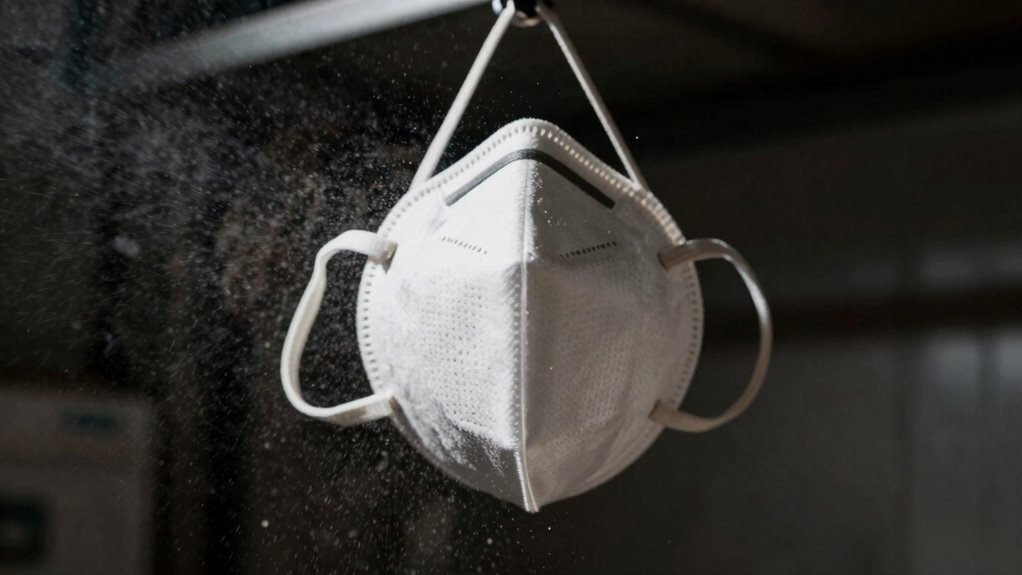
Dust masks play an essential role in protecting you from inhaling fine particles that can harm your respiratory health. Many people assume that wearing a dust mask automatically provides complete protection, but that’s not always the case. One common misconception is that all masks filter out the same particles equally well. In reality, the filters’ effectiveness varies based on design, material, and fit. A mask with a low-grade filter might block larger dust particles but allow finer particles to slip through. If your goal is to safeguard your respiratory health, you need to understand which masks are designed to filter out the smallest, most dangerous particles, like those less than 2.5 microns in size. These tiny particles can penetrate deep into your lungs and even enter your bloodstream, so choosing the right mask with high-quality filters is essential.
Many people underestimate the importance of fit when it comes to dust masks. You might have a mask with excellent filters, but if it doesn’t fit snugly against your face, airborne particles can bypass the filter altogether. Gaps around the mask reduce its overall filters effectiveness, making it less capable of protecting your respiratory health. A proper seal ensures that all air you breathe in passes through the filter material, maximizing protection. This is why fit testing and adjusting straps become essential steps in selecting and wearing a dust mask. Without a tight seal, even the best filter won’t perform as intended, leaving you vulnerable to inhaling fine particles. Understanding the filtering standards for masks helps ensure you select the appropriate level of protection for your specific environment. Additionally, recognizing the significance of mask material can help you choose options that provide better filtration and durability. When selecting a mask, considering filter media quality is crucial for effective protection against the smallest particles. It is also important to stay informed about regulations and standards to ensure your mask meets safety requirements.
best dust masks for fine particles
As an affiliate, we earn on qualifying purchases.
As an affiliate, we earn on qualifying purchases.
Frequently Asked Questions
Can Dust Masks Protect Against Viruses and Bacteria?
Dust masks can offer some protection against viruses and bacteria, but their effectiveness depends on virus filtration and bacterial resistance. Many masks, like N95s, are designed to filter out tiny particles, including viruses, and provide a tight seal. However, cheaper or improperly fitted masks may not block all pathogens. So, while they help, you should still follow other safety measures like handwashing and social distancing for better protection.
How Often Should I Replace My Dust Mask?
You should replace your dust mask regularly, especially when it no longer fits snugly or the filter becomes clogged. Check the mask fit each time you wear it, ensuring there’s no gaps. If the filter looks dirty or damaged, it’s time for a new one. Proper filter maintenance and a secure mask fit are essential to keep your protection effective against fine particles and airborne contaminants.
Are Cloth Masks Effective Against Fine Particles?
Cloth masks aren’t very effective against fine particles because of their limited particle filtration efficiency. Their fabric limitations mean they can’t block tiny particles like dust or pollution as well as respirators or masks with specialized filters. While cloth masks can reduce larger droplets, they don’t provide sufficient protection against fine particles, so if you’re exposed to airborne pollutants, consider masks designed specifically for high filtration efficiency.
Do All Dust Masks Filter Out the Same Particle Sizes?
Not all dust masks filter out the same particle sizes. Filtration efficiency varies widely based on mask design and material. Some masks, like N95s, effectively block small particles around 0.3 microns, while others may only trap larger debris. Understanding particle size is essential—if your mask isn’t designed for the specific fine particles you’re concerned about, it won’t provide adequate protection. Always check the mask’s specifications before use.
What Is the Difference Between N95 and Other Respirators?
N95 respirators offer higher filtration efficiency than many other masks, blocking at least 95% of fine particles. They also provide a better mask fit, creating a seal around your face to prevent airborne particles from leaking in. Other masks, like surgical or cloth masks, may not fit as snugly or filter as effectively. Selecting an N95 guarantees you’re better protected against small particles, especially in high-risk environments.
fitted respirator masks for dust
As an affiliate, we earn on qualifying purchases.
As an affiliate, we earn on qualifying purchases.
Conclusion
So, next time you reach for a dust mask, ask yourself—are you truly protected? Many masks fall short when it comes to filtering those tiny, harmful particles that linger in the air. Don’t settle for just any mask; understand what it really blocks. After all, isn’t your health worth more than a quick fix? Stay informed, choose wisely, and breathe easier knowing you’re better protected from invisible dangers.
mask with adjustable seal for fine particles
As an affiliate, we earn on qualifying purchases.
As an affiliate, we earn on qualifying purchases.
high filtration face masks with proper fit
As an affiliate, we earn on qualifying purchases.
As an affiliate, we earn on qualifying purchases.