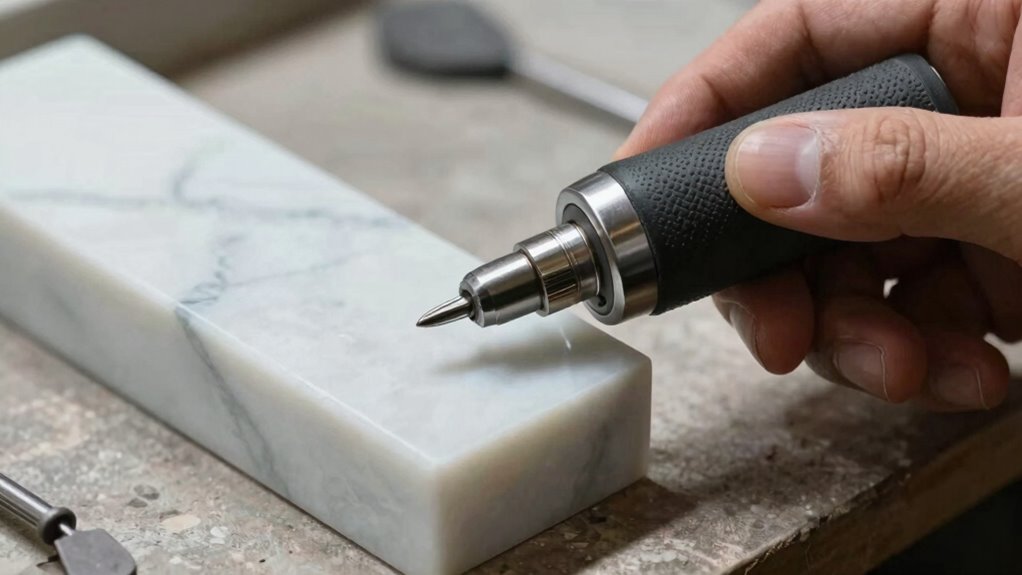

To match your tool’s capabilities to the material, start by evaluating the material’s properties, like hardness, brittleness, and texture. Use softer materials with blades designed for gentle cuts, and choose reinforced or carbide-tipped tools for tougher materials. Make certain your tools are suited in size and shape for the precision needed, and match the tool material to the workpiece’s abrasiveness. Paying attention to these factors helps you avoid damage and get better results—continue exploring to master this skill even further.

Get tools and workshop supplies delivered free — and shop member deals
- Fast, free delivery on millions of items
- Access to Prime Big Deal Days deals on October 6–7
- Prime Video, Amazon Music and more included
Key Takeaways
- Assess the material’s hardness, brittleness, and texture to determine the appropriate tool type and settings.
- Match softer materials with finer, less aggressive tools to prevent tearing or gouging.
- Use reinforced or coated tools for harder, abrasive materials to enhance durability and performance.
- Select tool size based on desired control and material removal rate—larger for rapid removal, smaller for precision.
- Ensure tool material (e.g., high-speed steel, carbide) is compatible with the material’s hardness and abrasiveness.

Choosing the right tool for your material is essential to achieving ideal results and avoiding damage. When you’re working with different materials, understanding how tool selection aligns with material properties is vital. Each material has unique characteristics—hardness, brittleness, flexibility, and texture—that dictate which tools will perform best. If you ignore these properties, you risk damaging your material or ending up with subpar results. The key is to match the tool’s capabilities to what the material demands, ensuring precision and efficiency in your work.
Choosing the right tool ensures precision, prevents damage, and delivers the best results for any material.
Start by evaluating the material’s properties. For example, soft woods require blades or bits that won’t tear or gouge, while hard metals need robust, high-torque tools designed to cut through tough surfaces. Knowing the hardness and flexibility of your material helps you select tools that are neither too aggressive nor too gentle. Using a dull or inappropriate tool can cause uneven cuts, splintering, or excessive wear on your equipment. Conversely, choosing a tool that’s too powerful for delicate materials can crush or deform them. Paying close attention to material properties helps you strike the right balance.
Next, consider tool design and material compatibility. For softer materials, like plastics or soft woods, fine-toothed blades and low-speed settings often produce cleaner results. For harder materials, such as steel or ceramic, you’ll need tools with reinforced edges, carbide tips, or diamond coatings to cut efficiently without dulling quickly. Also, note the shape and size of the tool—larger bits or blades are better for removing material quickly, but smaller tools give you more control for detailed work. Selecting the appropriate size and shape enhances your ability to achieve precise, clean cuts without unnecessary effort.
Another aspect to keep in mind is the tool’s material. The tool itself must withstand the demands of your work. For example, high-speed steel tools work well with softer materials, but for tougher materials, carbide-tipped tools offer longer life and better performance. Using the wrong tool material can lead to faster wear or failure, which wastes time and money. Always match the tool’s material composition to the hardness and abrasiveness of your material to maximize durability and efficiency. Additionally, understanding the material properties of your workpiece can help you select the most appropriate tools and techniques for optimal results.
In short, understanding your material properties guides your tool selection, ensuring you use tools optimized for the task. By paying attention to the specific needs of your material and choosing the right tools accordingly, you’ll improve your work quality, extend your equipment’s lifespan, and avoid costly mistakes. Matching tool capability to material type is an essential step toward mastering any project.
As an affiliate, we earn on qualifying purchases.
Frequently Asked Questions
How Do I Identify the Right Tool for a Specific Material?
You identify the right tool by checking its compatibility with the material you’re working on. Start with material identification—know whether you’re dealing with wood, metal, or plastic. Then, review the tool’s specifications to guarantee tool compatibility. Look for recommended applications, blade types, or cutting speeds suited for that material. This way, you prevent damage, improve efficiency, and achieve a clean, precise result tailored to your specific material.
Can I Modify Tools to Better Suit Different Materials?
Yes, you can modify tools for better material adaptation. Tool customization allows you to adjust cutting edges, speeds, or coatings, optimizing performance for different materials. However, do it carefully—improper modifications can lead to tool failure or poor results. Always assess the material’s properties first, then tweak your tools accordingly. This way, you reveal new potentials, but remember, precision in customization makes all the difference.
What Safety Precautions Are Essential When Working With Various Materials?
You should always prioritize safety by wearing appropriate safety gear, including gloves, goggles, and masks, to protect yourself from dust, debris, or chemical exposure. Proper material handling techniques prevent accidents and injuries, so handle materials carefully and use tools suited for each type. Stay alert, follow safety guidelines, and make certain your workspace is clean and organized to minimize risks when working with different materials.
How Often Should Tools Be Calibrated for Different Materials?
You should calibrate your tools regularly to guarantee precise work, typically every few months or after significant use, depending on the material and tool type. Proper tool maintenance involves adjusting calibration frequency based on the material’s hardness and the intensity of use. For softer materials or infrequent use, extend calibration intervals, but for harder or more demanding materials, check calibration more often to maintain accuracy and safety.
Are There Eco-Friendly Tool Options for Specific Materials?
Think of your tools as eco-friendly heroes on a mission. Yes, there are options like biodegradable blades that break down after use, reducing waste. Plus, recycled material handles give old resources new life, lowering environmental impact. These green choices let you tackle tasks responsibly while caring for the planet. By choosing such tools, you’re not just working efficiently, but also supporting sustainability in every cut.
As an affiliate, we earn on qualifying purchases.
Conclusion
So, there you have it—ditch the guesswork and let your tools do the talking. When you match tool capability to material type, you’re basically giving your project the VIP treatment it deserves. Skip the mismatch, avoid the chaos, and watch your work turn out flawless. Because nothing says “professional” like using the right tool for the right job—unless, of course, you’re aiming for a masterpiece of chaos. Happy tool-matching!
As an affiliate, we earn on qualifying purchases.
As an affiliate, we earn on qualifying purchases.
Fall yard work Picks
leaf blowers
As an affiliate, we earn on qualifying purchases.