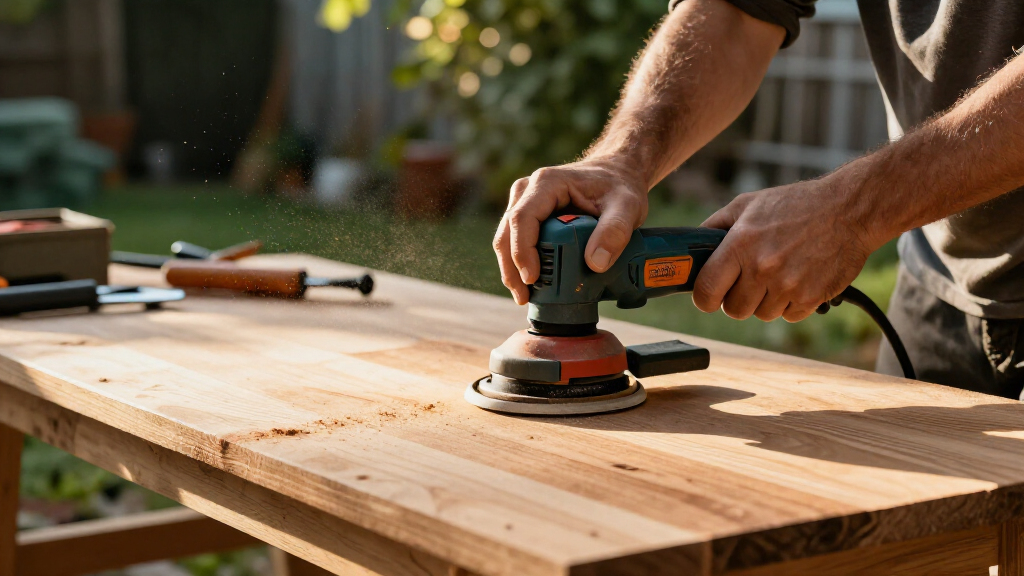

Among these cordless random orbital sanders, the DEWALT 20V MAX Orbital Sander (DCW210B) is my best overall pick for shoppers who want a familiar battery platform and a well-rounded tool-only option. The Makita XOB01Z stands out for buyers already invested in Makita 18V LXT, while the DEWALT brushless kit with battery and charger makes more sense for anyone starting without compatible batteries. The main tradeoffs are battery compatibility, runtime, speed control, dust handling, and whether a bare tool or complete kit better fits your setup. Some listings are brand-name tools, while others are third-party models designed to use a major brand’s battery, so compatibility and support deserve close attention. Read on for how all 13 compare and which one fits your projects.

Get business pricing on tools and workshop supplies
- Business-only prices and quantity discounts
- Tax-exempt purchasing
- Multiple users, one account, clear invoices
Complete the kit


Key Takeaways
- The DCW210B is the most balanced starting point: it pairs a mainstream 20V platform with a straightforward tool-only format, but buyers still need a compatible battery and charger.
- Battery ownership changes the value equation: the Makita, Milwaukee, CRAFTSMAN, and DEWALT bare-tool options make the most sense when you already own batteries in that system.
- A kit can be a better first purchase than a bare tool: the DEWALT brushless bundle and the 6-in-1 kit include batteries, reducing setup friction for buyers without a platform yet.
- Battery compatibility is not the same as brand support: several third-party models are listed as compatible with DEWALT batteries, but buyers should verify fit, battery requirements, and service options before choosing one over a DEWALT tool.
- Speed claims alone do not settle the choice: variable-speed controls and usable dust collection can matter more to finish quality and cleanup than a high advertised OPM figure.


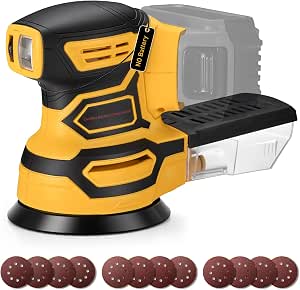


| cordless random orbital sander | Voltage | Power source | Maximum rotational speed |
|---|---|---|---|
| ONEAND 18V Cordless 5 in. Rand | 18 volts | Battery powered | 10,000 rpm |
| Cordless 5-Inch Random Orbital | — | Battery powered | 13,500 rpm |
| DEWALT 20V MAX Orbital Sander | 20V MAX | — | — |
| Cordless Random Orbital Sander | 20 volts | — | 12,000 rpm |
| DEWALT 20V MAX XR 5 in Random | 20 volts | Battery powered | 12,000 rpm |
| Milwaukee M18 Random Orbit San | — | Cordless | — |
| Makita XOB01Z 18V LXT Lithium- | — | Battery powered | 11,000 rpm |
| CRAFTSMAN V20 Orbital Sander | 20V max | — | — |
| AVID POWER 20V Cordless Random | 20V | Battery powered | — |
| DEWALT 20V MAX Orbital Sander | 20V | — | — |
| Cordless Random Orbital Sander | 20 volts | Battery powered | 12,000 rpm |
| Cordless Random Orbital Sander | 21 volts | Battery powered | 19,000 rpm |
| 6-in-1 Cordless Random Orbit S | — | — | — |
More Details on Our Top Picks
ONEAND 18V Cordless 5 in. Random Orbit Sander Tool ONLY
The ONEAND keeps its proposition simple: a 2.7-pound, 18V cordless sander for buyers who value portability over a long feature list. Its stated maximum speed of 10,000 rpm suits general sanding on wood, drywall, and composite surfaces, while the 5-inch disc covers common orbital-sanding tasks. Compared with the DEWALT DCW210B, it offers fewer documented control and dust-collection features, but its compact listed dimensions may appeal when working in tight spaces. The tradeoff is a bare-tool purchase with battery and charger sold separately, plus no supplied discs or replacement pads. Its listing also specifies medium grit rather than a broader range, so buyers who switch between aggressive stock removal and fine finishing may prefer the DeWalt-compatible variable-speed options.
Pros:- Low listed weight of 2.7 pounds supports easier handling.
- Cordless 18V design suits work away from an outlet.
- 5-inch disc fits common sanding tasks on wood, drywall, and composites.
- Maximum listed speed of 10,000 rpm supports efficient general sanding.
Cons:- Battery and charger are sold separately.
- Only medium grit is specified, limiting sanding-range flexibility.
- No accessories or replacement pads are included.
Best for: DIYers who already own a compatible 18V battery and need a light, basic 5-inch sander for occasional work in compact spaces.
Not ideal for: Woodworkers who need adjustable speed, included abrasives, or a ready-to-use kit with battery and charger.
- Voltage:18 volts
- Power source:Battery powered
- Maximum rotational speed:10,000 rpm
- Disc diameter:5 inches
- Item weight:2.7 pounds
- Item dimensions:4 x 4 x 6 inches
- Grit type:Medium
Our verdict“Choose the ONEAND if a lightweight 18V bare tool is your priority; choose a variable-speed alternative if you need broader control or included abrasives.”
Cordless 5-Inch Random Orbital Sander Compatible with DeWalt 20V Battery
This DeWalt-battery-compatible option is aimed at DIYers who want speed adjustment and abrasives in the box, rather than a bare tool with no immediate sanding supplies. Six speed settings and a stated 60–240 grit range give it more room to move between material removal and finish work than the ONEAND, which lists medium grit only. Its brushless motor and 13,500 rpm maximum are also strong headline features, though the supplied information does not give a speed range beyond those six settings. The included 20 sanding discs and dust collection system make it better equipped for a project start than the DEWALT DCW210B, but the battery and charger remain separate purchases. It also depends on DeWalt 20V MAX battery compatibility, so it is a poor fit for buyers outside that battery system.
Pros:- Six speed settings adapt sanding to different tasks.
- Stated 60–240 grit range supports coarse work through finer finishing.
- Includes 20 sanding discs for getting started.
- Dust collection system helps limit airborne debris and cleanup.
Cons:- Battery and charger are not included.
- Requires a compatible DeWalt 20V MAX battery.
- Listed 1 A amperage capacity gives limited information for comparing power under load.
Best for: DIY woodworkers who already own a DeWalt 20V MAX battery and want adjustable sanding with several grits included.
Not ideal for: Buyers without a compatible DeWalt battery, or those seeking a complete kit with battery and charger.
- Power source:Battery powered
- Battery compatibility:DeWalt 20V MAX batteries
- Motor:Brushless
- Speed settings:6 adjustable speeds
- Maximum rotational speed:13,500 rpm
- Disc diameter:5 inches
- Grit range:60–240
- Included sanding discs:20
Our verdict“Pick this model for adjustable DIY sanding and included discs if you already have a DeWalt 20V MAX battery.”
DEWALT 20V MAX Orbital Sander (DCW210B)
The DEWALT DCW210B earns the overall pick by pairing a brushless motor with a usable 8,000–12,000 OPM range and a low-profile, comfortable grip. That speed range gives buyers more control than the ONEAND, whose listing provides a single maximum speed, while the brushless motor is described as supporting efficient performance and longer runtime. Its replaceable 8-hole hook-and-loop pad makes paper changes straightforward, and the included one-handed locking dust bag can be supplemented with a compatible dust collector. Compared with the DeWalt-compatible sander that includes 20 discs, this DEWALT is less ready to start straight from the box: it is tool-only, and dust-collection accessories beyond the bag require separate purchase. Still, its clearly specified controls and established brand ecosystem make it the most balanced choice here for regular, varied sanding.
Pros:- Brushless motor is specified for efficient performance and longer runtime.
- Variable speed from 8,000 to 12,000 OPM supports different sanding stages.
- Low-profile design and comfortable grip help with control.
- 8-hole hook-and-loop pad supports quick abrasive changes.
Cons:- Battery and charger are sold separately.
- Dust collector accessories beyond the included dust bag require separate purchase.
- No sanding discs are listed as included.
Best for: Frequent DIYers and finish carpenters who already own DEWALT 20V MAX batteries and want predictable variable-speed control.
Not ideal for: First-time cordless-tool buyers who need a battery and charger included, or users who want sanding discs bundled with the tool.
- Motor type:Brushless
- Voltage:20V MAX
- Speed range:8,000–12,000 OPM
- Sanding pad type:8-hole hook-and-loop
- Dust collection:One-handed locking dust bag; compatible with dust collectors
- Battery and charger:Sold separately
Our verdict“For regular sanding with adjustable control, the DCW210B is the strongest all-around choice if you already have a DEWALT 20V MAX battery.”
Cordless Random Orbital Sander Compatible with DeWalt 20V MAX Battery – 5″ Brushless Palm Sander, 12,000 OPM, 6 Variable Speeds, Dust Collection, 10 Sandpapers
At a listed 2 pounds, this brushless 5-inch sander targets buyers who want to reduce hand fatigue during longer sessions without leaving the DeWalt 20V MAX battery system. Its six speeds and maximum 12,000 rpm give it more adjustment than the ONEAND, and it includes multiple grit papers plus a dust-collection system. That bundle makes it more project-ready than the DEWALT DCW210B, which lists no included sanding discs, while the DEWALT provides a more specific 8,000–12,000 OPM range and a documented 8-hole hook-and-loop pad. This model’s listed 5-year warranty is another point of differentiation, but it remains a bare tool and its compatibility is limited to DeWalt 20V MAX batteries. The supplied data also describes the included paper as multiple grits without detailing each grit.
Pros:- Listed 2-pound weight may help reduce fatigue during extended sanding.
- Brushless motor and six variable speeds support adjustable operation.
- Includes multiple grit sandpapers and a dust-collection system.
- Listed 5-year warranty.
Cons:- Battery and charger are not included.
- Limited to DeWalt 20V MAX battery compatibility.
- Included paper grits and pad details are not fully specified.
Best for: DeWalt 20V MAX owners who prioritize a low listed tool weight and want variable speeds, dust collection, and sanding papers included.
Not ideal for: Buyers who need a battery and charger in the box, or who want clearly documented pad and grit specifications before choosing.
- Voltage:20 volts
- Battery compatibility:DeWalt 20V MAX batteries
- Motor:Brushless
- Speed settings:6 variable speeds
- Maximum rotational speed:12,000 rpm
- Disc diameter:5 inches
- Item weight:2 pounds
- Warranty:5 years
Our verdict“Choose this DeWalt-compatible model for a lightweight, accessory-included bare tool, but favor the DEWALT DCW210B for more clearly documented speed and pad details.”
DEWALT 20V MAX XR 5 in Random Orbital Sander (DCW211B)
The DCW211B is the choice here for buyers who put low vibration and fast material removal ahead of bundled accessories. Its variable-speed control and maximum 12,000 rpm make it adaptable across sanding tasks, while its stated focus on small surfaces and tight spaces suits detail-oriented work. Compared with the DEWALT DCW210B, this model is presented as a low-vibration option for comfortable extended use, but the DCW210B provides a more specific OPM range, brushless-motor detail, and 8-hole pad information. The DCW211B listing also gives less detail about its dust-collection setup: compatibility is noted, but a dust extractor is not included. As a bare tool, it needs a separate battery and charger, so it makes the most sense for buyers already invested in DEWALT 20V MAX rather than casual users building a cordless setup from scratch.
Pros:- Low-vibration design is suited to more comfortable extended use.
- Variable speed control supports different sanding applications.
- Maximum listed speed of 12,000 rpm supports fast material removal.
- Designed for small surfaces and tight spaces.
Cons:- Battery and charger are sold separately.
- Dust extractor is not included.
- The supplied specs do not detail the speed range or sanding-pad type.
Best for: DEWALT 20V MAX owners sanding small surfaces or tight spaces who value low vibration during longer work sessions.
Not ideal for: Casual users seeking a complete starter kit, or buyers who need detailed pad and dust-collection specifications before purchase.
- Voltage:20 volts
- Power source:Battery powered
- Maximum rotational speed:12,000 rpm
- Disc diameter:5 inches
- Item dimensions:9.53 x 7.99 x 5.91 inches
- Grit number:80
- Dust collection:Dust collection compatible; extractor not included
Our verdict“The DCW211B is a sensible fit for DEWALT 20V MAX owners who want low-vibration sanding in tight areas, while the DCW210B offers more documented control details.”
Milwaukee M18 Random Orbit Sander
The Milwaukee M18 Random Orbit Sander makes the most sense for buyers already invested in Milwaukee’s M18 battery platform who want to add cordless sanding without changing systems. Its listed information emphasizes ease of use, but gives no speed range, pad size, weight, or runtime figures, so it is harder to match confidently to a particular finish or workload than the Makita XOB01Z or CRAFTSMAN V20. That missing detail also limits comparisons on control and sanding pace. The tradeoff is a familiar platform rather than a clearly documented feature set: buyers with compatible batteries may value that convenience, while anyone choosing a first cordless sander has less evidence here to judge performance. I’d shortlist it only after confirming the specifications and battery compatibility that matter for the job.
Pros:- Designed for use within the Milwaukee M18 cordless tool platform
- Described as easy to use for routine sanding tasks
- Cordless format avoids managing a power cord around a workpiece
Cons:- Product information does not specify pad diameter, speed, or weight
- Battery life and runtime are not stated
- Limited detail makes it difficult to judge suitability for demanding or finish-sensitive work
Best for: Milwaukee M18 owners who want a cordless sander for occasional general-purpose work and can confirm its specifications before buying
Not ideal for: First-time cordless sander buyers who need published pad, speed, weight, or runtime details to compare models
- Brand:Milwaukee
- Product type:Random orbit sander
- Battery platform:M18
- Power source:Cordless
- Ease of use:Described as easy to use
- Pad diameter:Not specified
- Runtime:Not specified
Our verdict“Choose this if you already own compatible M18 batteries and can verify the missing specifications; otherwise, the better-documented Makita XOB01Z is easier to evaluate.”
Makita XOB01Z 18V LXT Lithium-Ion Cordless 5″ Random Orbit Sander, Tool Only
The Makita XOB01Z is the most finish-oriented pick here for buyers who want to adjust sanding pace rather than run at one listed speed. Its three speed settings and 5-inch hook-and-loop pad make it more adaptable across smoothing and material removal than the simpler, sparsely documented Milwaukee M18. Makita also describes its large orbit action as producing a swirl-free finish, a useful aim when surface appearance matters. The tradeoff is that this is a tool-only listing, so an 18V LXT battery and charger are needed separately, and the supplied details report runtime of up to 40 minutes per charge. Its 11,000 rpm maximum is below the CRAFTSMAN V20’s listed 12,000 OPM, so buyers prioritizing the highest stated speed may prefer that model.
Pros:- Three speed settings let users adapt sanding pace to the task
- 5-inch hook-and-loop pad supports quick abrasive changes
- Large-orbit action is described as producing a swirl-free finish
- 18V LXT platform suits buyers who already own compatible batteries
Cons:- Battery and charger are not included
- Listed runtime is up to 40 minutes per charge
- Maximum listed speed is lower than the CRAFTSMAN V20’s 12,000 OPM
Best for: Makita 18V LXT users who want a 5-inch cordless sander with speed choices for both surface smoothing and routine material removal
Not ideal for: Buyers without Makita LXT batteries who want a ready-to-run kit, or users planning long sanding sessions without battery changes
- Battery platform:18V Makita LXT lithium-ion
- Power source:Battery powered
- Disc diameter:5 inches
- Speed settings:3
- Maximum rotational speed:11,000 rpm
- Abrasive attachment:Hook-and-loop
- Runtime:Up to 40 minutes per charge
- Tool status:Tool only; battery sold separately
Our verdict“Pick the Makita XOB01Z if adjustable speed and a stated swirl-free finish matter more than an included battery kit or the lineup’s highest listed speed.”
CRAFTSMAN V20 Orbital Sander, Cordless, 12,000 OPM, Bare Tool Only
The CRAFTSMAN V20 stands out for buyers who want a light, low-profile tool for surface preparation, seam smoothing, or paint and varnish removal. At 2.6 pounds, it is lighter than the AVID POWER model’s listed 3.3 pounds, which may make overhead or extended sessions easier to manage. Its 12,000 OPM maximum also gives it the highest stated speed in this comparison, although speed alone does not establish how quickly it will remove material or how refined its finish will be. An onboard dust bag, vacuum compatibility, and dustproof switch add practical workshop utility. The main compromise is that this is a bare tool: battery and charger are separate, unlike the AVID POWER and DEWALT kits, which include batteries.
Pros:- Listed weight of 2.6 pounds supports easier handling than the heavier AVID POWER
- 12,000 OPM maximum is the highest stated speed among these five picks
- Dust bag and vacuum compatibility offer two dust-management options
- Dustproof switch is designed to resist workshop dust
Cons:- Battery and charger are sold separately
- No variable-speed range is provided in the supplied details
- Bare-tool format adds setup requirements for buyers without V20 batteries
Best for: DIYers with a compatible CRAFTSMAN V20 battery who prioritize a light sander for furniture prep, seams, and occasional paint removal
Not ideal for: Buyers who need a complete kit out of the box or prefer a documented variable-speed range for delicate finishing
- Model:CMCW220B
- Voltage:20V max
- Maximum speed:12,000 OPM
- Weight:2.6 pounds
- Dimensions:7.7 × 5.8 × 5.8 inches
- Dust collection:Onboard dust bag; vacuum compatible
- Included components:Dust bag, 60-grit paper, 80-grit paper, 120-grit paper
- Warranty:3-year limited warranty
Our verdict“Choose the CRAFTSMAN V20 for lightweight surface prep if you already have its battery platform; choose the DEWALT kit instead if you need a battery and charger included.”
AVID POWER 20V Cordless Random Orbital Sander Tool 5”, 6 Variable Speeds
The AVID POWER 20V is the easiest entry point in this group for someone who needs the battery, charger, abrasives, and dust bag together. Its six speed settings cover a stated range of 7,000 to 11,000 RPM, giving beginners more control than a single-speed tool and more adjustment steps than the Makita XOB01Z’s three settings. The included 30 sandpapers also make it practical to start on different jobs without assembling a separate abrasive supply. That convenience comes with a real handling compromise: at 3.3 pounds, it is heavier than the CRAFTSMAN V20, and the supplied details flag limited battery life for extended use. Its 11,000 rpm ceiling is also below the CRAFTSMAN’s 12,000 OPM listing, so this kit favors readiness and adjustability over the lightest body or highest stated speed.
Pros:- Battery and charger are included, unlike the Makita XOB01Z and CRAFTSMAN V20 bare tools
- Six speed settings provide a broad range of adjustment
- Includes 30 sandpapers and a dust collection bag
- 20V cordless format supports work away from an outlet
Cons:- Battery life may be limited during extended use
- At 3.3 pounds, it is heavier than the CRAFTSMAN V20
- Maximum listed speed is lower than the CRAFTSMAN’s 12,000 OPM
Best for: First-time cordless sander buyers who want a battery, charger, dust bag, and assorted abrasives in one kit for intermittent home projects
Not ideal for: Woodworkers planning long sessions or frequent overhead sanding, where battery runtime and the 3.3-pound weight may become limiting
- Voltage:20V
- Disc diameter:5 inches
- Speed settings:6
- Speed range:7,000–11,000 RPM
- Weight:3.3 pounds
- Included components:Battery, charger, 30 sandpapers, dust collection bag
- Abrasive grit listed:80
- Power source:Battery powered
Our verdict“Choose the AVID POWER if you want an all-in-one starter kit with multiple speed settings, but look to the lighter CRAFTSMAN for longer hand-held sessions if you already own its batteries.”
DEWALT 20V MAX Orbital Sander, 5-Inch, Cordless, Brushless, Variable Speed, 2.0Ah Battery & Charger Included
The DEWALT DCW210D1 is the most complete premium-style kit in this batch: it pairs a brushless motor and variable speed with a 2.0Ah battery, charger, storage bag, and dust bag. Its 8,000–12,000 OPM dial spans slower finishing work through faster sanding, while the CRAFTSMAN V20 reaches the same listed maximum but comes as a bare tool and does not provide a speed range in the supplied data. Compared with the AVID POWER, DEWALT adds brushless construction and a stated upper speed of 12,000 OPM, but includes fewer abrasives. The 2.0Ah battery also may not suit long sessions without a spare, and the listed 1.95 kg weight is heavier than the CRAFTSMAN. This is a stronger fit for buyers who value a complete, controlled setup over minimum weight.
Pros:- Brushless motor is designed for efficient operation
- Variable-speed range of 8,000–12,000 OPM supports different sanding tasks
- Includes 2.0Ah battery, charger, storage bag, and dust bag
- Dust-sealed switch and rubber grip add practical protection and handling comfort
Cons:- Included 2.0Ah battery may require swapping or recharging during extended work
- Listed weight of 1.95 kg is heavier than the CRAFTSMAN V20
- Supplied information does not list included sanding discs
Best for: DIYers or tradespeople who want a brushless 5-inch sander with battery and charger included for varied work around a shop or jobsite
Not ideal for: Buyers who prioritize a lightweight tool for prolonged overhead sanding or need extended runtime from a single included battery
- Model:DCW210D1
- Voltage:20V
- Motor:Brushless
- Speed range:8,000–12,000 OPM
- Battery capacity:2.0Ah
- Weight:1.95 kg
- Included components:Sander, charger, battery, storage bag, dust bag
- Dust protection:Dust-sealed switch
Our verdict“Choose the DEWALT DCW210D1 if you want a brushless, variable-speed kit ready to use, and favor the CRAFTSMAN V20 if lower weight matters more than an included battery.”
Cordless Random Orbital Sander for Dewalt 20V Battery, Yellow
This is a practical pick for someone who already owns DeWalt 20V batteries and wants a brushless sander without adding another battery platform. Its six speed settings give more control over delicate finishing than a fixed-speed tool, while the included 12 discs let you start sanding without sourcing abrasives separately. Compared with the more versatile 6-in-1 Cordless Random Orbit Sander, this model sticks to standard random-orbit work rather than swapping between sanding bases. That simpler format suits broad surface prep, but limits detail work. The listed maximum speed is 12,000 rpm, and the 2.7-pound weight may feel tiring during long overhead sessions. The battery and charger are not included, so this makes the most sense when compatible batteries are already in your kit.
Pros:- Compatible with DeWalt 20V batteries, making it useful for owners of that battery platform.
- Brushless motor supports efficient operation with less motor maintenance.
- Six speed settings offer control across different sanding tasks.
- Includes 12 sanding discs for getting started with varied surface work.
Cons:- Battery and charger are sold separately.
- At 2.7 pounds, it may cause fatigue during prolonged or overhead sanding.
- Its standard sander format is less adaptable for corners and contours than a multi-base option.
Best for: DIYers with DeWalt 20V batteries who need a straightforward sander for furniture, trim, and general surface finishing.
Not ideal for: Buyers starting without DeWalt batteries or anyone seeking interchangeable detail-sanding bases and a lighter tool for extended overhead work.
- Voltage:20 volts
- Power source:Battery powered
- Amperage capacity:3 A
- Maximum rotational speed:12,000 rpm
- Dimensions:6 x 5 x 9 inches
- Weight:2.7 pounds
- Included components:Random orbital sander and 12 sanding discs
Our verdict“Choose this if you already own DeWalt 20V batteries and want a variable-speed brushless sander for standard finishing jobs.”
Cordless Random Orbital Sander for Dew 20V Max, 5-Inch Brushless with 19000 RPM and Dust Collector
For buyers who want a higher listed speed ceiling, this brushless 5-inch sander reaches 19,000 rpm, compared with the 12,000-rpm maximum listed for the Cordless Random Orbital Sander for Dewalt 20V Battery, Yellow. That extra range may suit demanding removal tasks such as paint stripping or rust cleanup, while variable speed gives users room to dial back for more controlled work. The model also lists a dust collection system and a 1.22 kg weight, a helpful combination for moving between work areas. The tradeoff is battery-platform dependence: it works with Dew 20V Max batteries, not a broadly interchangeable supply, and neither battery nor charger is included. Buyers should also check battery fit carefully, since the listing describes compatibility with Dew 20V Max rather than a named major-brand tool system.
Pros:- Brushless motor and variable speed provide a broad operating range.
- Listed maximum speed of 19,000 rpm is higher than the 12,000-rpm models in this batch.
- Dust collection is included for managing sanding debris.
- Listed weight of 1.22 kg supports portability between work areas.
Cons:- Battery and charger are not included.
- Compatibility is limited to the stated Dew 20V Max battery platform.
- The product data does not specify included sanding discs or the tool’s dimensions.
Best for: Experienced DIYers or workshop users with compatible Dew 20V Max batteries who want a higher-speed option for stripping and material removal.
Not ideal for: Shoppers who need a complete ready-to-run kit, rely on another battery platform, or want a clearly specified sanding diameter and included abrasives.
- Voltage:21 volts
- Power source:Battery powered
- Amperage capacity:5 A
- Maximum rotational speed:19,000 rpm
- Weight:1.22 kg
- Battery compatibility:Dew 20V Max batteries
- Grit type:Medium
Our verdict“Pick this for higher-speed sanding and removal work if you can confirm you own a compatible Dew 20V Max battery.”
6-in-1 Cordless Random Orbit Sander, 5” with 2 Batteries and 6 Speed Settings
This kit takes a different approach from the single-purpose Cordless Random Orbital Sander for Dewalt 20V Battery, Yellow: it includes six interchangeable bases for orbital, sheet, detail, contour, and finger sanding. That range can reduce the need to buy separate tools when a project moves from broad panels to edges and tighter shapes. It also comes with two 4000mAh batteries, so buyers are not tied to an existing platform and can keep one battery available while the other is in use. The listed runtime is up to one hour, though actual working time will depend on the task and conditions; that may not cover a large sanding job without pauses. Its maximum speed is 12,000 OPM, below the 19,000-rpm ceiling listed for the Dew 20V Max model, and the product data does not state its weight.
Pros:- Six interchangeable sanding bases cover broad surfaces, details, contours, and narrow areas.
- Includes two 4000mAh lithium-ion batteries rather than requiring a separate battery purchase.
- Six variable speed settings allow adjustment for different materials and sanding tasks.
- Dust bags and multiple bases provide a broad set of included accessories.
Cons:- Listed runtime is up to one hour, which may be limiting for large projects.
- Tool weight is not specified, making extended-use comfort harder to judge.
- Maximum speed of 12,000 OPM is lower than the 19,000-rpm ceiling listed for the Dew 20V Max sander.
Best for: DIYers who work on furniture, trim, and shaped surfaces and want multiple sanding formats plus included batteries in one kit.
Not ideal for: Users focused on long, uninterrupted sanding sessions, buyers who prioritize a stated low tool weight, or those needing the higher speed ceiling listed by the Dew 20V Max model.
- Sanding diameter:5 inches
- Batteries:2 x 4000mAh lithium-ion
- Speed settings:6 variable speeds
- Maximum speed:12,000 OPM
- Included sanding bases:6 interchangeable bases
- Included dust accessories:Dust bags
- Listed runtime:Up to 1 hour
Our verdict“Choose this kit if your projects demand several sanding shapes and you want batteries included more than maximum speed or extended runtime.”

How We Picked
I ranked these cordless random orbital sanders by how well their stated features answer real buying needs: sanding control, battery-platform fit, dust collection, included accessories, and the difference between a complete kit and a bare tool. I gave more weight to recognizable platform options and clearly described configurations than to listings whose compatibility or specifications are less clear. I also considered whether a model’s format suits common jobs, from occasional furniture touch-ups to repeated workshop sanding.
The order reflects overall usefulness, purchase clarity, and likely ownership fit, not a claim that every tool has been independently tested. Battery ecosystems can outweigh small differences in advertised speed: an owner’s existing batteries may make a tool-only model the sensible choice, while a new cordless-tool buyer may benefit more from an included battery and charger. Third-party battery-compatible models remain in the lineup for buyers seeking another route, but uncertainty about fit, support, or exact specifications keeps them from outranking clearer brand-platform choices.
| cordless random orbital sander | Power source |
|---|---|
| ONEAND 18V Cordless 5 in. Rand | Battery powered |
| Cordless 5-Inch Random Orbital | Battery powered |
| DEWALT 20V MAX Orbital Sander | — |
| Cordless Random Orbital Sander | — |
| DEWALT 20V MAX XR 5 in Random | Battery powered |
| Milwaukee M18 Random Orbit San | Cordless |
| Makita XOB01Z 18V LXT Lithium- | Battery powered |
| CRAFTSMAN V20 Orbital Sander | — |
| AVID POWER 20V Cordless Random | Battery powered |
| DEWALT 20V MAX Orbital Sander | — |
| Cordless Random Orbital Sander | Battery powered |
| Cordless Random Orbital Sander | Battery powered |
| 6-in-1 Cordless Random Orbit S | — |
Factors to Consider When Choosing Cordless Random Orbital Sanders
Choose a sander around the work you actually do and the cordless tools you already own. The right decision often comes down to platform costs, dust control, and how much sanding you expect to complete per battery—not a single headline specification.
Start With Your Battery Platform
Before comparing sanders, identify the battery system already in your workshop and check the exact voltage and connection required by the tool. A bare tool can be a sensible way to add a sander when you own compatible batteries, but it may be a poor first purchase if you also need a charger and spare pack. Third-party tools advertised as compatible with a major brand’s batteries are a separate decision from buying that brand’s own tool. Confirm the stated compatibility against the batteries you own, and check what happens if the tool needs service. Avoid assuming that batteries with similar voltage or branding will fit every model. If you have no cordless platform, compare the full kit cost and contents rather than the sander alone.
Match Runtime to the Size of the Job
Battery runtime affects how smoothly a sanding session goes, particularly when working across tabletops, doors, or several pieces in one batch. A small or older battery may keep the tool light but can mean more interruptions; a larger pack can extend work time while adding weight and bulk. Think about whether you will sand for a few minutes at a time or tackle a long surface in one session. For occasional repairs, buying extra batteries may add little value, while production-style work benefits from a rotation plan and a charger nearby. Check whether the tool is sold bare or with a battery, and confirm the included battery capacity before comparing kits. Do not assume that a stated OPM figure predicts how much work one charge will finish.
Choose Speed Control for the Materials You Sand
Variable speed is useful when a project includes different materials, delicate edges, or a finish that could show swirl marks. Lower settings can help you control sanding on softer stock or near corners, while faster settings may suit broad stock removal when the abrasive and surface allow it. A high maximum OPM number is not a substitute for a control you can adjust confidently. Buyers who mostly sand one type of rough lumber may have less need for multiple settings than people refinishing furniture or moving between wood, filler, and painted surfaces. Also consider how easy it is to reach the speed control while holding the tool. Use a light touch: pressing down harder can reduce control and create uneven results.
Treat Dust Collection as Part of the Setup
Dust management affects visibility, cleanup, abrasive life, and the amount of airborne debris around your work area. A dust bag can be convenient for short jobs, but it is not a substitute for suitable respiratory protection or good ventilation. If you already own a shop vacuum, check whether the sander’s port can connect to it and whether an adapter is needed. Pad-hole alignment matters: discs with the wrong hole pattern may collect dust poorly even if they fit the hook-and-loop surface. Buyers often focus on whether a collector is included without checking how easy it is to empty or connect. For indoor refinishing, plan for dust control before choosing the tool, not after the first sanding session.
Decide Whether You Need a Bare Tool or a Kit
A bare tool is usually the cleaner choice when compatible batteries and a charger are already part of your setup. A kit can be more practical for a first-time cordless-tool buyer, but inspect its contents rather than assuming every bundle includes the same capacity battery, charger, or accessories. Included sandpaper can get a project started, yet buyers who sand regularly may prefer to choose abrasives by grit, backing, and dust-hole layout. Brushless construction may appeal to buyers prioritizing motor design and frequent use, but it does not remove the need to compare ergonomics, runtime, and service support. Spend more only when the added kit contents or tool features solve a real need for your workload. A low-friction purchase is not always the best long-term fit if it locks you into a battery system you do not want.
Prioritize Comfort and Control Over a Long Session
A palm sander’s balance and grip affect how steadily you can guide it, especially on vertical panels or when working for extended periods. Battery placement can shift the center of gravity, so a heavier pack may change how the tool feels even if it improves runtime. If possible, hold the tool before buying and check whether the grip suits your hand and whether the controls are easy to reach. A compact model can be easier to manage in tight spaces, but a smaller body is not automatically more comfortable for every user. For large surfaces, fatigue can lead to uneven pressure and a less consistent finish. Look at the pad size and replacement-disc availability too, since an uncommon setup can make routine maintenance less convenient.
Frequently Asked Questions
Should I buy a bare cordless sander or a kit with a battery and charger?
Choose a bare tool if you already own batteries and a charger that the exact model accepts; that avoids paying for duplicates. If this will be your first tool in a battery system, compare the full kit contents and confirm the included battery capacity. A kit can make the first purchase simpler, but one small battery may not be enough for extended sanding sessions. Also check whether the charger is included, since listings can differ. If you are undecided about a battery platform, consider what other cordless tools you might buy before committing.
Can I use a third-party sander listed as compatible with my DEWALT battery?
Possibly, but check the exact model and battery compatibility rather than relying on a general brand name in the listing. Confirm that the battery physically fits and that the seller describes which battery types are supported. A compatible connection does not mean the tool has the same service, warranty, or parts support as a DEWALT sander. Check the return policy and warranty terms before purchase, especially if the tool will see frequent use. If support and platform certainty matter most, a brand-name model may be the safer fit.
Is a brushless cordless sander worth choosing for occasional home projects?
Not automatically. For short, occasional sanding jobs, battery-platform fit, comfortable handling, and useful speed control may matter more than motor type. Brushless construction may be attractive to frequent users who want a tool designed for repeated work, but it does not guarantee longer runtime in every setup or a better finish on its own. Compare the whole tool and kit rather than paying extra for one specification. If your projects are infrequent, put the budget toward compatible batteries, suitable abrasives, or dust-control equipment when those are missing.
How much should dust collection influence my choice?
It should have a strong influence if you sand indoors, work on large surfaces, or want to reduce cleanup. Check whether the collector is a bag or a vacuum connection, and whether your shop vacuum needs an adapter. The sanding disc must also match the pad’s hole pattern for effective dust pickup. Even a capable collection setup does not remove the need for ventilation and suitable respiratory protection. If you mostly sand outdoors or handle very small repairs, a simple collector may be enough, but plan for dust rather than treating it as an afterthought.
Does a higher OPM rating mean a cordless sander will finish work faster?
Not by itself. OPM describes how quickly the pad oscillates, but the result also depends on the abrasive grit, surface material, tool pressure, battery condition, and how well the dust is cleared. More speed can be useful on some broad sanding tasks, while control at lower settings may help prevent damage on delicate work. A high advertised maximum does not tell you how comfortable the tool is to guide or how long it runs on a charge. Choose a speed range that suits your projects and pair it with the right abrasive and a light, even touch.
Conclusion
For most buyers already using DEWALT 20V tools, I would start with the DEWALT 20V MAX Orbital Sander (DCW210B) as the best overall, since it offers a clear brand-platform choice without requiring a bundled battery. The best value depends on what you own: choose a compatible bare tool from your existing ecosystem rather than buying duplicate batteries, and compare the CRAFTSMAN V20 or other platform options only if they fit your setup. For a best premium direction, consider the DEWALT brushless options or the Makita and Milwaukee models if their battery systems already serve your workshop. Beginners without a cordless platform should look first at the DEWALT brushless kit with battery and charger or the 6-in-1 kit, checking the included battery and support details before deciding. For a specific need, pick Makita or Milwaukee for an established matching ecosystem, a variable-speed model for mixed materials, or a third-party battery-compatible option only after verifying fit and service terms. The best choice is the one that fits your projects and battery system, not simply the one with the biggest specification claim.