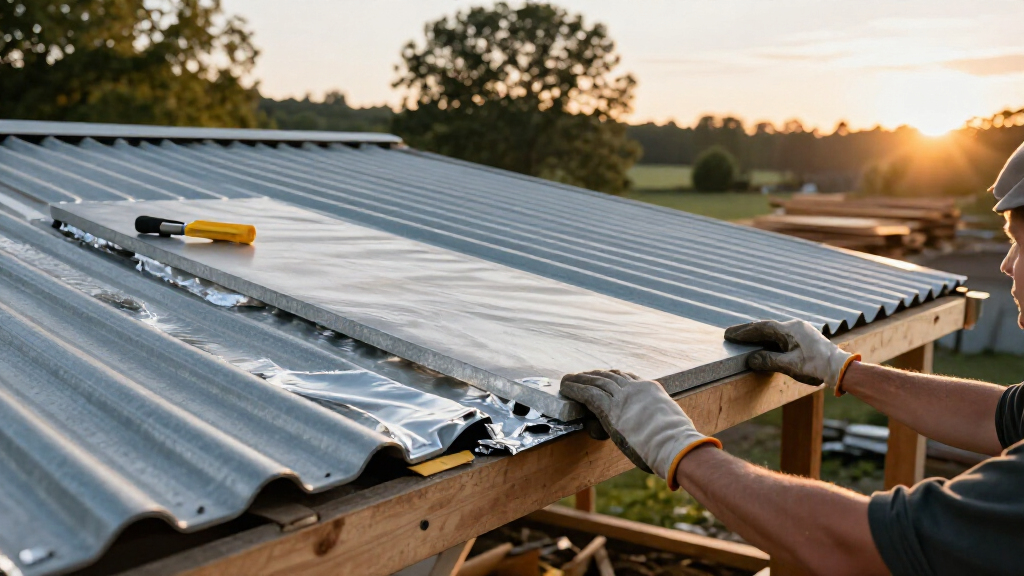
The best exterior insulation for metal roofs depends on whether you need radiant-heat control, a condensation blanket, or insulation that fits a particular roof assembly. My best overall pick is the BlueTex 2mm PRO for its wide coverage, tear-resistant backing, and reflective construction; US Energy Products Radiant Barrier stands out for large-area radiant-barrier use, while 2-inch PSK-faced fiberglass suits buyers who need a thicker condensation blanket. The tradeoff is that reflective rolls need an air space to work as radiant barriers, while thicker materials can take more planning and may not suit every exterior installation. Roof design, moisture management, and installation instructions matter as much as the product label. Read on for the full breakdown and guidance on matching insulation to your metal roof.

Get business pricing on tools and workshop supplies
- Business-only prices and quantity discounts
- Tax-exempt purchasing
- Multiple users, one account, clear invoices
Complete the kit

Key Takeaways
- BlueTex 2mm PRO leads for broad metal-building coverage: its 62-inch width and tear-resistant backing distinguish it from narrower, lighter-duty rolls.
- Reflective products are not interchangeable with bulk insulation: foil and bubble products target radiant heat, and their performance depends on an air space and the assembly around them.
- The 2-inch PSK-faced fiberglass fills a different need: it is the standout choice for buyers seeking a thicker condensation blanket rather than a thin reflective layer.
- Roll dimensions change job planning: the 700-square-foot BlueTex roll and 1,000-square-foot US Energy Products barrier suit larger areas, while 24-inch rolls such as SEALTECH are easier to handle in narrower sections.
- More layers or thickness do not automatically mean a better roof system: choose among single bubble, double bubble, foam core, and fiberglass based on climate, air gap, condensation risk, and installation method.


| exterior insulation for metal roof | Material | Thickness | Coverage | Dimensions |
|---|---|---|---|---|
| US Energy Products Radiant Bar | Metalized aluminum foil, Mylar, and nylon scrim | — | — | — |
| VEVOR Double Reflective Insula | Double reflective aluminum foil and EPE foam | 3.2 mm | — | 48 in x 50 ft |
| Vapor Barrier 6mm Metal Buildi | XPE foam with aluminum foil | 6 mm | 300 sq ft | — |
| US Energy Products 48" x 100′ | Double-bubble foil with waterproof white vinyl | — | 400 sq ft | — |
| Reflective Foam Core Insulatio | Polyethylene (PE) | 3 mm | 500 sq ft | 60 in x 100 ft |
| SmartSHIELD 5 mm Reflective Fo | Closed-cell polyethylene foam | 5 mm | — | 600 in L x 48 in W |
| EcoFoil Single Bubble Insulati | Foil/white facing | 3.175 mm (1/8 in) | 500 sq. ft. | — |
| Reflectix BP24025 24-Inch by 2 | Aluminum foil, polyethylene, bubble pack | 0.31 in | 7,200 sq. in. | 300 in L x 24 in W |
| 500 sqft NASA Tech Commercial | Aluminum | — | 500 sq. ft. | 4 ft x 125 ft |
| BlueTex 2mm PRO Metal Building | EPE foam with aluminum foil | 2 mm | 700 sq. ft. | — |
| 2" PSK Faced Fiberglass Insula | — | 2 inches | — | 48 inches x 52.5 feet |
| SmartSHIELD 5mm 24”x50ft R17 | Foil/foam core | 5 millimeters | 1,200 square feet | 600 inches long x 24 inches wide |
| EcoFoil Double Bubble Insulati | Polyethylene | 6.35 millimeters (1/4 inch) | 300 sq. ft. | — |
| SEALTECH 10mm Reflective Insul | Virgin polyethylene foam core with engineered foil layers | 10 millimeters | — | 24 inches x 25 feet |
More Details on Our Top Picks
US Energy Products Radiant Barrier Insulation 1000 sqft, Commercial Grade, Perforated, No Tear, Green Energy Reflective Insulation for Solar Attic, Roof, House Wrap
For a metal-roof project covering a broad, regular area, this roll’s 1,000-square-foot coverage and 250-foot length reduce the need to join multiple short sections. Its 99.7% reflective value is the highest stated figure among these five picks, making it a strong radiant-barrier option when the roof assembly has the air space the product needs to work as intended. Compared with the foam-core VEVOR roll, this is a much larger, foil-focused format rather than a compact layered product. The tradeoff is that it is perforated, so it should not be treated as a sealed vapor barrier, and careful detailing matters to limit unwanted air movement. The long, relatively heavy roll can also be awkward to position overhead; I’d favor it for planned, spacious installations over small patch jobs.
Pros:- 1,000 square feet of coverage in one long roll suits large roof runs.
- Listed 99.7% reflective value targets radiant heat transfer.
- Tear-resistant construction is suited to handling during installation.
- Perforated design and stated ASTM fire-safety compliance support roof and building-wrap applications.
Cons:- Perforations can allow air leakage and do not provide a sealed vapor barrier.
- The long, heavy roll may be difficult to handle overhead or in confined areas.
- Reflective barriers need the right air-space arrangement; the foil alone is not a substitute for a complete roof insulation assembly.
Best for: Roofers or building owners insulating large, accessible metal-roof areas who want a long reflective roll and can detail its perforations carefully.
Not ideal for: DIYers working alone in tight spaces or buyers who need a continuous air or vapor barrier without additional sealing.
- Coverage area:1,000 sq ft
- Roll dimensions:4 ft x 250 ft
- Material:Metalized aluminum foil, Mylar, and nylon scrim
- Reflective value:99.7%
- Weight:70 g/m²
- Construction:Perforated, tear-resistant
- Made in:USA
Our verdict“Choose this for broad, accessible roof areas where long-roll coverage matters more than a sealed foam-core layer.”
VEVOR Double Reflective Insulation Roll, Foam Core Radiant Barrier, 3.2 mm, 48 in x 50 ft
The VEVOR roll suits smaller roof sections or retrofit work where a foam core and reflective faces are more useful than a long foil-only sheet. Its 3.2 mm EPE layer adds a modest insulating component, while the manufacturer describes the assembly as combining radiant control and vapor control. That makes it a different proposition from the US Energy Products 1,000-square-foot radiant barrier, which prioritizes broad coverage and a higher stated reflectivity. VEVOR’s 48-inch-by-50-foot format is easier to cut into manageable sections, but the listed coverage figure is given as 2,400 square inches, not square feet, so buyers should verify the actual roll coverage before planning a roof. This is a thin layer, not a replacement for a properly specified roof insulation system, and the product data gives little detail on long-term durability.
Pros:- Double reflective foil faces pair with an EPE foam core.
- 3.2 mm thickness adds a foam layer beyond a foil-only radiant barrier.
- The 48-inch width and 50-foot length can be cut for smaller sections.
- The product is described as providing radiant, insulation, and vapor-control functions.
Cons:- Listed coverage of 2,400 square inches conflicts with the stated roll dimensions and should be clarified before purchase.
- At 3.2 mm, it is a thin layer and should not be mistaken for a complete roof insulation system.
- The product data provides limited information about long-term durability and exterior roof installation details.
Best for: DIY renovators insulating a modest metal-roof section who want a cuttable foam-core radiant layer and can confirm the needed coverage before ordering.
Not ideal for: Buyers covering a large roof or seeking a well-documented, long-term exterior roof assembly; the roll is relatively short and durability details are limited.
- Material:Double reflective aluminum foil and EPE foam
- Thickness:3.2 mm
- Dimensions:48 in x 50 ft
- Listed coverage:2,400 sq in
- Weight:4.2 lb
- Heat reflection:Over 95%, as described by the manufacturer
- Model number:EPE14-3
Our verdict“Pick VEVOR for a small, cut-to-fit job only after confirming its coverage and checking that its thin foam layer suits the roof assembly.”
Vapor Barrier 6mm Metal Building Foil and Foam Insulation, 62″ Wide, 300 sq ft Coverage
Metal roofs can face condensation concerns as well as radiant heat, and this product is the lineup’s clearest fit for buyers prioritizing moisture management. Its 6 mm XPE foam core and reflective foil provide a thicker layer than the 3.2 mm VEVOR roll, while the adhesive edge is intended to help join adjoining runs. That feature can reduce gaps, though the product description still recommends tape for stronger sealing, so I would not assume the edge alone creates a fully sealed assembly. The 62-inch width can cover more area per pass than the 48-inch US Energy Products roll, but its 300-square-foot coverage means more seams on a large roof. This makes it better suited to metal buildings, barns, and garages where condensation control is a stated goal than to buyers seeking a high-coverage radiant barrier alone.
Pros:- 6 mm XPE foam provides a thicker core than the VEVOR 3.2 mm roll.
- Designed to address moisture and condensation as well as radiant heat.
- 62-inch width covers a broad strip per pass.
- Adhesive edge can help align adjoining sections during installation.
Cons:- The 300-square-foot roll may require many joins on a large roof.
- Additional tape may be needed for reliable seam sealing.
- The product is positioned for metal-building applications, so its fit should be checked against the specific roof assembly.
Best for: Owners of metal garages, barns, or workshops who want a thicker foam-and-foil layer with moisture control as part of the roof plan.
Not ideal for: Buyers insulating very large roofs who want minimal seams, or anyone expecting the adhesive edge to replace careful taping and assembly detailing.
- Material:XPE foam with aluminum foil
- Thickness:6 mm
- Width:62 in
- Coverage:300 sq ft
- Color:White and reflective foil
- Application:Moisture prevention and thermal insulation
- Included feature:One roll with adhesive edge
Our verdict“Choose this for a metal outbuilding where condensation control and a thicker foam core matter more than maximum roll coverage.”
US Energy Products 48″ x 100′ Double Bubble Reflective Foil Insulation Thermal Barrier R8
This double-bubble roll is a balanced choice for buyers who want a foil-faced layer with a protective white-vinyl backing rather than a bare reflective sheet. At 400 square feet, it covers more area than the 300-square-foot 6 mm metal-building barrier, though the latter is thicker and more explicitly focused on condensation control. The US Energy Products roll is listed for roofs and metal buildings as well as interior spaces, and its puncture-resistant construction may be helpful during handling and installation. The manufacturer states that it reflects up to 97% of radiant heat, below the 99.7% listed for the 1,000-square-foot perforated US Energy Products barrier. That larger roll offers more coverage, while this one adds a double-bubble structure and waterproof vinyl face. Its 100-foot length still takes room to unroll, and the product data does not specify a thickness.
Pros:- Double-bubble construction adds a layered structure beyond a single foil sheet.
- White vinyl backing is described as waterproof.
- Puncture-resistant construction can help withstand installation handling.
- 400-square-foot coverage is greater than the 300-square-foot metal-building barrier.
Cons:- No thickness is provided in the supplied specifications.
- Its stated reflectivity is lower than the 99.7% listed for the larger US Energy Products radiant barrier.
- The 100-foot roll can be cumbersome to position and cut for small projects.
Best for: Homeowners or small commercial crews who need a mid-size reflective roll with a durable backing for a metal-roof project.
Not ideal for: Buyers who need a specified foam thickness or want the longest roll and highest stated reflectivity in this group.
- Size:48 in x 100 ft
- Coverage:400 sq ft
- Material:Double-bubble foil with waterproof white vinyl
- Reflective coating:Aluminum foil
- Bubble layers:Double bubble
- Reflectivity:Up to 97%, as described by the manufacturer
- Durability:Puncture-resistant
Our verdict“Choose this mid-size double-bubble roll when backing durability matters more than a specified thickness or maximum reflective value.”
Reflective Foam Core Insulation, 500 sqft, 60″ x 100ft Roll
The 60-inch width is the main practical distinction here: it covers a wider strip per pass than the 48-inch US Energy Products double-bubble roll, which can mean fewer lengthwise joins across a roof. With 500 square feet of coverage, it also offers more area than that 400-square-foot option. The 3 mm polyethylene core is thinner than the 6 mm metal-building barrier, so this pick favors broad, lightweight coverage over a thicker foam layer aimed at condensation control. Its waterproof, vapor-resistant construction and stated resistance to insects and rodents may suit exposed or moisture-prone applications, but the supplied data does not give a detailed R-value or long-term durability record. Installation also requires staples or adhesive. I would treat its fire-rated claim as a product attribute to verify against the requirements for the specific roof assembly, not as a substitute for code review.
Pros:- 60-inch width can reduce the number of lengthwise seams compared with 48-inch rolls.
- 500-square-foot coverage exceeds the US Energy Products 400-square-foot double-bubble roll.
- Waterproof and vapor-resistant construction is suited to moisture-conscious applications.
- Lightweight polyethylene core is described as easy to cut and handle.
Cons:- At 3 mm thick, it is thinner than the 6 mm metal-building barrier.
- The supplied specifications do not give a numeric R-value or detailed long-term durability information.
- Staples or adhesive are required for installation.
Best for: Roof installers or property owners covering wide, straightforward roof runs who want a lightweight, moisture-resistant reflective layer.
Not ideal for: Buyers needing a thicker foam core, a clearly documented R-value, or an installation system that does not rely on staples or adhesive.
- Material:Polyethylene (PE)
- Thickness:3 mm
- Dimensions:60 in x 100 ft
- Coverage:500 sq ft
- Reflective surface:Metalized film
- Waterproof:Yes
- Vapor barrier:Yes
- Insect and rodent resistance:Yes
Our verdict“Pick this for wide roof runs where moisture resistance and fewer seams matter more than foam thickness or a documented R-value.”
SmartSHIELD 5 mm Reflective Foam Core Insulation Roll, 48 in x 50 ft
For a metal roof assembly where radiant reflection is only part of the goal, I’d shortlist this 5 mm closed-cell foam roll for its combination of foil, white film, and stated vapor- and sound-barrier functions. The white outer face may also suit installations where a bright finish is preferred. Compared with the BlueTex 2mm PRO, SmartSHIELD has a thicker foam core, while BlueTex offers a wider roll and tearproof woven backing that may be more forgiving during handling. SmartSHIELD’s claimed R-value of up to 15.67 needs careful interpretation: the listing says “up to,” and the installed assembly and air space affect performance. I’d choose it for a project that values multiple barrier functions, but not as a substitute for a specified roof system with independently verified thermal performance.
Pros:- 5 mm closed-cell polyethylene foam core
- Combines reflective, vapor-barrier, and sound-barrier functions
- White polyethylene film face does not require painting
- Product data describes it as non-toxic and non-irritating
Cons:- The stated R-value is an “up to” figure and may depend on installation
- A 48-inch width means more seams than BlueTex’s 62-inch roll
- Does not specify a tearproof woven backing or fire certification
Best for: Metal-roof DIYers seeking a foam-core roll with reflective, vapor-barrier, and sound-barrier functions in one material.
Not ideal for: Buyers who need a documented assembly-level R-value or a rugged woven backing; the stated R-value depends on installation, and BlueTex has tear-resistant backing.
- Material:Closed-cell polyethylene foam
- Thickness:5 mm
- Dimensions:600 in L x 48 in W
- Reflective surface:Engineered foil on one side
- Backing:White polyethylene film
- Radiant energy reflected:Up to 95%
- R-value:Up to 15.67 with one layer
- Items included:1 roll
Our verdict“Choose SmartSHIELD when you want a thicker foam core and several barrier functions, but verify the installed assembly’s thermal rating before relying on its advertised R-value.”
EcoFoil Single Bubble Insulation Roll 48″ x 125′ (500 sq. ft.), 3.175mm Thick, White/Foil, Made-in-USA Reflective Foil Insulation
The EcoFoil single-bubble roll favors easy handling and broad coverage over a substantial insulating core. Its 500 sq. ft. coverage and 21-pound listed weight make it a practical option for installers who want a light material across a large roof area, while the stated 96% radiant-heat reflectivity targets solar gain rather than replacing a thicker insulation system. Compared with the Reflectix BP24025, EcoFoil covers far more area per roll; Reflectix has a thicker listed profile, though its roll is only 24 inches wide. EcoFoil’s own guidance flags snowy or icy climates as a weaker fit, and the vapor-barrier function depends on careful taping at seams. I’d favor it for warm-region metal buildings, not for buyers trying to address severe cold or maximize conductive insulation.
Pros:- 500 sq. ft. coverage in a single roll
- Listed 96% radiant-heat reflectivity
- Lightweight at 21 pounds and described as easy to handle
- Can serve as a vapor barrier when seams are properly sealed
Cons:- Product data identifies snowy and icy climates as a poor fit
- Vapor-barrier performance depends on taped seams
- 3.175 mm thickness may not meet demanding insulation needs
Best for: Warm-climate metal-roof owners who want a lightweight, wide-coverage radiant barrier and can tape seams carefully.
Not ideal for: Owners in snowy or icy regions, or anyone needing substantial insulation for extreme temperatures; the product data says the single-bubble thickness may be insufficient.
- Width:48 in
- Length:125 ft
- Coverage:500 sq. ft.
- Thickness:3.175 mm (1/8 in)
- Reflectivity:96%
- Material:Foil/white facing
- Weight:21 lb
- Made in:USA
Our verdict“Pick EcoFoil for light, broad radiant-barrier coverage in a warm climate, but choose a thicker or more complete insulation system for cold-weather performance.”
Reflectix BP24025 24-Inch by 25-Feet Bubble Pack Insulation
Reflectix’s strongest case here is its 24-inch roll width: it can be easier to fit around narrow roof bays or retrofit areas than the 48- and 62-inch rolls in this group. Its seven-layer foil-and-bubble construction is listed at 0.31 inches thick, giving it a more substantial profile than EcoFoil’s single-bubble material. The tradeoff is coverage: this roll measures only 24 inches by 25 feet, so a larger roof will require more runs and more seam work. The listing cites 97% radiant-heat reflection, but it also cautions that performance depends on application and climate, and some installations may need an additional vapor barrier. I’d pick it for smaller, constrained sections rather than a full roof, where BlueTex’s 700 sq. ft. coverage is a more efficient fit.
Pros:- Narrow 24-inch width can fit constrained sections
- Seven-layer aluminum foil and bubble-pack construction
- Listed 97% radiant-heat reflection
- Lightweight and fiber-free
Cons:- Limited roll coverage compared with EcoFoil and BlueTex
- Bubble layers can tear if handled roughly
- Some installations may need an additional vapor barrier
Best for: DIYers insulating narrow roof bays, small metal structures, or retrofit areas where a 24-inch roll is easier to place.
Not ideal for: Buyers covering a large uninterrupted roof or seeking a single-roll solution; its 25-foot length and 24-inch width create more seams and limited coverage.
- Brand:Reflectix
- Model number:BP24025
- Material:Aluminum foil, polyethylene, bubble pack
- Thickness:0.31 in
- Dimensions:300 in L x 24 in W
- Coverage:7,200 sq. in.
- Weight:16 oz
- Radiant heat reflection:97% as stated in product data
Our verdict“Choose Reflectix for small or narrow roof sections where its compact width helps, not for covering a large roof efficiently.”
500 sqft NASA Tech Commercial Grade Reflective Insulation – White, Non-Perforated, Green Energy Radiant Barrier for Attic and House Wrap
This NASA Tech roll stands apart for buyers prioritizing stated standards and large-area coverage over a foam or bubble core. The listing describes double-sided metallized aluminum film, a non-perforated construction, and compliance with several ASTM and IEEE standards; that documentation may make it a stronger candidate for a project with specification requirements than the more basic EcoFoil single-bubble roll. Its 99% radiant-heat reflection claim is notable, but reflective performance alone does not establish the full thermal performance of a metal-roof assembly. The solid, non-perforated sheet may also be less flexible to handle, and the listing notes it can be heavy for some DIY installers. Compared with BlueTex, it lacks the stated foam core and tearproof woven backing, so I’d reserve it for projects where standards documentation matters more than a forgiving install.
Pros:- 500 sq. ft. roll for broad coverage
- Double-sided metallized aluminum film
- Non-perforated construction
- Lists ASTM C1313, ASTM E-86, ASTM 96-00, and IEEE-299
Cons:- Non-perforated sheet may be less flexible during installation
- Product data describes it as heavy for some DIY applications
- No foam core or assembly-level R-value is specified
Best for: Contractors or building owners seeking a non-perforated radiant barrier with listed ASTM and IEEE standards for a roof or commercial project.
Not ideal for: Solo DIY installers who need a flexible, rugged foam-backed roll, or buyers seeking an assembly-level R-value; neither is established by the supplied product data.
- Coverage:500 sq. ft.
- Dimensions:4 ft x 125 ft
- Material:Aluminum
- Color:White
- Perforation:Non-perforated
- Radiant heat reflection:99% as stated in product data
- Certifications:ASTM C1313, ASTM E-86, ASTM 96-00, IEEE-299
Our verdict“Choose NASA Tech when listed standards and a solid radiant-barrier sheet matter more than foam-core cushioning or easy solo handling.”
BlueTex 2mm PRO Metal Building Insulation – EPE Foam with Aluminum Foil & Tearproof Backing, Reflects 97% Radiant Heat, 62″ Wide, 700 sq ft
BlueTex is the most purpose-built choice in this group for metal buildings: its tearproof woven backing and puncture-resistant construction address the rough handling that can happen during roof retrofits. A 62-inch width and 700 sq. ft. coverage can also reduce the number of runs and seams compared with SmartSHIELD’s 48-inch, 50-foot roll. Its 2 mm EPE core is thinner than SmartSHIELD’s 5 mm foam, so buyers seeking a thicker cushioning layer may prefer SmartSHIELD instead. BlueTex states 97% radiant-heat reflection and vapor-barrier properties, but the product requires a proper air gap for best performance, and no fire resistance or additional certifications are listed in the supplied data. I’d choose it when durability and coverage lead the decision, while checking roof-system and fire requirements before specifying it.
Pros:- Tearproof woven backing and puncture-resistant construction
- 62-inch width and 700 sq. ft. coverage can reduce seams
- 2 mm EPE foam core with aluminum foil
- Listed 97% radiant-heat reflection and vapor-barrier properties
Cons:- Requires a proper air gap for maximum effectiveness
- Thinner foam core than SmartSHIELD’s 5 mm material
- Product data does not list fire resistance or additional certifications
Best for: Metal-building owners or retrofit crews who need broad coverage and a more tear-resistant roll for installation around metal structures.
Not ideal for: Buyers requiring a thicker foam core, documented fire resistance, or a product specified without an air gap; its stated performance depends on correct installation.
- Material:EPE foam with aluminum foil
- Thickness:2 mm
- Width:62 in
- Length:135.5 ft
- Coverage:700 sq. ft.
- Color:White
- Radiant heat reflection:97%
- Features:Vapor barrier, tearproof, puncture resistant
Our verdict“Pick BlueTex for a durable, wide-coverage metal-building retrofit, provided you can install it with the required air gap and confirm applicable fire requirements.”
2″ PSK Faced Fiberglass Insulation 48″ x 52.5′, Condensation Blanket for Metal Buildings
For a metal roof where moisture management matters as much as temperature control, this 2-inch fiberglass blanket with PSK facing is the most targeted choice in this group. Its facing is intended to act as a vapor barrier, helping limit condensation that can damage a pole barn or metal building interior. Unlike the foil-and-foam rolls such as SmartSHIELD 5mm, this product uses fiberglass rather than a thin reflective core, making it a different fit for buyers seeking blanket-style insulation. The tradeoff is a shorter, narrower coverage specification of 24.5 square feet, so large roofs may require careful quantity planning. The listing also gives no fire rating or insulation R-value, leaving less technical detail for buyers comparing performance or code requirements.
Pros:- PSK facing is intended to help control vapor and condensation.
- Two-inch fiberglass construction provides thermal insulation.
- Designed for metal buildings, pole barns, walls, and ceilings.
- Blanket format suits buyers seeking an alternative to thin reflective rolls.
Cons:- Listed coverage is only 24.5 square feet, limiting area per item.
- No fire rating, certification, or R-value is provided in the product data.
- Fiberglass blanket installation may be less convenient than lightweight reflective rolls.
Best for: Metal-building and pole-barn owners who want faced fiberglass for roof or ceiling areas where condensation control is a priority.
Not ideal for: Buyers insulating large roof areas who need broad roll coverage, or projects that require a stated fire rating, certification, or R-value.
- Insulation type:Fiberglass
- Facing:Polypropylene Scrim Kraft (PSK)
- Thickness:2 inches
- Dimensions:48 inches x 52.5 feet
- Listed coverage:24.5 sq ft
- Item count:1
Our verdict“Choose this blanket for a metal-building roof where faced fiberglass and condensation management matter more than extensive roll coverage or detailed performance ratings.”
SmartSHIELD 5mm 24”x50ft R17 Reflective Insulation Roll, Foam Core Radiant Barrier, Thermal Insulation – FOIL/FOIL
SmartSHIELD’s 1,200-square-foot roll is the strongest fit here for buyers covering a broad commercial or industrial roof with a reflective barrier. Its foil-faced foam core is described as reflecting 95% of radiant heat, while the vapor-barrier function targets moisture concerns common beneath metal roofing. Compared with the 2-inch PSK fiberglass blanket, SmartSHIELD covers far more area per roll and is easier to cut to fit, but it is only 5 millimeters thick and should not be treated as equivalent to a thick insulation blanket. The product data lists ASTM C1313 and a Class A fire rating, useful details absent from several alternatives, though buyers still need to check suitability for their assembly and local requirements. Its commercial-scale roll may be awkward for small jobs, and careful handling is advised.
Pros:- Listed coverage of 1,200 square feet suits large projects.
- Foil surfaces are described as reflecting 95% of radiant heat.
- Product data cites ASTM C1313 and a Class A fire rating.
- Foam-core roll is described as tear- and puncture-resistant and easy to cut.
Cons:- At 5 millimeters thick, it is not a substitute for a thicker insulation blanket.
- Large roll size may be cumbersome for small residential projects.
- The product description advises careful handling to avoid installation damage.
Best for: Commercial and industrial building owners covering large roof or wall areas who want a reflective, vapor-barrier roll with stated standard and fire-rating information.
Not ideal for: Homeowners with a small repair area or buyers seeking thick blanket insulation rather than a thin radiant barrier.
- Material:Foil/foam core
- Facing:Foil/foil
- Thickness:5 millimeters
- Dimensions:600 inches long x 24 inches wide
- Coverage:1,200 square feet
- Radiant heat reflection:95%
- Standard:ASTM C1313
Our verdict“Pick SmartSHIELD for large roof areas where reflective coverage and listed compliance details matter more than blanket thickness or compact handling.”
EcoFoil Double Bubble Insulation Roll 48″ x 75′ (300 sq. ft.), 6.35mm Thick, Made-in-USA Reflective Foil Insulation for Cold & Warm Climates
For a DIY metal-roof project where manageable roll dimensions matter, EcoFoil Double Bubble offers a practical middle ground: 300 square feet of coverage, a 48-inch width, and a lightweight roll listed at 22 pounds. The product claims 96% radiant heat reflectivity and suitability for warm and cold climates, making it more adaptable on paper than the narrow 24-inch SEALTECH roll. It is also wider than SmartSHIELD’s 24-inch roll, which can mean fewer lengthwise runs across a roof. The compromise is modest 6.35-millimeter thickness; it is a reflective layer, not a deep insulation blanket like the 2-inch PSK fiberglass option. The description also says sealing may be needed for vapor-barrier performance, so roofers should plan the seams rather than assume the roll alone provides a continuous moisture barrier.
Pros:- 48-inch width can reduce the number of runs compared with 24-inch rolls.
- Listed 300-square-foot coverage fits moderate projects.
- Product claims 96% radiant heat reflectivity for warm and cold climates.
- Listed weight of 22 pounds supports more manageable handling than very large commercial rolls.
Cons:- At 6.35 millimeters thick, it offers less depth than the 2-inch PSK fiberglass blanket.
- Vapor-barrier performance may depend on properly sealing seams.
- Product data does not state a fire rating or named insulation standard.
Best for: DIY builders insulating a pole barn, home, or outbuilding roof who want a lightweight, 48-inch-wide reflective roll with moderate coverage.
Not ideal for: Buyers needing thick insulation, a clearly specified fire rating, or a vapor barrier that does not depend on careful seam sealing.
- Material:Polyethylene
- Construction:Double bubble reflective foil insulation
- Width:48 inches
- Length:75 feet
- Coverage:300 sq. ft.
- Thickness:6.35 millimeters (1/4 inch)
- Radiant heat reflectivity:Up to 96%
- Weight:22 pounds
Our verdict“Choose EcoFoil for a moderate DIY roof project when wide, manageable reflective coverage matters more than thick insulation or fully specified moisture and fire performance.”
SEALTECH 10mm Reflective Insulation Roll, 24 in x 25 ft
SEALTECH’s 10-millimeter foam core is thicker than the 5-millimeter SmartSHIELD and 6.35-millimeter EcoFoil, giving it a more substantial profile among these reflective rolls. The product is described as reflecting up to 95% of radiant energy, resisting moisture, and having fire-retardant properties—useful attributes for buyers weighing a roof-layer product for a garage, warehouse, or other metal-clad space. Its 24-inch width can suit narrow roof sections or limited installation areas, though it means more seams than EcoFoil’s 48-inch roll. Coverage is the main concern: the listing states 600 square inches, which does not match the stated 24-inch by 25-foot dimensions. I would verify actual coverage with the seller before planning a roof order. Soundproofing is also mentioned without quantified performance.
Pros:- 10-millimeter thickness exceeds the listed thickness of the other reflective rolls in this batch.
- Product description claims up to 95% radiant energy reflection.
- Moisture resistance is specified, which suits humid roof spaces.
- Fire-retardant properties are listed.
Cons:- Listed coverage of 600 square inches conflicts with the stated 24-inch by 25-foot dimensions.
- The 24-inch width can require more seams than EcoFoil’s 48-inch roll.
- Soundproofing and fire-retardant performance are not quantified in the supplied data.
Best for: Buyers insulating a small roof section, garage, or outbuilding who prioritize a thicker reflective foam core and moisture resistance.
Not ideal for: Anyone planning a large roof installation who needs dependable coverage figures, or buyers who require quantified soundproofing or documented fire-test details.
- Brand:SEALTECH
- Model:ST-302-24X25
- Thickness:10 millimeters
- Dimensions:24 inches x 25 feet
- Listed coverage:600 square inches
- Material:Virgin polyethylene foam core with engineered foil layers
- Radiant energy reflection:Up to 95%
- Moisture resistance:Yes
- Fire-retardant properties:Listed
Our verdict“Consider SEALTECH for a limited roof area where its thicker reflective core appeals, but verify the coverage discrepancy before buying for a larger installation.”
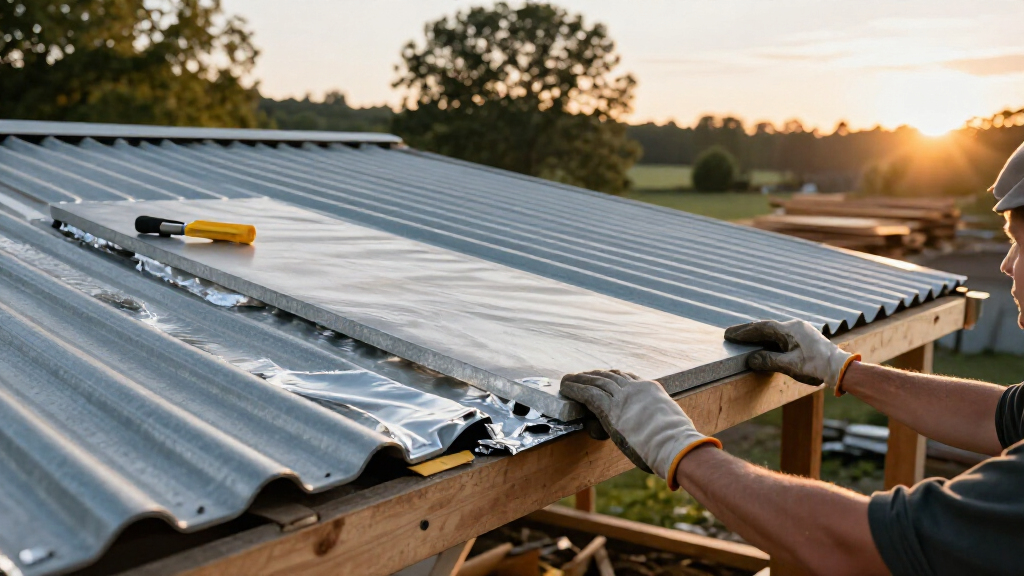
How We Picked
I compared the 14 listed products as components for metal-roof projects, not as interchangeable insulation systems. The main criteria were construction type, stated thickness and coverage, roll width, facing and backing durability, and whether the product’s format appeared suited to broad roof areas or narrower installation zones. I also separated radiant barriers from condensation blankets: reflective surfaces work through radiant heat control when paired with the right air space, while fiberglass offers a different kind of thermal layer.
The ranking favors products with a clear fit for common metal-roof needs and useful job-scale dimensions, while recognizing that no roll can compensate for a poorly planned roof assembly. BlueTex ranks first for its combination of wide coverage and tear-resistant backing; the US Energy Products radiant barrier earns a strong place for large-area reflective use, and the PSK-faced fiberglass ranks as a distinct pick for condensation-control needs. Smaller rolls and thinner single-bubble options rank lower for broad coverage, but can still make sense for limited areas or buyers prioritizing manageable handling. Product titles and listed specifications do not establish code compliance, installed R-value, or suitability for every exterior roof detail, so verify manufacturer instructions and project requirements before purchase.
Factors to Consider When Choosing Best Exterior Insulation For Metal Roofs
Choosing insulation for a metal roof starts with the roof assembly, not the roll label. I would first determine where the material will sit, how moisture will escape, and whether the design includes the air space a reflective layer needs. These broader checks can prevent a product that looks suitable on paper from causing installation trouble or delivering less benefit than expected.
Match the Material to the Kind of Heat Loss You Need to Address
Reflective foil and bubble products mainly target radiant heat transfer; they are not automatically substitutes for thick conventional insulation. Foam-core rolls add a low-profile layer, while fiberglass blankets provide a bulk-insulation approach and can also serve condensation-control roles in metal buildings. A common mistake is comparing products by a claimed R-value alone without checking how that figure was measured or whether it applies to the intended installation. Ask whether the roof’s main issue is summer radiant gain, winter heat loss, surface condensation, or a combination. If the answer is more than one, the roof may need a layered assembly rather than one roll expected to do every job.
Plan the Air Space and Roof Assembly Before Choosing Reflective Foil
A reflective surface needs an adjacent air space to reduce radiant heat transfer; pressed tightly against another surface, it cannot deliver the same radiant-barrier effect. That requirement can affect purlin layout, spacer depth, attachment details, and the order of roofing layers. Do not assume that every exterior application creates the right gap simply because the product is called reflective insulation. Check the manufacturer’s instructions for which side faces the air space and how seams should be treated. If your roof design leaves no suitable air gap, compare a different insulation approach instead of forcing a radiant product into an unsuitable assembly.
Treat Condensation Control as a Moisture-Management Problem
Metal roofs can develop condensation when warm, moisture-laden air reaches a cold surface, so insulation selection should account for vapor movement and ventilation. A vapor barrier or condensation blanket may help in a planned assembly, but placing a low-permeance layer on the wrong side can trap moisture inside the roof build-up. Consider indoor humidity, climate, roof slope, and whether the building is heated or cooled through the year. Pay attention to laps, penetrations, eaves, and ridge details, since gaps at those points can undermine otherwise sound material choices. For occupied or high-humidity buildings, have the full assembly reviewed rather than relying on a roll description to answer moisture questions.
Size Coverage Around Seams, Openings, and Installation Access
Nominal square footage is only a starting point: overlaps, cuts, valleys, skylights, vents, and roof edges reduce usable coverage. Wider rolls can mean fewer seams across large uninterrupted spans, while 24-inch formats may be easier to position in confined areas or between framing members. Before ordering, measure the actual roof surface and sketch where each run will begin and end. Check whether the stated dimensions describe the roll itself or usable coverage after overlap. A small allowance for cuts is sensible, but buying excess material without a layout can leave you with awkward remnants and unnecessary handling.
Balance Durability Against Weight, Thickness, and Attachment
Exterior roof materials face wind, handling, fasteners, and potential abrasion during installation, so backing strength and attachment method deserve attention alongside thermal claims. A tear-resistant backing can be useful on a large job where installers need to pull material across framing, while a thicker roll may be harder to fit around tight details. Check whether the product is designed for the exposure and location in your roof assembly; not every reflective roll is a finished weatherproof layer. Confirm fastening guidance and compatibility with roofing components before installation. Paying more for heavier construction makes sense when it addresses a real handling or durability need, not simply because the product is thicker.
Compare Specifications Without Treating Labels as Guarantees
Terms such as “R-value,” “radiant barrier,” and “commercial grade” can describe different test conditions and product constructions. Compare like with like: thickness, layers, facing, coverage, and installation requirements should all be visible in the documentation. Ask for test methods and assembly details when a performance claim would affect code compliance or energy calculations. Also check fire performance, local building requirements, and whether the product is approved for the planned use. If documentation is vague, treat that uncertainty as a reason to verify suitability before committing to a full roof area.
Frequently Asked Questions
Can I install reflective insulation directly against a metal roof?
That depends on the product and roof assembly, but a reflective barrier generally needs an air space next to its reflective face to reduce radiant heat transfer. Direct contact removes that intended gap and can limit the benefit associated with a radiant barrier. Check the product’s installation instructions for air-space requirements, orientation, and fastening details. Also confirm whether the roll is intended for the exterior, underside, or another position in the assembly. If the roof design does not provide the required space, choose a system designed for that configuration rather than relying on the product name.
Should I choose a reflective roll or a fiberglass condensation blanket?
Choose based on the problem and the assembly, not on a simple thickness comparison. Reflective rolls are aimed at radiant heat control and often need an air gap, while PSK-faced fiberglass is a thicker blanket-style option that can address a different mix of thermal and condensation concerns. Neither choice automatically solves moisture problems without suitable ventilation, vapor control, and detailing. Review the building’s climate, indoor humidity, heating and cooling pattern, and roof structure. If the building has high moisture loads or a complicated roof build-up, get assembly-specific advice before selecting either type.
How much extra material should I allow for a metal roof?
Start with measured roof area, then account for overlaps, edge details, penetrations, cuts, and any unusable remnants from the roll layout. The right allowance varies with roof geometry: a simple uninterrupted roof wastes less than one with many openings or changes in direction. Wider rolls can reduce the number of seams, but may be harder to manage around obstacles. Map the runs before ordering and use the manufacturer’s overlap guidance when calculating usable coverage. Do not assume the printed square-foot figure equals the area you can cover after installation details.
Does a higher stated R-value mean a product is better for my roof?
Not by itself. R-value claims may depend on test conditions, air spaces, and the full assembly, so values from different product types may not be directly comparable. A reflective product’s radiant-barrier benefit is also distinct from resistance to conductive heat flow. Check how the figure was determined and whether it applies to your planned installation, then compare it with the roof’s actual needs and local requirements. If you need a code or energy-performance calculation, use documentation accepted for that purpose rather than relying on a product title.
What should I verify before installing insulation on the exterior side of a metal roof?
Confirm that the product is intended for the planned location and exposure, and follow its requirements for air gaps, facing orientation, fastening, laps, and sealing. Review the roof’s drainage and moisture path so the added layer does not trap water or block ventilation. Check compatibility with roofing panels, underlayment, fasteners, and any required fire or building-code provisions. Exterior installation can expose material to weather and jobsite damage, so do not assume an interior-facing roll is suitable outside. When documentation does not clearly cover your assembly, ask the manufacturer or a qualified roofing professional before installation.
Conclusion
For most large metal-roof projects, I would start with the BlueTex 2mm PRO as the best overall choice because its wide roll, broad coverage, and tear-resistant backing suit substantial installations. For best value in large-area radiant-barrier use, compare the US Energy Products Radiant Barrier’s 1,000-square-foot format with the job’s air-gap and installation needs; it is not a stand-in for bulk insulation. My best premium-style pick for a thicker condensation blanket is the 2-inch PSK-faced fiberglass, provided the roof assembly calls for that material. Beginners handling smaller or awkward sections may prefer a manageable 24-inch roll such as SEALTECH 10mm, while buyers seeking a specific reflective foam-core format can compare SmartSHIELD and VEVOR by dimensions and installation fit. Before choosing any of them, confirm moisture control, air-space requirements, and suitability for the exact roof assembly.
Fall yard work Picks
leaf blowers
As an affiliate, we earn on qualifying purchases.