TL;DR

Get business pricing on tools and workshop supplies
- Business-only prices and quantity discounts
- Tax-exempt purchasing
- Multiple users, one account, clear invoices
A House Beautiful gardening report outlines seven ways homeowners can reuse raked leaves instead of bagging them for disposal. Options include mowing a thin layer into the lawn, protecting wildlife and plants, making mulch, improving garden beds, composting, and covering a path or edible plants.
House Beautiful has outlined seven ways to reuse fallen leaves instead of putting them in trash bags, offering homeowners options for lawn care, garden protection and composting. The recommendations include mowing over a thin layer of leaves, leaving whole leaves in garden beds for wildlife, and shredding leaves for mulch or soil improvement.
The guidance starts with the lawn: when the leaf layer is less than one inch thick, homeowners can let the leaves dry and mow over them to break them into smaller pieces. The report says a mulching mower is best; with a standard mower, a second pass at a right angle can help chop leaves further. The resulting pieces return organic material to the lawn, though the report does not quantify a specific nutrient benefit.
Other suggestions focus on preserving leaf cover. The report, citing the National Wildlife Federation, says whole leaves raked into garden beds can shelter insects, spiders, turtles, toads and small mammals through winter. It also notes that some moths and butterflies may remain in chrysalis form in underbrush. For plants, shredded leaves can be spread as mulch around shrubs and perennials: the report cites the University of Delaware for a recommended layer of two to three inches to suppress weeds and reduce soil erosion.
The remaining uses are to work leaves into garden soil, begin a compost pile, make a garden path, or insulate greens and herbs to extend harvesting. Shredded leaves are preferred for soil and paths; whole leaves can be slippery and may mat together. For compost, the report recommends saving leaves as “browns” to balance green materials over the growing season. It also suggests a three- to five-inch covering around and over selected greens and perennial herbs, held in place with a wire cage.
Leaves Can Serve Several Yard Needs
Reusing leaves can reduce the amount of yard waste sent for disposal while putting material already on the property to work. Depending on where leaves are placed, they can provide winter cover for wildlife, reduce exposed soil around plants, or become part of a compost pile. Those are different uses, so homeowners may want to keep some leaves whole and shred others rather than treating every pile the same way.
The advice also offers a practical alternative to buying some garden materials. Shredded leaves can serve as mulch or path material, while leaves incorporated into compost can contribute brown material. The report does not provide cost estimates or compare results across climates, but it describes ways to make seasonal cleanup serve lawn and garden maintenance as well as waste reduction.
Location and quantity matter. The report’s lawn recommendation applies to a thin layer under one inch, while its mulch guidance calls for two to three inches around shrubs and perennials. A thick layer left on turf is not the same practice as a measured layer in a garden bed, and the article does not advise covering lawns with heavy, unshredded piles.
As an affiliate, we earn on qualifying purchases.
Seven Uses From Lawn to Compost
The House Beautiful report presents the ideas as alternatives to bagging autumn leaves for landfill disposal. Its seven approaches are: mow a light layer into the lawn; leave whole leaves in beds as wildlife cover; shred leaves for mulch; till them into garden beds; save them for compost; use shredded leaves on a path; and mound leaves around certain greens and herbs to extend the growing season.
Some recommendations are attributed to outside organizations. House Beautiful cites the National Wildlife Federation for the wildlife-cover advice and the University of Delaware for the two- to three-inch mulch layer. The report also says local governments may offer leaf and yard-debris collection, with some municipalities turning collected material into compost later made available to residents. That service varies by location and should be checked with the local municipality.
“A two- to three-inch layer is sufficient to keep down weeds and reduce soil erosion.”
— House Beautiful, citing the University of Delaware
As an affiliate, we earn on qualifying purchases.
Local Conditions Shape the Advice
The report is a practical gardening guide, not a controlled comparison of the seven methods. It does not establish how much each approach improves soil or plant health, how quickly leaves decompose in different conditions, or which method works best in every climate. The suggested practices may need adjustment for local weather, plant type and yard conditions.
It also does not identify which municipalities offer leaf collection or compost distribution; those programs differ by location. The report’s advice about mowing depends on keeping the leaf layer below one inch, but it does not provide a full set of instructions for lawns with heavy leaf cover or explain how to handle leaves that are wet, diseased or contaminated. Readers should check local waste and gardening guidance when those circumstances apply.
As an affiliate, we earn on qualifying purchases.
Choose a Use During Cleanup
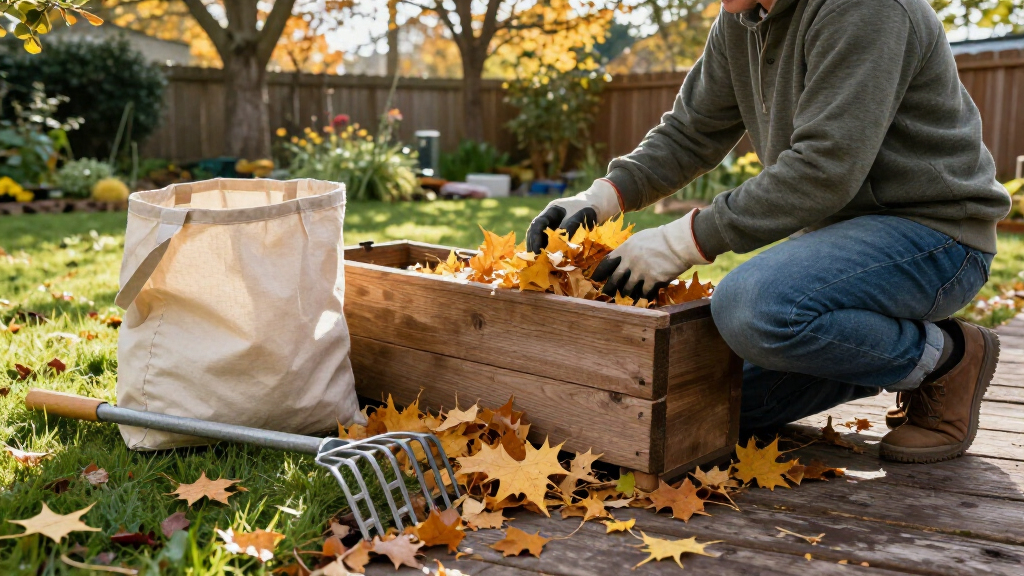
Homeowners can sort leaves as they rake: keep some whole for garden-bed cover, shred others for mulch or a path, and save a separate supply of dry leaves as compost browns. Before mowing, check the leaf depth and allow leaves to dry as much as possible. For municipal pickup or compost programs, check the local government’s current schedule and accepted materials.
As the season progresses, gardeners can monitor whether leaf layers remain in place and whether plants are receiving suitable cover. The House Beautiful report sets out these options but does not announce a new policy or program; the next steps depend on household needs and local services.
As an affiliate, we earn on qualifying purchases.
Key Questions
Can I mow fallen leaves into my lawn?
House Beautiful recommends mowing when the leaf layer is less than one inch thick. Let leaves dry first if possible; a mulching mower is preferred, while a standard mower may need a second pass at a right angle.
How deep should shredded-leaf mulch be?
The report cites the University of Delaware for a two- to three-inch layer around shrubs and perennials to help suppress weeds and reduce soil erosion.
Should leaves be shredded before using them?
Shredded leaves are recommended for mulch, garden beds and paths. The report says whole leaves can be slippery on paths and may mat down. Whole leaves are suggested for garden beds where they can provide winter cover for wildlife.
Can leaves go into a compost pile?
Yes. The report describes leaves as “browns” and recommends saving them to balance green materials in a compost pile over the growing season. A pile can be made in a yard corner or in a simple enclosure.
What if I do not have room to compost leaves?
House Beautiful suggests checking with the local municipality. Some towns and cities collect leaves and yard debris and turn them into compost, but availability and collection rules vary by location.
Source: rss
Fall yard work Picks
leaf blowers
As an affiliate, we earn on qualifying purchases.