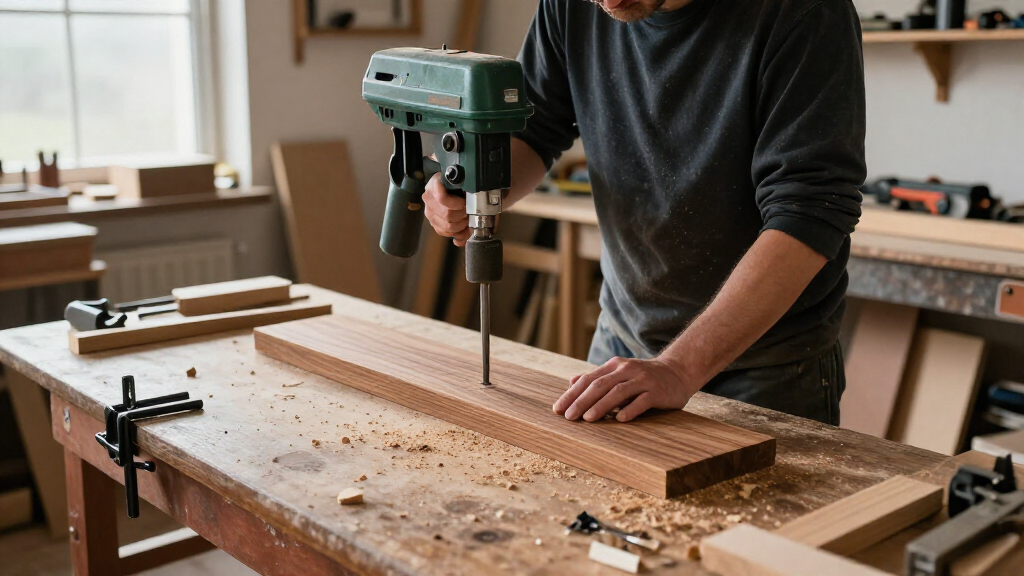
Among these benchtop drill presses, I’d put the JET JWDP-12 first for its 12-inch capacity, variable speed, and digital RPM readout, which make it the most adaptable choice for varied work. The WEN DP1263V is a strong alternative for shoppers seeking a 12-inch variable-speed machine, while the compact WEN 4206T keeps things straightforward for smaller projects and workspaces. The main tradeoffs are capacity versus footprint, variable-speed convenience versus simpler fixed-speed controls, and extra features versus ease of use. A larger swing does not automatically mean better accuracy or a better fit for your bench. Read on for the full breakdown and guidance on matching a press to your materials, projects, and available space.

Get business pricing on tools and workshop supplies
- Business-only prices and quantity discounts
- Tax-exempt purchasing
- Multiple users, one account, clear invoices
Complete the kit

Key Takeaways
- The JET JWDP-12 leads this lineup for buyers who can use its 12-inch capacity and want variable speed with a digital RPM readout.
- Several 12-inch options fill different roles: WEN, VEVOR, and BUCKTOOL models vary in controls and stated power, so compare their specific configurations rather than choosing by swing alone.
- Variable speed is most useful when work changes often; fixed-speed models can suit repeat tasks if you are comfortable changing belt positions.
- The WEN 4206T and the 8-inch models favor compact, simpler setups over the reach and flexibility of larger presses.
- Laser alignment and work lights aid setup, but they do not replace careful clamping or checking that the table and workpiece are square to the bit.


| benchtop drill presse | Motor | Swing | Speed range | Model |
|---|---|---|---|---|
| QD-KYOHO 10-Inch Variable-Spee | 6.2 A; 400 W maximum | — | 50–3000 RPM, stepless | — |
| SKIL 6.2-Amp 10-Inch 5-Speed B | 6.2 A induction motor | — | — | DP9505-00 |
| WEN 2.3-Amp 8-Inch 5-Speed Cas | 2.3 A induction motor | 8 inches | — | 4206T |
| WEN DP1062V 10-Inch Variable-S | 6.2-amp induction motor | 10 inches | 530–3100 RPM | DP1062V |
| JET JWDP-12 12-Inch Benchtop D | 1/2 HP, 115 V, single-phase; 5 A | 12 inches | 530–3100 RPM; adjustable while running | JWDP-12 (716000) |
| WEN 12-Inch Variable-Speed Ben | 6.2-amp induction motor | 12 inches | 580–3,100 RPM | — |
| JET JWDP-10 10-Inch Benchtop D | — | 10 inches | 630–3,300 RPM | — |
| VEVOR 12-Inch Variable-Speed B | 5 A | 12 inches | 580–3,200 RPM | DP12VL |
| VEVOR 10-Inch Benchtop Drill P | 3.2 A induction motor | 10 inches | — | DP1006L |
| VEVOR 8-Inch Benchtop Drill Pr | 2.5 A induction motor | 8 inches | 750–3,200 RPM | DP8 |
| BUCKTOOL 12-Inch Benchtop Dril | 6.2 A, 3/4 HP | 12 in | 580–3200 RPM | DP12VL |
| VEVOR 12-Inch Benchtop Drill P | — | 12 in | 530–3140 RPM | 1216BVS |
| VEVOR 10-Inch Benchtop Drill P | 0.8 HP (600 W), 5 A | 10 in | 530–3140 RPM | 1016BVS |
| QD-KYOHO RB14-VS 8-Inch Bencht | — | — | 350–2500 RPM | RB-14 |
| 8-Inch 5-Speed Benchtop Drill | 2.5 A | 8 in | — | — |
More Details on Our Top Picks
QD-KYOHO 10-Inch Variable-Speed Benchtop Drill Press
I’d choose the QD-KYOHO when matching speed to different bits and materials matters more than having a preset speed menu. Its stepless 50–3000 RPM range reaches lower speeds than the SKIL DP9505-00, which may suit slower drilling tasks, while its 5/8-inch chuck accepts larger-shank bits than the SKIL’s 1/2-inch chuck. The cast-iron base and table add useful stability, and the laser, LED light, and power-off shield bring setup and safety aids together.
The tradeoff is less about features than footprint and handling: its substantial cast-iron construction is not convenient to move, and the cord requires a nearby outlet. I’d also favor the WEN DP1062V if a digital RPM display matters; the QD-KYOHO offers stepless control but no listed readout. Its 2-3/8-inch spindle travel gives it more reach per plunge than that WEN’s two inches.
Pros:- Stepless 50–3000 RPM control offers a wider and lower speed range than the SKIL DP9505-00’s five settings.
- 5/8-inch chuck accommodates larger-shank bits than the 1/2-inch chuck on the SKIL and WEN DP1062V.
- Cast-iron table and base help steady the work during drilling.
- Laser, LED work light, power-off safety shield, and three-year warranty are included.
Cons:- Heavy cast-iron construction makes repositioning difficult.
- Corded operation requires access to a 120 V outlet.
- No digital RPM readout is listed, unlike the WEN DP1062V.
Best for: Woodworkers or hobby fabricators who want a broad, continuously adjustable speed range, a 5/8-inch chuck, and a drill press that can stay in one workshop spot.
Not ideal for: People who need to move their press between work areas or want a digital display to confirm spindle speed; its cast-iron build is heavy, and no RPM readout is listed.
- Swing capacity:10 inches
- Speed range:50–3000 RPM, stepless
- Motor:6.2 A; 400 W maximum
- Chuck size:5/8 inch
- Spindle travel:2-3/8 inches
- Table:8-11/16 × 8-11/16 inches; rotates 360° and tilts 45°
- Work aids:Laser guide, LED work light, and power-off safety shield
- Dimensions:20 × 11.4 × 31 inches
- Warranty:3 years
Our verdict“Pick the QD-KYOHO if you want fine, wide-ranging speed adjustment and a larger chuck in a press that can remain set up on a sturdy bench.”
SKIL 6.2-Amp 10-Inch 5-Speed Benchtop Drill Press with Laser Alignment and Work Light
The SKIL DP9505-00 is a practical choice for buyers who prefer a small set of defined speeds over stepless adjustment. Its five-speed setup, adjustable depth stop, laser alignment, and LED work light cover the basics for repeatable bench drilling without the digital speed controls found on the WEN DP1062V or JET JWDP-12. The table tilts up to 45 degrees in either direction, giving it useful flexibility for angled holes.
Compared with the QD-KYOHO, the SKIL gives up a larger 5/8-inch chuck and a lower minimum speed, but its listed 1/2-inch drilling capacity in both wood and metal gives buyers a clear limit to plan around. That modest capacity is also the main reason I wouldn’t rank it as a heavier-duty option. Choose it for routine, controlled work; skip it if your projects call for larger holes or finer speed matching.
Pros:- Five defined speeds provide a straightforward way to adapt spindle speed to different tasks.
- Adjustable depth stop helps repeat hole depth across multiple pieces.
- Laser alignment and LED work light assist with positioning and visibility.
- Table tilts up to 45 degrees left or right.
Cons:- Listed drilling capacity is limited to 1/2 inch in both wood and metal.
- The 1/2-inch chuck is smaller than the QD-KYOHO’s 5/8-inch chuck.
- Five fixed speeds offer less adjustment than the QD-KYOHO or WEN DP1062V variable-speed controls.
Best for: Home workshop users who want a familiar five-speed machine with a depth stop and alignment aids for repeated small-hole drilling.
Not ideal for: Woodworkers or metalworkers whose plans regularly call for holes larger than 1/2 inch, or buyers who need a broad low-speed range or variable-speed controls.
- Model:DP9505-00
- Motor:6.2 A induction motor
- Speeds:5 settings, 610–2800 RPM
- Maximum chuck size:1/2 inch
- Listed drilling capacity:1/2 inch in wood and metal
- Table tilt:0–45° left and right
- Work aids:Class II laser alignment and LED work light
- Power and voltage:Corded electric, 120 V
- Warranty:3-year limited warranty
Our verdict“Choose the SKIL for predictable, small-capacity drilling with useful setup aids, but look elsewhere for larger holes or more exact speed control.”
WEN 2.3-Amp 8-Inch 5-Speed Cast Iron Benchtop Drill Press (4206T)
For a small shop or a bench with limited room, the WEN 4206T makes more sense than the larger 10-inch QD-KYOHO or SKIL. Its 8-inch swing and 23-inch height give it a more compact format, while the cast-iron construction, beveling table, and locking depth stop support controlled work rather than making it a bare-bones option. Five speeds from 750 to 3200 RPM cover common drilling tasks in wood, metal, and plastic.
Its limitations become clear beside the larger presses: the 2.3-amp motor and two-inch spindle travel are better suited to lighter work and shallower holes per pass. Speed changes also require manually moving the belt, unlike the WEN DP1062V’s mechanical variable-speed control. I’d pick this model for straightforward bench work where compact size matters, but not for projects that regularly need more reach, power, or rapid speed changes.
Pros:- Compact 8-inch swing and 23-inch height suit smaller workspaces better than the 10-inch presses.
- Cast-iron construction offers a stable base for bench-mounted work.
- Five speeds cover a useful range for light work in wood, metal, and plastic.
- Beveling table and locking depth stop support angled and repeatable drilling.
Cons:- 2.3-amp motor is less suited to demanding drilling than the 6.2-amp QD-KYOHO and WEN DP1062V.
- Two-inch spindle travel limits how deep each plunge can reach.
- Changing speeds requires manual belt repositioning rather than variable-speed adjustment.
Best for: Beginners, apartment-shop hobbyists, and occasional DIY users who need a compact press for light drilling and can work within fixed speed settings.
Not ideal for: Users drilling large or deep holes, handling demanding materials, or changing speed often; its smaller motor, two-inch travel, and manual belt adjustment are limiting.
- Model:4206T
- Swing:8 inches
- Motor:2.3 A induction motor
- Speeds:750, 1100, 1500, 2100, or 3200 RPM
- Chuck:1/2-inch keyed chuck with JT33 spindle taper
- Spindle travel:2 inches
- Worktable:6.5 × 6.5 inches; bevels 45° left and right
- Height:23 inches
- Warranty:2 years
Our verdict“Choose the WEN 4206T for light-duty drilling in a compact workspace, not for deep holes or frequent speed changes.”
WEN DP1062V 10-Inch Variable-Speed Benchtop Drill Press with Laser
The WEN DP1062V suits buyers who want variable speed but also want to see the spindle setting at a glance. Its 530–3100 RPM mechanical adjustment and digital readout make it easier to monitor speed than on the QD-KYOHO, whose wider range starts lower but has no listed display. The 6.2-amp induction motor, laser guide, and beveling cast-iron table make this a capable 10-inch choice for mixed workshop tasks.
Compared with the JET JWDP-12, the WEN is smaller in swing and has less spindle travel, but it is also a more compact alternative on paper. Its 1/2-inch chuck and stated 1/2-inch drilling capacity in wood and metal set a firm boundary; the JET takes a 5/8-inch chuck and offers 3-1/8 inches of travel. I’d choose the WEN for speed visibility, not for maximum reach or larger-bit capacity.
Pros:- Digital RPM readout makes spindle speed easier to monitor than on the QD-KYOHO.
- Mechanical variable-speed range spans 530–3100 RPM.
- Cast-iron worktable bevels 45 degrees left and right.
- Laser guide supports hole positioning.
Cons:- 1/2-inch chuck and listed 1/2-inch drilling capacity limit larger-bit work.
- Two-inch spindle travel is shorter than the JET JWDP-12’s 3-1/8 inches.
- At about 29.94 kg, it may be difficult to move.
Best for: Workshop users who want adjustable spindle speed with a digital RPM display for tracking settings across varied materials and bits.
Not ideal for: Buyers who need a 5/8-inch chuck, more than two inches of spindle travel, or a lighter press to move around; the JET JWDP-12 offers greater reach and chuck capacity.
- Model:DP1062V
- Swing:10 inches
- Motor:6.2-amp induction motor
- Speed range:530–3100 RPM
- Chuck capacity:1/2 inch
- Spindle travel:2 inches
- Drilling capacity:1/2 inch in wood and metal
- Worktable:8 × 7.5 inches; bevels 45° left and right
- Warranty:2 years
Our verdict“Pick the WEN DP1062V if a visible RPM readout matters more than a larger chuck or longer spindle travel.”
JET JWDP-12 12-Inch Benchtop Drill Press with Variable Speed and Digital RPM Readout
The JET JWDP-12 is the strongest fit here for buyers who need more reach and a larger chuck in a benchtop press. Its 12-inch swing, 5/8-inch chuck, and 3-1/8-inch spindle travel give it an advantage over the 10-inch QD-KYOHO and WEN DP1062V when workpieces or drilling depth push beyond their more compact capacities. Speed adjusts from 530 to 3100 RPM while running, and the digital display helps track the setting without stopping to reposition a belt.
The feature set also includes a tilting cast-iron table, laser crosshair, LED light, depth stop, and roller extension, making it especially appealing for woodworking. That capability comes with a substantial footprint and an 85-pound weight: unlike the WEN 4206T, this is not a portable, space-saving choice. It must be bolted to a bench or stand, and assembly may call for a second person.
Pros:- 12-inch swing and 3-1/8-inch spindle travel provide more reach than the 10-inch presses in this group.
- 5/8-inch chuck accepts larger-shank bits than the WEN DP1062V and SKIL DP9505-00.
- Speed can be adjusted while running, with a digital RPM display.
- Includes a tilting cast-iron table, laser crosshair, LED light, depth stop, and roller extension.
Cons:- At 85 pounds, it is heavy to handle and must be secured to a bench or stand.
- Its size and bench-mounting requirement make it a poor fit for limited workspaces.
- Bench-mounting bolts and drill bits are not included; assembly may require a second person.
Best for: Serious home woodworkers who need a larger swing, longer spindle travel, 5/8-inch chuck, and variable speed for varied bench projects.
Not ideal for: Small-shop users seeking a light, easy-to-store press or anyone without a sturdy bench or stand for bolting down an 85-pound machine.
- Model:JWDP-12 (716000)
- Swing:12 inches
- Speed range:530–3100 RPM; adjustable while running
- Motor:1/2 HP, 115 V, single-phase; 5 A
- Chuck capacity:5/8 inch
- Spindle travel:3-1/8 inches
- Table:9-1/2 × 9-1/2 inches; tilts 45° left and right
- Weight:85 lb
- Warranty:5 years for residential use; 2 years for commercial or industrial use
Our verdict“Choose the JET JWDP-12 for greater drilling reach and woodworking features if you have the space and bench strength to mount it securely.”
WEN 12-Inch Variable-Speed Benchtop Drill Press (DP1263V)
The WEN DP1263V pairs a 12-inch swing with mechanical variable speed, so I’d put it ahead of the five-setting VEVOR 12-Inch when a project calls for dialing in speed rather than choosing from fixed steps. Its 580–3,100 RPM range and digital readout make speed easier to monitor across wood, metal, and plastic work. A beveling cast-iron table, laser, LED light, and adjustable depth stop add useful control for angled holes and repeatable drilling. The tradeoff is its 85-pound weight: it is a more substantial shop fixture than the 48.5-pound JET JWDP-10, not a press I’d plan to move often. It also needs a benchtop or other mounting surface, so its size and mass call for a dedicated spot.
Pros:- Mechanical variable speed from 580 to 3,100 RPM with a digital speed readout
- 12-inch swing provides more workpiece clearance than the JET JWDP-10
- Beveling cast-iron table, laser, LED light, and adjustable depth stop support controlled drilling
- Two-year warranty
Cons:- At 85 pounds, it is substantially heavier than the JET JWDP-10 and difficult to reposition
- Requires a benchtop or work surface for mounting
- Its larger footprint may be a poor fit for a crowded workbench
Best for: Home-shop users who regularly drill different materials and want a 12-inch press with continuously adjustable speed and a digital readout.
Not ideal for: People with limited bench space or anyone who needs to move their drill press frequently; its 85-pound weight and mounting requirement make it less portable.
- Motor:6.2-amp induction motor
- Swing:12 inches
- Speed range:580–3,100 RPM
- Spindle travel:3-1/8 inches
- Chuck capacity:5/8 inch
- Table size and bevel:9-1/2 × 9-1/2 inches; 45° left and right
- Weight:85 pounds
- Power:Corded electric, 120 V
Our verdict“Choose the WEN DP1263V if you want a substantial 12-inch press with fine speed adjustment, and skip it if bench space or portability matters more.”
JET JWDP-10 10-Inch Benchtop Drill Press
The JET JWDP-10 is the compact choice in this group: at 48.5 pounds, it is easier to accommodate and reposition than the 85-pound WEN DP1263V. Its 10-inch swing and five speeds from 630 to 3,300 RPM suit common workshop drilling, while the tilting table, laser, and LED light help with angled setup and visibility. The JET is better suited to users who value a smaller, simpler press than those who need the WEN’s 12-inch swing, 5/8-inch chuck, and continuously adjustable speed. Its main limitation is a stated 0.5-inch metal drilling capacity, which narrows its appeal for heavier metal work. The five speed settings also offer less adjustment freedom than a true variable-speed control.
Pros:- At 48.5 pounds, it is lighter than the WEN DP1263V
- Five speed settings span 630 to 3,300 RPM
- Table tilts ±45° for angled drilling
- Laser guide, LED light, and five-year warranty
Cons:- Stated metal drilling capacity is limited to 0.5 inch
- Five fixed speed settings provide less control than the WEN DP1263V’s mechanical variable speed
- Its 10-inch swing offers less workpiece clearance than either 12-inch press in this batch
Best for: DIYers with a smaller workshop who want a lighter 10-inch press for routine wood and modest metal drilling.
Not ideal for: Metalworkers who routinely drill holes larger than 0.5 inch or users who want continuously adjustable speed and the greater reach of a 12-inch press.
- Swing:10 inches
- Speed settings:5
- Speed range:630–3,300 RPM
- Power:1/3 hp, 6.2 A
- Chuck capacity:1/16–1/2 inch
- Metal drilling capacity:0.5 inch
- Table tilt:±45°
- Weight:48.5 pounds
- Power supply:120 V
Our verdict“Pick the JET JWDP-10 for a lighter, space-conscious setup and routine drilling, but choose a larger-capacity press for demanding metalwork.”
VEVOR 12-Inch Variable-Speed Benchtop Drill Press
This VEVOR 12-inch press combines a broad 580–3,200 RPM range with a digital display and laser, making it a feature-focused alternative to the WEN DP1263V. Both offer 12-inch swing and speed adjustment, but the VEVOR’s listed 5 A motor is a different power specification from the WEN’s 6.2-amp induction motor, so I’d favor the WEN when motor specification is a priority. The VEVOR lists five speeds alongside continuously variable control; that description is unclear, so buyers should verify how the speed adjustment works before choosing it for frequent changes. Its stated 0.6-inch drilling capacities for wood and metal also set a clear limit. The tilting cast-iron table and supplied accessories add practical workshop utility, but the data gives no weight or dimensions for judging its bench demands.
Pros:- 12-inch swing gives more workpiece clearance than the 10-inch JET JWDP-10
- Broad 580–3,200 RPM speed range with digital display
- Laser guide and tilting cast-iron table aid setup
- Listed for both wood and metal drilling and includes accessories
Cons:- Product data lists both five speeds and continuously variable speed control, leaving the adjustment method unclear
- Listed drilling capacity is limited to 0.6 inch for both wood and metal
- The stated 5 A motor provides less current than the WEN DP1263V’s 6.2-amp motor
Best for: DIY woodworkers and light metalworking hobbyists who want a 12-inch swing, digital speed display, and laser-guided alignment.
Not ideal for: Buyers who need clearly documented speed controls or routinely drill beyond the listed 0.6-inch capacity in wood or metal.
- Model:DP12VL
- Motor:5 A
- Swing:12 inches
- Speed range:580–3,200 RPM
- Listed speed count:5; product data also describes continuously variable control
- Maximum chuck size:0.63 inch
- Drilling capacity:0.6 inch in wood and 0.6 inch in metal
- Worktable tilt:0–45°
- Power supply:Corded electric, 120 V
Our verdict“Choose this VEVOR for a 12-inch swing and digital speed display, provided its speed-control description and capacity limits fit your work.”
VEVOR 10-Inch Benchtop Drill Press, 3.2 Amp
The VEVOR DP1006L keeps the setup straightforward: a 10-inch swing, five speed settings, cast-iron frame, and a table that tilts from 0 to 45°. It makes more sense for routine DIY drilling than the WEN DP1263V, whose variable-speed drive, digital readout, and 12-inch swing serve users who want finer control and more clearance. This VEVOR’s 3.2 A induction motor and 0.5-inch stated capacity suit smaller jobs, not demanding large-hole work. There is also a specification conflict: the speed range is listed as 650–3,100 RPM, while maximum rotational speed is separately listed as 2,800 RPM. I would resolve that inconsistency before relying on the upper speed for a particular bit or material.
Pros:- Cast-iron frame provides a substantial base for a benchtop press
- Five speed settings cover a range of routine drilling tasks
- Worktable tilts from 0 to 45°
- Compact 10-inch format takes less reach than the WEN DP1263V’s 12-inch swing
Cons:- Maximum chuck size and stated drilling capacity are limited to 0.5 inch
- Product data conflicts between a 3,100 RPM speed-range maximum and a 2,800 RPM maximum rotational speed
- 3.2 A motor is a modest specification for demanding drilling work
Best for: DIY users who want a cast-iron 10-inch press for routine wood and light metal jobs, with a tilting table and five speed choices.
Not ideal for: Users drilling larger holes or needing dependable documentation of the machine’s maximum RPM; its listed capacity is 0.5 inch and the speed specifications conflict.
- Model:DP1006L
- Motor:3.2 A induction motor
- Swing:10 inches
- Speed settings:5
- Listed speed range:650–3,100 RPM
- Maximum rotational speed:2,800 RPM (conflicts with listed speed range)
- Maximum chuck size and drilling capacity:0.5 inch
- Worktable tilt:0–45°
- Weight:41.9 pounds
Our verdict“Choose the DP1006L for modest shop and DIY drilling with a tilting table, but avoid it for larger holes or when precise speed specifications matter.”
VEVOR 8-Inch Benchtop Drill Press, 2.5-Amp
With its 8-inch swing, this VEVOR is the small-project option in the batch, suited to a bench where the larger WEN DP1263V’s 12-inch reach would be unnecessary or awkward. It offers five belt-adjusted speeds from 750 to 3,200 RPM, plus an LED work light, adjustable depth stop, and a height-adjustable table that tilts up to 45°. Those controls help with repeatable holes and visibility, but speed changes require moving the belt rather than turning a variable-speed control. The 2-inch spindle travel and 0.5-inch maximum drilling diameter also mark its limits: I’d choose it for woodworking and smaller jobs, not deep drilling or larger metal holes. Its compact role is a clear advantage only if the reduced capacity matches the work.
Pros:- 8-inch swing suits smaller workpieces and a more space-conscious setup than the WEN DP1263V
- LED work light improves visibility at the drilling point
- Adjustable depth stop supports repeatable hole depth
- Worktable adjusts in height and tilts up to 45°
Cons:- Belt adjustment is required to change among the five speeds
- Maximum drilling diameter is limited to 0.5 inch
- Two inches of spindle travel offers less depth than the WEN DP1263V’s 3-1/8 inches
Best for: Woodworkers and DIYers with limited bench space who mainly drill smaller holes and value a depth stop and adjustable table.
Not ideal for: Users who need larger hole capacity, more spindle travel, or quick speed changes without belt adjustment.
- Model:DP8
- Motor:2.5 A induction motor
- Swing:8 inches
- Speed settings:5, belt-adjusted
- Speed range:750–3,200 RPM
- Maximum chuck size:0.5 inch
- Maximum drilling diameter:0.5 inch
- Spindle travel:2 inches
- Worktable tilt:0–45°
Our verdict“Pick the VEVOR DP8 for small woodworking jobs and a compact bench setup, but choose a larger press for deeper travel or bigger holes.”
BUCKTOOL 12-Inch Benchtop Drill Press
The BUCKTOOL DP12VL suits a workshop where speed adjustment and angled setups matter more than easy portability. Its 580–3200 RPM range and digital readout make it easier to set a repeatable speed for different materials than on the five-speed 8-inch model in this group. The table rotates fully and tilts 45 degrees either way, while the laser and work light help with positioning and visibility. A cast iron base and safety switches add useful workshop-minded details. The tradeoff is its 86.5-pound weight: this is a machine to place and leave, not move around between jobs. Its 2-inch spindle travel is also limited compared with what some buyers may expect from a larger press, so I’d choose it for controlled general drilling rather than unusually deep work.
Pros:- Digital readout pairs with a broad 580–3200 RPM speed range for repeatable adjustments.
- Worktable rotates 360 degrees and tilts 45 degrees left or right.
- Laser, work light, emergency stop, and no-voltage release switch add useful shop features.
- Cast iron base helps limit vibration during drilling.
Cons:- At 86.5 pounds, it is difficult to reposition once installed.
- Corded operation requires a suitable outlet and limits placement.
- The listed 2-inch spindle travel may restrict deeper drilling tasks.
Best for: Woodworkers and home metalworkers who want variable-speed control, angled table positioning, and built-in alignment aids in a permanent benchtop setup.
Not ideal for: Buyers with a small or shared workspace who need to move the press often, or anyone who needs greater than 2 inches of spindle travel.
- Model:DP12VL
- Motor:6.2 A, 3/4 HP
- Speed range:580–3200 RPM
- Swing:12 in
- Spindle travel:2 in
- Chuck:Keyed, 1/32–5/8 in
- Worktable:Rotates 360 degrees; bevels 45 degrees left or right
- Weight:86.5 lb
Our verdict“Choose the BUCKTOOL if you want a well-equipped 12-inch press for a stationary workshop, but skip it if portability or deep spindle travel matters most.”
VEVOR 12-Inch Benchtop Drill Press, 1 HP, Variable Speed
The VEVOR 1216BVS is the power-focused choice among these five: its listed 1 HP motor gives it the strongest stated motor rating, while variable speed and a digital readout keep adjustments more flexible than the five-speed 8-inch press. Its 530–3140 RPM range covers a broad mix of home woodworking and light metalwork, and the tilting table helps with angled holes. The X-laser and LED light add practical setup assistance, much like the feature set on the BUCKTOOL DP12VL. The VEVOR is a little lighter at 84.3 pounds, though neither 12-inch machine is a casual carry. Its listed drilling capacity is 0.6 inch in both wood and metal, so the motor rating should not be mistaken for a promise of greater hole capacity; buyers seeking a compact press should compare it with the smaller VEVOR 10-inch model.
Pros:- Listed 1 HP motor is the highest stated motor rating among these five options.
- Variable speed and digital readout allow adjustments across materials.
- Table tilts 45 degrees left or right for angled drilling.
- X-laser guide and LED work light assist with positioning and visibility.
Cons:- At 84.3 pounds, it still calls for a stable, largely permanent location.
- Listed drilling capacity is limited to 0.6 inch in wood and metal.
- Corded power restricts placement to areas with a suitable outlet.
Best for: Home-shop users who want a 12-inch swing and a comparatively high stated motor rating for mixed woodworking and light metal projects.
Not ideal for: Buyers who need a compact, frequently movable press or larger listed drilling capacity than 0.6 inch in wood and metal.
- Model:1216BVS
- Motor power:1 HP
- Voltage:110 V
- Speed range:530–3140 RPM
- Swing:12 in
- Maximum chuck size:0.6 in
- Maximum torque:100 in-lb
- Weight:84.3 lb
Our verdict“Pick this VEVOR for its 12-inch swing and higher stated motor rating, but not if you need a lightweight press or greater listed hole capacity.”
VEVOR 10-Inch Benchtop Drill Press, 5 Amp, 0.8 HP
This VEVOR 1016BVS brings digital variable-speed control to a smaller footprint than the two 12-inch presses in this group. The 10-inch swing and 0.8 HP motor suit common home-shop drilling without committing to the heavier BUCKTOOL DP12VL or VEVOR 1216BVS. Its 530–3140 RPM range, digital readout, X-laser, and LED light give it a more adjustable setup than the fixed five-speed 8-inch press. The table tilts up to 45 degrees, too, adding flexibility for angled work. That space-saving choice comes with a real limit: the listed chuck and drilling capacities top out at 0.5 inch, below the 0.6-inch capacities of the 12-inch VEVOR. At 56.4 pounds, it is lighter than those larger presses but still substantial for frequent carrying.
Pros:- Variable speed from 530 to 3140 RPM with a digital readout.
- Smaller 10-inch swing than the 12-inch presses, with a lower listed weight.
- X-laser and LED work light support setup and visibility.
- Worktable adjusts in height and tilts up to 45 degrees.
Cons:- Listed drilling capacity is 0.5 inch in both wood and metal.
- Its 56.4-pound weight is still awkward for frequent relocation.
- Corded operation limits where it can be set up.
Best for: DIY woodworkers and light-metal hobbyists who want variable speed and alignment aids without the size and weight of a 12-inch press.
Not ideal for: Users who need to drill holes larger than the listed 0.5-inch capacity or want the extra swing of a 12-inch machine.
- Model:1016BVS
- Motor:0.8 HP (600 W), 5 A
- Speed range:530–3140 RPM
- Swing:10 in
- Maximum chuck size:0.5 in
- Drilling capacity:0.5 in in wood and metal
- Worktable tilt:45 degrees left or right
- Weight:56.4 lb
Our verdict“Choose this VEVOR for a mid-size variable-speed setup with useful alignment aids, unless your projects need a 12-inch swing or larger holes.”
QD-KYOHO RB14-VS 8-Inch Benchtop Drill Press with Variable Speed
The QD-KYOHO RB14-VS stands apart from the larger VEVOR and BUCKTOOL presses by pairing an 8-inch swing with a 350W variable-speed motor and a keyless chuck. That makes it a more compact-style choice for home projects where quick bit changes and controlled speed matter more than wide work clearance or a high motor rating. Its 350–2500 RPM range is slower at the top end than the VEVOR 10-inch model, while the digital display helps track the selected speed. A rotating table, adjustable depth stop, cross-line laser, and LED light round out the setup features. The tradeoff is that the supplied dimensions and 12.5 kg weight may be worth checking before planning a bench location; they are unusually compact figures for a drill press. It is also corded, so placement still depends on outlet access.
Pros:- Variable speed from 350 to 2500 RPM with a digital display.
- Keyless chuck allows bit changes without a chuck key.
- Adjustable depth stop supports repeatable hole depth.
- Rotating table, cross-line laser, and LED light aid setup.
Cons:- 8-inch swing offers less work clearance than the 10- and 12-inch alternatives.
- 350W motor is a lower stated power rating than the other variable-speed presses here.
- Listed dimensions and weight may need verification before choosing a bench location.
Best for: DIYers with smaller drilling projects who value variable speed, quick keyless bit changes, and an adjustable depth stop.
Not ideal for: Buyers handling wide stock or larger holes, or anyone who needs confidently verified size and weight details before arranging a fixed installation.
- Model:RB-14
- Motor power:350 W DC
- Speed range:350–2500 RPM
- Chuck:Keyless, 1–13 mm
- Voltage:120 V
- Amperage:3.1 A
- Worktable:Adjustable; rotates 360 degrees
- Weight:12.5 kg
Our verdict“The QD-KYOHO suits small DIY work where speed control and a keyless chuck matter, but larger projects are better served by a 10- or 12-inch press.”
8-Inch 5-Speed Benchtop Drill Press
This 8-inch five-speed press is the straightforward pick for buyers who prefer set speed positions over electronic adjustment. Its 2.5 A motor, cast iron construction, and tilting table suit basic drilling in wood, metal, and plastic, while the 34.2-pound weight is easier to manage than the 56.4-pound VEVOR 10-inch model. In exchange, it gives up the variable speed and digital display found on that VEVOR and the QD-KYOHO RB14-VS. The five settings are less convenient when a project calls for frequent speed changes, and the 8-inch swing limits clearance around larger workpieces. There is also conflicting supplied information for the low end of its speed range: one listing gives 650 RPM and another 740 RPM, so I would not rely on an exact minimum-speed figure without checking the product details.
Pros:- Five speed settings cover common drilling tasks without variable-speed controls.
- Cast iron construction helps reduce vibration.
- Worktable tilts from 0 to 45 degrees for angled holes.
- At 34.2 pounds, it is lighter than the larger presses in this batch.
Cons:- Fixed speed settings are less flexible than the variable-speed VEVOR and QD-KYOHO models.
- 8-inch swing limits clearance for larger workpieces.
- Conflicting listed minimum speeds make the exact low end unclear.
Best for: Occasional DIY users who want a simpler, lighter benchtop press with a tilting table and do not need continuous speed adjustment.
Not ideal for: Hobbyists who change materials often, need digital speed feedback, or regularly drill larger workpieces that call for more swing.
- Motor:2.5 A
- Voltage:120 V
- Speed settings:5
- Maximum speed:3100 RPM
- Swing:8 in
- Spindle travel:50 mm
- Worktable:170 × 165 mm; tilts 0–45 degrees
- Weight:34.2 lb
Our verdict“Choose this press for basic, occasional drilling and simpler controls, but pick a variable-speed model if your projects demand frequent adjustments.”
How We Picked
I compared these presses by the factors that shape day-to-day drilling: swing and usable capacity, speed range and adjustment method, motor specifications, setup aids, and the practical demands of mounting a machine on a bench. I gave weight to features that help a buyer match speed to material or position work accurately, while treating lasers, lights, and digital displays as conveniences rather than proof of precision. I also considered whether a compact or simpler model makes more sense for light, occasional work than a larger machine.
The ranking reflects the balance of versatility, usability, and stated capability, not a claim that every press will perform identically in every shop. The JET JWDP-12 ranks first because its variable speed and readout pair with a larger swing; other 12-inch choices follow according to their stated features and fit. Smaller and fixed-speed presses rank lower for all-around flexibility, but they may be a better match when space, straightforward controls, or limited project needs matter more than capacity.
Factors to Consider When Choosing Benchtop Drill Presses
Before choosing a benchtop drill press, I’d start with the work it must do and the space it must occupy. The categories overlap, but a larger swing or a longer feature list cannot compensate for a poor fit with your materials, bits, or bench.
Match Swing and Throat Depth to Your Work
A press’s swing describes the largest workpiece diameter it can reach around the spindle, but the useful reach depends on the actual shape of your projects. A 12-inch model gives more room for boards or parts that need holes away from an edge, while an 8-inch press can be easier to place in a crowded shop. Buyers sometimes focus on swing and overlook table size, column clearance, and the height available beneath the chuck. Check the dimensions of your typical workpiece and the distance from the bit to the column before deciding. If most holes sit near edges or fall on small parts, paying for extra reach may not improve your results.
Choose Speed Control for Your Material Mix
Variable-speed controls make it easier to adjust spindle speed without changing belt positions, which helps when switching between materials, bit sizes, or drilling tasks. Fixed-speed presses can still handle routine work, but their available steps may not line up as neatly with every bit and material combination. The common mistake is to treat more speed settings as a substitute for choosing an appropriate speed. Consider how often you change jobs and whether quick adjustments matter more than a simpler control layout. For repeat holes in similar stock, a fixed-speed model may be perfectly practical; for varied shop work, variable speed offers more flexibility.
Read Motor Claims Alongside the Whole Machine
Motor amperage and horsepower provide useful clues, but neither number alone tells you how steadily a press will drill under load. A buyer should also check the machine’s speed range, chuck capacity, construction, and the size of bits and materials involved. Avoid assuming that a higher stated power figure automatically makes a press the better choice for precision work. Larger or tougher jobs also depend on suitable bits, a secure workpiece, and a stable mounting surface. If you regularly drill large holes or dense stock, compare the complete specifications and leave room in your expectations for the limits of a benchtop machine.
Treat Lasers and Readouts as Setup Aids
A laser can help indicate where the bit may meet the work, and a work light can make it easier to see a layout mark. A digital RPM readout can reduce guesswork when setting speed, especially on a variable-speed press. These features help with setup, but they do not confirm that the table is square, the bit is sharp, or the workpiece is held securely. Buyers can overvalue alignment gadgets and overlook a vise or clamps that keep parts from spinning. Think of electronic aids as conveniences that support good setup habits, not as replacements for them.
Plan for Bench Space, Mounting, and Workpiece Support
A benchtop press still needs a sturdy, level mounting surface and enough clearance to work around its table and handle. Measure the machine’s footprint as well as the room required for long stock, a vise, and the movement of the table. A compact 8-inch press may suit a shared or limited workspace, while a 12-inch unit can demand more room and support. Skipping this check can leave a capable machine awkward to use or difficult to secure. For long boards or bulky parts, plan an outfeed support surface before buying rather than relying on the drill press table alone.
Decide When Paying for More Features Makes Sense
Extra capacity, variable speed, and digital displays are most useful when they solve a recurring problem in your shop. A buyer doing occasional small holes may get more practical value from simple controls and a compact footprint than from a larger, feature-rich press. On the other hand, frequent material changes can make speed adjustment and a readout worth prioritizing. Compare the features you will use with maintenance and setup demands, including belt changes on fixed-speed machines and the space needed for larger models. Choose the least complicated press that meets your real work, while leaving enough capacity for projects you expect to tackle regularly.
Frequently Asked Questions
Is a 12-inch benchtop drill press worth choosing over an 8- or 10-inch model?
I’d choose a 12-inch press when your work regularly needs more distance from the spindle to the column, such as drilling holes farther from the edge of a wider part. For smaller components and routine holes near an edge, an 8- or 10-inch model may use less bench space without limiting the work. Swing is only one part of fit, so check table dimensions, under-chuck clearance, and the size of stock you plan to support. A larger press also needs a stable mounting surface and room to handle parts. Buy the added reach for a specific task pattern, not simply because the number is larger.
Should I choose variable speed or a fixed-speed drill press?
Variable speed makes the most sense if you frequently change materials, bit sizes, or drilling tasks and want adjustments without moving belts. Fixed-speed models can be a sensible choice for repeated work where a small set of speeds covers most jobs. The real tradeoff is convenience and flexibility versus a simpler adjustment routine, not good versus bad performance. Check the actual speed range and how the machine changes speeds rather than relying on the label alone. If you are unsure, list the materials and common bit sizes you use before deciding whether frequent speed changes justify the added controls.
Can a benchtop drill press accurately drill metal?
A benchtop press can drill metal when its speed suits the material and bit, and the workpiece is held securely. Accuracy also depends on a sharp, appropriate bit, a properly aligned table, and steady feed; a laser by itself does not guarantee a square or precise hole. Use a vise or clamps rather than holding metal by hand, since a bit can catch and spin the part. Check that the press’s stated speed range includes settings appropriate for your planned work. For repeated or demanding metal drilling, prioritize stable setup and speed control over cosmetic features.
Do laser alignment and digital RPM displays make a drill press more accurate?
They can make setup easier: a laser helps identify a target point, while an RPM display shows the selected spindle speed. Neither feature checks whether the bit is centered in the chuck, the table is square, or the work is clamped securely. For dependable placement, confirm alignment with a test piece and use a center mark or suitable layout method. A readout is most helpful when you routinely change speed and want a clear reference. If your work is mostly repetitive, careful setup may matter more than having extra electronics.
What should I check before mounting a benchtop drill press?
Check the bench’s stability, the press’s mounting footprint, and whether you can reach the controls and handle from your normal working position. Leave clearance for the table to move and for long stock to extend beyond the machine. A vise or clamp also needs room, so account for its footprint rather than measuring the press alone. Confirm that the bench can support the machine and workpieces without rocking, and secure the press according to its instructions. If the shop is tight, compare the full working area required by a 12-inch model with a more compact option before committing.
Conclusion
For the broadest mix of capacity and speed control, I recommend the JET JWDP-12 as best overall. The best premium-leaning choice is also the JET for buyers who value its digital RPM readout and larger swing; the WEN DP1263V is a strong alternative for a 12-inch variable-speed setup. For best value, compare the simpler VEVOR and WEN models against the features you will actually use rather than paying for unused capacity. Beginners with small projects and limited space can start with the WEN 4206T or another compact 8-inch press, accepting less reach for a simpler footprint. If you need extra reach, focus on the 12-inch presses; if you change materials often, prioritize variable speed; and if you mainly drill small, repeat holes, a straightforward fixed-speed model may be the better fit.
Fall yard work Picks

Halloween Inflatable Haunted House Maze – 20×20 ft with Removable Roof and Blower
As an affiliate, we earn on qualifying purchases.