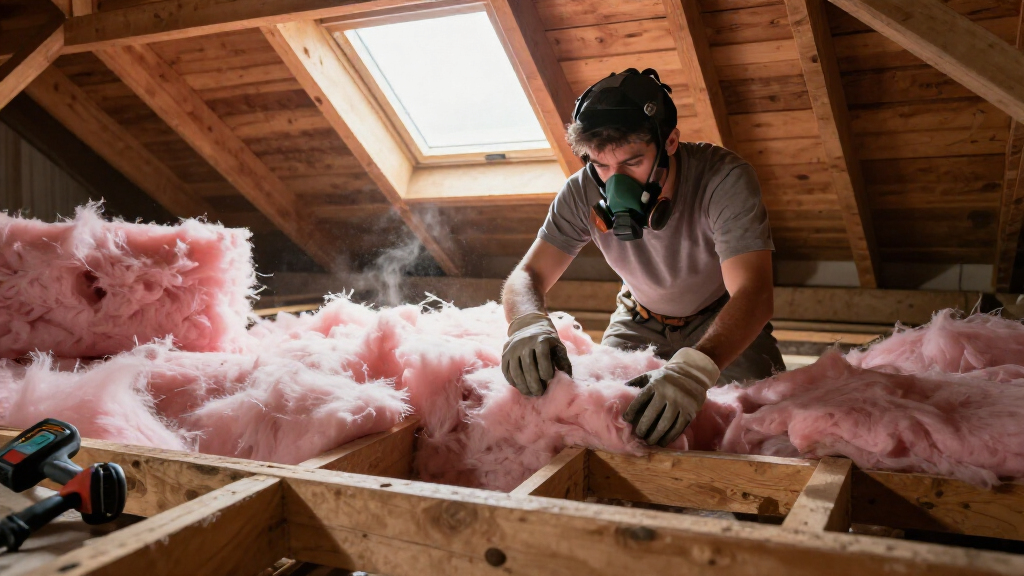

For most buyers comparing these 12 options, Owens Corning R-38 Unfaced Fiberglass Batt Insulation is the strongest overall choice: its substantial R-value and broad coverage suit many unfinished attic floors. Owens Corning R-49 Kraft-Faced Batts stand out when a deeper cavity and facing are appropriate, while BEEST FullStop Spray Foam is a specialty pick for sealing irregular gaps. The right choice depends on more than the product label: R-value, joist depth, air leakage, moisture, and installation skill all matter. Radiant barriers can help in hot, sunny climates but do not replace bulk insulation, and reflective bubble products work differently from fiberglass. Read on for the full breakdown and practical guidance on choosing insulation for your attic.

Get business pricing on tools and workshop supplies
- Business-only prices and quantity discounts
- Tax-exempt purchasing
- Multiple users, one account, clear invoices
Complete the kit



Key Takeaways
- R-38 fiberglass is the best all-around starting point in this lineup: the Owens Corning R-38 batts pair a substantial labeled R-value with 512 square feet of stated coverage.
- R-49 is a deeper-cavity choice, not an automatic upgrade: the kraft-faced and unfaced versions need compatible framing depth and careful attention to facing and moisture conditions.
- Radiant barriers serve a different job from fiberglass: RadiantGUARD, Margar, and AES NASA Tech are reflective products for radiant heat management, not direct substitutes for high-R-value attic-floor insulation.
- Product format changes the project as much as R-value does: batts suit accessible, regular joist bays; spray foam and reflective rolls call for different installation skills and surface conditions.
- Coverage and fit separate the practical picks: the small R-49 32-square-foot pack and compact R-8 sound-barrier batt suit limited areas, while larger rolls and multi-bag packs are better matched to broader work.


| attic insulation | Material | Brand | Thickness | Coverage |
|---|---|---|---|---|
| Owens Corning R-19 Unfaced Fib | Fiberglass | Owens Corning | 6.5 inches | — |
| Owens Corning R-30 Unfaced Fib | Fiberglass | Owens Corning | 10 inches | 513.36 square feet |
| RadiantGUARD Xtreme Radiant Ba | Reinforced aluminum | — | — | 542 square feet |
| Owens Corning R-8 Unfaced Fibe | Fiberglass | Owens Corning | 2.5 inches | — |
| BEEST FullStop Spray Foam Insu | — | — | — | Up to 240 board feet |
| Reflectix BP24025 Reflective B | Aluminum foil, polyethylene, and insulating bubbles | — | 0.31 in (5/16 in) | 7,200 sq in |
| Owens Corning R-38 Unfaced Fib | Fiberglass | Owens Corning | 12 in | 512 sq ft |
| Owens Corning R-49 Unfaced Fib | Fiberglass | Owens Corning | 14 in | 32 sq ft |
| Margar Perforated Double-Foil | Perforated double-sided reflective foil | — | — | 1,000 sq ft |
| AES NASA Tech Perforated Radia | Aluminum | AES | 1 mil | 500 sq ft |
| Owens Corning 480 Sqft 10-Bag | Fiberglass | Owens Corning | 16 inches | — |
| Owens Corning RU41 Pink Fiberg | Fiberglass | Owens Corning | — | — |
More Details on Our Top Picks
Owens Corning R-19 Unfaced Fiberglass Insulation 128-sq ft (24-in W x 96-in L)
R-19 performance and a 6.5-inch thickness make this batt a framing-specific choice for 2×6 cavities, including attic knee walls, floors, and crawlspaces. The five 24-by-96-inch batts cover 128 square feet, and the unfaced fiberglass can be paired with a separately selected moisture-control layer. That flexibility distinguishes it from the Owens Corning R-30 batt, which is thicker and intended for deeper 2×10 cavities, but makes this a poor fit where greater cavity depth is available. The batts are described as easy to cut and can help reduce sound transmission, useful where an attic floor or adjacent space needs acoustic as well as thermal separation. The main tradeoff is that there is no vapor barrier; buyers must plan moisture control separately and match the insulation to the actual framing depth.
Pros:- R-19 rating is suited to 2×6 framing cavities.
- Unfaced construction allows a separately chosen moisture-control approach.
- Batts are described as easy to cut and fit between framing.
- Can help reduce sound transmission as well as heat flow.
Cons:- No built-in vapor barrier, so moisture control must be addressed separately.
- The 128-square-foot pack may not suit larger attic projects without multiple packs.
- Its 6.5-inch thickness is not suited to deeper 2×10 cavities.
Best for: Homeowners insulating 2×6 attic knee walls, floors, or crawlspaces who want R-19 batts and plan to manage moisture separately.
Not ideal for: Buyers filling 2×10 attic cavities or seeking a ready-faced product, since this batt is 6.5 inches thick and has no built-in vapor barrier.
- Brand:Owens Corning
- Model:M50A
- Material:Fiberglass
- R-value:R-19
- Thickness:6.5 inches
- Batt dimensions:24 × 96 inches
- Coverage and quantity:128 square feet per pack; 5 batts
- Facing:Unfaced; no built-in vapor barrier
Our verdict“Choose this batt for 2×6 attic sections where R-19 fits the cavity and you can provide moisture control separately.”
Owens Corning R-30 Unfaced Fiberglass Batt Insulation, 19 × 48 in, 8 Bags
For an attic with 2×10 cavities, this R-30 batt offers a better depth match than the Owens Corning R-19 batt, which is only 6.5 inches thick and intended for 2×6 framing. Its 10-inch thickness and 19-by-48-inch dimensions are specified for floor and attic cavities, while 513.36 square feet of coverage across eight bags makes it a candidate for a sizable project. The unfaced fiberglass leaves moisture-control decisions to the installer, which may suit assemblies where a separate system is already planned. It is less versatile than the RadiantGUARD Xtreme roll for reflective coverage across rafters, because this product fills cavities rather than creating a radiant barrier. Check cavity dimensions before buying: the R-30 rating is useful only when the batt fits properly, and the package does not provide a vapor barrier.
Pros:- R-30 rating is higher than the R-19 Owens Corning batt in this lineup.
- Ten-inch thickness is specified for 2×10 floor or attic cavities.
- Eight bags cover 513.36 square feet for larger installations.
- Unfaced format can work with a separately planned moisture-control system.
Cons:- No moisture barrier is included.
- Ten-inch batts will not fit shallower cavities without an appropriate installation plan.
- Fiberglass cavity batts do not provide the same radiant-heat barrier approach as the RadiantGUARD Xtreme roll.
Best for: Homeowners insulating a large attic floor or 2×10 cavity who want fiberglass batts with R-30 thermal resistance.
Not ideal for: Buyers with shallow framing, a need for a built-in vapor barrier, or an attic assembly better served by a radiant barrier.
- Brand:Owens Corning
- Material:Fiberglass
- R-value:R-30
- Thickness:10 inches
- Batt dimensions:48 × 19 inches
- Coverage:513.36 square feet
- Quantity:8 bags
- Facing and moisture barrier:Unfaced; no moisture barrier
- Recommended uses:Floor and attic thermal insulation
Our verdict“Pick this for broad attic-floor coverage when your framing is deep enough for 10-inch R-30 batts and moisture control is handled separately.”
RadiantGUARD Xtreme Radiant Barrier Attic Insulation, 542 sq ft, 26 in x 250 ft
Radiant heat control is this roll’s defining role: RadiantGUARD says its reinforced aluminum barrier blocks up to 95% of radiant heat transfer. Unlike the Owens Corning R-30 fiberglass batts, which insulate by filling attic or floor cavities, this material is installed on rafters or vertical attic walls to reflect radiant heat. That makes it a different approach, not a direct substitute for cavity insulation, so buyers should check what their attic assembly needs before choosing it. The 542-square-foot roll measures 26 inches by 250 feet, and its perforated, tear-resistant construction is described as easier to handle than fragile foil. It can be cut with utility scissors or a hacksaw, but fitting and stapling still take planning and labor. It is also fiber-free, though it does not provide a stated batt-style R-value.
Pros:- Designed to block up to 95% of radiant heat transfer.
- 542-square-foot roll provides broad coverage for attic projects.
- Perforated reinforced aluminum is described as tear and puncture resistant.
- Fiber-free material can be cut with utility scissors or a hacksaw.
Cons:- Requires stapling to rafters and may need coverage on vertical attic walls.
- Roll must be measured and cut to fit the installation area.
- No batt-style R-value is provided, so it is not a direct replacement for cavity insulation such as Owens Corning R-30.
Best for: Homeowners seeking a radiant barrier for attic rafters or vertical attic walls, especially where a fiber-free roll format suits the installation.
Not ideal for: Buyers who need cavity-filling R-value insulation or want a simple batt installation without measuring, cutting, and stapling a long roll.
- Brand and model:RadiantGUARD RG-X
- Material:Reinforced aluminum
- Coverage:542 square feet
- Roll dimensions:26 inches × 250 feet
- Radiant heat transfer blocked:Up to 95%
- Certification:Meets and exceeds ASTM C1313
- Installation:Staple to attic roof rafters; vertical exterior attic walls may also be covered
- Recommended uses:Attics, roofs, windows, RVs, and metal buildings
Our verdict“Choose this roll for a planned radiant-barrier installation, not as a substitute for fiberglass batts in attic cavities.”
Owens Corning R-8 Unfaced Fiberglass Batt Insulation with Sound Barrier, 16 x 96 Inches
The 2.5-inch thickness makes this R-8 batt a fit for shallow spaces where thicker options such as the Owens Corning R-19 or R-30 may not fit. Its stated uses include attics, floors, and walls, and the product also helps reduce sound transmission—an extra benefit when insulating a partition or floor near a living area. The 20-batt package is listed at approximately 213.33 square feet of coverage. That can suit a smaller or lower-depth job, but the R-8 rating is modest beside the R-19 and R-30 alternatives, so this is not the pick for buyers seeking higher thermal resistance in a deep attic cavity. It is unfaced, too, meaning moisture control must be planned separately. I’d choose it for shallow framing or sound-conscious projects, not as a high-R attic-floor solution.
Pros:- Thin 2.5-inch batts suit shallow framing where thicker products may not fit.
- R-8 rating provides basic thermal insulation.
- Sound-barrier design can help reduce noise transmission.
- Twenty batts provide approximately 213.33 square feet of coverage.
Cons:- R-8 provides less thermal resistance than the Owens Corning R-19 and R-30 options.
- Unfaced construction includes no vapor barrier.
- The stated R-8 rating is better suited to basic insulation than high-performance attic-floor coverage.
Best for: Homeowners insulating shallow 2×4 framing or an attic section where sound reduction matters alongside basic thermal insulation.
Not ideal for: Buyers targeting higher thermal resistance in deep attic cavities, since R-8 is lower than the R-19 and R-30 batt options.
- Brand:Owens Corning
- Material:Fiberglass
- R-value:R-8
- Thickness:2.5 inches
- Batt dimensions:16 × 96 inches
- Coverage and quantity:Approximately 213.33 square feet per bag; 20 batts
- Facing:Unfaced; no vapor barrier
- Recommended uses:Thermal insulation for attics, floors, and walls
Our verdict“Choose this for shallow attic framing or a sound-conscious project, but select a higher-R batt for deeper cavities needing more thermal resistance.”
BEEST FullStop Spray Foam Insulation Kit, 240 Board Feet
For irregular gaps and edges around an attic, this kit offers a different tool from the Owens Corning R-30 batt: moisture-cured spray foam that adheres to wood, metal, drywall, concrete, and brick. Its stated coverage is up to 240 board feet, and the kit includes 12 cans, an applicator gun, cleaner, gloves, goggles, and a coverall, so it is set up for targeted sealing rather than laying large, open attic-floor areas. At two inches thick, the foam has an R-value of 8.24 and meets Class A surface-burning criteria under ASTM E84. Those details do not make it equivalent to a deep layer of high-R batt insulation; use it where its gap-filling format makes sense. Application also calls for protective gear and a recommended temperature of 68–77°F, which narrows when and how the job can be done.
Pros:- Kit includes an applicator gun, cleaner, gloves, goggles, and coverall.
- Adheres to wood, metal, drywall, concrete, and brick.
- Provides an R-value of 8.24 at two inches thick.
- Meets Class A surface-burning criteria under ASTM E84.
Cons:- Recommended application temperature is limited to 68–77°F.
- Requires protective gear and careful application.
- Up to 240 board feet is better suited to targeted sealing than broad attic-floor coverage.
Best for: DIYers sealing irregular attic gaps and building-surface joints who can work within the specified application temperature and use protective gear.
Not ideal for: Buyers insulating a broad attic floor with batts, or anyone unable to apply foam carefully within the 68–77°F recommended range.
- Brand and model:BEEST B-BNDL-SFI-12PK
- Foam material:Moisture-cured polyurethane
- Coverage:Up to 240 board feet
- R-value and thickness:R-8.24 at 2 inches
- Number of cans:12
- Compatible surfaces:Wood, metal, drywall, concrete, and brick
- Flame spread and smoke developed:Flame Spread Index 0; Smoke Developed Index 120 (ASTM E84)
- Recommended application temperature:68–77°F
- Included components:Foam gun, foam cleaner, glasses, coverall, and gloves
Our verdict“Choose this kit for targeted attic gap sealing when conditions allow careful foam application, not for covering large areas like fiberglass batts.”
Reflectix BP24025 Reflective Bubble Pack Insulation, 24 in × 25 ft
Reflectix BP24025 is the most adaptable pick here for smaller attic sections where a lightweight reflective layer is easier to handle than deep fiberglass batts. Its seven-layer foil-and-bubble construction reflects radiant heat and resists heat flow, while the fiber-free material avoids the handling issues associated with Owens Corning’s R-38 fiberglass batts. That does not make it a direct substitute for an R-value-rated batt: at just 5/16 inch thick, it suits radiant-control applications better than buyers seeking substantial bulk insulation. The 24-inch width is manageable around narrow framing, but wider surfaces will take more cuts and seams than the 4-foot rolls from MARGAR or AES. I’d choose it for compact, irregular sections, not as my first choice for insulating a whole attic floor.
Pros:- Seven-layer construction combines reflective foil with insulating bubbles.
- Lightweight, fiber-free material is easier to handle than fiberglass batts.
- Suitable for attics, crawl spaces, walls, metal buildings, and post-and-frame structures.
- 24-inch width can be convenient around narrower framing.
Cons:- The 5/16-inch profile is not equivalent to deep, R-value-rated attic batts.
- The 24-inch width means more lengths and seams on wider surfaces.
- Reflective performance depends on appropriate installation and an adjacent air space.
Best for: DIYers covering narrow or irregular attic sections who want lightweight, fiber-free reflective material.
Not ideal for: Homeowners insulating a large attic floor who need deep, R-value-rated thermal insulation or fewer seams across wide spans.
- Model:BP24025
- Dimensions:300 in L × 24 in W
- Thickness:0.31 in (5/16 in)
- Coverage:7,200 sq in
- Layers:7
- Material:Aluminum foil, polyethylene, and insulating bubbles
- Radiant heat reflected:97%
- Item weight:16 oz
Our verdict“Choose Reflectix for lightweight radiant-control coverage in small or awkward areas, not as a replacement for thick attic batts.”
Owens Corning R-38 Unfaced Fiberglass Batt Insulation, 24 x 48 in, 12 in Thick, 512 sq ft
For buyers who want substantial fiberglass coverage in one bulk package, Owens Corning R-38 is the strongest practical choice in this group. Its 512 square feet of 12-inch-thick batts make it better suited to a sizable attic than the R-49 product’s 32-square-foot coverage, though that comparison does not make R-38 the higher-resistance option. The unfaced format avoids an attached vapor barrier, so it can fit projects where that layer is not wanted, but attic installation calls for at least 2 inches of properly vented air space. It is also not suitable for exterior walls. Compared with reflective rolls like AES NASA Tech, these batts provide a clearly stated R-value and more depth, but they are bulkier to move and fit around obstructions.
Pros:- R-38 thermal resistance in 12-inch-thick batts.
- 512 square feet of coverage across eight bags.
- Unfaced design suits projects that do not call for an attached vapor barrier.
- Can also be used for interior walls, floors, ceilings, and sound control.
Cons:- Attic use requires at least 2 inches of properly vented air space.
- Not suitable for exterior walls.
- Thick batts can be cumbersome around attic obstacles and framing details.
Best for: Homeowners insulating a large attic between trusses who want a bulk pack of thick, R-38 fiberglass batts.
Not ideal for: Buyers who need exterior-wall insulation, a faced batt with a vapor barrier, or material that can be rolled over irregular surfaces.
- Brand:Owens Corning
- Material:Fiberglass
- Insulation type:Unfaced batt
- R-value:R-38
- Batt dimensions:24 × 48 in
- Thickness:12 in
- Coverage:512 sq ft
- Package quantity:8 bags; 8 batts per bag
- Attic installation note:Requires at least 2 in of properly vented air space
Our verdict“Pick this bulk R-38 pack for broad attic coverage when the framing allows the required vented air space.”
Owens Corning R-49 Unfaced Fiberglass Batt Insulation, 32 sq. ft., 16 in. × 48 in.
Owens Corning R-49 brings the highest stated R-value among these fiberglass batt options, making it a fit for buyers prioritizing thermal resistance in a defined area. At 14 inches thick, it is substantially deeper than the R-38 batts, but its 32-square-foot coverage is only a small fraction of that bulk pack’s 512 square feet. That makes this product more compelling for a limited repair or carefully measured section than for outfitting a large attic. The unfaced, formaldehyde-free fiberglass is GreenGuard Gold certified and designed to cut cleanly and recover after handling. Unlike a faced batt, it does not include a vapor barrier, so it will not meet every assembly’s needs on its own. I’d favor it over thin reflective rolls when the priority is stated R-value, but not when easy broad coverage matters most.
Pros:- R-49 thermal resistance in a 14-inch-thick batt.
- Formaldehyde-free and GreenGuard Gold certified.
- Fibers are designed to recover quickly and cut cleanly.
- Can provide thermal and sound control in attics, floors, and walls.
Cons:- Coverage is limited to 32 square feet per batt.
- Unfaced construction provides no vapor barrier.
- The 14-inch thickness may not fit every attic cavity.
Best for: Homeowners insulating a small, measured attic area who want R-49 fiberglass and formaldehyde-free, GreenGuard Gold-certified material.
Not ideal for: Anyone covering a large attic in one purchase or needing an attached vapor barrier, since each batt covers only 32 square feet and is unfaced.
- Brand:Owens Corning
- Model:BU91
- Material:Fiberglass
- R-value:R-49
- Coverage:32 sq ft
- Dimensions:16 × 48 in
- Thickness:14 in
- Facing:Unfaced; no vapor barrier
- Certification:GreenGuard Gold
Our verdict“Choose this R-49 batt for a small project where high stated thermal resistance matters more than broad package coverage.”
Margar Perforated Double-Foil Radiant Barrier Insulation Roll, 1,000 sq. ft.
Among the reflective options here, the MARGAR 1,000-square-foot roll offers the widest coverage for a project that calls for a radiant barrier across a large attic area. Its 4-by-250-foot format can be cut with household scissors and fastened to rafters, walls, or roofs, while perforations are designed to support airflow. Compared with AES NASA Tech’s 500-square-foot roll, MARGAR covers twice as much area, but its long roll can be awkward to position in a tight attic. This is a reflective foil product, not a deep fiberglass batt like Owens Corning R-38, so it should not be treated as an equivalent source of bulk R-value. Installation also requires fastening, and the perforated design may not suit situations where an unperforated barrier is needed.
Pros:- 1,000 square feet of coverage in one roll.
- Perforations are designed to support airflow and breathability.
- Can be cut with household scissors and fastened with staples or nails.
- Manufacturer describes it as tear-resistant and Class A fire-rated.
Cons:- The 4-by-250-foot roll can be cumbersome in small spaces.
- Requires fastening during installation.
- Perforations may not suit applications requiring an unperforated barrier.
Best for: DIYers installing a reflective barrier across a large attic or roof area who can manage and fasten a long roll.
Not ideal for: People working alone in cramped attic spaces or buyers who need thick, R-value-rated insulation rather than a reflective barrier.
- Coverage:1,000 sq ft
- Dimensions:4 ft × 250 ft
- Material:Perforated double-sided reflective foil
- Color:Silver
- Weight:28.3 lb
- Standards:ASTM E84 and E96
- Manufacturer:MARGAR
- Installation:Can be fastened with staples or nails
Our verdict“Choose MARGAR when a large, fastenable reflective barrier is the goal and you have room to handle its long roll.”
AES NASA Tech Perforated Radiant Barrier Insulation, 4 ft x 125 ft, 500 sq ft
The AES NASA Tech radiant barrier is a practical match for smaller attic sections and utility buildings where a 500-square-foot roll is easier to handle than MARGAR’s 1,000-square-foot version. Its 4-foot width suits broad runs, and the perforated aluminum is listed for attics as well as sheds, garages, workshops, barns, and other spaces. That range gives it more flexibility than a batt pack, but the 1-mil material is thin and is best understood as a radiant barrier, not a substitute for the R-38 or R-49 fiberglass batts elsewhere in this lineup. Perforations support applications that call for a breathable barrier, yet make this a poor fit where an unperforated layer is required. The modest roll size helps with handling, though the material’s thinness calls for care during installation.
Pros:- 500 square feet of coverage in a 4-by-125-foot roll.
- Perforated aluminum design is intended for breathable applications.
- Listed for attics, garages, sheds, workshops, barns, and other spaces.
- Smaller coverage area than MARGAR’s roll can be easier to handle for limited projects.
Cons:- The 1-mil material is thin and may require careful handling.
- Perforations limit use where an unperforated barrier is needed.
- A radiant barrier does not provide the stated R-value of the fiberglass batt options.
Best for: Owners of sheds, garages, workshops, or smaller attic areas who want a perforated reflective roll with 500 square feet of coverage.
Not ideal for: Buyers who need thick, R-value-rated insulation, an unperforated radiant barrier, or a more robust material for demanding installation conditions.
- Brand:AES
- Manufacturer:US Energy Products
- Material:Aluminum
- Thickness:1 mil
- Coverage:500 sq ft
- Dimensions:4 ft × 125 ft
- Recommended uses:Attics, sheds, warehouses, house wrap, garages, workshops, storage units, and barns
- Number of items:1
Our verdict“Choose AES NASA Tech for a manageable reflective roll in an attic or outbuilding, but use fiberglass batts when bulk thermal resistance is the priority.”
Owens Corning 480 Sqft 10-Bag R-49 Kraft-Faced Fiberglass Insulation (24″ x 48″) for 2×12 Attic
For an attic framed to accommodate its 16-inch thickness, this Owens Corning batt delivers R-49 insulation with kraft facing in a stated 480-square-foot package. That combination makes it a stronger fit for deep attic cavities than the lineup’s R-38 Unfaced Fiberglass Batt, while the facing offers a built-in vapor retarder where local codes and assembly design call for one. The broad coverage can also mean fewer individual packages to manage across a large job. The tradeoff is handling: thick fiberglass batts take space and care to fit, and kraft facing must not be left exposed to flame. Installers also need to keep the specified clearance from non-IC recessed lights. I’d choose it for a compatible, code-compliant attic, not for shallow cavities or tight spaces.
Pros:- R-49 rating provides substantial thermal resistance for suitable attic cavities.
- Stated 480-square-foot total coverage suits larger projects.
- Kraft facing supplies a vapor retarder when appropriate for the assembly.
- The product description says it produces less dust than traditional fiberglass.
Cons:- Bulky, thick batts can be awkward to transport, cut, and fit around attic obstructions.
- Kraft facing is combustible and must not be left exposed to open flame.
- Requires at least 3 inches of clearance from non-IC recessed lighting fixtures.
Best for: Homeowners or contractors insulating a large attic with cavities suited to 16-inch batts who want R-49 fiberglass and kraft facing.
Not ideal for: People with shallow framing, tight access, or non-IC recessed lights where the required clearance cannot be maintained; skip it if the attic assembly calls for unfaced insulation.
- Brand:Owens Corning
- Material:Fiberglass
- R-value:R-49
- Thickness:16 inches
- Facing:Kraft
- Total coverage:480 square feet
- Package count:10 bags
- Batt dimensions:48 x 24 inches
Our verdict“Choose this for a spacious, compatible attic where R-49 batts and kraft facing suit the planned assembly, but avoid it where clearance or cavity depth is limited.”
Owens Corning RU41 Pink Fiberglass Insulation
The RU41 is the simpler choice for buyers who need unfaced fiberglass for a specific thermal or sound-control application. Its stated 93 x 23-inch dimensions and cuttable material may suit straightforward fitting, but the supplied data lists a thickness of just 0.25 inches and gives no R-value or coverage area. That makes it difficult to judge as a stand-alone attic insulation layer, especially beside the R-49 Kraft-Faced Owens Corning batt, which has a clear thermal rating and coverage figure. The unfaced construction can be useful when a design calls for no kraft facing, but it does not provide a facing layer to serve as a vapor retarder. I’d only select this after confirming its intended application and thermal performance with the seller or product documentation.
Pros:- Unfaced construction suits assemblies that call for insulation without kraft facing.
- Fiberglass is described as soft to the touch.
- Product description says it is easy to cut and install.
- Intended for both thermal and acoustical control.
Cons:- No R-value or coverage area is provided in the supplied product data.
- Unfaced construction does not provide a facing layer that can act as a vapor retarder.
- The listed 0.25-inch thickness is difficult to reconcile with typical attic batt needs; verify specifications before buying.
Best for: Buyers seeking an unfaced fiberglass product for a defined thermal or acoustical application who can verify its thickness and R-value for their project.
Not ideal for: Attic renovators who need a clearly specified, high-R-value batt or depend on published coverage and thickness to plan a whole-attic installation.
- Brand:Owens Corning
- Model:RU41
- Material:Fiberglass
- Finish:Unfaced
- Listed thickness:0.25 inches
- Dimensions:93 L x 23 W inches
- Weight:18 pounds
- Recommended uses:Thermal insulation and acoustical control
Our verdict“Consider the RU41 only for a verified, specific unfaced application; for a planned attic upgrade, the R-49 Owens Corning batt offers clearer performance and coverage information.”
How We Picked
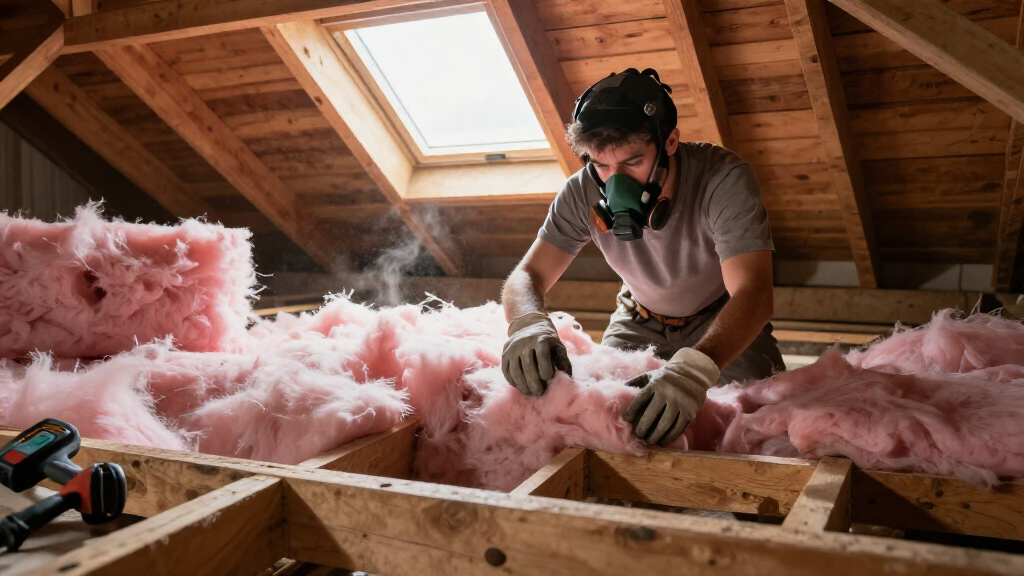
I compared the 12 products by insulation type, labeled R-value where provided, stated coverage, dimensions, facing, and likely attic application. I gave more weight to options that can serve as a main layer over an accessible attic floor, while treating radiant barriers and reflective bubble insulation as specialized tools rather than direct substitutes for fiberglass batts. Pack size and format also shaped the ranking: a product suited to a large, regular area is more useful for broad coverage, while smaller or unusual formats make more sense for patching or targeted projects.
The order reflects how many common attic projects each option can reasonably serve, alongside fit constraints and installation demands. The R-38 batt ranks ahead of specialty reflective products because it presents a straightforward bulk-insulation option with substantial stated coverage. R-49 products rank well for deeper cavities but are less universal; spray foam offers a distinct air-sealing role but requires more care, and radiant barriers rank lower as standalone choices for an attic insulation project. Product names and listings do not establish compatibility with every assembly, so I treat facing, ventilation, local climate, and manufacturer instructions as necessary checks before purchase.
| attic insulation | Brand | Material | R-value |
|---|---|---|---|
| Owens Corning R-19 Unfaced Fib | Owens Corning | Fiberglass | R-19 |
| Owens Corning R-30 Unfaced Fib | Owens Corning | Fiberglass | R-30 |
| RadiantGUARD Xtreme Radiant Ba | — | Reinforced aluminum | — |
| Owens Corning R-8 Unfaced Fibe | Owens Corning | Fiberglass | R-8 |
| BEEST FullStop Spray Foam Insu | — | — | — |
| Reflectix BP24025 Reflective B | — | Aluminum foil, polyethylene, and insulating bubbles | — |
| Owens Corning R-38 Unfaced Fib | Owens Corning | Fiberglass | R-38 |
| Owens Corning R-49 Unfaced Fib | Owens Corning | Fiberglass | R-49 |
| Margar Perforated Double-Foil | — | Perforated double-sided reflective foil | — |
| AES NASA Tech Perforated Radia | AES | Aluminum | — |
| Owens Corning 480 Sqft 10-Bag | Owens Corning | Fiberglass | R-49 |
| Owens Corning RU41 Pink Fiberg | Owens Corning | Fiberglass | — |
Factors to Consider When Choosing Best Attic Insulation
Choosing attic insulation starts with the space you need to insulate, not with the highest number on a package. I would first identify whether the project is covering an attic floor, filling sloped roof cavities, reducing radiant heat, or sealing gaps. Then match the product to the assembly, climate, and installation conditions.
Match R-Value to Your Existing Insulation and Framing
Use the labeled R-value as a measure of resistance to heat flow, then check how much insulation is already present before deciding what to add. A higher-rated batt may need a deeper cavity; compressing it to fit can reduce its performance. This roundup ranges from the R-8 sound-barrier batt through R-19, R-30, R-38, and R-49 options, but those numbers alone do not identify the right layer for your home. Check local energy guidance and the product instructions for recommendations tied to your climate and assembly. When adding a new layer over existing insulation, avoid creating an unsuitable moisture-trapping arrangement, especially if the new product has a facing. Treat a higher R-value as a fit question as well as a performance goal.
Choose the Right Product for the Surface
Attic floors with open, regular joist bays are usually easier to cover with batts than irregular roof slopes or crowded corners. Radiant barrier rolls are designed to limit radiant heat transfer when installed with the required air space; they do not provide the same kind of bulk resistance as thick fiberglass. Reflective bubble insulation also depends on the assembly and air space, so its appearance is not a substitute for checking its stated performance and intended use. Spray foam may suit small or irregular areas where sealing is part of the goal, but it is not simply a roll-out replacement for attic-floor batts. Decide which surface you are treating before comparing package coverage. A product that fits the wrong part of the attic can leave the main heat-loss path untouched.
Account for Moisture, Ventilation, and Facing
Insulation should not block soffit or other intended attic ventilation paths, since restricted airflow can contribute to moisture problems. Faced batts include a vapor-control layer, so the correct facing direction and suitability depend on the building assembly and local conditions. Unfaced batts avoid adding a facing layer and can be more appropriate for some additions over existing insulation, but they do not fix air leaks by themselves. Before covering the attic floor, look for signs of roof leaks, damp materials, or condensation and address the source. Keep insulation away from heat-producing fixtures and other hazards according to product and building guidance. Planning these details before installation can prevent a simple insulation upgrade from creating a more difficult repair.
Measure Coverage and Plan for Installation
Measure the area to be insulated and compare it with the package’s stated coverage, allowing for cuts, joist spacing, and irregular sections. Large packs such as the R-38 and R-49 offerings may suit broad projects, while the 32-square-foot R-49 pack is better suited to a limited area or a smaller addition. Batt width and length need to match the framing without gaps or excessive compression. Rolls can be easier to carry across long runs, but they still require accurate cuts and a suitable attachment or installation method. Spray foam kits call for careful preparation and attention to instructions, protective equipment, and cleanup. If safe access or consistent installation is uncertain, getting qualified help may be a better decision than choosing a product solely by its listed coverage.
Know When to Pay for a Specialty Product
A specialty product is worthwhile when it addresses a problem that ordinary batts do not. Radiant barriers may fit a hot-climate project where roof-driven radiant heat is a concern, but their benefit depends on installation conditions and they should not be treated as a replacement for adequate bulk insulation. Spray foam can combine insulation and air sealing in certain applications, though its setup and application demands make it less forgiving than placing batts. The compact R-8 sound-barrier batt has a narrower role than the R-30 or R-38 options and should not be chosen as a high-R-value attic layer simply because sound control is mentioned. Compare the work needed to install a specialty option with the specific problem it solves. Paying for extra features that do not match the attic assembly adds complexity without addressing the main need.
Check Air Leaks Before Adding Insulation
Fiberglass batts slow heat flow but do not serve as a dependable air barrier, so air leaks around attic hatches, wiring, plumbing, and top plates can remain. Sealing accessible gaps before laying new insulation can improve the overall result and reduce drafts, but use methods suited to the location and any fire-safety requirements. Do not bury junction boxes or block access to equipment that needs inspection. A spray foam kit may address selected gaps, yet broad application is not automatically the right approach for every attic. If the source of a draft or moisture problem is unclear, identify it before covering the area. The comparison’s key practical lesson is that insulation type and air sealing are related tasks, but one product does not necessarily accomplish both.
Frequently Asked Questions
Should I choose R-38 or R-49 attic insulation?
Choose based on the depth and layout of the space, your existing insulation, and local recommendations rather than assuming the larger R-value always fits. The R-38 option in this roundup has broad stated coverage, while the R-49 batts are better suited to a deeper cavity or a project with room for the added thickness. A batt that is compressed into a shallow space may not perform as labeled. Also check whether the product is faced or unfaced and whether that suits the assembly. If you are adding insulation over an existing layer, check product guidance before mixing types or facings.
Can I use a radiant barrier instead of fiberglass batts?
Usually, these products address different parts of heat transfer, so a radiant barrier should not be treated as a direct replacement for bulk attic insulation. RadiantGUARD, Margar, and AES NASA Tech are reflective options whose performance depends on the installation and a suitable air space. Fiberglass batts instead provide labeled R-value through their thickness. In a hot, sunny climate, a radiant barrier may be a useful part of a broader plan, but it does not automatically supply the insulation level a home needs. Check local guidance and the manufacturer’s installation directions before deciding whether to use one alone or alongside another layer.
Is faced or unfaced fiberglass better for an attic?
Neither is universally better; the right choice depends on where the batt is going and how the assembly manages moisture. Unfaced batts avoid adding a vapor-control facing and can be useful for some additional layers, while kraft-faced batts include a facing that must be installed in the correct orientation for the specific assembly. Placing facings incorrectly or trapping moisture between layers can cause problems. This roundup includes both types, so check the product label and local building guidance before choosing. If the attic already has insulation, identify its type and condition before adding faced material.
When does spray foam make more sense than attic batts?
Spray foam may be a better fit for targeted gaps or irregular areas where air sealing is part of the objective, while batts are often simpler for covering accessible, regularly spaced attic-floor joists. The BEEST kit has a different installation process from the Owens Corning batt products and calls for close attention to its instructions and safety requirements. It should not be selected solely because it can fill a space; application, ventilation, and compatibility with the assembly matter. For a broad attic floor, batts may be easier to place consistently. For a complex area, ask whether a qualified installer is needed before buying a kit.
How much insulation should I buy for my attic?
Measure the area you plan to cover and compare it with each package’s stated coverage, then account for framing, cuts, and awkward corners. The products here vary widely, from small packs such as the 32-square-foot R-49 option to larger stated coverage for the R-38 and radiant-barrier rolls. Coverage does not tell you whether the product reaches the R-value your project needs, so check both figures. For batts, verify the width and thickness against the joist bays; for rolls, plan for overlaps and cuts as instructed. If adding to existing insulation, measure the exposed area rather than treating the whole attic as empty.
Conclusion
For a broad attic-floor project with accessible joist bays, I would start with Owens Corning R-38 Unfaced Fiberglass Batts as the best overall balance of substantial labeled R-value and stated coverage. The R-19 Unfaced Batts are my best value-style pick when the project calls for a lower-R layer or a smaller step in an insulation plan, while the R-49 Kraft-Faced Batts are the premium choice for a compatible, deeper assembly—not a universal upgrade. Beginners who want a familiar batt format can look first at the Owens Corning R-30 Unfaced Batts, after checking dimensions and coverage against their framing. For specific needs, choose BEEST FullStop for targeted spray-foam work or a radiant barrier such as RadiantGUARD for a suitable radiant-heat application. I would skip reflective products as a sole insulation layer when the project calls for bulk R-value; matching the product to the attic assembly matters more than choosing the most specialized label.