Using the right air hose diameter is vital for maintaining tool performance. A hose that’s too narrow restricts airflow, reduces air pressure, and slows down your tool. Longer hoses and small diameters cause even greater pressure drops, making your tool less powerful and efficient. Properly sized hoses guarantee a steady airflow and consistent pressure, keeping your tool working at its best. Keep going to discover how optimizing hose size can boost your productivity even more.
Get ready for Prime Big Deal Days — try Prime free
Exclusive member deals on October 6–7, plus fast free delivery. Cancel anytime.
As an affiliate, we earn on qualifying purchases.
Key Takeaways
- Narrow hoses restrict airflow, causing pressure drops and reducing tool power and speed.
- Larger diameter hoses allow more air flow, maintaining optimal pressure for better tool performance.
- Small hoses lead to pressure loss along the line, resulting in sluggish tool operation.
- Proper hose size and length combination helps sustain consistent pressure at the tool.
- Correct fittings and hose dimensions prevent leaks and pressure drops, enhancing overall efficiency.
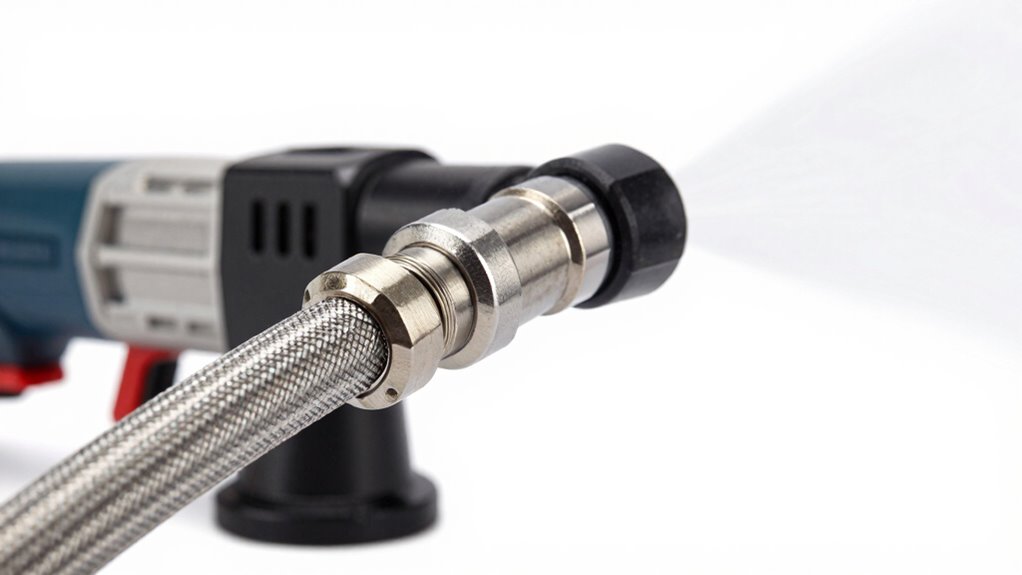
Have you ever wondered why your air tools don’t perform as expected? One key factor often overlooked is the diameter of your air hose. The size of the hose directly influences how much air reaches your tool and how effectively it operates. When the hose diameter is too narrow, it restricts airflow, causing a drop in air pressure before the air even reaches your tool. This reduction in air pressure means your tools won’t deliver the power or speed they’re designed for, leading to frustration and inefficient work. Conversely, a hose with a larger diameter allows for a greater volume of air to flow freely, maintaining consistent air pressure from the compressor to your tool. This ensures maximum performance and minimizes the risk of sluggish operation.
Another crucial aspect to consider is hose length. The longer the hose, the more pressure drops you’ll experience along the line. This pressure loss occurs because of friction and resistance within the hose walls, which becomes more pronounced as the length increases. When combined with a small diameter, a long hose can significantly diminish air pressure at the tool’s connection, reducing its effectiveness. This is why choosing the right hose diameter for your desired hose length is vital. A wider hose can compensate for longer runs, maintaining the necessary air pressure and ensuring your tools operate at peak performance. Additionally, understanding how air pressure interacts with hose dimensions can help you optimize your setup for better efficiency and airflow management. Properly selecting hose diameter in relation to your tools and work environment is essential for achieving optimal results. Paying attention to hose fittings can also prevent unnecessary leaks and pressure loss, further enhancing overall tool performance.
air hose diameter for pneumatic tools
As an affiliate, we earn on qualifying purchases.
As an affiliate, we earn on qualifying purchases.
Frequently Asked Questions
How Do I Measure My Air Hose Diameter Correctly?
To measure your air hose diameter correctly, first turn off your compressor and disconnect the hose. Use a caliper or a ruler to measure the inner diameter at the connection fittings, ensuring you’re measuring the interior. Take note of the hose material, as it can affect flexibility and durability. Accurate measurement helps you choose the right connection fittings, ensuring ideal airflow and tool performance.
What Tools Require the Largest Air Hose Diameter?
Ever wondered which tools need the largest air hose diameter? High-demand tools like air sanders, grinders, and impact wrenches require an air compressor with a larger hose diameter to operate efficiently. These tools demand higher airflow, so using thicker hose fittings and a wider diameter guarantees peak performance. If your hose is too narrow, you’ll notice decreased power and increased frustration. Always match your hose diameter to the tool’s airflow requirements for best results.
Can a Smaller Hose Diameter Improve Tool Performance?
A smaller hose diameter generally doesn’t improve tool performance because it reduces airflow efficiency, which can cause pressure drops and slower operation. However, if the hose is more flexible, it might enhance maneuverability and reduce fatigue during use. Still, for ideal performance, you should prioritize maintaining adequate airflow with a larger diameter, ensuring your tools operate smoothly and efficiently without sacrificing hose flexibility.
How Does Hose Length Influence Air Pressure?
Longer hoses can reduce air pressure because of increased resistance, leading to inconsistent air pressure and potentially affecting your tool’s performance. Shorter hoses help maintain air pressure consistency, ensuring your tools operate smoothly. Be mindful that longer hoses may offer more flexibility but can compromise pressure. To optimize performance, balance hose length with diameter, and consider using high-quality hoses to keep air pressure steady and your work efficient.
What Safety Precautions Are Needed With Different Hose Sizes?
Think of your air hose as a lifeline; safety depends on proper precautions. Always wear safety gear like goggles and gloves, especially with larger hoses that can deliver powerful bursts. Use pressure regulation devices to prevent over-pressurization. Different hose sizes require mindful handling to avoid accidents. Regularly check for leaks or damage, and guarantee connections are secure. Staying vigilant keeps your work safe and your tools performing at their best.
heavy-duty air compressor hose 1/2 inch
As an affiliate, we earn on qualifying purchases.
As an affiliate, we earn on qualifying purchases.
Conclusion
Choosing the right air hose diameter is like selecting the right size wrench—you need the right fit to get the job done efficiently. I once watched a neighbor struggle with a thin hose, wasting time and effort, until he upgraded to a larger diameter and instantly improved performance. Remember, a small change in hose size can make a big difference, just like upgrading tools—small tweaks can lead to big results in your project’s success.
high flow air hose for air tools
As an affiliate, we earn on qualifying purchases.
As an affiliate, we earn on qualifying purchases.
air hose fittings and connectors
As an affiliate, we earn on qualifying purchases.
As an affiliate, we earn on qualifying purchases.
NFL season / tailgating Picks
team gear
As an affiliate, we earn on qualifying purchases.