Your dust collection hose size greatly affects airflow and debris removal. A narrow hose causes airflow to slow down, letting dust settle before it reaches the collection system. On the other hand, a too-wide hose might lack enough suction to pull debris efficiently. Choosing the right size balances airflow with debris movement, ensuring your system works effectively. Want to know how to pick the perfect hose size? Keep exploring to find out.
Open a free Amazon Business account
Business pricing, bulk buying and tax-exempt orders.
As an affiliate, we earn on qualifying purchases.
Key Takeaways
- Hose size impacts airflow velocity, influencing debris pickup efficiency in dust collection systems.
- Smaller hoses restrict airflow, reducing dust extraction performance; larger hoses may require more powerful blowers.
- Proper diameter balance ensures optimal debris removal without causing airflow loss or system strain.
- Flexibility and material choices affect airflow, with overly flexible hoses risking kinks that impede suction.
- Mismatched hose sizes with system components lead to airflow reduction and decreased dust collection efficiency.
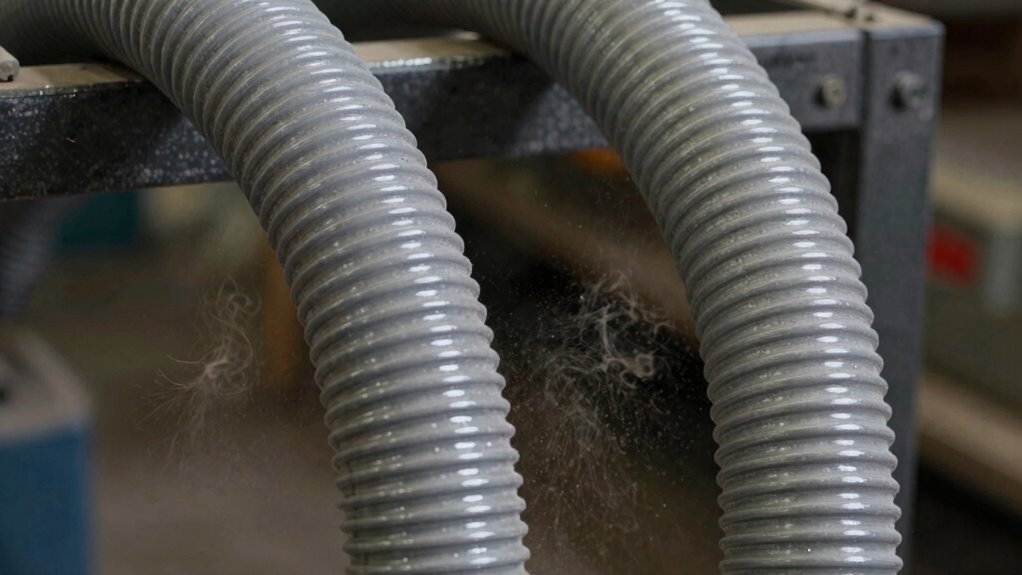
Choosing the right dust collection hose size is essential for ensuring efficient dust extraction and maintaining a clean workspace. The size of your hose directly impacts how well your system moves air and captures debris. If the hose is too narrow, airflow slows down, and dust particles may settle before reaching the collector. Conversely, if it’s too wide, you might not generate enough suction to pull in debris effectively. Finding the optimal size balances these factors, ensuring your dust collection system functions at peak performance.
Hose flexibility plays a crucial role in selecting your size. A flexible hose allows you to maneuver around your workspace easily, reaching all corners without difficulty. However, flexibility often comes with trade-offs in material durability. Cheaper, highly flexible hoses may kink or collapse under pressure, restricting airflow and reducing efficiency. On the other hand, more rigid hoses tend to maintain their shape better and resist collapsing, but they could be less maneuverable. When choosing your size, consider a hose that strikes a balance between flexibility and durability, ensuring it can bend and twist without compromising airflow or tearing over time. Material flexibility can also influence how well the hose adapts to different workspace setups. Additionally, selecting the right size can help minimize system strain, which in turn enhances overall efficiency and prevents potential damage.
Moreover, proper hose sizing can reduce the risk of airflow loss caused by improper fit or mismatched components, ensuring consistent performance.
As an affiliate, we earn on qualifying purchases.
Frequently Asked Questions
How Does Hose Flexibility Impact Airflow Efficiency?
Hose flexibility impacts airflow efficiency because more flexible hoses, often made from softer materials, tend to have smoother interiors, reducing airflow resistance. Conversely, less flexible hoses with rigid materials may cause kinks or bends, restricting airflow and decreasing efficiency. Your choice of hose material influences flexibility, so selecting a flexible hose helps maintain consistent airflow, making your dust collection system more effective and easier to maneuver.
Are There Best Practices for Connecting Hoses of Different Sizes?
To guarantee ideal airflow, you should follow best practices for hose connection and size compatibility. Use properly fitted connectors or adapters to secure hoses of different sizes tightly, preventing leaks and airflow loss. Always match hose diameters as closely as possible, or use high-quality reducers if necessary. Check that connections are airtight and secure, which maintains consistent airflow and maximizes dust collection efficiency.
How Often Should Dust Collection Hoses Be Replaced?
Ever wondered how often you should replace your dust collection hoses? Regular maintenance is key to keeping your system efficient. Generally, you should inspect hoses monthly and replace them every 2-3 years, or sooner if you notice cracks, tears, or significant wear. Following a consistent maintenance schedule helps guarantee ideal airflow and safety. Don’t wait for problems to arise—stay proactive with your replacement frequency to keep your workshop running smoothly.
Can Hose Length Affect Airflow and Dust Collection Performance?
Yes, hose length can impact airflow and dust collection performance. Longer hoses create more resistance, reducing airflow, which hampers dust pickup efficiency. To optimize airflow, you might consider hose diameter adjustments—using a larger diameter can compensate for length increases. Properly balancing hose length and diameter helps maintain airflow optimization, ensuring your dust collection system works effectively without losing suction or performance.
What Materials Are Best for Durable Dust Collection Hoses?
Did you know that choosing the right material can double your hose’s lifespan? For durability and hose longevity, consider reinforced PVC or rubber hoses. These materials resist cracking, kinking, and abrasions better than basic plastics. Heavy-duty options like polyurethane or neoprene also offer flexibility and strength, making them ideal for demanding environments. Investing in these materials guarantees your dust collection system stays reliable and effective longer.
flexible dust collection hose 4 inch
As an affiliate, we earn on qualifying purchases.
As an affiliate, we earn on qualifying purchases.
Conclusion
Choosing the right dust collection hose size isn’t just about fitting your equipment—it’s about ensuring your airflow flows like a well-oiled machine. Bigger isn’t always better, but undersized hoses choke your system’s potential. Remember, a hose that’s too small can turn your workspace into a clogged corridor, while the right size releases efficiency and safety. So, pick wisely, and let your dust collection system breathe freely—because in the dance of airflow, size truly matters.
As an affiliate, we earn on qualifying purchases.
As an affiliate, we earn on qualifying purchases.
Fall Picks
fall essentials
As an affiliate, we earn on qualifying purchases.