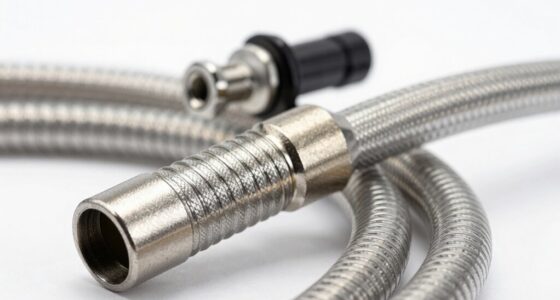
Pressure washer nozzles come in plastic and metal types, each with different strengths and uses. Plastic nozzles are lightweight and affordable but wear out faster, making them good for light tasks. Metal nozzles are more durable and better for tough cleaning, but they’re heavier and pricier. Choosing the right nozzle material depends on your task and safety needs. Keep exploring to discover how proper selection and maintenance can boost your pressure washing results.
Open a free Amazon Business account
Business pricing, bulk buying and tax-exempt orders.
As an affiliate, we earn on qualifying purchases.
Key Takeaways
- Nozzle materials vary: plastic is lightweight and affordable but less durable; metal offers strength and longevity.
- Choose nozzles based on task: narrow-angle for tough grime, wide-angle for light rinsing.
- Metal nozzles resist wear and corrosion, ideal for heavy-duty use; plastic nozzles wear out faster.
- Proper maintenance and regular inspection extend nozzle lifespan and ensure safety.
- Understanding material properties helps select the right nozzle for effective, safe pressure washing.

Another important aspect to take into account is nozzle material durability. Not all nozzles are created equal in terms of strength and longevity. Some are made from plastic, which is lightweight and affordable but can wear out quickly under high pressure or abrasive conditions. Others are crafted from metal, such as stainless steel or brass, offering superior durability and resistance to corrosion. Metal nozzles are often better suited for heavy-duty tasks or prolonged use, where a plastic nozzle might crack or degrade prematurely. Investing in a nozzle with high material durability ensures you get more value over time, reducing the need for frequent replacements and maintaining consistent performance. Additionally, understanding the material composition of nozzles helps you select options that will withstand demanding cleaning conditions and extend their lifespan. Recognizing the impact of nozzle material on performance can help you choose the right tool for specific tasks, ensuring effective cleaning without risking damage. Water jet angles and nozzle material durability work hand in hand to influence your cleaning experience. For example, a high-pressure, narrow-angle nozzle made from durable metal is perfect for stubborn grime, while a wide-angle plastic nozzle might be better for light rinsing. Proper maintenance and inspection of the nozzle material can also prevent unexpected failures and extend usability. Regularly checking the wear resistance of your nozzles can help identify early signs of deterioration, preventing potential safety hazards caused by nozzle failure. Understanding how these factors interact helps you optimize your pressure washing tasks, saving time and effort. It’s also important to remember that using the wrong nozzle can lead to safety hazards, like water ricocheting or damaging surfaces, so choosing carefully based on the task at hand is essential.
As an affiliate, we earn on qualifying purchases.
Frequently Asked Questions
How Do I Choose the Right Nozzle for My Specific Task?
To choose the right nozzle, consider your task’s surface and dirt level. Opt for a nozzle with the appropriate spray pattern—wider for delicate surfaces and narrow for tough grime. Also, check the nozzle material; brass is durable, while plastic is lightweight but less sturdy. Match the nozzle to your pressure washer’s specifications, and you’ll get effective cleaning without damaging surfaces.
Can Pressure Washer Nozzles Be Used Interchangeably?
You shouldn’t use pressure washer nozzles interchangeably without considering nozzle materials and size. Different materials like stainless steel or plastic withstand varying pressures and conditions, so using the wrong one can cause damage. Likewise, nozzle size affects water flow and pressure. Always match the nozzle size to your task and verify the material is suitable for your cleaning environment, preventing damage and ensuring safety.
What Safety Precautions Should I Follow With Different Nozzles?
Imagine you’re cleaning a delicate patio with a high-pressure nozzle. Always wear safety gear like goggles and gloves to protect yourself from flying debris or water. Before switching nozzles, turn off the pressure washer and check nozzle integrity during maintenance. Follow manufacturer instructions for each nozzle type, and be cautious of the spray angle. These precautions prevent injuries and guarantee safe, effective use of different pressure washer nozzles.
How Often Should I Replace or Clean My Nozzles?
You should replace or clean your nozzles based on their nozzle longevity and cleaning frequency. Typically, inspect them after every use for signs of wear, such as clogs or uneven spray patterns. Clean them regularly to prevent buildup, and replace them if you notice damage or persistent issues. Proper maintenance guarantees peak performance, extends the lifespan of your nozzles, and keeps your pressure washing effective and safe.
Are There Nozzles Designed for Eco-Friendly Cleaning?
Yes, there are nozzles designed for eco-friendly cleaning, including biodegradable nozzles made from environmentally friendly materials. These nozzles help reduce plastic waste and minimize environmental impact. When you choose biodegradable nozzles, you’re supporting sustainable practices while maintaining effective cleaning. Look for nozzles labeled as eco-friendly or biodegradable to guarantee you’re contributing to environmentally conscious cleaning routines. This way, you get a powerful clean without harming the planet.
stainless steel pressure washer nozzle
As an affiliate, we earn on qualifying purchases.
As an affiliate, we earn on qualifying purchases.
Conclusion
Now that you understand pressure washer nozzles, you’re ready to tackle any cleaning task. Remember, choosing the right nozzle can save you time and prevent damage. Did you know that a narrow 0-degree nozzle can shoot water at over 3000 PSI, equivalent to a powerful jet that can cut through dirt and grime effortlessly? With this knowledge, you’ll confidently select the perfect nozzle for every job, making your cleaning chores faster and more effective.
adjustable spray nozzle for pressure washer
As an affiliate, we earn on qualifying purchases.
As an affiliate, we earn on qualifying purchases.
plastic vs metal pressure washer nozzles
As an affiliate, we earn on qualifying purchases.
As an affiliate, we earn on qualifying purchases.
Flea & tick season Picks
flea and tick prevention
As an affiliate, we earn on qualifying purchases.