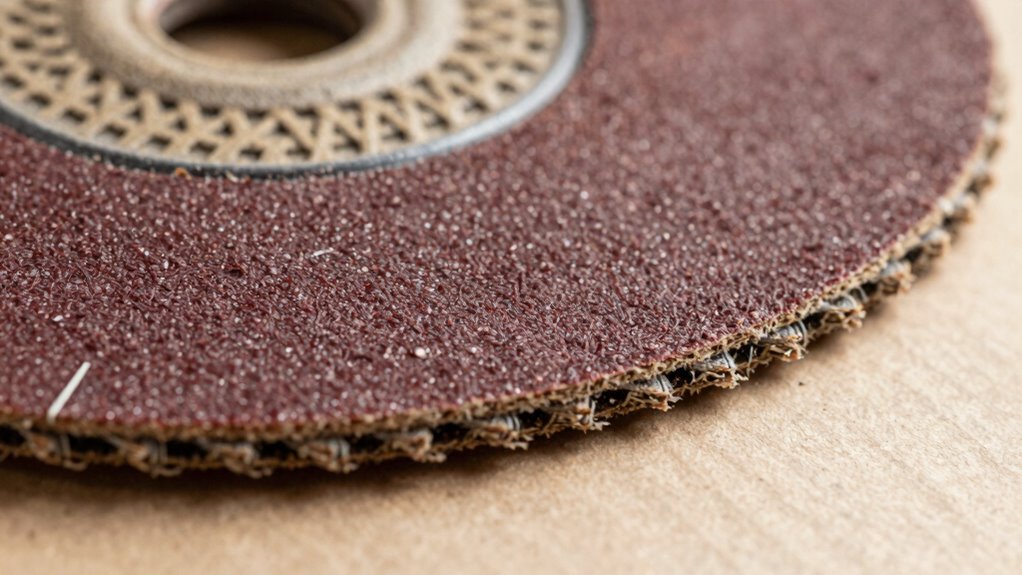

Choosing the right sanding disc with durable backing and consistent grit is more important than you might think because it impacts your project’s quality and efficiency. A sturdy backing prevents tearing and guarantees smooth, even sanding, while uniform grit gives you consistent results and fewer reworks. Poor quality discs wear out faster, wasting your time and money. If you keep exploring, you’ll discover how these factors can make a big difference in your finishing outcomes.
Key Takeaways
- The backing’s sturdiness ensures consistent pressure and prevents tearing, leading to smoother, more efficient sanding.
- Grit consistency guarantees uniform material removal, reducing scratches and achieving a professional finish.
- High-quality backing and grit durability extend disc lifespan, saving time and costs on replacements and rework.
- Proper selection of abrasive material and backing enhances surface quality and project results.
- Investing in quality discs improves efficiency, reduces rework, and delivers long-term savings.
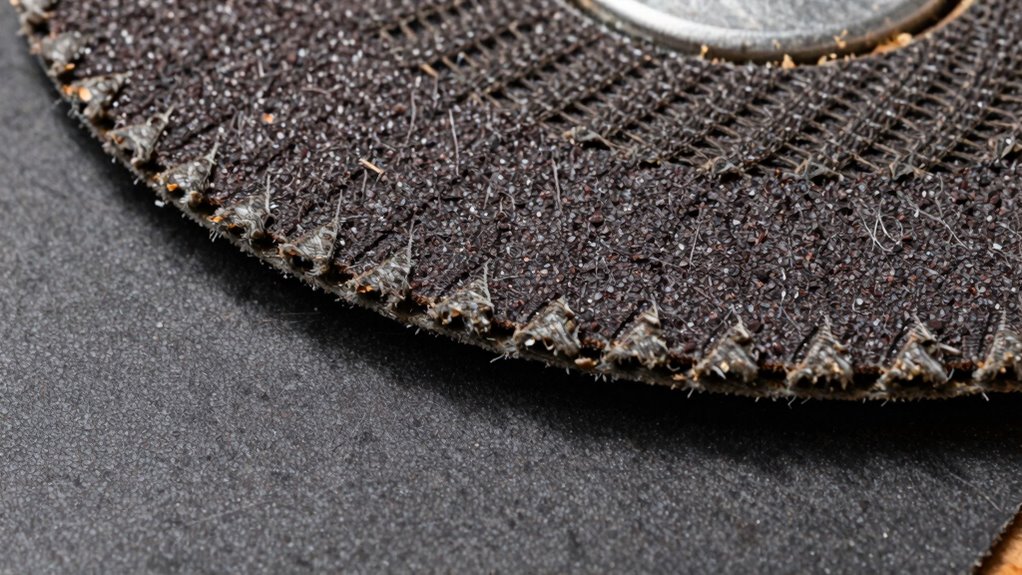
Choosing the right sanding disc backing and grit is essential for achieving a smooth, professional finish on your project. The backing’s durability plays a crucial role because it determines how well the disc withstands repeated use without tearing or breaking down. If you opt for a backing that’s too flimsy, it might not hold up under pressure, leading to uneven sanding or the need for frequent replacements. On the other hand, a sturdy backing ensures your disc remains intact, providing consistent performance from start to finish. When durability aligns with your project’s demands, you’ll find that your work becomes more efficient and produces cleaner results.
Grit consistency is equally important because it directly impacts the quality of your finish. When the grit on your disc is evenly distributed, it sands uniformly, preventing gouges or scratches that can mar your work. Inconsistent grit, however, can create rough patches or leave behind unwanted marks, forcing you to spend extra time correcting mistakes. Choosing a disc with well-manufactured grit ensures that every pass of your sander removes material evenly, giving you a smoother surface faster. This consistency also means you won’t have to frequently change discs to maintain the same level of abrasiveness, saving you time and frustration. Additionally, understanding the manufacturing quality of the grit can help you choose more durable and effective sanding options.
You might overlook these aspects initially, but they greatly influence your results. For instance, if your disc’s grit isn’t consistent, your project might end up with an uneven finish, making it look amateurish. Similarly, a disc with poor durability can cause delays, as you’ll need to stop and replace worn-out discs more often. When selecting sanding discs, pay attention to the material and manufacturing quality, as these factors affect both durability and grit consistency. High-quality discs might cost more upfront, but they save you money in the long run by lasting longer and providing superior, uniform results. Recognizing the importance of abrasive material can further help in selecting the most suitable disc for your specific surface and project needs.

Mercer Industries 325045-4-1/2" x 5/8"-11 Standard Backing Pad for Fibre Discs
- Compatible with resin fibre discs: Use with angle grinder
- Durable polypropylene construction: Strong backing pad
- Flexible for effective sanding: Supports disc responsiveness
As an affiliate, we earn on qualifying purchases.
As an affiliate, we earn on qualifying purchases.
Frequently Asked Questions
How Does Backing Material Affect Sanding Disc Durability?
The backing material directly impacts the durability of your sanding disc by determining its strength and flexibility. A high-quality backing resists tearing and wear, extending the disc’s lifespan. If the backing isn’t durable, the disc will wear out faster, requiring more frequent replacements. Selecting the right backing material guarantees you get maximum efficiency, making your sanding projects smoother and more cost-effective.
Can Grit Size Influence Finishing Quality?
Grit size can dramatically influence your finishing quality—think of it as the difference between a smooth, polished mirror and a rough, scratched surface. Smaller grits remove imperfections during surface preparation, leaving a finer finish. Larger grits are better for shaping. Choosing the right abrasive for your project is essential, as it guarantees ideal surface prep and a flawless finish. Don’t underestimate the power of proper grit selection!
Are Certain Backing Types Better for Specific Materials?
Certain backing types are better for specific materials because they influence the abrasive bonding and overall effectiveness. For example, fiber-backed discs work well on heavy-duty metals, providing durability and strength, while paper-backed discs are ideal for woodworking, offering flexibility and precision. Your choice of backing material affects how well the abrasive bonds, ensuring smoother finishes and longer disc life tailored to each material’s demands.
How Do I Choose the Right Grit for Project Stages?
You should choose your grit based on your project’s stage. Start with coarse abrasives for shaping, then move to finer grits for smoothing and finishing. Imagine disc storage like a well-organized toolbox—keeping abrasive types sorted helps you pick the right grit quickly. Use rougher grits early, progressing to finer ones as you refine your work, ensuring a smooth, professional finish every time.
Does Backing Type Impact Sanding Disc Compatibility With Tools?
Yes, backing type impacts sanding disc compatibility with your tools. Different backing materials, like paper, cloth, or nylon, are designed for specific disc types and tool attachments. Always check disc compatibility with your sander or grinder to guarantee a secure fit and safe operation. Using incompatible backing can lead to poor performance, disc slippage, or safety hazards, so choose the right backing material for your tool and project needs.

52 Pack 5 Inch 8-Hole Hook and Loop Sanding Discs Sandpaper Red Round 60 80 120 220 320 Mixed Grits Sandpaper for Random Orbital Sander
- Grits Clearly Printed: Grits printed on the back for easy identification
- Universal Fit: Fits 5 inch orbital sanders with 8-hole design
- Dust Collection Holes: Pre-punched 8 holes for dust extraction
As an affiliate, we earn on qualifying purchases.
As an affiliate, we earn on qualifying purchases.
Conclusion
Remember, choosing the right backing and grit for your sanding disc isn’t just a small detail—it can make or break your project. When you match the right tools to your task, you’ll save time, avoid frustration, and achieve better results. It’s often said that the devil’s in the details, and in this case, paying attention to these choices means you’re setting yourself up for success. Don’t overlook the small stuff, because it truly makes a big difference.
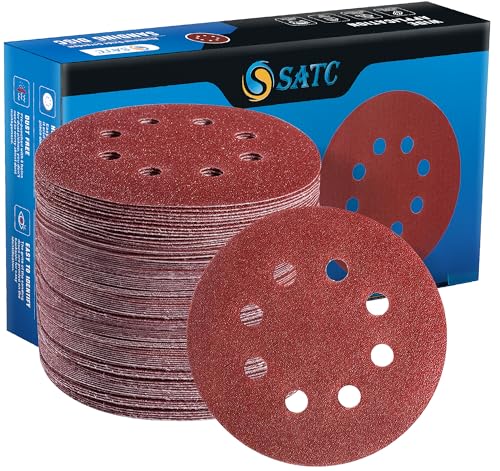
S SATC 72 PCS 5 Inch 8 Hole Hook and Loop Adhesive Sanding Discs Sandpaper for Random Orbital Sander 40 60 80 120 180 240 320 Grits
- Complete Sandpaper Set: 72 pieces from coarse to fine grits
- Easy-to-Use Hook and Loop: Secure attachment to orbital sander
- Durable Aluminum Oxide: Long-lasting, anti-static sanding discs
As an affiliate, we earn on qualifying purchases.
As an affiliate, we earn on qualifying purchases.

S SATC 46PCS Sanding Discs 2 Inch Quick Change Discs 1pcs 1/4'' Holder Surface Conditioning Discs Fine Medium Coarse for Die Grinder Surface Strip Grind Polish Burr Finish Rust Paint Removal
- Long-lasting quick change discs: Durable with multiple grits and grains
- Upgraded aluminum oxide: High-quality professional-grade material
- Perfect size for various tasks: 2-inch surface conditioning discs with 1/4 inch shank
As an affiliate, we earn on qualifying purchases.
As an affiliate, we earn on qualifying purchases.