
TL;DR
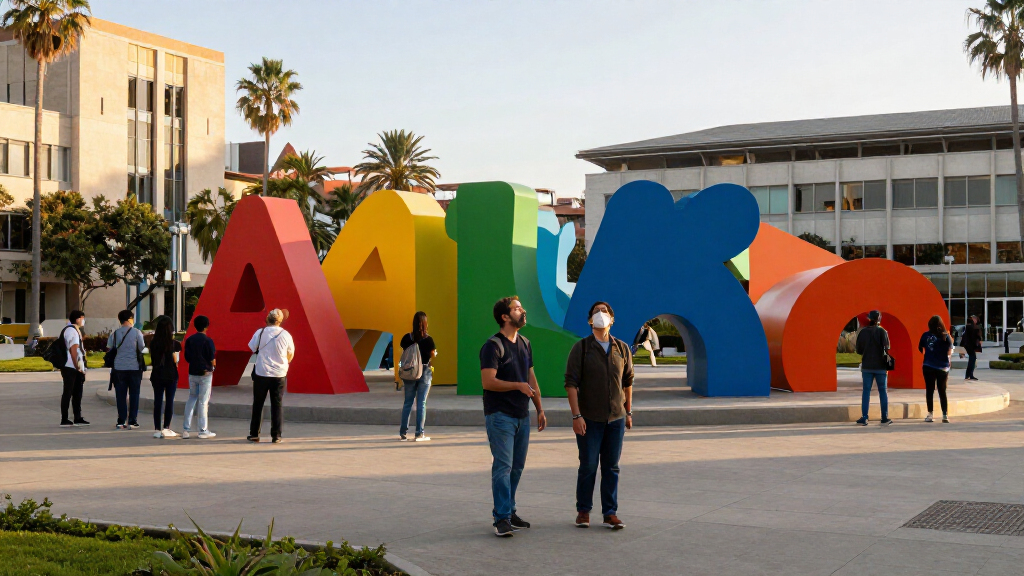
RojoNegro, the Mexican artist duo representing Mexico at the 61st Venice Biennale, has installed La asamblea del barro, a permanent outdoor artwork at UC San Diego. The work consists of 260 hand-painted ceramic tiles on four tree-like panels and draws on Mesoamerican knowledge, cultural memory and colonial history.
Mexican artist duo RojoNegro has installed La asamblea del barro, a permanent outdoor artwork outside the Triton Center at the University of California, San Diego. The installation brings 260 hand-painted ceramic tiles together on four tree-like panels, presenting Mesoamerican ideas about cultural memory and knowledge in a public campus setting.

Get business pricing on tools and workshop supplies
- Business-only prices and quantity discounts
- Tax-exempt purchasing
- Multiple users, one account, clear invoices
The work is dated 2026 and was recently unveiled on the UC San Diego campus, according to Hyperallergic’s report. Each of its 260 ceramic tiles is unique and hand-painted. The source describes the panels as tree-like and places the installation outside the university’s Triton Center. It does not specify the date of the unveiling.
RojoNegro is the artistic partnership of María Sosa and Noé Martínez, artists from Michoacán who are based in Mexico City. The pair are representing Mexico at the 61st Venice Biennale. Sosa has Purépecha roots, while Martínez’s family origins are in the Huasteca region, according to the report.
The artists say the installation considers how cultural knowledge passes between generations and how Mesoamerican and Western knowledge have been shaped by colonialism. Their practice draws on Indigenous ways of being and ancestral knowledge, the report says. These themes are the artists’ stated framework for the work; they are not a claim that one artwork can summarize the experiences of all Indigenous communities.
Mesoamerican Knowledge in Public
By placing the work outside a university building, RojoNegro makes Indigenous histories and ideas part of a shared campus space rather than limiting them to a gallery or classroom. The installation’s public location gives students, staff and visitors an opportunity to encounter the artists’ themes as part of everyday campus life.
The work also connects a local public-art installation with a wider international moment in the duo’s career: Sosa and Martínez are representing Mexico at the 61st Venice Biennale. The campus project is distinct from that representation, but both place the artists’ practice before audiences beyond their home region. The report does not provide details on how UC San Diego will interpret or program the installation for visitors.
Products Worth Considering

iRobot Roomba 105 Combo Robot Vacuum and Mop with AutoEmpty Dock

TCL 85-Inch QM6K QLED Mini LED 4K HDR Smart Google TV, 144Hz

Dyson V8 Cyclone Cordless Vacuum
As an affiliate, we earn on qualifying purchases.
Artists and Ancestral Memory
RojoNegro’s work often foregrounds Indigenous knowledge and ways of being, according to the source report. Sosa’s Purépecha roots and Martínez’s family origins in the Huasteca inform the background the artists bring to their collaboration. The report describes their practice as challenging colonial narratives and drawing attention to knowledge carried through materials and practices over generations.
In its account of the installation, Hyperallergic frames this history against centuries of colonial efforts to erase Indigenous cultures. The artwork’s title, La asamblea del barro, is presented alongside its ceramic material and the artists’ interest in memory and transmission. The source does not offer a detailed account of the production process beyond noting that the tiles were hand-painted, or explain how the piece was commissioned and funded.
““In ‘La asamblea del barro,’ we include the four cosmic trees that sustain the universe in Mesoamerican thought.””
— RojoNegro, in a statement about the artwork
Installation Details Still Unreported
The available report confirms the artwork’s location, materials, tile count and permanent status, but leaves several practical details unanswered. It does not state the exact unveiling date, the commissioning process, the project’s cost or the names of other institutions or individuals involved in its development.
The source also does not explain whether the university plans public tours, educational events or interpretive materials, or how visitors can access the site. Those details should not be inferred from the artwork’s campus location. The artists’ statements describe their intent and interpretation; the report does not establish how audiences have responded.
Public Access and Campus Programming
The installation is described as permanent, so it is expected to remain on the UC San Diego campus rather than appear as a temporary exhibition. The source material does not announce a future event, opening program or maintenance schedule.
Further information from UC San Diego could clarify visitor access, any accompanying educational programming, and the commission’s history. Until the university or artists provide those details, the confirmed development is the installation itself: a 260-tile work outside the Triton Center that brings RojoNegro’s stated themes of Mesoamerican knowledge and intergenerational memory into a public campus setting.
Key Questions
What is La asamblea del barro?
It is a permanent outdoor artwork by Mexican duo RojoNegro, installed outside the Triton Center at UC San Diego. The work is made of 260 unique, hand-painted ceramic tiles mounted on four tree-like panels.
Who are the artists behind the installation?
María Sosa and Noé Martínez make up RojoNegro. They are from Michoacán and are based in Mexico City; the report says they are representing Mexico at the 61st Venice Biennale.
What ideas does the artwork explore?
The artists say it explores cultural memory across generations, Mesoamerican thought and the relationship between Indigenous and Western knowledge. Their statement also links the work’s four cosmic trees to relationships among the body, surroundings and nature.
Where is the work located?
It is installed outside the Triton Center on the University of California, San Diego campus. The source report does not give further visitor-access instructions.
When was the installation unveiled?
The artwork is dated 2026 and was described as recently unveiled in the report, but the source does not provide an exact unveiling date.
Source: hyperallergic.com