TL;DR

Get business pricing on tools and workshop supplies
- Business-only prices and quantity discounts
- Tax-exempt purchasing
- Multiple users, one account, clear invoices
A Livingetc feature examines how social media has given homes a public life, influencing what people value and how interiors are designed and displayed. Its sources describe both the pressure of idealized domestic images and a distinction between creating content and living at home; the degree of that pressure on ordinary household choices remains unclear.
Livingetc has published a feature examining how social media turns the home into both a private living space and a public image, raising questions about whether people shape interiors for themselves or for an imagined online audience. The report draws on architect and academic Javier Fernández Contreras and the creative duo Dima and Guy of The Berlin Chapters, whose accounts highlight the difference between domestic life and the images circulated online.
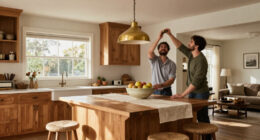
The feature argues that domestic space has long communicated identity, status and aspiration, but social platforms have expanded its audience. Homes now appear as backdrops, portfolios and galleries as well as places to live. Instagram, TikTok, Twitch and Pinterest circulate interior images and can influence the standards people use to judge their own spaces, according to Fernández Contreras, author of The Interiors of Social Media: Architecture, Space, and Technology in the 21st Century.
Fernández Contreras describes platforms as producing “aspirational futures” and says they can make the home a “container for visual representation.” The report connects that shift to design choices that emphasize visual composition: artworks displayed on uncluttered walls, collectible furniture given room to stand out, theatrical lighting and everyday items kept out of sight. It also notes that these choices can reflect genuine interest in art, craft and design, not simply a desire to perform for viewers.
The pandemic accelerated the visibility of domestic space, the feature says. As people worked and communicated from home, bookshelves, kitchen islands and the walls behind desks became part of professional and public presentation. For creators, renovation can also become a sequence of content, from demolition and sourcing to a finished-room reveal. The source does not quantify how common that practice is or how many people change their homes specifically to attract attention online.
When Home Becomes Public
The issue matters because social platforms can affect more than decoration. If images of carefully composed interiors become a reference point, they may shape what people consider attractive, acceptable or successful at home. Fernández Contreras warns that platforms can promote normative models of domesticity that deserve scrutiny, comparing the process to the way social media can reinforce ideals about bodies.
That possibility sits alongside a more positive design culture. Greater exposure to interiors can expand people’s visual vocabulary and introduce them to artists, makers and furniture they might not otherwise encounter. The report does not conclude that a visually arranged home is false or that people who share interiors are necessarily acting for an audience. Instead, it asks where personal expression ends and external expectation begins, and whether a home can accommodate both representation and ordinary use.
For readers, the distinction is practical as well as cultural. A room may look carefully staged in a photograph while still serving its residents comfortably. Conversely, a constant comparison with idealized images could make everyday clutter or practical needs feel like failures. The feature raises that concern but offers no survey or other evidence establishing how often online imagery leads people to sacrifice comfort, money or privacy.
Products Worth Considering

Philips Hue Smart LED Candle Light Bulb (B39, E12) – 2 Pack

eufy Security Video Doorbell E340 Kit with Chime, 2K Resolution and 8GB Local Storage

Shark Rocket Corded Stick Vacuum for Carpet and Hard Floors, Gray/Orange, HV301
As an affiliate, we earn on qualifying purchases.
From Private Rooms to Feeds
The Livingetc article is part of The Meaning of Home, a series described by the magazine as exploring how domestic spaces shape the way people live, think and feel. Its focus is the changing public role of the home, rather than a specific renovation, policy change or new research finding.
The report presents social media as an acceleration of an older practice: using interiors and objects to express identity and aspiration. What has changed, it argues, is the potential permanence and reach of the audience. During the pandemic, home offices and kitchens became visible in work calls, broadcasts and online posts. In the creator economy, the same space can function as residence, studio and portfolio.
The feature also describes homes taking on gallery-like qualities, with objects isolated and arranged to draw attention. It presents this not only as a response to online images but as part of broader overlaps between art, craft and furniture. One unrelated passage in the supplied source concerns a South Korea exhibition and does not establish a direct connection to the article’s argument about social media and domestic life.
“Social media can produce “aspirational futures” and turn the home into a “container for visual representation.””
— Javier Fernández Contreras, architect and academic
How Much Pressure Do Images Create?
The feature offers cultural analysis and personal testimony, not a quantified study. It does not establish how many people alter their homes to appeal to social media, how much they spend, or whether online exposure directly causes particular design decisions. Its discussion of potential pressure should therefore be read as an interpretation, not as a measured finding about all users.
It is also unclear how viewers distinguish deliberate staging from the ordinary life of a home, or how often a polished image reflects a space that remains comfortable and functional. Dima and Guy say they do not experience their home as a set when they are not creating content, but their account cannot establish how other creators or households feel. The source gives no publication date, and it reports no new policy, platform response or follow-up research.
The Question for Homeowners
The article’s immediate next step is a question for readers rather than a scheduled event: what, if anything, are they willing to give up to make a home more visually compelling? The source material identifies no planned study, campaign or platform change that would settle the issue.
For now, the report leaves the tension open. Social media can provide inspiration and a wider audience for design, while also making private rooms part of public comparison. Whether a home is being shaped mainly for its residents, for a camera or for both will vary by household; the feature does not claim a single answer. What happens next depends on how people and creators balance visual presentation with everyday needs.
Key Questions
What is the “performed home” idea?
It describes the home’s growing role as a space that is not only lived in but also shown to an audience through social media, work calls and creator content. The Livingetc feature asks how that public role may affect expectations about domestic life.
Does the feature say everyone designs for Instagram?
No. It raises the possibility that online images influence how people judge interiors, but it does not claim everyone makes design choices for social media. Dima and Guy of The Berlin Chapters say their home feels like home first when they are not making content.
He argues that platforms can circulate “aspirational futures” and encourage normative ideas about domesticity. The article presents this as his analysis; it does not report a quantified study measuring the effect.
Does the report show that people sacrifice comfort for appearance?
No. It asks whether people may make that trade-off but provides no data on how often it happens or what people give up. The article also notes that visually composed interiors can coexist with ordinary domestic use.
Source: livingetc.com