The main difference between 10-inch and 12-inch miter saws is their cutting capacity. A 10-inch saw handles materials up to about 3-1/2 inches thick and is perfect for trim work and small projects. A 12-inch model offers a larger cut capacity, allowing you to handle thicker and wider materials with more stability. While 12-inch saws are bulkier and more powerful, a 10-inch saw is more portable. Keep exploring to discover which saw suits your project needs best.
Key Takeaways
- 12-inch saws handle thicker and wider materials, offering deeper cuts compared to 10-inch models.
- 12-inch saws are generally larger, heavier, and less portable than 10-inch saws.
- Larger blades in 12-inch saws are more expensive and less common but support demanding projects.
- 10-inch saws are ideal for trim work and small projects, while 12-inch saws are better for heavy-duty tasks.
- Both saws provide accurate cuts; size influences stability, safety, and suitability for different materials.
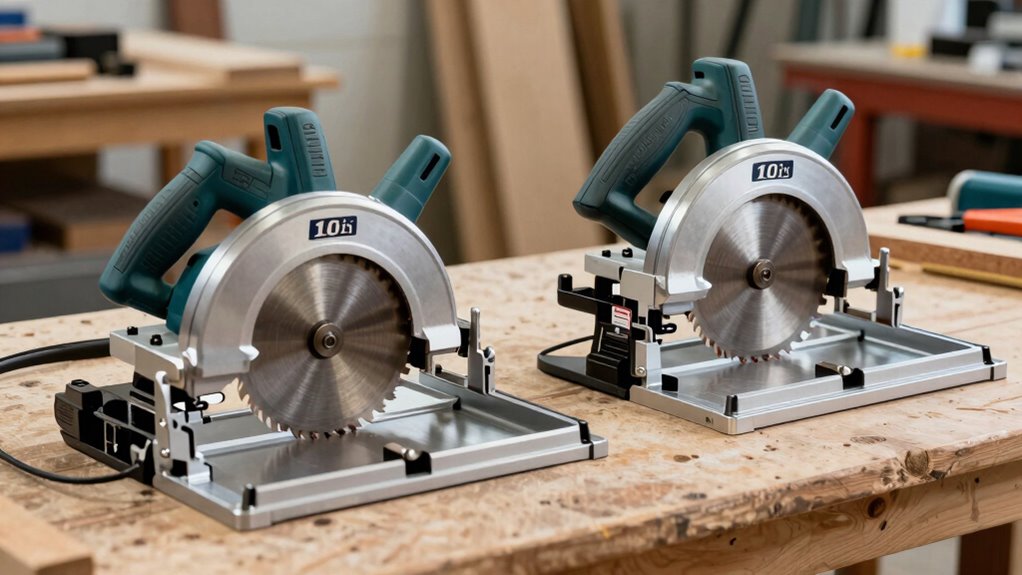
When choosing between a 10-inch and a 12-inch miter saw, understanding their key differences can help you make the right decision for your projects. The most noticeable distinction lies in their blade size, which directly impacts the cutting capacity. A 10-inch saw features a smaller blade, typically around 10 inches in diameter, while a 12-inch saw has a larger blade, measuring about 12 inches. This difference may seem minor, but it considerably affects the types of cuts you can make and the materials you can handle.
The blade size determines the maximum cut depth and width. With a 10-inch saw, you can usually make crosscuts and miter cuts in materials up to about 3-1/2 inches thick. This size is sufficient for most trim work, small furniture projects, and general carpentry. Conversely, a 12-inch saw allows you to cut thicker and wider pieces, often up to 4 inches or more. This increased cutting capacity means you can handle larger crown moldings, broader baseboards, or thicker lumber without flipping or repositioning your workpiece. If your projects involve substantial or heavy-duty materials, a 12-inch saw offers clear advantages.
However, the larger blade also means a bigger, heavier saw. A 12-inch miter saw tends to be bulkier and less portable, which might be a concern if you need to move it around frequently or work on-site. The size difference also impacts the power requirements; 12-inch saws often come with more powerful motors to support their larger blades, making them more suitable for intensive tasks but also more expensive and potentially more challenging to operate. Additionally, the blade size can influence the overall cost and availability of replacement blades, which is an important consideration for long-term use. It’s also worth noting that blade compatibility can affect your ability to switch between different blade types for specialized cuts. Furthermore, understanding the cutting capacity is essential for matching the saw to your specific projects and needs. When evaluating different models, considering blade quality can also help ensure cleaner cuts and longer-lasting blades.
Another factor to consider is the safety features that accompany larger saws, as they often require different handling techniques to operate safely. In terms of precision, both saws can deliver accurate cuts, but the larger blade on a 12-inch saw provides better stability when cutting larger or thicker materials. This stability can translate into cleaner, more precise cuts, especially on wider boards. But, if your projects mainly involve smaller trim work or detailed cuts, a 10-inch saw might be more than enough, offering easier handling and less storage space. Ultimately, selecting the right size involves balancing your project scope with considerations of portability and budget.

Metabo HPT 10-Inch Single Bevel Compound Miter Saw, 15-Amp Power Saw with Xact Cut Shadow Line, Precision Miter Angles, Single Bevel 0-45°, 40T TCT Miter Saw Blade, Lightweight Design, C10FCG2
POWERFUL AND PRECISE: This 10-inch single bevel compound miter saw features a 15-Amp motor delivering high power for…
As an affiliate, we earn on qualifying purchases.
As an affiliate, we earn on qualifying purchases.
Frequently Asked Questions
Which Miter Saw Is More Portable for Job Sites?
A 10-inch miter saw is more portable for job sites because it’s generally lighter and easier to carry around. You’ll appreciate its shorter battery life, but that’s often enough for smaller cuts. Its weight comparison shows it’s less cumbersome, making setup and transport simpler. If portability matters most, choose the 10-inch model, especially if you need a lightweight saw for quick, on-the-go jobs.
How Do Blade Costs Compare Between 10-Inch and 12-Inch Saws?
You’ll find that blade costs are generally higher for 12-inch saws due to their larger size and increased blade durability demands. While they might be more expensive upfront, they often offer better cost efficiency over time because of longer-lasting blades and fewer replacements. Conversely, 10-inch blades tend to be cheaper initially, but you might need to replace them more frequently, affecting overall durability and cost efficiency.
Are 12-Inch Saws Suitable for Delicate, Detailed Cuts?
Yes, 12-inch saws can handle delicate, detailed cuts, but they might not offer the same precision accuracy as smaller saws. Their larger blades provide greater versatility for various cuts, making them suitable for diverse projects. However, for fine, intricate work, a 10-inch saw often delivers more control and precision. If you prioritize blade versatility and power, a 12-inch saw can still be a good choice for detailed tasks.
What Safety Features Differ Between the Two Sizes?
You’ll find that safety features differ mainly in blade compatibility and dust collection systems. The 12-inch saw often has larger guards and better dust collection, reducing debris and increasing safety. Both sizes usually include blade guards and safety switches, but the 12-inch model often offers enhanced dust collection, making your workspace cleaner and safer. Always check specific models for features like blade covers and dust ports to guarantee maximum safety.
How Does Motor Power Typically Vary?
A stitch in time saves nine, and understanding motor power helps you make smarter choices. Generally, 12-inch miter saws feature more powerful motors—around 15 to 20 amps—offering better cutting capacity and efficiency. In contrast, 10-inch saws usually have slightly lower motor specifications, around 13 to 15 amps, which can lead to differences in power efficiency. Your choice depends on the cuts you plan to make and the power you need.

DEWALT Miter Saw, 12 Inch Double Bevel Sliding Compound Miter Saw, Includes Blade Wrench and Clamp, Increased Crosscut Capacity, Powerful 3800 RPM Motor 15 Amp (DWS779)
Powerful 15 Amp, 3,800 rpm motor delivers extended power and durability
As an affiliate, we earn on qualifying purchases.
As an affiliate, we earn on qualifying purchases.
Conclusion
Ultimately, choosing between a 10-inch and 12-inch miter saw depends on your projects and workspace. If you’re tackling smaller cuts and want a more versatile, portable tool, a 10-inch saw is your best bet. But if you’re aiming for larger, more precise cuts, the 12-inch model will serve you well—like a trusty sword in a knight’s arsenal. So, weigh your needs carefully, and remember, even in the age of knights and castles, the right saw makes all the difference.

AltitudeCraft Crown Stops for Miter Saw – Simplifies Compound Angle Cutting, Heavy Duty Crown Molding Jig Fits DEWALT DWS780 DW718 DW716 & Other DEWALT Models
Simplify Complex Cutting: Streamlines crown cutting by allowing for precise 45° miter cuts (nested method) without needing the…
As an affiliate, we earn on qualifying purchases.
As an affiliate, we earn on qualifying purchases.
Metabo HPT 10-Inch Single Bevel Compound Miter Saw, 15-Amp Power Saw with Xact Cut Shadow Line, Precision Miter Angles, Single Bevel 0-45°, 40T TCT Miter Saw Blade, Lightweight Design, C10FCG2
POWERFUL AND PRECISE: This 10-inch single bevel compound miter saw features a 15-Amp motor delivering high power for…
As an affiliate, we earn on qualifying purchases.
As an affiliate, we earn on qualifying purchases.