To choose the right log splitter tonnage without guessing, start by evaluating the types and sizes of logs you’ll typically split. Softer woods like pine need less power, around 20-30 tons, while harder woods like oak require 30-50 tons. Consider log diameter and density for a better match. Always follow manufacturer recommendations, and keep safety in mind. If you want to know how to make an accurate choice based on your logs, there’s more you can learn here.

Get business pricing on tools and workshop supplies
- Business-only prices and quantity discounts
- Tax-exempt purchasing
- Multiple users, one account, clear invoices
Key Takeaways
- Assess the type and density of logs to determine required splitting force.
- Match wood hardness (soft or hard) with recommended tonnage ranges.
- Consider log size and diameter to choose an appropriate splitter capacity.
- Consult manufacturer guidelines and online resources for specific force recommendations.
- Evaluate safety, maintenance, and longevity factors to ensure optimal tonnage selection.
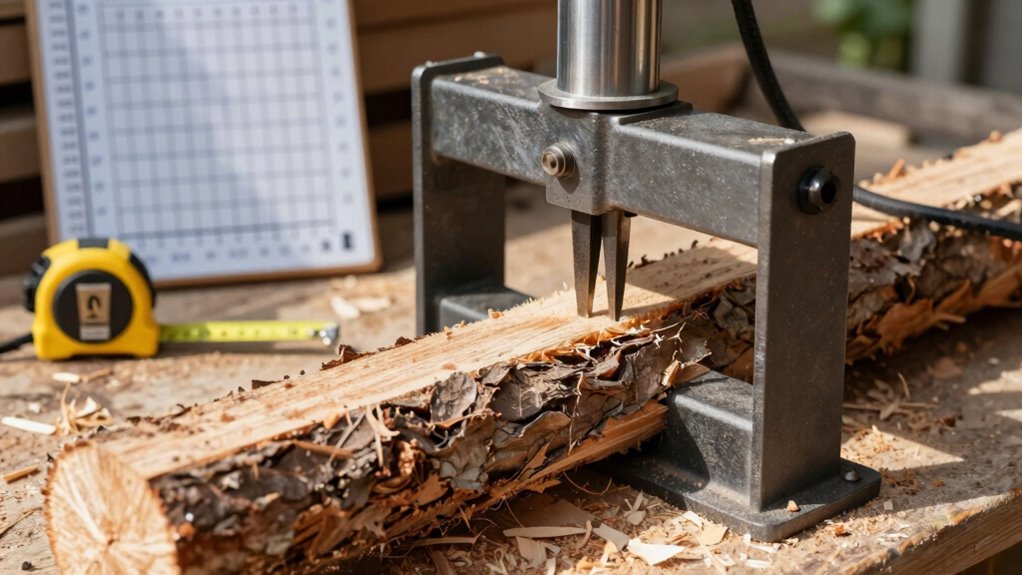
When selecting a log splitter, understanding the importance of tonnage can make all the difference in finding the right machine for your needs. Tonnage measures the splitting power of the machine, indicating how much force it can exert to split logs. Choosing the correct tonnage ensures you can handle your wood efficiently without overdoing it or risking damage to the equipment. To do this confidently, you need to assess the types of logs you’ll be splitting, including their size, density, and the species of wood. For softer woods like pine or cedar, a lower tonnage—around 20 to 30 tons—usually suffices. Harder woods like oak or hickory, however, demand higher tonnage, often between 30 and 50 tons, to get the job done smoothly. Understanding the splitting force of your machine is essential for making an informed choice.
Choosing the right tonnage ensures efficient, safe log splitting tailored to your wood type and size.
Knowing the right tonnage also helps you avoid unnecessary strain on the machine and prolong its lifespan. If you opt for too much power, you might be paying more upfront and risking wear and tear faster. Conversely, choosing too little power can lead to frustration, as logs won’t split properly, forcing you into multiple attempts and possibly damaging the equipment. It’s also helpful to consider the types of logs you’ll be working with, as this impacts the necessary power level. Additionally, knowing the wood density can help you better estimate the required tonnage for different species. In some cases, consulting manufacturer guidelines can provide valuable insights into the appropriate tonnage for specific log sizes and types. Once you’ve determined the needed tonnage, it’s crucial to follow safety precautions at every step. Always wear appropriate protective gear—gloves, safety glasses, and steel-toed boots—to prevent injuries. Keep your hands clear of moving parts and never force logs into the splitter; let the machine do the work.
Regular maintenance is key to keeping your log splitter running safely and efficiently. After each use, inspect for signs of wear or damage, especially on hydraulic hoses and the wedge. Lubricate moving parts as recommended by the manufacturer to prevent rust and ensure smooth operation. Keep the splitting area clean and free of debris to avoid accidents. Proper maintenance tips also include storing the machine in a dry, sheltered place to prevent corrosion and checking fluid levels periodically. Implementing these practices can significantly extend the lifespan of your equipment and ensure safety during operation.
Understanding how to select the right tonnage, combined with following safety precautions and maintenance tips, guarantees you get the most out of your log splitter. It’s not just about power; it’s about matching the machine to your specific needs and caring for it properly. With these steps, you’ll be able to split wood efficiently, safely, and with confidence, making your firewood preparation faster and more reliable.
As an affiliate, we earn on qualifying purchases.
Frequently Asked Questions
How Does Wood Type Affect Required Log Splitter Tonnage?
Wood type considerably impacts the required log splitter tonnage because of differences in wood density and split size. Hardwoods like oak or hickory need more force to split due to their density, requiring a higher tonnage. Softwoods like pine are easier, needing less power. Larger split sizes also demand more tonnage. So, consider both wood density and split size to choose the right splitter, ensuring efficiency and safety.
Can Overestimating Tonnage Cause Damage to the Splitter?
Overestimating tonnage can cause damage to your splitter if you rely solely on brute force, especially with improper splitting technique. Excessive force may strain the hydraulic system or damage the ram. To prevent this, use the right tonnage for your wood type and size, and guarantee proper log storage to keep wood stable. A balanced approach ensures safe operation, prolongs your splitter’s lifespan, and results in cleaner splits.
What Safety Features Should I Look for in a Log Splitter?
Imagine a sudden malfunction as you’re splitting logs — safety features become your lifeline. Look for safety protocols like guards that shield your hands and an emergency shutoff that stops the machine instantly. These features prevent accidents and keep you safe during operation. Make certain your log splitter has clear, accessible safety controls, and always read the user manual to understand all safety precautions before starting. Your safety depends on it.
How Often Should I Perform Maintenance on My Log Splitter?
You should perform maintenance on your log splitter every 25-50 hours of use or at least once a season, whichever comes first. Regular checks help guarantee peak fuel efficiency and reduce noise levels during operation. Change the hydraulic oil, inspect the hoses, and clean the machine regularly. Proper maintenance keeps your splitter running smoothly, extends its lifespan, and maintains safe, efficient performance.
Is Electric or Gas-Powered Better for Heavy-Duty Splitting?
If you’re tackling heavy-duty splitting, a gas-powered log splitter usually offers more power for tough jobs, but it’s less fuel-efficient and noisier. An electric splitter is quieter and more fuel-efficient, making it great for lighter or occasional use. However, for continuous heavy-duty work, gas models provide the necessary force. Consider your project’s demands, fuel efficiency, and noise levels to decide which suits your needs best.
hardwood log splitter 30-50 tons
As an affiliate, we earn on qualifying purchases.
As an affiliate, we earn on qualifying purchases.
Conclusion
Just like King Arthur choosing the right sword for his quest, selecting the proper log splitter tonnage guarantees you’re equipped for the challenge. Don’t leave it to chance—know your wood, understand your needs, and pick the right power to get the job done efficiently. With the right tonnage, you’ll be slicing through logs with confidence and ease, turning a formidable task into a straightforward victory. Equip yourself wisely, and let your firewood season be legendary.
hydraulic log splitter for large logs
As an affiliate, we earn on qualifying purchases.
As an affiliate, we earn on qualifying purchases.
As an affiliate, we earn on qualifying purchases.
Fall yard work Picks
leaf blowers
As an affiliate, we earn on qualifying purchases.