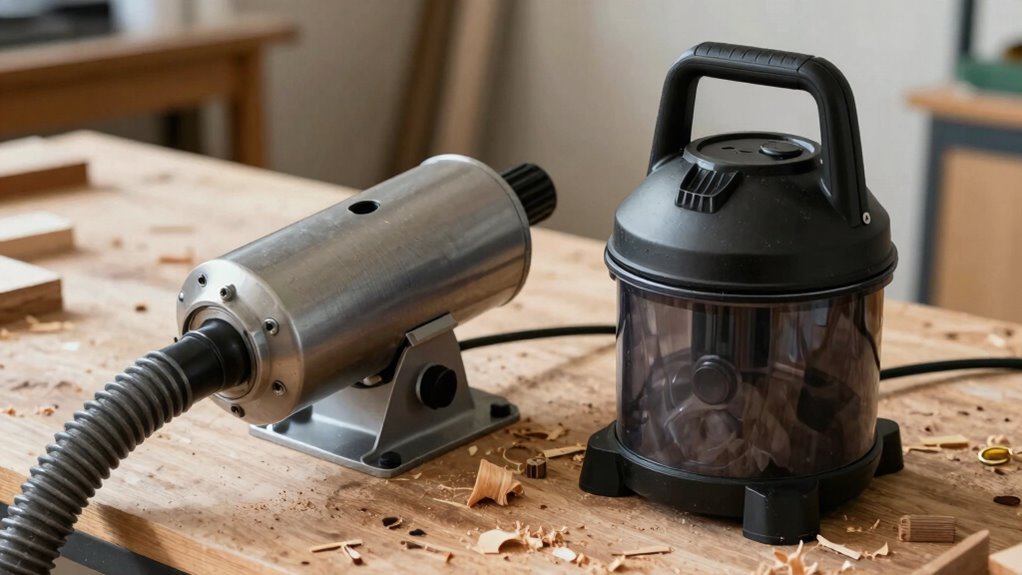
If you’re choosing between a dust extractor and a shop vac, consider what matters most for your workspace. Dust extractors are better at capturing fine dust, improving air quality, and operating quietly, making them ideal for long-term health and cleaner environments. Shop vacuums are more versatile and portable, great for quick cleanups and larger debris. To find out which suits your needs best and how each can benefit your projects, keep exploring the details ahead.
Listen free for 30 days with Audible
Thousands of audiobooks and originals — cancel anytime.
As an affiliate, we earn on qualifying purchases.
Key Takeaways
- Dust extractors are more effective at capturing fine dust directly at the source, improving air quality and safety.
- Shop vacuums are portable and better suited for quick cleanup of larger debris and general-purpose tasks.
- Dust extractors operate quieter with specialized noise-reduction features, ideal for shared or sensitive environments.
- Shop vacs are versatile but less effective for fine dust due to less advanced filtration systems.
- Investing in a dust extractor benefits long-term health by maintaining cleaner air and reducing airborne contaminants.
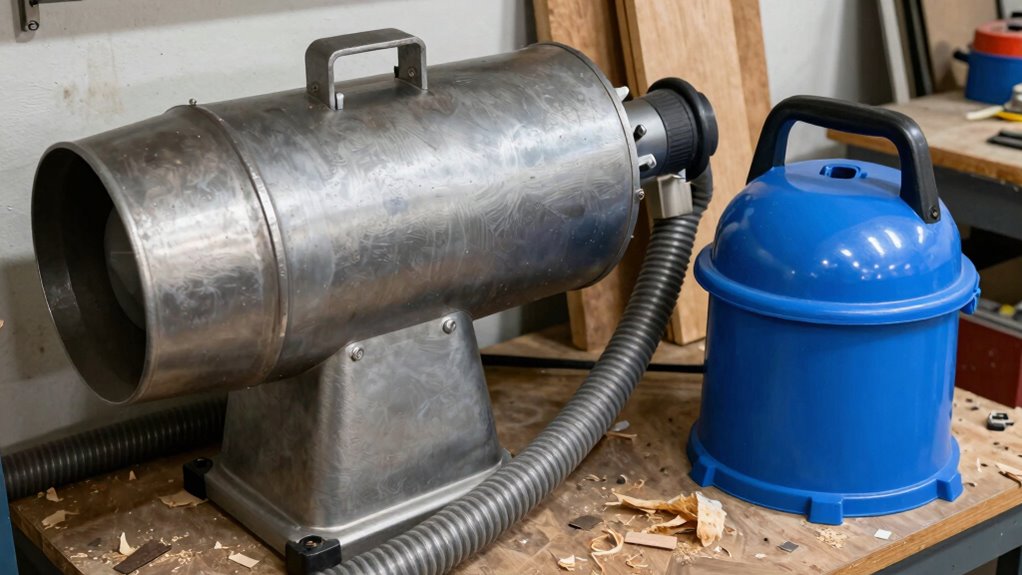
Are you unsure whether a dust extractor or a shop vac is better suited for your woodworking or construction projects? It’s a common question among tool users, and the answer depends on what you value most in your workspace. Dust extractors are designed specifically for air filtration, targeting fine dust particles that can linger in the air and pose health risks. They often come with high-efficiency filters that trap tiny particles, helping you breathe cleaner air during and after your work. Shop vacuums, on the other hand, are versatile and excel at picking up larger debris, but they don’t usually filter the air as thoroughly. If keeping your workspace free of fine dust is a priority, a dust extractor is likely the better choice because it actively improves air quality and reduces airborne contaminants. Additionally, air quality is a crucial aspect to consider for long-term health and safety in your workspace.
Noise levels are another critical factor to contemplate. Dust extractors are generally quieter than shop vacs because they’re built with sound-dampening features and optimized airflow paths. If you work in a shared space or need to minimize noise disruption, a dust extractor can help create a more comfortable environment. Shop vacuums tend to be louder, especially when used for longer periods or with high suction settings. This noise can become distracting or even harmful over time, so if quiet operation matters to you, investing in a dust extractor with noise reduction features makes sense. Proper air filtration is also essential to prevent dust accumulation that can affect machinery performance over time.
Beyond noise and air filtration, you should think about how each tool fits into your workflow. Dust extractors often come with specialized hoses and fittings designed to connect directly to power tools, capturing dust at the source before it has a chance to settle or become airborne. This not only keeps your workspace cleaner but also reduces cleanup time. Shop vacuums are more portable and flexible, suitable for quick pickups and a variety of messes, but they might not be as efficient in capturing fine dust during continuous woodworking sessions.
Ultimately, if your main concern is maintaining good air quality and reducing health risks, a dust extractor wins out thanks to superior air filtration and quieter operation. If you need a versatile, general-purpose vacuum for different kinds of debris, a shop vac is more practical. But for long-term health, cleaner air, and a more pleasant working environment, a dust extractor is the smarter investment. Choose the one that aligns best with your priorities, and you’ll enjoy a safer, more efficient workspace.
dust extractor with high efficiency filter
As an affiliate, we earn on qualifying purchases.
As an affiliate, we earn on qualifying purchases.
Frequently Asked Questions
Can a Shop Vac Be Used for Industrial Dust Extraction?
You can use a shop vac for some light industrial applications, but it’s not ideal for heavy-duty dust extraction. Shop vacs often lack the powerful suction and specialized filters needed for industrial dust, which can lead to frequent filter maintenance and reduced efficiency. For consistent performance and safety, especially with fine or hazardous dust, invest in a dedicated dust extractor designed for industrial applications.
How Often Should Filters Be Replaced in Dust Extractors?
Filter maintenance is vital for your dust extractor’s performance. You should replace filters based on the manufacturer’s recommendations, typically every 3 to 6 months, or sooner if you notice a decline in suction or visible damage. Regular replacement guarantees peak dust collection and prevents motor strain. Keep an eye on the filter’s condition, and don’t delay replacement to maintain safety and efficiency during your work.
Are Dust Extractors Compatible With All Power Tools?
Think of dust extractors as the universal adapters of your workshop, but they aren’t compatible with every power tool out there. Their dust filtration systems are designed to work best with certain tools, and power compatibility can vary. You’ll want to check each extractor’s specifications to make certain it matches your tools’ power requirements. Otherwise, you risk a mismatch that could hinder performance or even cause damage.
What Is the Noise Level Difference Between Dust Extractors and Shop Vacs?
The noise comparison shows that dust extractors are generally quieter than shop vacs, with sound level differences often ranging from 10 to 20 decibels. Dust extractors typically produce around 60-70 dB, making them more comfortable to use for extended periods. Shop vacs, on the other hand, can reach 80-90 dB, which is noticeably louder. You’ll appreciate the quieter operation of dust extractors, especially during long projects.
Can Both Devices Handle Wet and Dry Debris Effectively?
Both devices can handle wet and dry debris, but dust extractors excel in moisture management, preventing damage from wet debris, and often have better filtration. Shop vacuums typically have larger debris capacity, making them suitable for bigger messes. However, dust extractors are usually more specialized for fine dust and moisture, ensuring safer, cleaner operation. If you frequently deal with wet debris, a dust extractor might be the better choice.
portable shop vac for woodworking
As an affiliate, we earn on qualifying purchases.
As an affiliate, we earn on qualifying purchases.
Conclusion
Choosing between a dust extractor and a shop vac depends on your needs, but did you know that dust extractors can reduce airborne particles by up to 99%? This makes them ideal for protecting your health and keeping your workspace cleaner. While shop vacs are versatile and great for general cleanup, investing in a dust extractor can markedly improve your safety and efficiency during woodworking or construction projects. Make the smart choice for a safer, cleaner environment.
quiet dust extractor for workshop
As an affiliate, we earn on qualifying purchases.
As an affiliate, we earn on qualifying purchases.
dust collection hose and fittings
As an affiliate, we earn on qualifying purchases.
As an affiliate, we earn on qualifying purchases.
NFL season / tailgating Picks
team gear
As an affiliate, we earn on qualifying purchases.