If you’re a homeowner choosing between a gas and electric pressure washer, consider your cleaning needs. Gas models offer more power for large or tough jobs but are louder, heavier, and less eco-friendly. Electric washers are lighter, quieter, and cost less over time, making them ideal for small to medium tasks. Your decision depends on how often and how intensely you’ll use it. To discover which fits your lifestyle best, keep exploring the details ahead.
Key Takeaways
- Electric pressure washers are more suitable for light, occasional tasks due to their lower power and ease of use.
- Gas models offer higher power for larger or more demanding cleaning projects around the home.
- Electric washers are quieter, more portable, and environmentally friendly, ideal for noise-sensitive areas.
- Gas pressure washers consume more fuel, produce more noise, and require more maintenance, making them less convenient for casual use.
- Electricity costs are generally lower than gasoline, making electric models more cost-effective over time for typical homeowner needs.
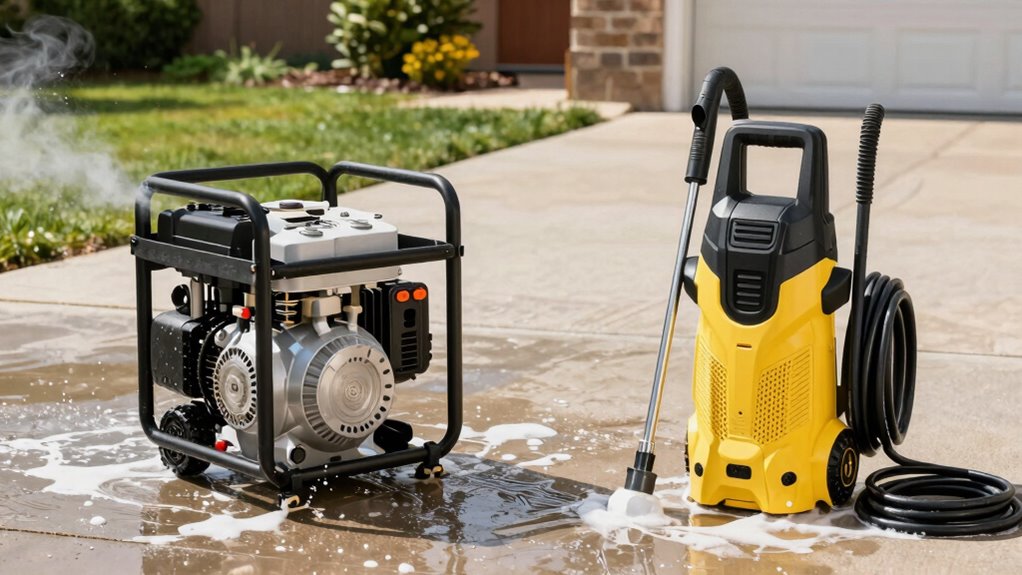
Are you trying to decide between a gas or electric pressure washer for your home? It’s a common dilemma, and understanding the differences can help you make the right choice. One of the first things to weigh is fuel efficiency. Gas pressure washers typically consume more fuel because they rely on gasoline engines, which tend to burn more fuel during extended use. If you plan to tackle large or frequent cleaning projects, a gas model might seem appealing for its power, but keep in mind that you’ll need to keep an eye on fuel levels and refill as needed. Conversely, electric pressure washers run on electricity, so they don’t require fuel, making them more cost-effective over time. Since electricity is generally cheaper than gasoline, electric models tend to be more fuel-efficient, especially if your cleaning tasks are occasional or smaller in scale. This can be a significant advantage if you’re conscious of ongoing costs or want a more environmentally friendly option.
Another factor to assess is noise levels. Gas pressure washers are known for being louder because their engines produce more noise during operation. If you live in a neighborhood with noise restrictions or prefer to avoid disturbing your family or neighbors, an electric model is usually much quieter. Electric pressure washers operate with a motor that produces less noise, allowing you to work longer or more comfortably without creating a lot of sound pollution. This makes electric washers ideal for residential use where noise can be a concern.
In addition, electric pressure washers are generally lighter and more compact, which adds to their convenience for home use. They’re easier to store and transport, making them perfect for quick jobs around the yard, deck, or driveway. Gas units, on the other hand, tend to be bulkier and heavier, which can make them more challenging to maneuver, especially if you don’t have a dedicated storage space.

Westinghouse ePX3500 Electric Pressure Washer, 2500 Max PSI 1.76 Max GPM with Anti-Tipping Technology, Onboard Soap Tank, Pro-Style Steel Wand, 5-Nozzle Set, for Cars/Fences/Driveways/Home/Patios
- High Pressure and Flow Rate: 2500 PSI max, 1.76 GPM max flow
- Pro-Style Steel Wand: 17.5-inch extendable with quick-connect nozzles
- Compact and Lightweight: 16.5 inches tall, 19 pounds for portability
As an affiliate, we earn on qualifying purchases.
As an affiliate, we earn on qualifying purchases.
Frequently Asked Questions
Which Pressure Washer Has a Longer Lifespan?
A gas pressure washer generally has a longer lifespan because of its durable power source and less frequent maintenance needs. You’ll find that gas models can handle tougher, more frequent use without wearing out quickly. Electric pressure washers, while easier to maintain, tend to have shorter lifespans due to their less durable power sources and more delicate electrical components. So, if longevity is your priority, a gas pressure washer is typically the better choice.
Are Electric Pressure Washers More Environmentally Friendly?
Imagine a tiny superhero, powered by sunshine and breezes, fighting grime with eco-friendly cleaning. Yes, electric pressure washers are more environmentally friendly because they use less energy and produce no emissions, tapping into renewable energy sources. They help you clean while reducing your carbon footprint. So, if you want to feel like a green hero, go electric—your planet will thank you for your eco-conscious choice.
How Noisy Are Gas Versus Electric Pressure Washers?
Gas pressure washers tend to be noisier, with sound levels often exceeding 80-90 decibels, making them quite loud during operation. Electric models, on the other hand, usually produce a quieter sound comparison, typically around 70 decibels or less. If noise levels are a concern for you, electric pressure washers are a better choice, offering quieter operation that’s less disruptive to your household or neighbors.
Can I Use Either Type for Delicate Surfaces?
Yes, you can use both types on delicate surfaces, but you need to be cautious. Gas pressure washers tend to have higher pressure, increasing the risk of surface damage, while electric models usually offer better cleaning versatility with adjustable pressure settings. Always choose a washer with a lower PSI, use a wide spray nozzle, and test in a small area first to prevent surface damage.
What Are the Safety Concerns With Gas Pressure Washers?
Gas pressure washers pose safety concerns mainly due to fuel emissions, which can be harmful if inhaled in enclosed spaces. You should always operate them outdoors in well-ventilated areas and avoid inhaling exhaust fumes. Follow safety precautions like wearing protective gear, keeping a safe distance from the spray, and ensuring proper maintenance. Never refuel a hot engine, and store fuel safely to prevent leaks or fires.

DeWalt 3300 PSI Gas Pressure Washer, 2.4 GPM, Residential Model DXPW3300-S
- Easy-to-start 208cc engine: Ideal for residential cleaning tasks
- Powerful 3300 PSI at 2.4 GPM: Effective for heavy-duty cleaning
- Durable welded steel frame: Ensures long-lasting use
As an affiliate, we earn on qualifying purchases.
As an affiliate, we earn on qualifying purchases.
Conclusion
Choosing between a gas and electric pressure washer is like picking between a trusty steed and a nimble bicycle. If you want raw power and durability, the gas engine is your rugged companion, ready for any challenge. But if you prefer ease and convenience, the electric washer is your swift, efficient partner for everyday chores. Whichever you choose, remember: your decision shapes your cleaning journey—so pick the one that best matches your ride.
Westinghouse ePX3500 Electric Pressure Washer, 2500 Max PSI 1.76 Max GPM with Anti-Tipping Technology, Onboard Soap Tank, Pro-Style Steel Wand, 5-Nozzle Set, for Cars/Fences/Driveways/Home/Patios
- High Pressure and Flow Rate: 2500 PSI max, 1.76 GPM max flow
- Pro-Style Steel Wand: 17.5-inch extendable with quick-connect nozzles
- Compact and Lightweight: 16.5 inches tall, 19 pounds for portability
As an affiliate, we earn on qualifying purchases.
As an affiliate, we earn on qualifying purchases.

Westinghouse ePX3100v Electric Pressure Washer, 2100 Max PSI 1.76 Max GPM, Built-in Carry Handle, Detachable Foam Cannon, Pro-Style Steel Wand, 3-Nozzle Set, for Cars/Fences/Driveways/Home/Patios
- Maximum Pressure: 2100 PSI at lowest pressure
- Water Flow Rate: 1.76 GPM max flow
- Rated Pressure: 1800 PSI rated
As an affiliate, we earn on qualifying purchases.
As an affiliate, we earn on qualifying purchases.