TL;DR

Get tools and workshop supplies delivered free — and shop member deals
- Fast, free delivery on millions of items
- Access to Prime Big Deal Days deals on October 6–7
- Prime Video, Amazon Music and more included
A Hunker comparison says gravel driveways typically need regular raking, weed removal and regrading, while chip seal generally needs crack repairs and resealing every three to five years. Gravel may suit owners willing to do small tasks often; chip seal may suit those who prefer less frequent but more involved maintenance.
A Hunker report comparing gravel and chip seal driveways finds that neither option is maintenance-free: gravel generally needs more frequent hands-on attention, while chip seal calls for occasional repairs and resurfacing. Which is easier to live with depends on whether a homeowner prefers routine work such as raking and regrading or less frequent, more involved upkeep.
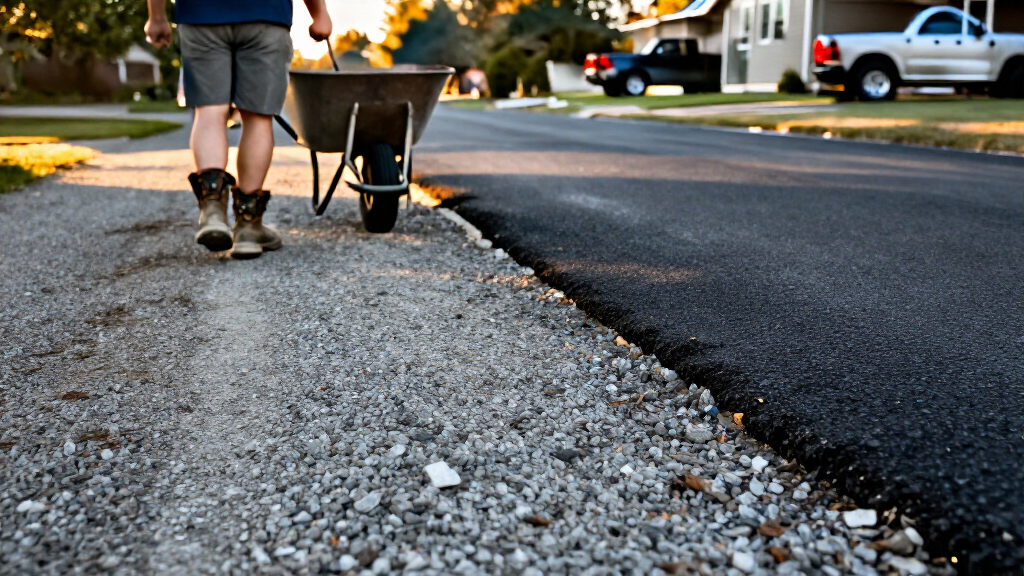
Gravel driveways are made from layers of crushed stone topped with loose gravel. The report says vehicle traffic and weather can compact or displace the stones, leaving ruts and uneven areas. Owners may need to refill ruts, remove weeds, rake gravel back into place and regrade the driveway every one to three years.
Chip seal, also called tar-and-chip, is made by applying liquid asphalt and covering it with stone chips. Because the chips are bonded to the base, the surface is less susceptible to erosion than loose gravel, according to Hunker. Typical upkeep includes repairing cracks, power-washing, clearing drainage areas and resealing every three to five years.
The report gives chip seal an average upfront cost of $1 to $5 per square foot, describing it as slightly more expensive than gravel on average. It does not provide a gravel price range or a direct cost comparison for a particular driveway, so local estimates would be needed to weigh total costs.
Upkeep Shapes Daily Driveway Use
The choice affects more than appearance. Ruts and displaced stones can make a gravel driveway less even and may hinder traction and drainage, while weeds and repeated grading add recurring chores. Chip seal can reduce those frequent tasks, but its maintenance is not eliminated: owners still need to address cracks and plan for periodic resealing.
That difference can matter to homeowners weighing the initial expense against the time and effort required over the years. Hunker’s comparison frames the decision as a trade-off between frequent small jobs and less frequent, scheduled surface work—not a simple choice between a high-maintenance and maintenance-free option.
As an affiliate, we earn on qualifying purchases.
How The Surfaces Differ
Both materials are presented in the report as alternatives to common concrete and asphalt driveways. Gravel relies on a loose stone surface, whereas chip seal holds stone chips to an asphalt layer. That construction difference helps explain why gravel can shift under traffic and why chip seal is described as less prone to erosion.
Hunker says driveway choices can range from $1 to more than $50 per square foot, depending on the material, but that broad range is not a quote for either option. The report also identifies durability, drainage, climate compatibility and appearance as factors to weigh. It does not supply location-specific comparisons for those factors, so conditions at a particular property remain relevant.
“The easiest driveway to live with isn’t necessarily set in stone.”
— Hunker report
chip seal driveway crack repair kit
As an affiliate, we earn on qualifying purchases.
As an affiliate, we earn on qualifying purchases.
Costs And Conditions Vary Locally
The supplied report does not give a specific gravel installation price, a lifespan estimate for chip seal, or a costed comparison over the same period. Its maintenance intervals are general guidance, not guarantees for every driveway. Climate, traffic, drainage, installation quality and local costs may affect how often work is needed, but the source does not quantify those differences.
It is also unclear how the two options would perform at any particular home without details about site conditions and owner priorities. The comparison does not establish that one material is best for all properties; it describes different upkeep patterns and trade-offs.
As an affiliate, we earn on qualifying purchases.
Compare Local Quotes And Upkeep
Homeowners considering either surface can use the report’s maintenance schedules as starting points, then ask local contractors for itemized installation and maintenance estimates. Quotes should clarify what preparation is included, what repairs may be needed and how often resurfacing is expected under local conditions.
Before deciding, owners can also assess drainage, traffic and the amount of routine work they are prepared to do. The source provides no new policy, product launch or scheduled follow-up; the next step for readers is a property-specific comparison rather than assuming the general figures apply everywhere.
As an affiliate, we earn on qualifying purchases.
Key Questions
Which driveway usually needs more frequent upkeep?
According to Hunker, gravel generally needs more frequent attention, including raking, weed removal, filling ruts and periodic regrading.
How often does a gravel driveway need regrading?
The report says regrading may be needed every one to three years. Actual timing can vary with weather, traffic and how the driveway is maintained.
How often should chip seal be resealed?
Hunker says chip seal driveways typically need resealing every three to five years, alongside crack repairs and other care.
Is chip seal more expensive than gravel?
The report describes chip seal as slightly more expensive than gravel on average and gives a chip seal range of $1 to $5 per square foot. It does not provide a gravel price range, so local quotes are needed for a direct comparison.
Which option is easier to live with?
That depends on maintenance preferences. Gravel involves more frequent small tasks; chip seal generally involves less frequent repairs and periodic resealing. Neither option is maintenance-free.
Source: rss
Fall yard work Picks
leaf blowers
As an affiliate, we earn on qualifying purchases.