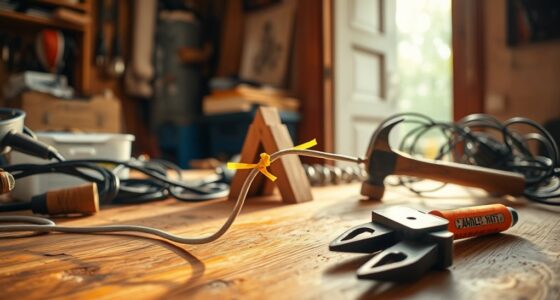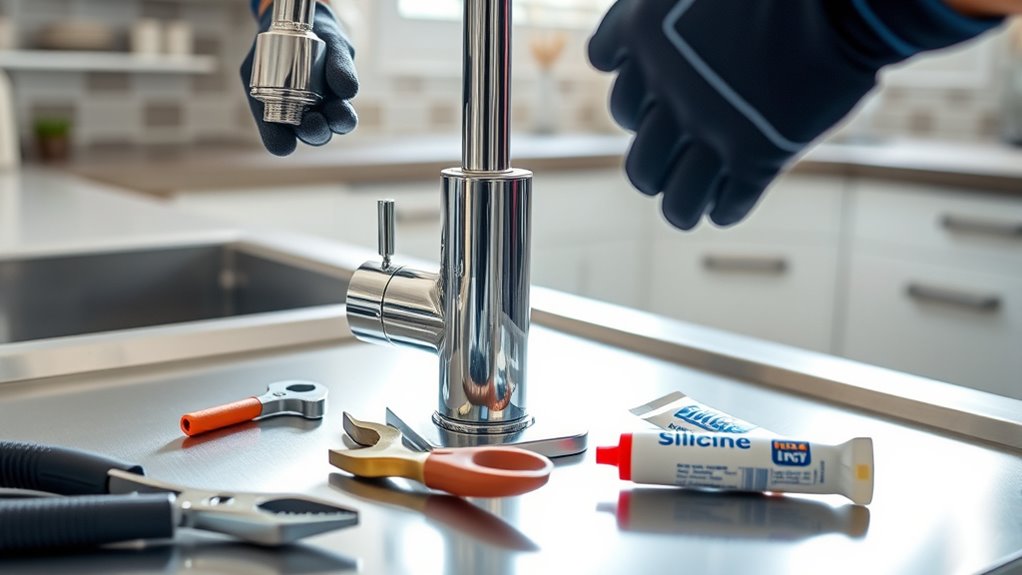
To install a new kitchen faucet yourself, start by turning off the water supply and disconnecting the old faucet with an adjustable wrench. Clean the mounting surface, then follow the manufacturer’s instructions to attach the new faucet, tightening all connections securely but not overtightening. Turn the water back on and check for leaks. If you keep these steps in mind, you’ll be able to complete the job confidently and successfully. Keep going, and you’ll learn more tips to streamline the process.
Key Takeaways
- Turn off water supply, disconnect old faucet, and clean the mounting area before starting installation.
- Gather essential tools such as an adjustable wrench, plumber’s tape, and a bucket for water drainage.
- Follow manufacturer instructions to position gasket, insert faucet, and tighten mounting nuts carefully.
- Connect water supply lines securely, ensuring no leaks before turning on the main water supply.
- Test the new faucet for proper flow and check all connections for leaks, tightening as necessary.

Are you ready to upgrade your kitchen? Installing a new faucet might seem daunting, but with the right tools and a clear plan, you can do it yourself and save money. Before you start, it’s important to understand safety precautions and plumbing regulations to guarantee a smooth and compliant installation. First, turn off the water supply to avoid leaks or water damage. Locate the shutoff valves under your sink and twist them clockwise until they’re fully closed. If your home lacks shutoff valves, you’ll need to turn off the main water supply. Wearing gloves and eye protection is a smart safety precaution to prevent injury from sharp edges or accidental splashes. Once the water is off, open the faucet to relieve pressure and drain any remaining water from the lines.
Turn off water, wear safety gear, and drain lines before replacing your kitchen faucet.
Next, remove the old faucet. Use an adjustable wrench to loosen the mounting nuts securing the faucet to the sink. Be cautious not to overtighten or damage the sink surface. If the nuts are stubborn, applying penetrating oil can help loosen them. Carefully lift the old faucet away, taking note of how the water supply lines are connected. Before installing the new faucet, review the manufacturer’s instructions and guarantee your plumbing setup complies with local plumbing regulations. This step is vital to avoid future leaks or code violations. Clean the mounting surface thoroughly to remove any debris or mineral buildup, which will help create a tight seal for your new faucet.
Now, install the new faucet. Place the gasket or mounting plate as instructed, ensuring it aligns properly with the sink’s holes. Insert the faucet’s shank through the mounting hole and tighten the mounting nuts from underneath. Be cautious not to overtighten, as this could crack the sink or damage the faucet. Attach the water supply lines to the faucet’s connectors, ensuring they’re tightened securely but not overdone. It’s a good idea to check for leaks at this stage by turning on the shutoff valves slowly and watching for drips. If leaks occur, tighten connections slightly until they stop. Remember, all work should follow plumbing regulations, which often specify proper pipe fittings and secure connections to prevent future issues. Additionally, verifying pressure compatibility with your water system can help ensure long-term performance.
Finally, once everything is tight, turn on the main water supply and check your work. Run the faucet to clear out any debris and ensure steady water flow. Inspect all connections for leaks, tightening as needed. Wipe down the area and admire your handiwork. By following safety precautions and adhering to plumbing regulations, you’ve successfully upgraded your kitchen with a new faucet. Not only do you improve your sink’s functionality and appearance, but you also gain confidence in handling plumbing projects for future upgrades.

NoCry Clear Safety Glasses for Men and Women with Anti-Fog and Scratch Resistant Wrap Around Lenses, Adjustable Temples and Nose Pads — ANSI Z87 Certified Protective Eyewear with 100% UV Shielding
- Durable Polycarbonate Wraparound Design: Provides superior protection from threats
- Adjustable Fit for Comfort: Extendable arms and soft nose pads
- Non-slip Rubber Grips: Ensures glasses stay securely in place
As an affiliate, we earn on qualifying purchases.
Frequently Asked Questions
Can I Install a Kitchen Faucet Without Turning off the Water Supply?
No, you shouldn’t install a kitchen faucet without turning off the water supply. Doing so could cause water pressure to build up, leading to messy leaks or damage. Turning off the water ensures you prevent water pressure issues and protect the faucet material from damage. Always shut off the supply, then carefully install your new faucet for a safe, clean, and successful upgrade.
What Should I Do if the New Faucet Leaks After Installation?
A leak after installing your faucet is like a drip in a sinking ship. First, do a leak diagnosis by checking all connections for tightness. If it persists, remove the faucet and reseat it, applying sealant around the base to prevent water escape. Verify all fittings are secure and properly sealed. This should stop the leak and keep your sink dry and functioning smoothly.
How Do I Choose the Right Faucet Size for My Sink?
To select the appropriate faucet size for your sink, measure the existing faucet or check your sink’s specifications. Make certain the faucet’s spout height and reach fit comfortably without causing splashes or blocking cabinet space. Look for a faucet that matches your sink’s pre-drilled holes and overall size for ideal sink compatibility. Taking these steps helps you choose a faucet that works seamlessly, giving your kitchen a functional and stylish upgrade.
Are Special Tools Needed for Removing an Old Faucet?
No, you usually don’t need special tools for the removal process, but don’t be surprised if your old faucet stubbornly refuses to let go. A wrench, pliers, and maybe a screwdriver are your main tools. Sometimes, rust or mineral buildup turns the removal process into a battle of wits. Just remember, patience and a little muscle are your best friends. No secret gadgets required—just perseverance.
How Long Does a Typical Kitchen Faucet Installation Take?
You can expect the installation duration to be around 30 minutes to an hour, depending on your experience and the faucet model. Timing expectations vary, but with the right tools and preparation, you’ll likely finish within this timeframe. Make sure to turn off the water supply beforehand and follow the steps carefully to avoid delays. Rushing might extend the process, so take your time for a smooth installation.

TICONN Anti-Fog Safety Glasses for Men and Women, ANSI Z87.1 Scratch Proof Eye Goggles with Adjustable Arms and UV Protection (Clear, 1PK)
- Durable Polycarbonate Construction: Impact-resistant and lightweight design
- Anti-Fog and UV Protection: Scratch-resistant coating and 99.9% UV block
- Adjustable and Comfortable Fit: Rubber frame, nose pads, and adjustable temples
As an affiliate, we earn on qualifying purchases.
Conclusion
Now that you’ve installed your new faucet, you’ve simplified your kitchen, enhanced its style, and improved its function. You’ve gained confidence in your DIY skills, saved money, and taken pride in your work. Each step you completed, from turning off the water to tightening connections, brought you closer to a perfect finish. With your new faucet in place, you’ve created a space that’s efficient, attractive, and truly your own—ready to serve your needs and impress your guests.

Pit Viper Revlock | Z87+ Safety Glasses with Side Shields | Polarized Scratch Resistant Shatterproof Lenses | No-Slip Grip
- ANSI Z87+ Certified with Side Shields: High-impact safety with removable shields
- Removable Latching Side Shields: Secure, seal sides for safety and style
- Shatterproof Scratch-Resistant Lenses: Durable polarized polycarbonate for impact and scratch resistance
As an affiliate, we earn on qualifying purchases.

TICONN 12 Clear Safety Glasses for Men, Safety Goggles with Scratch Impact Resistant Meets ANSI Z87.1 Standard (12 Pack)
- Safety Protection: Protects against debris, UV rays, and hazards
- ANSI Z87.1 Certified: Meets safety standards for impact resistance
- Premium Polycarbonate Material: Durable, anti-scratch, and distortion-free lenses
As an affiliate, we earn on qualifying purchases.