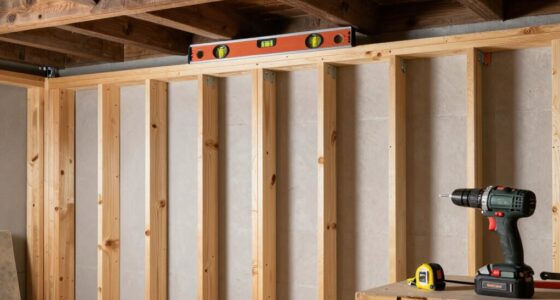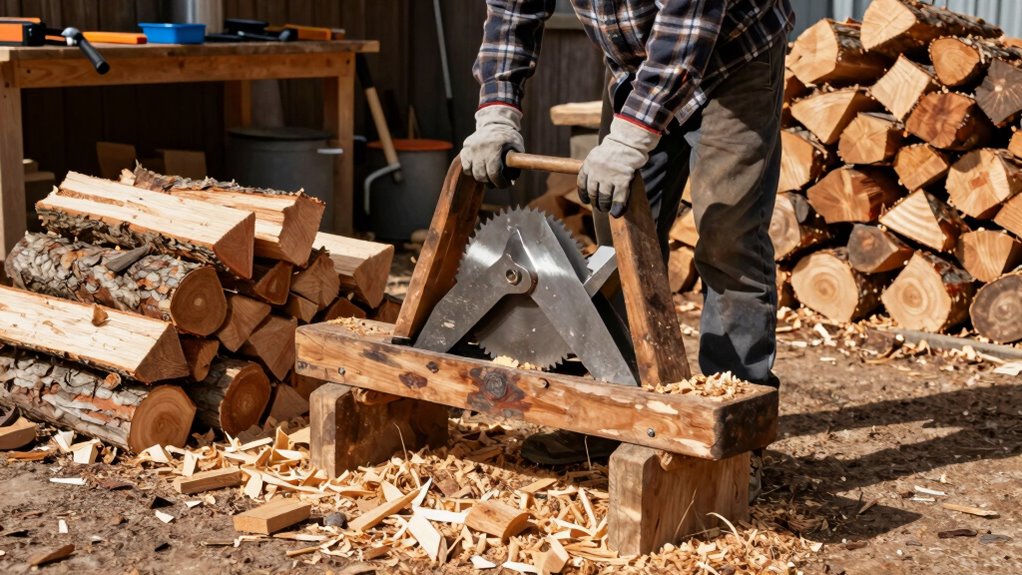

To build a better firewood processing workflow, organize your tools and materials for easy access, and create a designated, well-ventilated workspace to minimize movement. Prioritize safety by wearing protective gear and inspecting your equipment regularly. Use sharp tools and proper techniques for splitting logs efficiently. Stack and cover cut wood to promote airflow and drying, monitoring moisture levels with a meter. For more tips on optimizing safety and efficiency throughout your process, keep exploring these strategies.

Get business pricing on tools and workshop supplies
- Business-only prices and quantity discounts
- Tax-exempt purchasing
- Multiple users, one account, clear invoices
Key Takeaways
- Organize tools and materials in a dedicated workspace for quick, efficient access during processing.
- Use safety gear and proper tool techniques to prevent accidents and ensure smooth operation.
- Stack and air-dry split wood properly, elevating and covering it for optimal airflow and moisture reduction.
- Monitor moisture content regularly with a meter to ensure wood is below 20% for efficient burning.
- Establish a sequential workflow: logging, splitting, stacking, drying, and storage for a streamlined process.
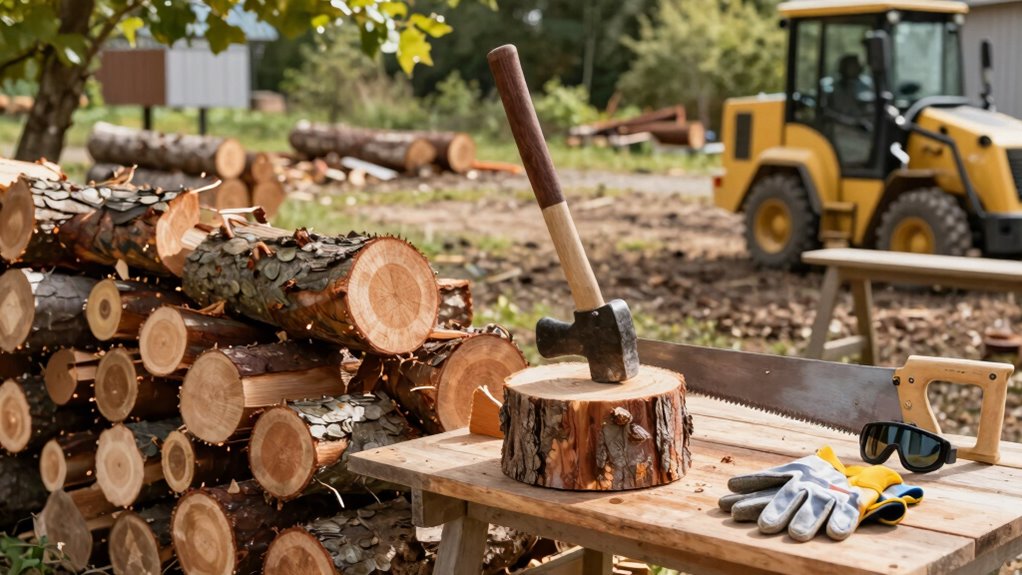
Creating an efficient firewood processing workflow is essential for maximizing productivity and ensuring you have quality wood ready when you need it. To start, plan your workspace carefully, organizing tools and materials so everything is easily accessible. This minimizes unnecessary movement and streamlines each step of the process. When splitting logs, use the right tools—like sharp axes or hydraulic splitters—and always prioritize safety precautions. Wear protective gear such as gloves, eye protection, and sturdy footwear to prevent injuries. Remember, safety isn’t just about avoiding accidents; it’s about maintaining a steady, efficient pace without setbacks.
Organize your workspace and prioritize safety for a smooth, efficient firewood processing experience.
Once you’ve split your wood, the next critical step is proper wood drying. Freshly cut logs contain high moisture content, which can lead to inefficient burning, excess smoke, and creosote buildup. To maximize burning efficiency, stack your split wood in a way that promotes good airflow, elevating it off the ground on pallets or a firewood rack. Cover the top of your stack to protect it from rain while leaving the sides open for ventilation. Good airflow is key to effective wood drying, so avoid tightly packing your logs or stacking them in enclosed spaces. This will help you achieve a moisture level below 20%, ideal for burning.
Using a wood moisture meter** can help you monitor the drying process and ensure your wood is seasoned properly before use. In addition to stacking method, consider the climate and weather conditions in your area. If you live in a damp environment, you might need to extend the drying period or use a dehumidifier in your drying area. Proper wood drying techniques are crucial for efficient burning and safety. Additionally, understanding the moisture content of your wood can prevent potential issues during combustion. Keep an eye on the moisture content with a wood moisture meter, ensuring your firewood is adequately seasoned before use. Properly dried wood burns hotter**, produces less creosote, and gives you a more efficient heating experience.
Throughout the process, maintaining safety precautions is essential. When operating saws, splitters, or chopping tools, always follow manufacturer instructions and keep your work area clear of debris. Regularly inspect your tools for wear and damage to prevent accidents. Be cautious when handling heavy logs—use proper lifting techniques or mechanical aids to avoid strains or injuries. By integrating safety precautions into every stage of your workflow, you’ll create a safer environment that keeps your productivity high and your risk of injury low.
As an affiliate, we earn on qualifying purchases.
Frequently Asked Questions
What Safety Gear Is Essential During Firewood Processing?
You should wear essential safety gear like eye protection, gloves, and ear protection during firewood processing. Personal protective equipment helps prevent injuries from flying debris, splinters, and loud noises. Make certain safe handling of sharp tools and chainsaws by using sturdy gloves and maintaining focus. Wearing the right gear minimizes risks, keeping you safe while working efficiently. Always prioritize safety to avoid accidents and injuries during your firewood processing tasks.
How Do I Choose the Right Tools for Each Step?
To choose the right tools, consider each step carefully. For cutting logs, a chain saw with safety features is essential; always follow chain saw safety guidelines. For splitting logs, select a quality axe or hydraulic splitter, depending on the size. Use proper log splitting techniques to prevent injuries. Confirm your tools are sharp, well-maintained, and suited for the job, making your firewood processing safer and more efficient.
What Are Common Mistakes to Avoid in Workflow Setup?
Avoid common mistakes like neglecting equipment maintenance, which can cause delays and safety hazards. Don’t overlook workflow optimization; rushing steps or skipping planning reduces efficiency. Make certain your tools are well-maintained and organized, so you save time and prevent breakdowns. Also, avoid overloading your workspace—this hampers safety and productivity. Regularly review and refine your process to keep it smooth, safe, and efficient, making your firewood processing more effective and enjoyable.
How Can I Improve Efficiency During Processing?
You can boost efficiency by focusing on timing optimization; plan your processing schedule to minimize downtime and maximize flow. Regularly maintaining your tools guarantees they work smoothly, reducing delays caused by malfunctions. Streamline your workflow by batching tasks, like cutting and splitting in groups, to save time. Keep your workspace organized, so you aren’t wasting effort searching for equipment. These steps will help you process firewood faster and more effectively.
How Do I Handle and Store Firewood Properly?
You should handle firewood carefully to prevent damage and guarantee safety, using proper handling techniques like lifting with your legs and avoiding unnecessary drops. For firewood storage, stack logs off the ground on a dry, well-ventilated surface, such as a rack or pallets, to keep them dry and prevent mold. Cover the top to shield from rain, but leave sides open for airflow, which helps the wood dry properly.
As an affiliate, we earn on qualifying purchases.
Conclusion
By streamlining your firewood processing workflow, you’ll save time, effort, and guarantee safer handling. Keep your tools sharp, stay organized, and follow each step carefully. Remember, a well-planned process can turn a challenging task into a manageable one. Don’t put all your eggs in one basket—spread out your work and stay consistent. When you do, you’ll find that building a better firewood workflow is easier than you might think, and the flames will thank you.
As an affiliate, we earn on qualifying purchases.
protective safety gear for chopping wood
As an affiliate, we earn on qualifying purchases.
As an affiliate, we earn on qualifying purchases.
Fall yard work Picks
leaf blowers
As an affiliate, we earn on qualifying purchases.