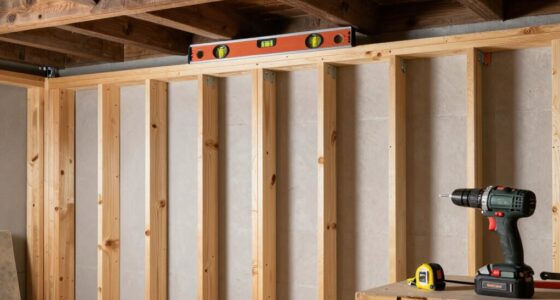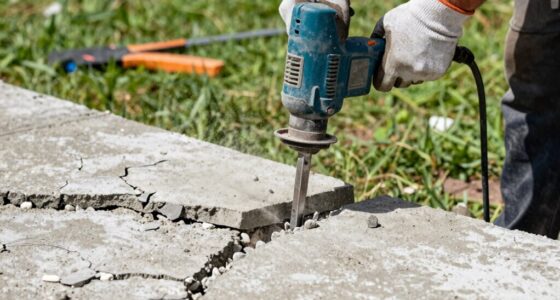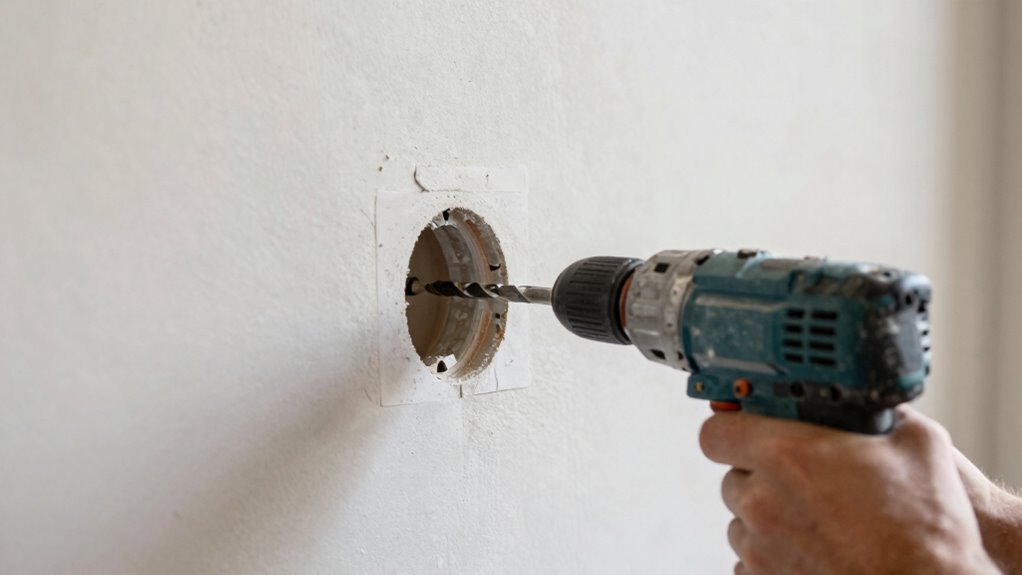

To make cleaner openings for electrical boxes, start by carefully marking the spot with a pencil and use a template for accuracy. Choose the right tools like hole saws or drywall saws based on the shape you need. Work steadily and smoothly, applying even pressure, and test fit fittings as you go. Smooth rough edges with a file or sandpaper afterward to improve appearance and safety. If you want to master these techniques, you’ll discover more tips that can help you achieve professional results.

Get tools and workshop supplies delivered free — and shop member deals
- Fast, free delivery on millions of items
- Access to Prime Big Deal Days deals on October 6–7
- Prime Video, Amazon Music and more included
Key Takeaways
- Use a hole saw or step drill bit for precise, round openings matching conduit fittings.
- Carefully mark the outline with a pencil and straightedge before cutting.
- Smooth rough edges with a file or sandpaper to improve appearance and safety.
- Wear safety glasses and gloves to prevent injury during cutting and finishing.
- Practice on scrap material to develop steady hand control for cleaner cuts.
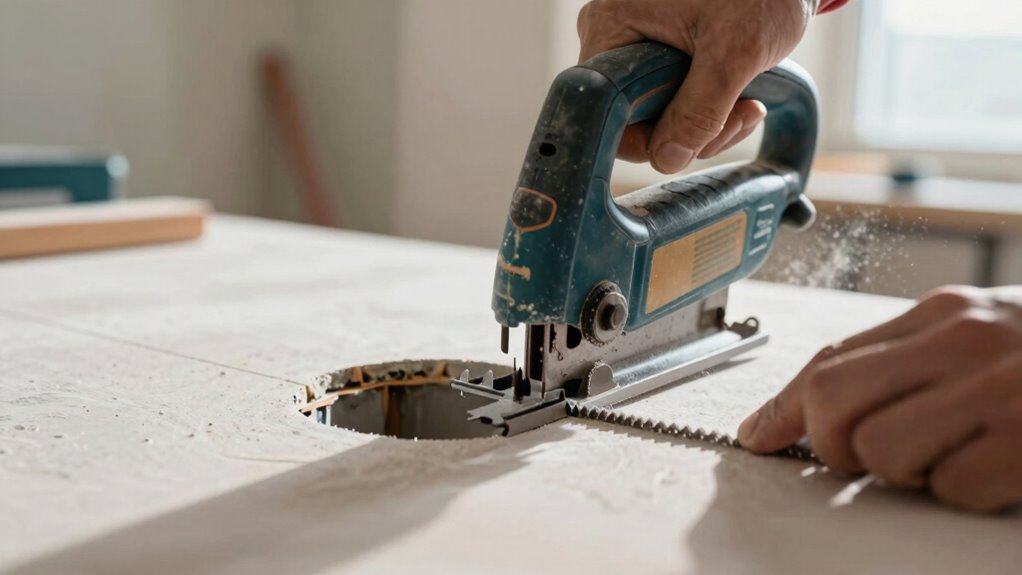
Have you ever struggled to make neat, precise openings for electrical boxes? If so, you’re not alone. Achieving clean cuts can be tricky, especially when working in tight spaces or with different types of wiring. The key to making professional-looking openings starts with understanding your tools and materials, including the wire gauge and conduit fittings you plan to use. The wire gauge determines the thickness of the wire, which influences the size of the opening you’ll need. Thicker wires, like 6-gauge, require larger holes, while thinner wires, such as 14-gauge, need smaller ones. Knowing this helps ensure your cut is just right—not too big or too small—reducing the risk of gaps or damage that could compromise safety and appearance.
Understanding wire gauge helps you make precise, safe openings for electrical boxes.
When preparing to cut the opening, start by marking your spot carefully. Use a pencil and a straightedge to draw a clear outline that matches the size of the conduit fitting or electrical box. This step prevents mistakes and gives you a visual guide to follow. Next, choose the right cutting tool. A hole saw or a step drill bit works well for round openings, especially if you need a precise, smooth edge. For rectangular or square cuts, a drywall saw or utility knife can do the job, but make sure to work slowly and steadily to keep the cut clean. Also, consider using a template or stencil if you want consistent, repeatable openings across multiple boxes.
As you cut, keep your work steady and apply even pressure. If you’re working with conduit fittings, make sure the hole size matches the fitting’s diameter. Too tight, and you risk damaging the fitting or cracking the wall; too loose, and you’ll have gaps that could cause issues with wiring or safety code compliance. It’s helpful to have a set of conduit fittings on hand to test fit as you go, ensuring your opening is just right. Remember to wear safety glasses and gloves to protect against debris and sharp edges. Additionally, using proper cutting techniques can greatly improve your results and safety during the process. Developing a steady hand through practice can make a significant difference in the accuracy of your cuts. Properly preparing your workspace and tools is equally important to achieving a clean, professional finish. To further enhance your work, consider researching cutting tool maintenance to keep your tools in optimal condition for precise cuts.
Finally, after making the cut, smooth the edges with a file or sandpaper to remove any rough spots or burrs. This not only improves the appearance but also reduces the risk of damaging wires as they pass through. Taking these steps, paying attention to wire gauge and conduit fittings, ensures your openings are clean, accurate, and safe. With practice, you’ll develop a steady hand and a keen eye for detail that transforms a simple cut into a professional finish every time. Proper preparation and planning and understanding of conduit fittings can greatly improve the quality of your work.
As an affiliate, we earn on qualifying purchases.
Frequently Asked Questions
What Tools Are Best for Making Clean Electrical Box Openings?
You should use electrical box templates and hole saws for the cleanest openings. Templates help you mark precise cut lines, ensuring accuracy. Hole saws, especially those designed for drywall or wood, create smooth, round cuts with minimal mess. Choose the right size based on your box, and secure your template properly before drilling. This combo makes your electrical box openings neat, professional-looking, and easy to install.
How Do I Measure for the Correct Hole Size?
To measure the correct hole size, start by marking the outline on the wall using a pencil. Use a power drill with a hole saw attachment to cut the opening, guaranteeing it matches your measurements. Before drilling, wrap electrical tape around the drill bit for a cleaner cut and to prevent slipping. Double-check your measurements, and make adjustments if needed, to ensure a precise fit for the electrical box.
Can I Reuse Old Electrical Boxes With New Openings?
Yes, you can reuse old electrical boxes with new openings, but you’ll need to make sure they’re still in good condition for electrical box reinstallation. Check for rust, damage, or corrosion. Make sure the existing openings are properly sized and shaped for your new wiring. If drywall repair is needed, patch around the box to create a clean surface. Properly securing the box ensures safety and compliance during reinstallation.
What Safety Precautions Should I Take During This Process?
You should always turn off the power, wear insulated gloves, and use proper tools to guarantee wire safety. Keep your workspace dry and clear of clutter to avoid accidents. Before starting, test the circuit to confirm no current flows. During the process, stay alert to potential hazards, avoid working alone, and double-check your tools. These precautions help protect you from shocks, short circuits, and other electrical dangers.
How Do I Prevent Damage to Surrounding Drywall?
To prevent damage to surrounding drywall during box installation, carefully mark the opening size and use a drywall saw for precise cuts. Support the drywall edges with painter’s tape to minimize cracking. If damage occurs, perform drywall repair by filling gaps with joint compound and sanding smoothly. This approach guarantees a cleaner opening and easier drywall repair, helping your project stay neat and professional-looking.
drywall saw for electrical box openings
As an affiliate, we earn on qualifying purchases.
As an affiliate, we earn on qualifying purchases.
Conclusion
Remember, a well-made opening not only looks neat but also guarantees safety and efficiency. Take your time to measure carefully and cut steadily, because haste makes waste. With patience and precision, you’ll create clean, professional-looking openings that make your electrical work safer and more reliable. Sometimes, it’s the small details that make the biggest difference—like the saying goes, “A stitch in time saves nine.” Keep these tips in mind, and you’ll do just fine.
step drill bit for electrical work
As an affiliate, we earn on qualifying purchases.
As an affiliate, we earn on qualifying purchases.
As an affiliate, we earn on qualifying purchases.
Fall yard work Picks
leaf blowers
As an affiliate, we earn on qualifying purchases.