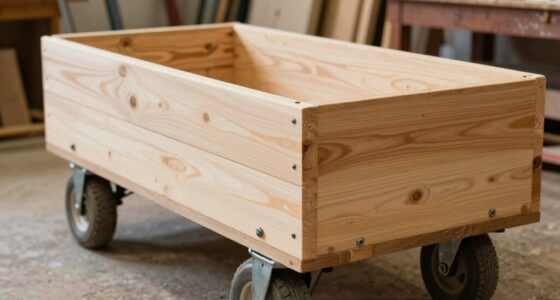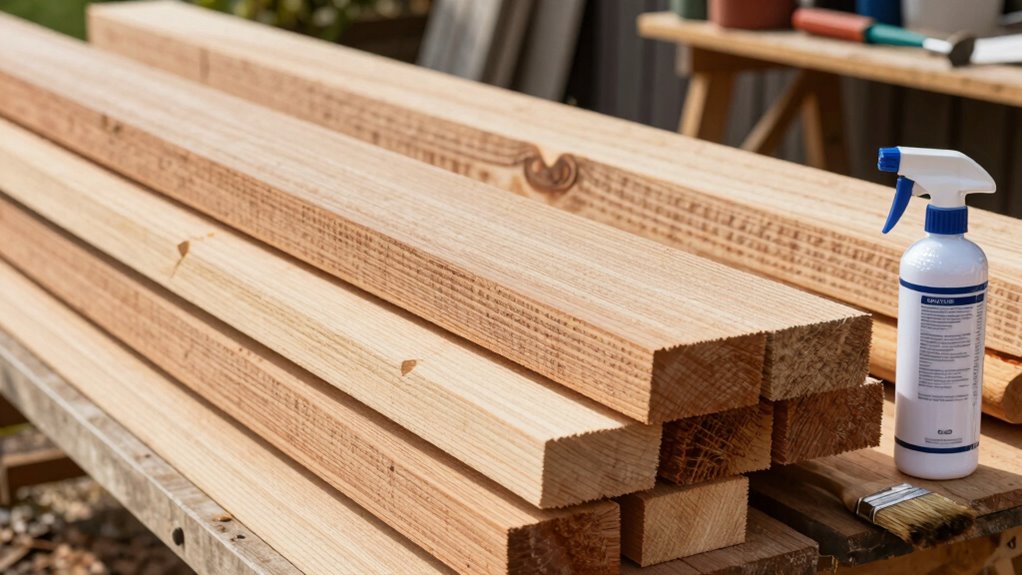

To prep lumber for outdoor use, start by choosing weather-resistant wood like cedar or redwood. Clean the lumber thoroughly with a stiff brush or power washer, then let it dry completely. Apply a high-quality sealant or stain, following the manufacturer’s instructions, and use multiple coats with drying time in between. Guarantee to treat all surfaces, especially end grains. Proper prep ensures your outdoor projects stay durable and attractive longer—keep exploring for more helpful tips.

Get business pricing on tools and workshop supplies
- Business-only prices and quantity discounts
- Tax-exempt purchasing
- Multiple users, one account, clear invoices
Key Takeaways
- Select weather-resistant or pressure-treated lumber suitable for outdoor conditions.
- Clean the wood thoroughly, removing dirt and debris, then allow it to dry completely.
- Apply high-quality sealants or stains evenly, following manufacturer instructions and multiple coats if needed.
- Ensure proper ventilation during application and drying to enhance treatment effectiveness.
- Regularly inspect and reapply protective finishes to maintain moisture resistance and prevent damage.
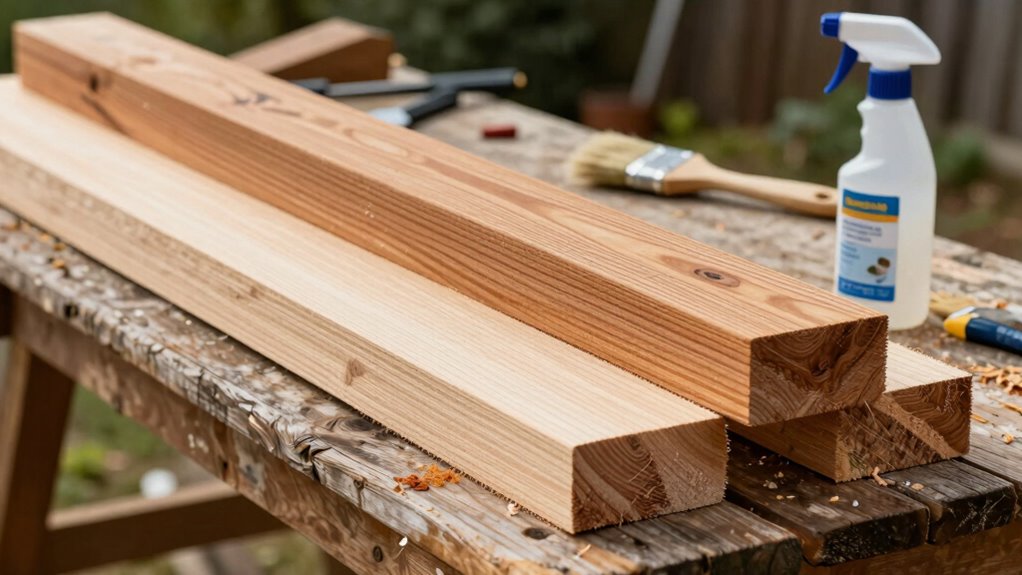
Preparing lumber properly is essential to guarantee it withstands outdoor conditions and lasts for years. When you’re prep wood for exterior projects, focusing on effective wood treatment is crucial. You want to protect your lumber from moisture, decay, and pests, which are the main threats to outdoor wood. Applying the right wood treatment helps enhance moisture resistance, ensuring your structure remains sturdy and looks great over time. Start by selecting the right type of lumber, ideally pressure-treated or naturally weather-resistant wood like cedar or redwood. These options already possess some inherent resistance to moisture and pests, making them a good foundation for your project.
Proper lumber prep ensures outdoor durability and long-lasting protection against moisture, pests, and decay.
Once you have your lumber, the next step is to clean and dry it thoroughly. Any dirt, dust, or debris on the surface can interfere with the absorption of protective finishes. Use a stiff brush or a power washer on a gentle setting to remove grime without damaging the wood. After cleaning, let the wood dry completely—this could take several days depending on humidity and temperature. Proper drying is essential because applying treatments on damp wood can trap moisture, leading to mold, rot, or warping down the line. Additionally, understanding outdoor wood treatment methods can help you choose the most effective protective products for your project. Knowing the types of treatments available allows you to select the best solution for your specific climate and wood type. Being aware of the environmental factors that affect outdoor wood can further guide your treatment choices to ensure longevity. Incorporating proper application techniques can significantly improve the effectiveness of your chosen treatment. Also, researching best practices for outdoor wood can help you avoid common mistakes and achieve better results.
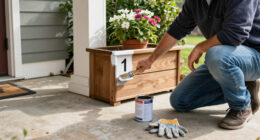
When it comes to wood treatment, applying a high-quality sealant or stain designed for outdoor use is your best move. These products are formulated to penetrate the wood and create a barrier against moisture. Be sure to follow the manufacturer’s instructions carefully, applying evenly with a brush, roller, or sprayer. Pay special attention to end grains and cut surfaces, as these areas are more susceptible to absorbing water. For added moisture resistance, consider applying multiple coats, allowing each layer to dry thoroughly before adding the next. This layered approach maximizes protection and prolongs the lifespan of your lumber.
Don’t forget about ventilation during application and drying. Good airflow helps the wood treatment cure properly, reducing the risk of trapping moisture inside. Additionally, if you live in an area with high humidity or frequent rain, you might want to consider a weatherproofing product that offers UV protection as well. This helps prevent fading, cracking, and deterioration caused by sun exposure and rain. Regular maintenance is key; inspect your outdoor wood periodically, and reapply protective finishes as needed to maintain maximum moisture resistance. Proper prep work ensures your lumber isn’t just visually appealing but also resilient enough to stand up to the elements for many years.
As an affiliate, we earn on qualifying purchases.
Frequently Asked Questions
How Often Should Outdoor Lumber Be Re-Treated?
You should re-treat outdoor lumber, like for staining your deck, every 1-3 years, depending on weather exposure and wear. Regular deck maintenance involves inspecting for cracks or peeling, then applying a fresh coat of stain or sealant. Keep an eye on how the lumber looks; if it starts fading or becomes gray, it’s time for re-treatment. This guarantees your outdoor space stays protected and looks great longer.
Can Treated Lumber Be Used Immediately Outdoors?
Yes, treated lumber can be used immediately outdoors, but you should wait for the wood to dry properly. Check the wood grain for signs of moisture and make certain it has undergone sufficient drying time. This helps the treatment penetrate evenly and prevents issues like warping or splitting later. Rushing this process can compromise durability, so patience is key to ensuring your outdoor projects last longer and stay protected.
What Environmental Factors Affect Lumber Preservation?
Environmental factors greatly impact lumber preservation; for example, moisture levels can cause wood to rot or warp. You should consider how wood grain affects water absorption, with tighter grains resisting moisture better. Insect resistance also varies; dry, well-ventilated environments deter pests. To protect your outdoor lumber, control humidity, guarantee proper drainage, and select wood with natural insect resistance, which helps extend its lifespan despite fluctuating weather conditions.
Is It Necessary to Sand Lumber Before Sealing?
Yes, sanding lumber before sealing is necessary. It helps smooth the wood grain, removing rough spots and splinters that can trap moisture. Use proper sanding techniques, starting with coarse grit and finishing with fine grit, to achieve a smooth surface. This process guarantees better adhesion of the sealant, enhances durability, and results in a cleaner, more professional finish for outdoor projects.
Are There Eco-Friendly Options for Outdoor Wood Treatment?
Yes, you can choose eco-friendly preservatives and sustainable treatments for outdoor wood. Look for products labeled as non-toxic, biodegradable, or made from natural ingredients like plant-based oils or mineral-based preservatives. These options protect your lumber from decay and pests while minimizing environmental impact. Using sustainable treatments not only preserves the wood effectively but also guarantees you’re reducing harmful chemical exposure, making your outdoor projects safer for you and the planet.
pressure-treated lumber for outdoor projects
As an affiliate, we earn on qualifying purchases.
As an affiliate, we earn on qualifying purchases.
Conclusion
Now that you’ve carefully prepared your lumber, you’re all set to let your outdoor project flourish. Think of it as giving your wood a gentle nudge toward a long, happy life in the elements. With a little love and the right prep, your outdoor space will flourish beautifully, standing proud through seasons to come. So, enjoy the journey—your well-prepared wood is ready to embrace the great outdoors with confidence.
As an affiliate, we earn on qualifying purchases.
As an affiliate, we earn on qualifying purchases.
Fall yard work Picks
leaf blowers
As an affiliate, we earn on qualifying purchases.