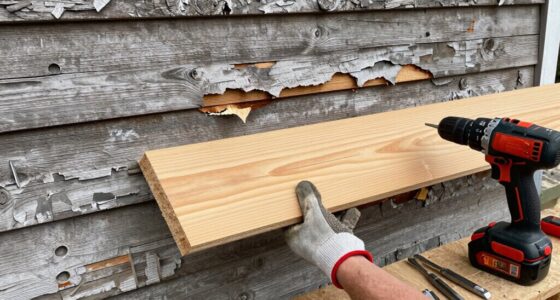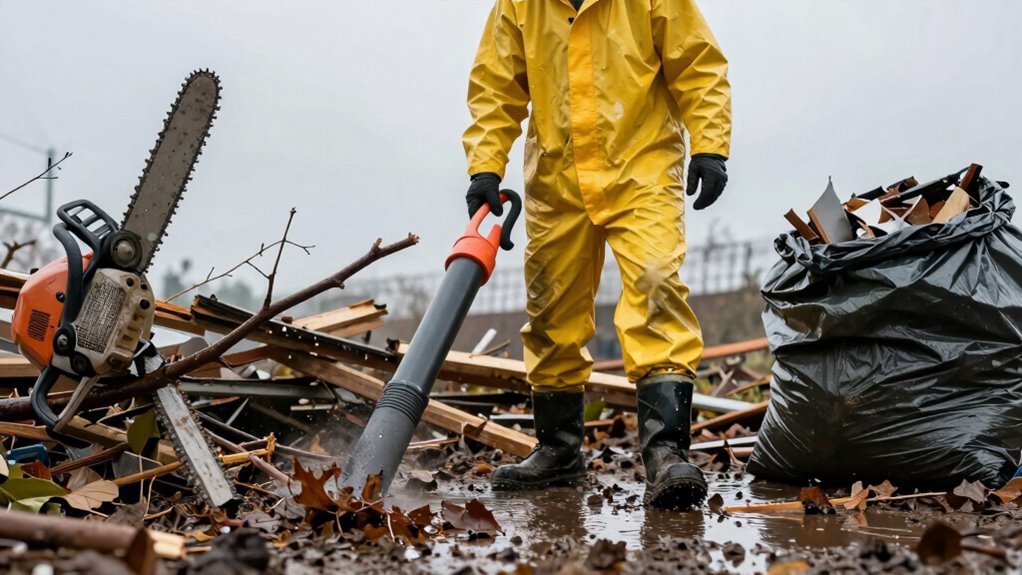

During storm damage cleanup, your most useful tools include sturdy gloves, safety goggles, dust masks, helmets, and steel-toe boots for protection. Power tools like chainsaws, reciprocating saws, and leaf blowers help handle large debris quickly. Hand tools such as rakes and wheelbarrows simplify gathering and transporting debris. Using the right safety gear alongside these tools guarantees you stay safe and efficient. Keep exploring to discover even more tips and tools for a thorough cleanup.
Key Takeaways
- Heavy-duty chainsaws and handsaws for efficiently cutting large fallen trees and damaged structures.
- Rakes and leaf blowers for gathering and clearing leaves and small debris quickly.
- Wheelbarrows and tarps for transporting and containing debris to reduce physical strain.
- Safety gear like gloves, goggles, helmets, and steel-toe boots to prevent injuries during cleanup.
- Proper organization and use of tools to work efficiently and ensure safety throughout the process.
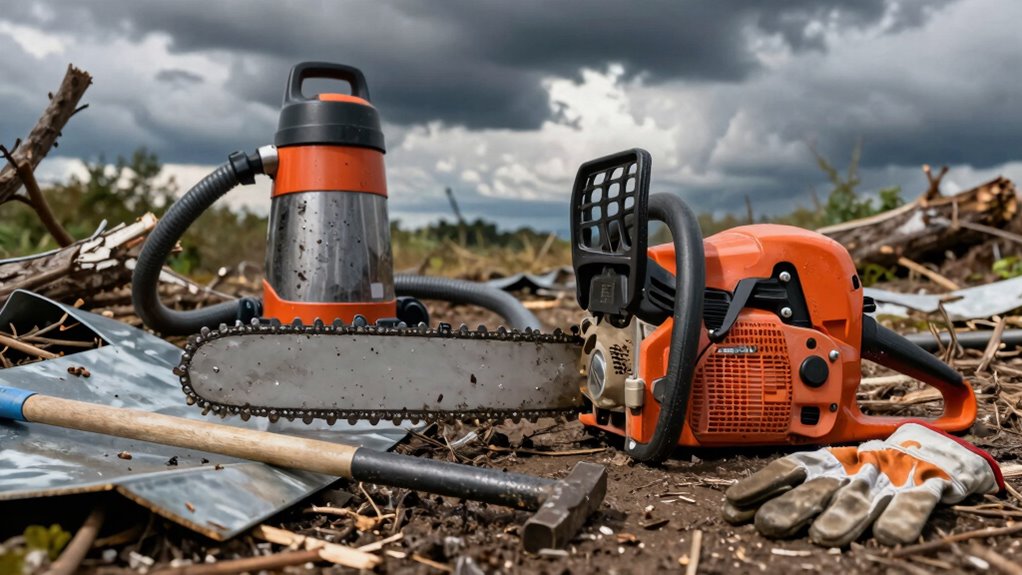
When a storm hits, having the right tools can make cleanup faster and safer. After the storm passes, you’ll face the challenge of clearing storm debris and restoring your property. The key to efficient cleanup lies in choosing the right tools for storm damage cleanup, especially those that aid in storm debris removal and guarantee your safety. Proper safety equipment selection is essential because storm debris often includes sharp, heavy, or unstable objects that pose hazards. You should start with sturdy gloves, safety goggles, and a dust mask to protect your hands, eyes, and lungs. Heavy-duty work gloves prevent cuts from broken glass or jagged wood, while goggles shield your eyes from flying debris. A dust mask helps you breathe safely in dusty environments, especially when handling materials like insulation or drywall.
Proper safety gear like gloves, goggles, and masks is essential for safe storm debris cleanup.
To tackle storm debris effectively, you’ll need a variety of tools. A strong rake or leaf blower can help gather leaves, smaller branches, and loose debris, making it easier to collect and dispose of. For larger debris like fallen branches or pieces of roofing, a chainsaw or handsaw becomes indispensable. These tools cut through thick wood efficiently, reducing the time and effort needed for cleanup. If you’re dealing with sizable or heavy debris, a wheelbarrow or sturdy tarp can help transport materials without straining your back. Using a tarp to drag debris minimizes the number of trips and keeps the area safer and cleaner. Additionally, understanding biodiversity can help you identify and preserve living plants and animals that might be affected during cleanup.
Power tools like a reciprocating saw can also come in handy for cutting through dense or tangled debris, especially when removing damaged fencing or siding. Always remember, safety equipment selection is just as important as choosing the right tool. Wear a helmet if there’s a risk of falling objects, and sturdy boots with steel toes provide stability and protect your feet. When working with potentially hazardous materials like broken glass or sharp metal, use puncture-resistant gloves and long sleeves to prevent injuries. Furthermore, being aware of hazardous materials commonly found in storm debris, such as asbestos or lead paint, can help you take additional precautions during cleanup.
Ultimately, the most effective storm damage cleanup depends on a combination of suitable tools and proper safety measures. You want to work efficiently, but never at the expense of safety. Investing in quality safety equipment and knowing how to use your tools properly will help you clear storm debris more quickly and reduce the risk of injury. Stay alert, prioritize safety, and you’ll find that cleanup becomes a manageable task even after the fiercest storms.

68CC Gas Powered Chainsaw 22 24 Inch Bar Chainsaws 2-Cycle Cordless Handheld Petrol Gasoline Chain Saw for Backyard Storm Wood Cutting
- Engine Power: 4.5HP, 13000 RPM 68CC engine
- Guide Bar Options: 22-inch or 24-inch bars included
- Dual-Tank System: 550ml fuel and 260ml oil capacity
As an affiliate, we earn on qualifying purchases.
As an affiliate, we earn on qualifying purchases.
Frequently Asked Questions
How Do I Safely Operate a Chainsaw During Storm Cleanup?
To safely operate a chainsaw during storm cleanup, focus on chainsaw safety and proper handling. Always wear protective gear like gloves, goggles, and ear protection. Start the saw on the ground, maintain a firm grip, and keep your stance balanced. Watch out for power lines and unstable trees. Follow manufacturer instructions, stay alert, and cut slowly. Proper handling mitigates risks and guarantees your safety during storm damage cleanup.
What Protective Gear Is Essential for Storm Damage Cleanup?
You need essential safety equipment and protective clothing for storm damage cleanup. Wear sturdy gloves and eye protection like goggles to shield against debris. A helmet or hard hat safeguards your head from falling objects. Use high-visibility vests so you’re seen in low light conditions. Durable waterproof boots keep your feet dry and stable. Always wear respiratory masks if dust or mold is present. These safety measures help prevent injuries and keep you protected during cleanup.
Can I Use Household Tools for Heavy Storm Debris Removal?
Imagine finding your gardening shears while tackling a DIY project—household tools can help with light debris, but for heavy storm cleanup, they may fall short. You might think of using basic tools for landscaping techniques, but safety’s key. Heavy limbs and debris require specialized equipment like chainsaws and heavy-duty rakes. Using the right tools guarantees efficient, safe storm damage cleanup and prevents injury.
How Do I Dispose of Hazardous Storm Debris Properly?
To dispose of hazardous storm debris properly, you should contact your local waste management authority for guidelines on hazardous waste disposal. Separate hazardous materials like chemicals, batteries, and electronics from other debris. Consider storm debris recycling options for non-hazardous materials, such as wood and metal. Always wear protective gear and follow safety protocols during disposal, ensuring hazardous waste is handled and transported according to local regulations.
What Tools Are Best for Cleaning up Flooded Basements?
Channel your inner Odysseus steering treacherous waters by tackling your flooded basement with essential tools. Use a powerful water extractor to remove standing water quickly and efficiently. A sump pump can help you drain deep pools, while industrial fans aid in drying everything thoroughly. Don’t forget heavy-duty wet/dry vacuums for stubborn spots, and moisture meters to monitor drying progress. These tools turn chaos into control, restoring safety and peace of mind.
As an affiliate, we earn on qualifying purchases.
Conclusion
When storm damage strikes, having the right tools by your side is like wielding a trusted shield against chaos. A sturdy chainsaw clears fallen branches, while a heavy-duty blower clears debris swiftly. Safety gear acts as your armor, protecting you from harm. With these tools, you’ll navigate the aftermath like a seasoned captain steering through stormy waters—confident and prepared, turning an overwhelming mess into manageable progress.

BLACK+DECKER Electric Leaf Blower, Handheld Blowers for Lawn Care, Lightweight, 180 MPH 180 CFM, 7-Amp, Corded (LB700)
- Motor Power: 7 Amp motor for efficient blowing
- Blowing Speed: 180 MPH and 180 CFM for fast cleanup
- Design Feature: Built-in cord retention prevents interruptions
As an affiliate, we earn on qualifying purchases.
As an affiliate, we earn on qualifying purchases.

VEVOR 800LBS 7 CU.FT Poly Garden Cart Dump Wagon, Heavy Duty 4 Wheel Wheelbarrow with 10" Flat Free Tires, Yard Cart Dump Wagon with Removable Raised Sides and Quick-Release System
- Removable Metal Sides: Increases height and storage capacity
- Expanded Volume: From 5 to 7.5 cu.ft for more storage
- Heavy Duty Capacity: Holds up to 800 lbs of materials
As an affiliate, we earn on qualifying purchases.
As an affiliate, we earn on qualifying purchases.