
TL;DR
A Livingetc report describes a shift in bioethanol fireplaces from basic tabletop and wall-mounted burners to designs intended to fit into contemporary interiors. The units produce real flames without a chimney or flue, but they do not reproduce a wood fire’s crackle, and the supplied report does not establish how well they heat different rooms.
Bioethanol fireplaces are being designed as integrated interior features rather than the shiny tabletop burners and wall boxes that helped give the category a novelty reputation, according to a Livingetc report. The units burn real bioethanol flames without a chimney or flue, making them an option for homes where conventional fireplaces are impractical, although the report does not establish their heating performance across different room sizes.

Get business pricing on tools and workshop supplies
- Business-only prices and quantity discounts
- Tax-exempt purchasing
- Multiple users, one account, clear invoices
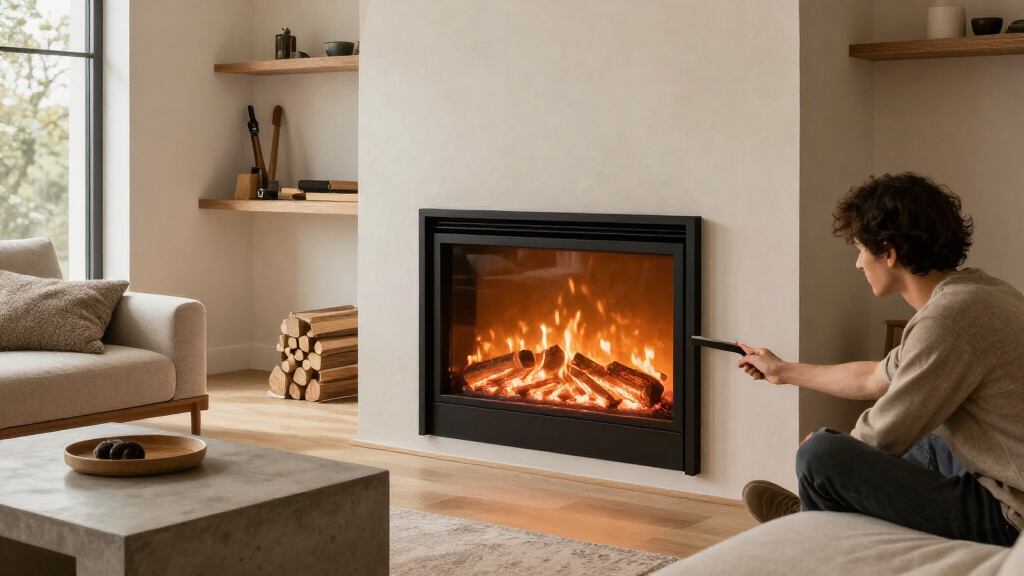
The main change described by Livingetc is aesthetic and architectural. Newer models use cleaner lines, restrained finishes and more familiar stove proportions, while some are designed to sit within larger features such as sculptural plaster forms, stone surrounds or suspended installations. The lack of a flue gives designers more freedom over placement than a conventional wood-burning fireplace, but it does not mean every design can be installed anywhere without regard to its instructions or safety requirements.
Designers interviewed by the publication describe options extending well beyond the early refillable firebox. Daniel Sanders, director of Modus Fireplaces, points to linear flames, realistic log effects and app-controlled models, alongside fireplaces incorporated into bespoke interiors and outdoor pots. Those examples describe product and design possibilities; the report does not provide independent testing of the products or compare their performance with wood-burning or electric alternatives.
The fire itself is not an LED effect: bioethanol burns to produce a genuine flame. That can create a convincing visual focal point, and some contemporary models borrow details from traditional stoves, including glass-fronted doors and ceramic logs. The trade-off is that the experience is not identical to burning wood. The sources quoted by Livingetc acknowledge that bioethanol fires do not reproduce the crackle or changing appearance of burning logs.
A Fireplace Option Without a Flue
For homeowners and renters who want a visible flame but cannot readily add a chimney, a flue-free design may widen the choices available. Its appeal is not limited to a portable tabletop burner: the designs described by Livingetc aim to make the fire part of a room’s architecture, which may suit interiors where a traditional hearth is not feasible. The report also cites units styled as freestanding stoves, offering a familiar look without a conventional wood burner.
That flexibility should not be confused with a guarantee of suitable heat or effortless installation. Livingetc’s supplied material does not provide room-by-room heating guidance, fuel-use comparisons, running costs or detailed safety requirements. Buyers need to check a specific model’s manufacturer instructions, permitted location, ventilation requirements and output before relying on it as a heat source. A real flame remains an open flame, even when there is no chimney.
Products Worth Considering

TCL 85-Inch QM6K QLED Mini LED 4K HDR Smart Google TV, 144Hz

Dyson V8 Cyclone Cordless Vacuum

Sonos Roam (Gen 1) Portable Smart Speaker, White
As an affiliate, we earn on qualifying purchases.
From Novelty Burner to Interior Feature
Bioethanol fires attracted interest partly because they appeared to solve a practical problem: providing flames in a home without the chimney work associated with many traditional fireplaces. Their early appearance, however, often failed to match the atmosphere people wanted from a fire. Richard Fewings, owner of Glowing Embers, recalled that earlier products were commonly inexpensive wall boxes and tabletop burners with thin blue flames, which he said gave the category a novelty-item reputation.
The design shift is described by Jon Butterworth, director at Arada, as a move away from glass-heavy, futuristic-looking appliances toward understated finishes and considered proportions. Sanders says manufacturers and designers can now incorporate flames into a wider range of forms. These are industry perspectives in Livingetc’s report, rather than a market-wide survey establishing how common each design is or how consumers rate the newer models.
“Early bioethanol fires were mostly cheap wall boxes and tabletop burners with a thin blue flame, and due to this they gained a bad reputation as a novelty item.”
— Richard Fewings, owner of Glowing Embers
Heat Output and Safety Details
The supplied Livingetc report excerpt ends as it begins a section on whether bioethanol fires work as a heat source. It therefore does not establish how much usable heat a typical model provides, how long it runs under ordinary conditions, or how performance varies by room. Product examples in the report list individual burn times and outputs, but those specifications should not be treated as representative of the full category.
The material also does not detail fuel costs, emissions, ventilation needs, operating precautions or any applicable local installation rules. Those points depend on the product and where it is used; prospective buyers should consult the manufacturer’s instructions and relevant local requirements. No claim in the supplied material establishes that every bioethanol model is suitable for every home.
Check Model-Level Specifications
The immediate next step for anyone considering a bioethanol fireplace is to compare specific models rather than rely on the category’s newer styling. Check the stated heat output and burn time, the manufacturer’s installation and operating instructions, and any requirements for the room where the fire will be used. The report does not identify a forthcoming product launch, regulatory decision or additional milestone.
Further reporting would be needed to establish how the newer designs perform in everyday use and how their running costs compare with other heating options. Until then, the confirmed development is principally a design change: real-flame, flue-free fireplaces are being offered in more varied and integrated forms, while important practical comparisons remain outside the supplied report.
Key Questions
Do bioethanol fireplaces need a chimney?
They do not require a chimney or flue, according to the Livingetc report. Buyers should still follow the specific model’s installation instructions and check any applicable local requirements.
Are the flames real or simulated?
They are real flames produced by burning bioethanol, not LED imitations. That does not make them identical to a wood fire: they do not reproduce its crackling sound or the changing appearance of burning logs.
Can a bioethanol fireplace heat a room?
The report includes examples of products listing heat outputs, but the supplied material does not establish how well these fireplaces heat different room sizes. Check the output and guidance for the specific model rather than assuming it can serve as a room’s main heat source.
What has changed in newer bioethanol fireplace designs?
Designers describe a move away from glass-heavy gadget-like forms toward cleaner finishes, stove-inspired shapes and built-in architectural features. Some models also offer linear flames, log effects or app controls, according to industry sources quoted by Livingetc.
Source: livingetc.com