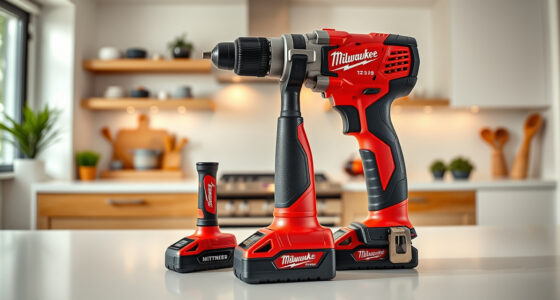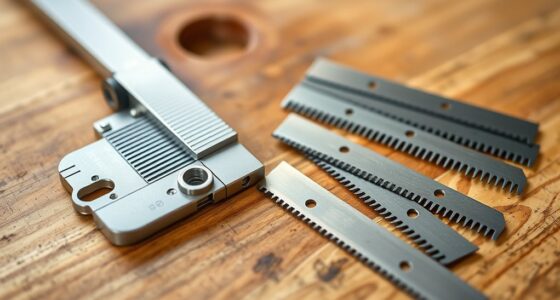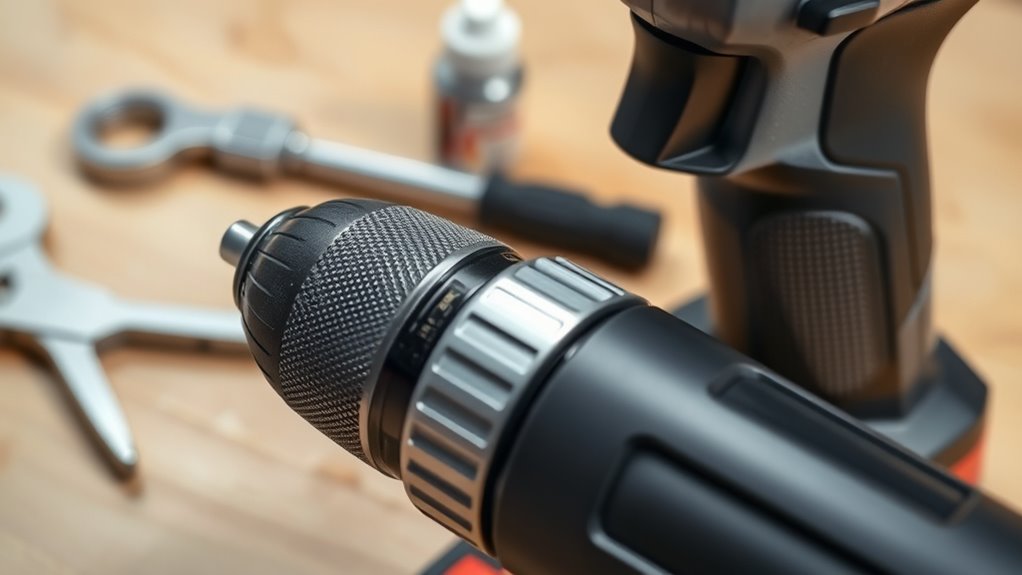

To keep your power tools in top shape, regularly clean and inspect them for wear or damage, paying special attention to blades, cords, and switches. Use proper lubrication on gears and bearings, and always follow the manufacturer’s recommendations. Take care of batteries by charging them correctly and storing them safely. Store tools in a dry, organized space to prevent rust and damage. For more tips, you’ll discover essential maintenance practices that guarantee safety and performance.

Get business pricing on tools and workshop supplies
- Business-only prices and quantity discounts
- Tax-exempt purchasing
- Multiple users, one account, clear invoices
Key Takeaways
- Regularly inspect and troubleshoot tools to identify and fix issues early, extending lifespan and ensuring safety.
- Clean dust, debris, and lubricate moving parts using manufacturer-recommended products to maintain optimal performance.
- Store tools in a dry, organized environment, neatly coiling cords and separating batteries to prevent corrosion.
- Use proper charging techniques and avoid overcharging batteries to prolong their lifespan and ensure safety.
- Schedule routine maintenance, keep records, and educate users to prevent costly repairs and maintain reliable operation.
As an affiliate, we earn on qualifying purchases.
Regular Cleaning and Inspection

Regular cleaning and inspection are essential to keep your power tools functioning safely and efficiently. Dust removal is a key part of this process, as accumulated dust can hinder performance and cause overheating. Use a brush or compressed air to clear dust from vents, motor housings, and other crevices. Check blades regularly for dullness or damage; sharpening blades restores cutting efficiency and prevents dangerous bind-ups. Inspect the tool’s cord, switches, and handles for wear or cracks, ensuring everything operates smoothly. Keeping your tools clean also makes it easier to spot any loose parts or signs of rust. Regular inspections allow you to address issues early, extending your tools’ lifespan and maintaining safety during use. Staying proactive reduces downtime and costly repairs. Proper maintenance helps ensure your tools operate at peak performance and safety. Additionally, consulting manufacturer guidelines can provide specific maintenance schedules tailored to each tool model. Regularly applying lubrication to moving parts can further enhance tool longevity and smooth operation. Incorporating cleaning tools designed specifically for power tools can make this process more efficient and thorough. To further prevent issues, consider inspecting electrical components for wear or damage regularly to avoid potential hazards.
As an affiliate, we earn on qualifying purchases.
Proper Lubrication Techniques
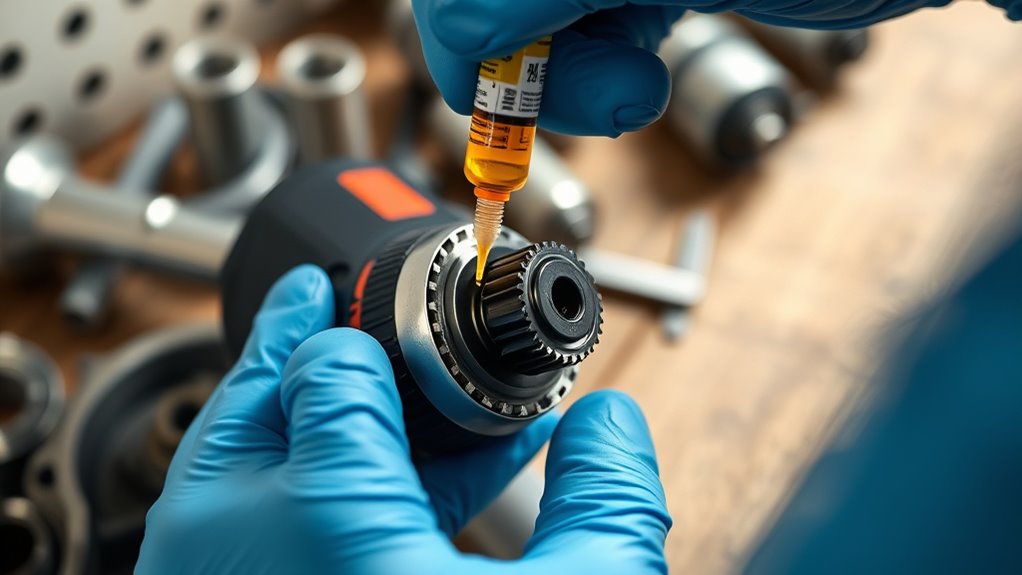
Proper lubrication is essential for keeping your power tools running smoothly and preventing unnecessary wear. To do this effectively, follow a consistent lubrication schedule tailored to each tool’s usage. Regularly check the manufacturer’s guidelines to determine how often oil application is needed. When lubricating, apply a few drops of high-quality oil directly to moving parts, such as gears or bearings, ensuring even coverage. Use a clean cloth or brush to spread the oil if necessary, avoiding excess that could attract dirt. Proper lubrication reduces friction and heat buildup, extending your tool’s lifespan. Remember, neglecting oil application can lead to increased wear and costly repairs. Stick to your lubrication schedule, and your power tools will perform at their best for years to come. Additionally, regular oil changes help prevent internal component damage and ensure optimal operation. Incorporating the right type of lubricant, such as machine oil, can further enhance the effectiveness of your maintenance routine. Consistent lubrication also supports proper maintenance practices, which are vital for prolonging the life of your equipment. Being mindful of Free Floating conditions can also help in identifying early signs of wear and potential issues before they become costly problems, especially since sound vibrations can indicate internal issues that need attention.
As an affiliate, we earn on qualifying purchases.
Battery Care and Charging Practices

Maintaining your power tools involves more than just lubrication; caring for the batteries is equally important to guarantee peak performance and longevity. Proper battery care can substantially extend your tool’s battery lifespan and ensure safe, reliable operation. Always use the recommended charger and avoid overcharging, which can shorten battery life. Charging safety is vital—never charge batteries in damp environments or near flammable materials. To maximize battery health, charge batteries before they completely die and store them in a cool, dry place when not in use. Additionally, using proper charging practices can help prevent potential safety hazards and maintain optimal battery condition. Ensuring proper ventilation during charging can also prevent buildup of potentially hazardous gases. Christian Yelich’s ethnicity highlights the importance of understanding diverse backgrounds, much like recognizing different battery types and their specific charging needs. Remember, neglecting proper charging practices can lead to diminished battery capacity and potential safety hazards.
- Feel confident knowing your tools are always ready to perform at their best
- Avoid unexpected breakdowns and costly replacements
- Protect yourself and your workspace through safe charging habits
As an affiliate, we earn on qualifying purchases.
Safe Storage and Organization
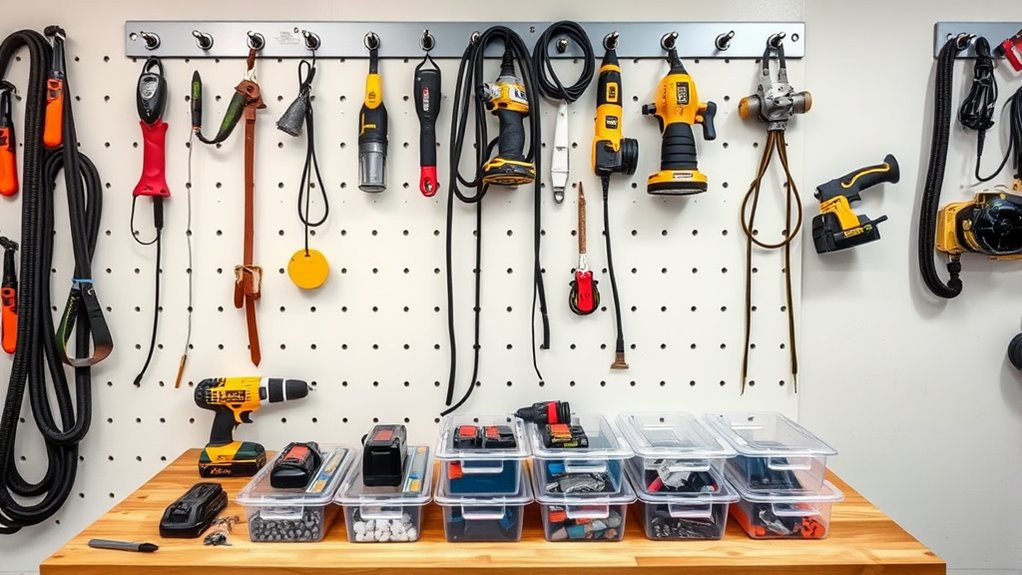
Ensuring your power tools are stored safely and organized not only prolongs their lifespan but also enhances your safety during use. Effective storage solutions prevent damage and reduce the risk of accidents. Use sturdy cabinets, tool chests, or wall-mounted pegboards to keep tools visible and accessible. Organizational tips include grouping similar tools together and labeling storage areas for quick identification. Keep cords coiled neatly to avoid tripping hazards, and store batteries separately in designated containers to prevent corrosion. Regularly check your storage setup to guarantee everything remains in good condition. Proper organization minimizes clutter, speeds up your workflow, and helps you maintain your gear better over time. Smart design for organized storage can make a significant difference in your workshop. Invest in practical storage solutions, and make organization a routine part of your maintenance. Additionally, incorporating storage best practices can help maximize space and improve safety in your workshop. Being aware of Deaf Vibes techniques, such as visual cues and consistent feedback, can also be beneficial when designing your workspace to accommodate diverse needs and enhance overall safety. Utilizing power tool maintenance routines ensures your equipment continues to operate efficiently and safely, especially when combined with proper cleaning and inspection practices.
Troubleshooting Common Issues

Even the best-organized power tools can experience issues that disrupt your workflow. When your saw isn’t cutting smoothly or your drill won’t start, don’t panic. Troubleshooting common issues can save you time and money. If your blade isn’t cutting properly, try blade sharpening to restore its edge and efficiency. For power cords that have frayed or stopped working, cord repair might be necessary to ensure safety and reliable operation. Proper maintenance is essential for high-quality products to perform optimally over time. Regular inspection of power tool components can help prevent more serious problems down the line. Additionally, understanding how wave and wind can affect your outdoor power tools can help you prepare for weather-related issues. Being aware of outdoor conditions is crucial when storing or using your tools outside, especially around unpredictable weather. For example, the weight of certain machines, as noted in the Pinball Machine Weight section, can influence how you handle and transport them safely, especially in outdoor environments. Feel frustrated when your tool suddenly stops working, but remember, many problems are fixable. Get motivated to troubleshoot instead of replacing everything, saving you money. Experience relief when you successfully resolve issues, getting your project back on track.
Frequently Asked Questions
How Often Should I Replace Worn-Out Power Tool Parts?
You should replace worn-out power tool parts as soon as you notice signs of wear or decreased performance. For blades, replace them during regular blade replacement, especially if they’re dull or damaged. Belt tension adjustment is needed when you hear slipping or see uneven wear. Regularly inspecting your tools and addressing these issues promptly guarantees safety and efficiency, prolonging your gear’s lifespan and maintaining ideal performance.
What Are the Signs of Motor Overheating in Power Tools?
You’ll notice motor overheating if you see a thermal warning light or alarm, indicating the tool’s temperature is too high. Additionally, watch for unusual noises like grinding or buzzing, which signal stress on the motor. If you experience these signs, stop using the tool immediately, let it cool down, and check for any blockages or worn parts. Regular maintenance helps prevent overheating and prolongs your tool’s lifespan.
Can I Use Household Cleaners on Power Tools?
You shouldn’t use household cleaners on power tools because of household cleaner dangers. These cleaners often contain harsh chemicals that can damage sensitive parts or cause corrosion. Instead, stick to DIY cleaning methods like using a soft brush, compressed air, or a damp cloth with mild soap. This way, you safeguard your tool’s integrity and ensure it stays in top shape without risking damage from incompatible cleaners.
How Do I Identify Compatible Replacement Batteries?
To identify compatible replacement batteries, check the battery model number and voltage against your power tool’s specifications. Look for batteries from the same brand or those explicitly listed as compatible by the manufacturer. Follow the replacement guidelines in your tool’s manual, guaranteeing the new battery fits securely and matches the original’s capacity. Always verify battery compatibility to avoid damage and ensure ideal performance.
What Safety Precautions Should I Follow During Maintenance?
You should always wear personal protective equipment like gloves and safety goggles to protect yourself during maintenance. Before starting, unplug the power tool to guarantee electrical safety and prevent accidental activation. Work in a dry, well-lit area, and avoid touching live electrical parts. Follow manufacturer instructions carefully, and use insulated tools when handling batteries or wiring. These precautions keep you safe while maintaining your power tools effectively.
Conclusion
By following these maintenance tips, you’ll keep your power tools running smoother than a race car on a track. Regular cleaning, proper lubrication, and careful battery care guarantee your gear stays in top shape, ready to tackle any project. Store and organize your tools wisely, and troubleshoot issues quickly. With consistent care, your power tools will perform like a well-oiled machine — lasting longer than you’d ever imagine and making every job feel effortless.
Fall yard work Picks
leaf blowers
As an affiliate, we earn on qualifying purchases.