
Cordless oscillating multi-tools have become one of the most useful tools on a jobsite or in a workshop: they cut trim, undercut door jambs, scrape adhesive, sand in corners, and flush-cut nails where nothing else fits. Once you decide to go cordless, the real question is which pro-grade model to buy, and the comparison almost always narrows to the DeWalt DCS356B and the Makita XMT03Z. These two dominate the conversation because they sit at a similar performance level, carry similar street prices, and come from the two most popular cordless platforms in North America.

Get business pricing on tools and workshop supplies
- Business-only prices and quantity discounts
- Tax-exempt purchasing
- Multiple users, one account, clear invoices
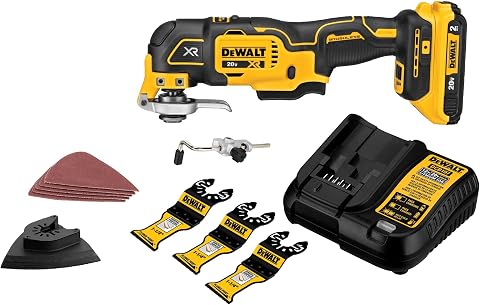
DEWALT 20V MAX XR Cordless Oscillating Multi-Tool Kit (DCS356D1)
- ✔ Brand: DEWALT
- ✔ Model: DCS356D1
- ✔ Power source: Cordless (20V MAX)
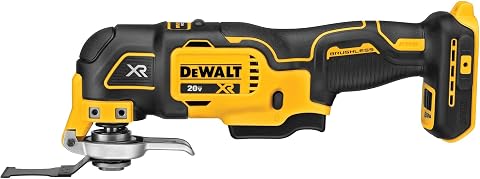
DEWALT 20V MAX XR Cordless Oscillating Multi-Tool with Brushless Motor
- ✔ Model: DCS356B
- ✔ Power source: 20V MAX cordless (tool only)
- ✔ Motor: Brushless

WORKPRO 20V Brushless Cordless Oscillating Multi-Tool Kit
- ✔ Brand: WORKPRO
- ✔ Voltage: 20V
- ✔ Motor type: Brushless
That platform point matters more than most buyers realize. A bare-tool multi-tool is not a standalone purchase; it is an entry point into a battery ecosystem. If you already own DeWalt 20V MAX batteries, the Makita becomes a much harder sell, and vice versa. For buyers starting from scratch, though, the tools themselves have to carry the argument.
The core tension between them comes down to control versus value. The DeWalt brings a three-speed selector that presets optimal oscillation ranges for cutting, sanding, and scraping, plus notably refined vibration damping. The Makita trades that convenience for aggressive variable-speed performance at a lower effective price, backed by one of the broadest 18V lineups in the industry. This comparison breaks both tools down across the criteria that actually affect daily use — cutting performance, speed control, ergonomics, blade attachment, runtime, and platform economics — so you can match the tool to your work rather than to marketing claims.
At a Glance
| Criteria | DeWalt DCS356B (20V MAX) | Makita XMT03Z (18V LXT) | Winner |
|---|---|---|---|
| Cutting performance and power | Strong; 3.0Ah-class battery delivers consistent cuts in hardwood and nail-embedded wood | Comparable; slightly more aggressive feel in thick material | Tie |
| Speed control system | 3-speed preset selector plus variable-speed trigger-style dial | Variable-speed dial only (10,000–20,000 OPM), no presets | A |
| Vibration and comfort | Excellent; rubber overmold and damping make long sessions comfortable | Good; dampened but more buzz transmits to the hand at top speed | A |
| Blade change system | Tool-free Quick-Change lever; secure blade retention | Tool-free lever lock; accepts most OIS-style accessories | Tie |
| Ergonomics and grip | Compact barrel-style grip, 3.1 lbs with battery, well-balanced | Grip positioned farther back, 3.7 lbs with battery, larger footprint | A |
| Battery platform value | 20V MAX — enormous lineup, easy to find batteries and deals | 18V LXT — one of the deepest ecosystems in the industry | Tie |
| Runtime per charge | Good; roughly 20–30 min of heavy cutting per 2.0Ah pack | Very good; efficient motor stretches smaller packs further | B |
| Bare-tool price | Higher — typically $30–50 more than Makita as a bare tool | Lower — frequently the cheapest pro-grade bare tool available | B |
DEWALT 20V MAX XR Cordless Oscillating Multi-Tool Kit (DCS356D1)
This is the pick that makes the most sense for buyers starting from zero. The DCS356D1 kit includes everything the DCS356B leaves out — battery, charger, cutting blades, and sandpaper — which means you’re working within minutes of opening the box. Compared with the WORKPRO, it also gives you access to DEWALT’s enormous 20V MAX accessory and battery ecosystem, so future tool purchases share the same power source.Performance-wise, the brushless motor pairs with a three-speed selector (up to 20,000 OPM at the top setting) and a variable-speed trigger that lets you feather the speed to the material. That trigger is the standout control feature across this entire lineup — the WORKPRO matches the speed flexibility with six preset settings, but a trigger gives you instant, tactile modulation that presets can’t replicate when you’re easing into a delicate cut.The quick-change accessory system means no wrench hunting mid-job, and the included universal adapter widens compatibility with most aftermarket blades. The LED work light is genuinely useful rather than a checkbox feature, since oscillating work often happens in shadowed corners and under cabinets. Our one criticism: DEWALT’s runtime claim is framed only as a percentage improvement over brushed motors, with no absolute runtime figure — so plan for a second battery if you’re cutting continuously for hours.
Pros:
- Complete kit includes battery, charger, blades, and sandpaper
- Brushless motor with three-speed selector plus variable-speed trigger for precise control
- Quick-change accessory system eliminates wrench-based blade swaps
- LED work light illuminates dark or tight work areas
Cons:
- Runtime claim is relative to brushed motors only, with no specific runtime figure provided
- Heavier upfront commitment than a bare tool if you only need occasional use
Best for: Buyers who want a complete, ready-to-work kit and a tool that integrates with the broader DEWALT 20V MAX platform
Not ideal for: Buyers who already own 20V MAX batteries and a charger — the DCS356B delivers the same tool for less duplication
Bottom line: The most complete cordless oscillating tool package in this lineup, and the one we’d hand to a buyer starting a tool collection from scratch.
“The most complete cordless oscillating tool package in this lineup, and the one we’d hand to a buyer starting a tool collection from scratch.”
DEWALT 20V MAX XR Cordless Oscillating Multi-Tool with Brushless Motor
Here’s the important thing to understand: the DCS356B is the same tool as our top pick, sold without battery or charger. Same brushless motor, same three-speed selector reaching 20,000 OPM, same quick-change accessory system. If you already run DEWALT 20V MAX tools, buying the kit version means paying twice for a battery and charger you already own — this bare-tool route avoids that entirely.What differentiates it slightly from the D1 kit beyond packaging is the dual-grip variable-speed trigger, which improves control during extended one-handed operation. The package does include two wood-cutting blades, so you can start on real work immediately, though you’ll want to add a sanding pad and multi-material blades depending on your projects.Compared with the WORKPRO, this model wins on top-end speed (20,000 vs 19,000 OPM) and on ecosystem depth — but it demands you already have skin in the DEWALT game. One caveat we’d flag honestly: the included universal adapter fits most accessory brands, not all. Before stocking up on third-party blades, verify fitment so you’re not left with a drawer of unusable steel.
Pros:
- Same brushless motor and speed control as the kit version at a lower commitment
- Dual-grip variable-speed trigger enhances handling and control
- Quick-change system requires no wrench for blade swaps
- Includes two wood-cutting blades to start working right away
Cons:
- Tool-only — battery and charger sold separately
- Universal adapter may not fit every aftermarket accessory brand
Best for: DIYers and pros already invested in the DEWALT 20V MAX battery platform
Not ideal for: First-time cordless tool buyers, who would need to purchase battery and charger separately at additional cost and hassle
Bottom line: The smart add-on for anyone whose garage already hums with 20V MAX batteries — identical performance to our top pick, minus redundant accessories.
“The smart add-on for anyone whose garage already hums with 20V MAX batteries — identical performance to our top pick, minus redundant accessories.”
WORKPRO 20V Brushless Cordless Oscillating Multi-Tool Kit
The WORKPRO takes a different approach to speed control, and it’s the reason it earns a spot here. Instead of DEWALT’s three speed bands with a trigger, it offers six preset variable speed settings up to 19,000 OPM. For less experienced users, that granularity is arguably friendlier — you dial in a speed for the material and let the tool hold it, rather than managing trigger pressure through a long cut.Where it trails the DEWALT models is top-end performance and platform depth. Its 19,000 OPM ceiling is slightly below DEWALT’s 20,000, and WORKPRO’s 20V ecosystem is far smaller, so this tool is less likely to become part of a growing battery family. On the other hand, the tool-less blade change with a universal fit interface accepts most accessory brands natively — no adapter needed — which can simplify your blade shopping compared with the DEWALT’s adapter-dependent compatibility.We’d characterize this as the homeowner’s multi-tool: capable across cutting, trimming, grinding, and sanding tasks, with a brushless motor and LED light that match the premium picks feature-for-feature. The main watch-item is packaging — depending on the kit configuration you select, the battery and charger may be sold separately, so confirm what’s included before checkout.
Pros:
- Six variable speed settings for fine-tuned control across materials
- Tool-less blade change with native universal fit for most accessory brands
- Brushless motor delivers up to 19,000 OPM for cutting and sanding
- Integrated LED light for dark work areas
Cons:
- Battery and charger may be sold separately depending on kit configuration
- Smaller battery ecosystem than DEWALT’s 20V MAX platform
- Slightly lower top speed than the DEWALT models
Best for: Homeowners and occasional DIYers who want brushless performance and fine speed control without joining a pro battery platform
Not ideal for: Tradespeople planning to build out a tool collection around one battery ecosystem, or those who need maximum cutting speed
Bottom line: A well-equipped brushless multi-tool whose six-speed dial and universal blade fit make it the easiest entry point for casual users — just verify what the box includes.
“A well-equipped brushless multi-tool whose six-speed dial and universal blade fit make it the easiest entry point for casual users — just verify what the box includes.”
As an Amazon Associate we earn from qualifying purchases.
Key Differences
The most consequential difference is the DeWalt’s 3-speed selector. It presets oscillation ranges tuned for cutting (0–13,000 OPM range), sanding, and scraping, and prevents you from dwelling a blade at an RPM that burns wood or scatters dust. The Makita relies on a conventional variable-speed dial, which works perfectly well but demands more operator judgment. For experienced users, the gap is minor; for anyone who uses a multi-tool occasionally or hands it to helpers, the presets are a genuine quality-of-life advantage and reduce the learning curve to nearly zero.
The second real difference is comfort and handling. The DeWalt is lighter (about 3.1 lbs with a compact battery versus the Makita’s 3.7 lbs), shorter, and better damped. That matters more with oscillating tools than with drills, because oscillation transmits continuous high-frequency vibration into your hand. Over a long day of undercutting jambs or removing grout, the DeWalt is measurably less fatiguing. The Makita’s rear-weighted grip also makes it feel bulkier in tight corners, though some users with larger hands prefer its handle shape.
Where the Makita wins is price and value. As a bare tool it routinely sells for noticeably less than the DeWalt, performs at a comparable level in most cuts, and draws from the 18V LXT platform — the largest cordless ecosystem Makita offers, with over 275 tools sharing the same batteries. If you already own LXT batteries, the effective cost of adding the XMT03Z is so low that the DeWalt’s refinements become hard to justify. The decision, then, is mostly about whether you are buying into a platform or buying the best standalone tool.
Detailed Comparison
Cutting performance and power (minor difference)
Both tools occupy the same performance class: both will flush-cut oak, slice through nail-embedded trim with a bi-metal blade, and undercut multiple door jambs without bogging down. User reports and independent tests consistently place them within a small margin of each other, with the Makita sometimes feeling slightly more aggressive in thick stock thanks to its higher top speed, and the DeWalt feeling smoother and more controllable in delicate cuts. Neither tool will replace a reciproc saw for demolition, but both handle 90% of oscillating tasks comfortably. The gap here is minor and should not drive your decision. Blade quality matters more than the tool’s motor at this level — a premium blade in either tool outperforms a cheap blade in the other.
Speed control system (DeWalt DCS356B (20V MAX) wins — moderate)
This is where the tools genuinely diverge. The DeWalt DCS356 has a three-speed preset selector plus variable-speed control within each band, essentially matching the tool’s motion to the task: slower for heat-sensitive plastics and scraping, mid-range for wood cutting, high for fast stock removal. The Makita offers a single variable-speed dial spanning 10,000 to 20,000 OPM. The Makita’s system is not deficient — it is the industry standard — but it puts the burden of matching speed to material on you. Set it too high in hardwood and the blade glazes; too low in drywall and the job takes twice as long. For tradespeople who use the tool daily, the Makita’s dial becomes second nature. For weekend users, renovators, or anyone who values set-and-forget simplicity, the DeWalt’s presets are a real advantage. DeWalt wins, and the difference is moderate — meaningful for less-experienced users, minor for pros.
Vibration and comfort (DeWalt DCS356B (20V MAX) wins — moderate)
Oscillating tools vibrate by nature, and the difference in damping between these two is noticeable over extended sessions. The DeWalt’s barrel grip with rubber overmold sits close to the work, and its internal damping keeps high-frequency buzz to a minimum. The Makita is dampened too, but at maximum speed more vibration reaches the hand, and its larger body distributes weight differently. In practice: fifteen minutes of occasional cutting feels the same on both tools; two hours of grout removal or adhesive scraping leaves your hand noticeably happier on the DeWalt. If vibration sensitivity or long continuous use is part of your routine — flooring, tile, restoration work — this criterion alone justifies the DeWalt. DeWalt wins; the gap is moderate and grows with session length.
Blade change system (minor difference)
Both use tool-free blade change. The DeWalt uses a Quick-Change lever system that accepts DeWalt’s universal accessory range; the Makita uses a lever-lock mount compatible with most OIS-style accessories. Both hold blades securely under load, and both can be operated with one hand. A practical note: because oscillating accessory standards have largely converged, aftermarket blades from third-party makers fit both tools, and those generic blades are dramatically cheaper than OEM accessories — which slightly neutralizes any attachment-system advantage. A tie; this is a non-factor.
Ergonomics and grip (DeWalt DCS356B (20V MAX) wins — moderate)
The DeWalt is the more compact tool: shorter front-to-back, lighter with a battery installed, and easier to maneuver inside cabinets, under sinks, and along baseboards. Its 12-position accessory adjustment lets you rotate the blade in small increments to reach awkward angles without re-gripping. The Makita is longer and heavier, with a grip set farther back; that layout suits two-handed operation and users with bigger hands but makes single-handed precision work in tight spots harder. For trim carpenters and remodelers who work in confined spaces all day, the DeWalt’s compactness is a daily benefit. DeWalt wins by a moderate margin, though hand size and personal preference can flip this for individual users.
Runtime and battery efficiency (Makita XMT03Z (18V LXT) wins — minor)
Both tools drain batteries at a rate typical of pro-grade oscillating tools — continuous heavy cutting will empty a compact 2.0Ah pack in roughly 20–30 minutes. The Makita’s motor is slightly more efficient on smaller packs, and its 18V platform’s 5.0Ah batteries offer a good balance of runtime and weight. The DeWalt performs best on 4.0Ah or larger packs; on the smallest 1.3Ah batteries it can feel constrained in thick material. Realistically, anyone buying either tool for frequent work should already own or budget for at least two mid-capacity batteries. Makita wins narrowly; the difference is minor in practice because both tools depend far more on battery capacity than on motor efficiency.
Battery platform and total cost (Makita XMT03Z (18V LXT) wins — major)
This is the criterion that most often decides the purchase. The DeWalt 20V MAX and Makita 18V LXT platforms are both enormous — hundreds of tools, ubiquitous battery availability, and frequent kit deals. The Makita bare tool is consistently cheaper, often by a meaningful margin, and LXT batteries are similarly affordable on the used and aftermarket markets. If you already own either platform, the math is decisive: buy the tool that matches your batteries, because a single additional battery and charger erases any price difference the other way. For platform-neutral buyers, the Makita’s lower entry cost gives it the value edge, while the DeWalt’s platform offers excellent kit bundling if you want to build out a tool collection. Makita wins on value; DeWalt wins on tool refinement. The significance is major, because platform lock-in compounds over years.
DeWalt DCS356B (20V MAX): Pros and Cons
Pros:
- 3-speed preset selector simplifies speed matching for cutting, sanding, and scraping
- Best-in-class vibration damping for long work sessions
- Compact and light (about 3.1 lbs with battery) — excellent in tight spaces
- 12-position blade adjustment for awkward-angle work
- Secure, genuinely one-handed tool-free blade change
- 20V MAX platform offers huge accessory and battery availability
Cons:
- Higher bare-tool price than the Makita
- Feels underpowered on the smallest battery packs — plan for 4.0Ah or larger
- Speed presets add little for experienced users who prefer full manual control
Makita XMT03Z (18V LXT): Pros and Cons
Pros:
- Lowest typical price among pro-grade cordless multi-tools
- Comparable cutting performance to the DeWalt in real-world tasks
- Slightly better runtime efficiency on compact batteries
- 18V LXT ecosystem is one of the deepest in the industry — over 275 compatible tools
- Durable construction with a strong reliability reputation
Cons:
- Heavier (about 3.7 lbs with battery) and bulkier front-to-back
- More vibration transmits to the hand at high speed
- Variable-speed dial only — no task presets
- Grip position makes tight-corner work less comfortable
Who Should Choose What
Choose DeWalt DCS356B (20V MAX) if:
- You already own DeWalt 20V MAX batteries and chargers — the platform match makes it a no-brainer
- You do long continuous sessions (flooring, grout removal, restoration) where vibration damping pays off daily
- You work in tight spaces — cabinets, under sinks, inside trim — and want the most compact body
- You are a less-frequent user who benefits from preset speeds instead of learning a variable dial
- You hand the tool to helpers or apprentices and want fewer ways to misuse it
Choose Makita XMT03Z (18V LXT) if:
- You already own Makita 18V LXT batteries — the bare tool price makes this the cheapest quality upgrade available
- You are platform-neutral and want the lowest entry cost for pro-grade performance
- You prefer raw, aggressive cutting feel and full manual speed control
- You plan to expand into a large cordless collection and value LXT’s tool breadth
- You have larger hands and prefer a bigger, rear-set grip
Skip both if: You only need a multi-tool for rare, light household tasks — a quality corded model or a mid-range brushed cordless option costs far less and will cover occasional use. Likewise, if you need a tool primarily for heavy demolition cutting, a reciprocating saw serves that job better than any oscillating tool.
Value for Money
On pure price-to-performance, the Makita XMT03Z is the better value. It delivers roughly 95% of the DeWalt’s cutting capability at a noticeably lower bare-tool cost, and if LXT batteries are already on your shelf, the marginal cost of adding it is small enough that the comparison nearly ends there. For buyers building a first cordless kit, Makita’s aggressive bundle pricing on LXT further tilts the ledger.
But value is not only price per amp. The DeWalt’s advantages — vibration damping, compactness, speed presets — are exactly the features that matter on the days a multi-tool is in your hand for hours. If your work includes flooring, tile, or finish carpentry where those sessions are routine, the DeWalt’s premium of $30–50 is cheap insurance against fatigue and mistakes. Paying more makes sense for the frequent, precision-oriented user; it does not make sense for the occasional cutter. The honest framing: buy the Makita for economics, buy the DeWalt for refinement, and let your existing battery shelf make the final call if you have one.
Final Verdict
If you already own either brand’s batteries, buy the matching tool — that single factor outweighs every difference discussed here. For everyone else choosing fresh: the Makita XMT03Z is the smarter buy for most people. It cuts as well as the DeWalt, costs less, runs efficiently, and opens the door to one of the most complete cordless ecosystems available. Its weaknesses (weight, vibration, no presets) are annoyances, not disqualifiers, and they matter least to the occasional and moderate user who makes up the majority of buyers.
The DeWalt DCS356 is worth its premium for a specific user: the tradesperson or serious renovator who runs the tool for long stretches, works in confined spaces, or wants preset speeds for consistency across tasks and users. Its superior damping and compact body are advantages you feel every working day, and that justifies the extra cost for heavy users alone.
The single deciding factor is intensity of use. Heavy and frequent use favors the DeWalt; everything else favors the Makita. Both are excellent tools, and neither is a wrong purchase — but the Makita’s combination of matching performance and lower price makes it the default recommendation.
Frequently Asked Questions
Will a cordless multi-tool cut as well as a corded one?
Modern pro-grade cordless models like these two cut nearly as well as corded oscillating tools, with the caveat that very long continuous sessions require battery swaps. For most users, the convenience of no cord outweighs the small runtime penalty. If you run the tool all day every day in one spot, corded still has a place; otherwise cordless is the better choice.
Do DeWalt blades fit the Makita, and vice versa?
Modern oscillating accessories have largely converged on universal mounting systems, and most current aftermarket blades fit both tools. Always check the listed compatibility before buying, but in practice third-party blades are inexpensive and work in both — which makes blade cost a non-factor in this comparison.
Which battery size should I use with these tools?
A 4.0Ah to 5.0Ah battery is the sweet spot for both tools: enough runtime for extended cutting without excessive weight. The DeWalt in particular feels restricted on packs below 2.0Ah in thick material. Compact 2.0Ah packs are fine for quick tasks and overhead work where weight matters more than runtime.
Is the DeWalt’s 3-speed selector really worth paying extra for?
It depends on how you work. If you change tasks often, share the tool with less-experienced users, or simply want to avoid burning blades at the wrong speed, the presets are genuinely useful. If you are experienced and set the dial by feel anyway, the selector adds little — in that case save the money and buy the Makita.
Both tools are sold as bare tools — what else do I need to buy?
Budget for a battery and charger if you do not already own the platform (or buy a kit version), plus a starter set of bi-metal and wood blades. OEM blades are expensive; quality aftermarket blade packs cost a fraction of the price and perform well. Factor roughly the cost of one battery into your total comparison if you are starting from zero.
Fall yard work Picks
leaf blowers
As an affiliate, we earn on qualifying purchases.