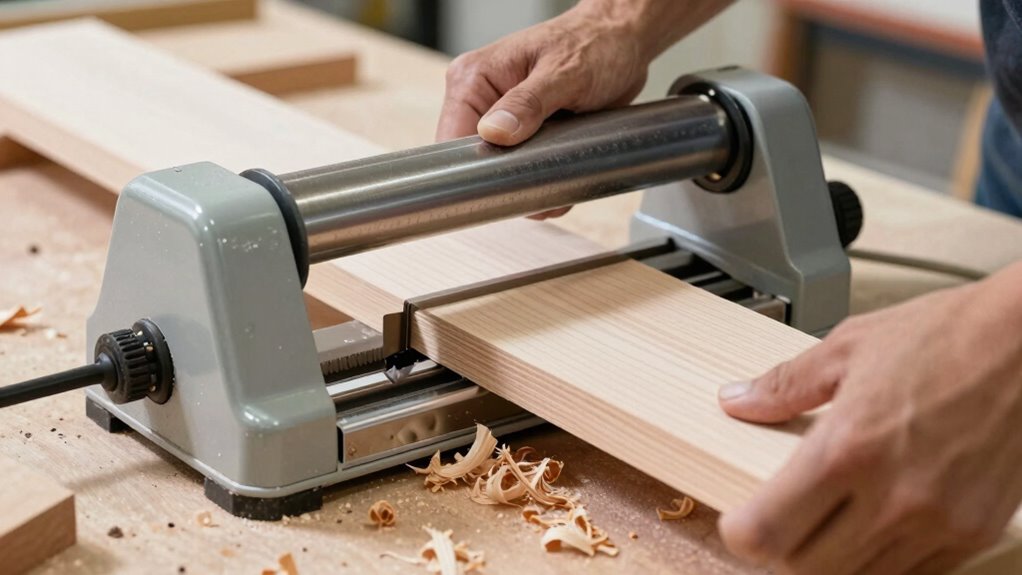

To improve accuracy with your benchtop planer, guarantee your infeed and outfeed tables are level and properly aligned using a straightedge or square. Keep blades sharp and well-maintained, and regularly check the calibration of the depth adjustment. Maintain a clean workspace by managing dust and debris, and handle your lumber carefully—supporting and feeding it steadily. Regular inspection and upkeep also keep your machine reliable and precise; learn more tips to enhance your results.

Get business pricing on tools and workshop supplies
- Business-only prices and quantity discounts
- Tax-exempt purchasing
- Multiple users, one account, clear invoices
Key Takeaways
- Regularly calibrate and align the blades and infeed/outfeed tables before use.
- Keep blades sharp and replace them promptly for cleaner, more accurate cuts.
- Maintain a clean workspace and dust collection system to prevent debris interference.
- Use well-prepared, dry, and flat stock to reduce feeding issues and inaccuracies.
- Perform routine maintenance, including lubrication and tightening loose parts, to ensure consistent performance.
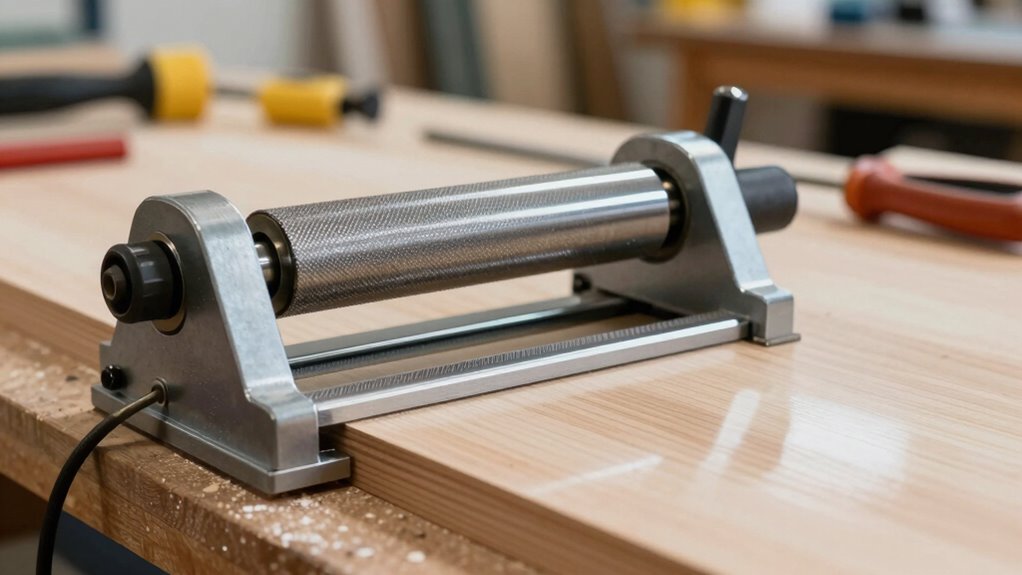
Achieving greater accuracy with your benchtop planer starts with understanding how proper setup and maintenance can make all the difference. When your planer is correctly aligned, and the blades are sharp, you’ll notice a significant improvement in the consistency and precision of your results. Blade sharpening is essential—dull blades cause uneven cuts, tear-out, and can lead to inaccurate thicknesses. Regularly inspect the blades, and if they’re dull or nicked, sharpen or replace them promptly. Sharp blades cut cleanly through wood fibers, reducing the need for multiple passes and minimizing errors.
Proper alignment and sharp blades are key to consistent, accurate planing results.
Equally important is your dust collection system. Proper dust management not only keeps your workspace clean but also guarantees your planer operates smoothly. Dust buildup can interfere with the movement of the blades and feed rollers, causing inconsistent feed rates and uneven planing. Make sure your dust collection is functioning efficiently; clean out the ports and filters regularly and consider upgrading to a more powerful system if dust accumulates quickly. This maintenance reduces the risk of debris affecting your cuts and helps maintain the overall accuracy of your work.
When setting up your benchtop planer, double-check the alignment of the infeed and outfeed tables. They should be perfectly level and parallel to each other to guarantee the wood feeds smoothly and consistently through the blades. Use a straightedge or a precision square to verify this alignment. Any misalignment can result in uneven thicknesses or snipe, which compromises accuracy. Also, calibrate the depth adjustment mechanism regularly, so your cuts are precise and repeatable. Adjustments should be smooth and hold their setting firmly once secured.
Another key factor is the quality of your wood stock. Always start with well-prepared, flat, and dry lumber. Warped or overly moist wood can cause feed issues and lead to inaccuracies. Support your stock properly during planing to prevent twisting or shifting as it passes through the blades. Keep your feed rate steady; rushing can cause uneven cuts, while moving too slowly might lead to snipe or over-cutting. Practice consistent feeding, and you’ll develop a feel for the proper speed that yields the best results. Additionally, understanding blade alignment and ensuring it is precise can significantly enhance your planing accuracy.
Finally, take the time to regularly inspect and maintain your planer. Clean the machine after each use, lubricate moving parts as recommended, and check for loose bolts or worn components. These small steps ensure your planer remains reliable and accurate over time. Combining sharp blades, effective dust collection, precise setup, and proper handling will dramatically improve the accuracy of your benchtop planer, giving you cleaner, more precise results each time you work.
Products Worth Considering

Ring Alarm 14-Piece Wireless Security System Kit

Shark AI Ultra Robot Vacuum with Self-Empty Base

Dyson Big Ball Multi Floor Canister Vacuum, Yellow
As an affiliate, we earn on qualifying purchases.
Frequently Asked Questions
How Often Should I Calibrate My Benchtop Planer?
You should calibrate your benchtop planer regularly, ideally after every few uses or when you notice inaccuracies. Keep dust collection systems clean to prevent dust buildup that can affect precision. Also, sharpen or replace blades frequently, as dull blades cause uneven cuts and inaccuracies. Regular calibration, combined with proper dust management and sharp blades, guarantees consistent accuracy and peak performance from your planer.
What Types of Wood Are Best for Planing Accuracy?
Softwoods like pine and cedar often provide smoother surface finishes, making them ideal for planing accuracy. However, hardwoods such as maple and cherry offer more stability, reducing the risk of tear-out and uneven grain. The key is matching the wood grain to your project’s needs, ensuring consistent results. When you choose the right type of wood, your planer works more efficiently, giving you a cleaner, more precise surface finish every time.
Can I Upgrade Parts to Improve Precision?
Yes, you can upgrade parts to improve your benchtop planer’s precision. Start by upgrading blades for cleaner, more accurate cuts. Also, regularly tighten the belts to reduce vibration and ensure smoother operation. These small adjustments can substantially enhance your planer’s accuracy, helping you achieve more precise, consistent results with each project. Proper maintenance and upgrades make a noticeable difference in your woodworking quality.
How Does Humidity Affect Planing Results?
Humidity markedly affects your planing results because wood moisture levels fluctuate with environmental changes. When humidity rises, wood absorbs moisture, making it swell and become harder to plane smoothly. Conversely, low humidity dries out the wood, causing shrinkage and uneven surfaces. To guarantee consistent results, control your workspace’s environment by maintaining stable humidity levels, and let wood acclimate to your environment before planing. This minimizes moisture-related distortions and improves accuracy.
What Safety Precautions Enhance Accuracy During Operation?
To enhance accuracy during planer operation, always wear safety gear like eye and ear protection. Use dust collection systems to keep your workspace clear, preventing debris from affecting your work. Secure the wood firmly and check the planer’s blades regularly to guarantee smooth cuts. Staying focused and following safety guidelines minimizes mistakes, making your results more precise. Remember, safety and cleanliness directly contribute to better accuracy in planing.
Conclusion
By paying careful attention to your setup and routine, you can subtly enhance the precision of your benchtop planer. Small adjustments and consistent practices act like gentle whispers guiding your tool to perform at its best. While perfection isn’t always within reach, these mindful steps help you get closer to that ideal finish. With patience and a keen eye, you’ll find your projects becoming smoother and more refined, making each cut feel just a bit more special.