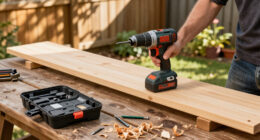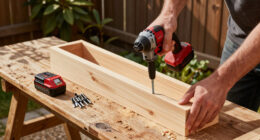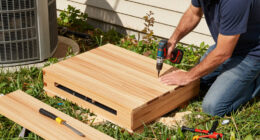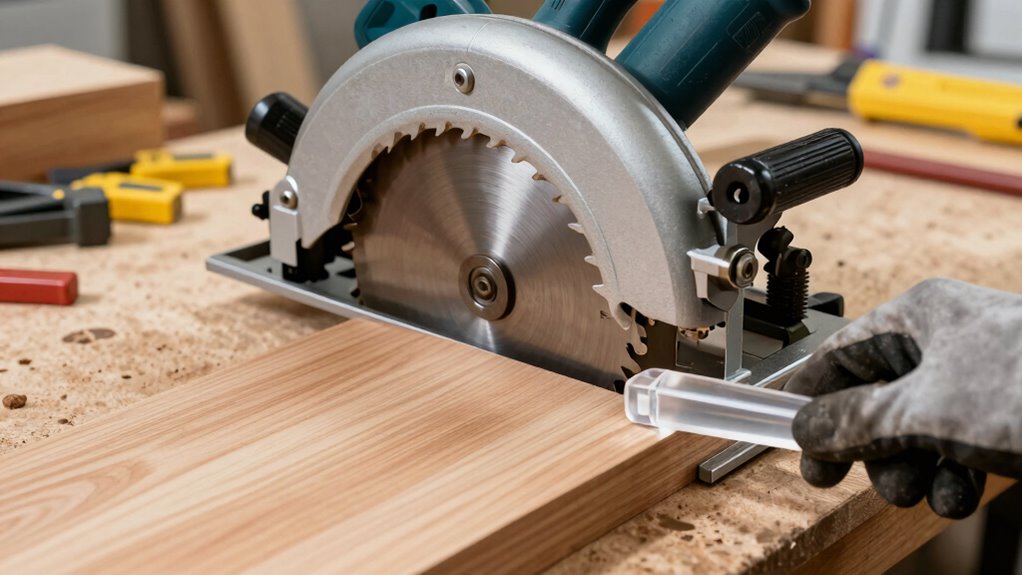

To prevent kickback before it starts, always wear proper safety gear like glasses, gloves, and dust masks, and guarantee your workspace is clear and stable. Read and follow the manufacturer’s instructions for your tools, keep blades sharp and aligned, and use push sticks for small pieces. Maintain a balanced stance and stand to the side of your cut. Staying vigilant and focused ensures safe operation—keep these tips in mind to stay safe and control your cuts better.

Get tools and workshop supplies delivered free — and shop member deals
- Fast, free delivery on millions of items
- Access to Prime Big Deal Days deals on October 6–7
- Prime Video, Amazon Music and more included
Key Takeaways
- Ensure the saw blade is sharp, properly aligned, and in good condition before use.
- Maintain a balanced stance and hold the saw firmly to control movement during cuts.
- Use push sticks or guides for narrow or small workpieces to keep hands away from the blade.
- Confirm the workpiece is securely clamped to prevent shifting or binding.
- Avoid forcing the saw; let the blade cut at its own pace to minimize binding and kickback.
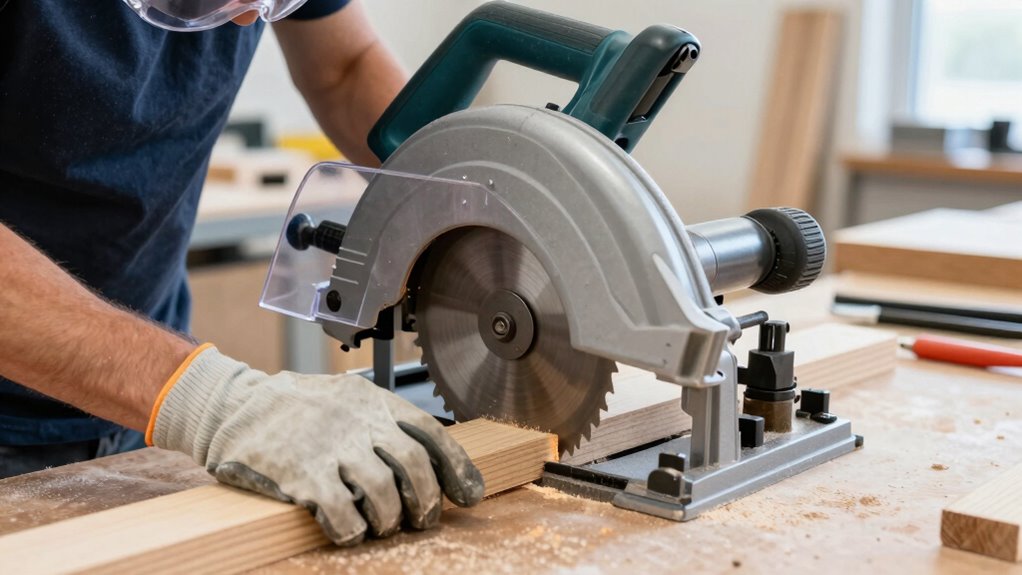
Have you ever experienced a sudden, jarring kickback while using a power saw or similar tool? That sharp jerk can catch you off guard and lead to serious injuries if you’re not prepared. To prevent this from happening, it’s essential to prioritize safety gear and adopt proper technique at every step. Wearing the right safety gear isn’t just a recommendation—it’s your first line of defense. Equip yourself with safety glasses to protect your eyes from flying debris, and use hearing protection to guard against loud noises. Gloves can improve your grip, but make sure they fit well and don’t interfere with your control. A dust mask or respirator keeps dust and fumes out of your lungs, especially when working with materials that produce fine particles. Don’t overlook the importance of sturdy, non-slip footwear and fitted clothing—these small details keep you stable and prevent accidents.
Beyond safety gear, mastering proper technique is vital to avoiding kickback. Always read the manufacturer’s instructions for your tool before you start. Keep your hands away from the blade or cutting area, and never force the tool through a cut. Let the saw do the work; pushing too hard increases the risk of sudden jerks. When making cuts, confirm your workpiece is securely clamped to prevent it from shifting unexpectedly. Check that your blade is sharp and properly aligned—dull or misaligned blades can cause uneven cuts, which heighten kickback risks. Maintaining a sharp blade is especially important for safe operation. Maintain a balanced stance with your feet shoulder-width apart, and keep your body centered behind the saw. Never reach across or over the blade, and always stand to the side of the cutting path when possible. Proper handling techniques are essential to maintaining control and avoiding accidents. Practicing proper technique also involves paying attention to your environment. Clear away clutter and debris from your workspace so nothing interferes with your movement.
Be mindful of your body position, and avoid awkward angles that could compromise your control. Use push sticks or guides when working with small or narrow pieces to keep your hands at a safe distance from the blade. Before starting the cut, double-check everything: the position of your workpiece, the blade’s condition, and your stance. Taking a moment to plan your cut reduces the chance of unexpected movements that can lead to kickback. Additionally, understanding power tool safety and how to handle potential hazards can further help prevent accidents. Developing an awareness of cutting techniques can also significantly reduce the likelihood of kickback, as proper method minimizes the chances of blade binding or unexpected jumps. Incorporating safety awareness into your routine ensures you remain vigilant and prepared during every cut. Remember, consistent focus and respect for the tool’s power are your best defenses against kickback. By combining the right safety gear with proper technique, you greatly reduce your risk of injury and make your woodworking safer and more enjoyable.
As an affiliate, we earn on qualifying purchases.
Frequently Asked Questions
What Tools Are Most Prone to Kickback?
Chainsaws and circular saws are most prone to kickback, especially if you don’t use personal protective gear or maintain proper blade alignment. Always wear safety gear like gloves and eye protection, and double-check that your blade is aligned correctly. Keeping your tools well-maintained and focused during cuts minimizes the risk. By staying alert and following safety practices, you can substantially reduce the chances of kickback happening.
Can Kickback Happen With All Saw Types?
Yes, kickback can happen with all saw types if you’re not careful. The key is maintaining proper saw blade alignment and ensuring you’re well-trained as an operator. When you neglect these, even the safest saws can catch you off guard. Always double-check your equipment and sharpen blades. Stay alert, follow safety guidelines, and never underestimate how quickly kickback can occur, turning a routine cut into a dangerous surprise.
How Often Should Safety Checks Be Performed?
You should perform safety checks before each use of your saw, making certain all safety gear is in place and functioning properly. Regular inspections help catch issues early, reducing kickback risks. Always review emergency procedures so you’re prepared if an incident occurs. Consistently maintaining your saw and adhering to safety protocols keeps you safer, minimizes accidents, and guarantees your equipment operates smoothly. Remember, proactive safety checks are essential for preventing kickback altogether.
Is Kickback More Common in Certain Materials?
Ironically, you might find kickback more common in softer woods where the grain is unpredictable, or in dense materials that resist easy cutting. The wood grain and material density play key roles—grain irregularities can snag your blade, and higher density offers more resistance, increasing kickback chances. So, pay close attention to material choice and grain direction; ignoring these factors can turn your project into an unexpected rodeo.
What Are the First Steps After a Kickback Occurs?
If a kickback occurs, immediately turn off the saw, keeping your hands clear of the blade. Don’t try to fight the kickback; instead, focus on maintaining control. Once the saw stops, assess for injuries and use your safety gear, like gloves and eye protection. Follow your emergency procedures, such as calling for help if needed. Staying calm and acting quickly helps prevent further accidents and guarantees safety.
As an affiliate, we earn on qualifying purchases.
Conclusion
By staying alert and following safety protocols, you can substantially reduce the risk of kickback. Many believe that using a sharp, well-maintained blade is enough, but research shows that proper technique and awareness are just as essential. In fact, some safety experts argue that understanding how kickback occurs truly prevents it before it starts. Trusting your instincts and respecting the equipment’s power can make all the difference, keeping you safe and confident during every cut.
As an affiliate, we earn on qualifying purchases.
As an affiliate, we earn on qualifying purchases.
Halloween Picks
halloween
As an affiliate, we earn on qualifying purchases.