TL;DR
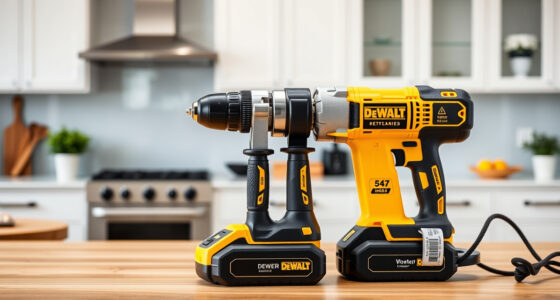
High-performance cordless drills can save time on demanding work such as large-diameter drilling, but their added power often comes with greater size and weight. For common home tasks, a compact drill may be easier to control and more comfortable to use; the right choice depends on the jobs you expect to do.
A tool-buying guide says a flagship cordless drill may be worth the added expense for repeated, demanding work, but many homeowners doing routine repairs may get more practical value from a smaller, lighter model. The trade-off matters because higher torque and speed can help with heavy drilling, while a larger tool can be harder to handle for everyday tasks.

Get business pricing on tools and workshop supplies
- Business-only prices and quantity discounts
- Tax-exempt purchasing
- Multiple users, one account, clear invoices
High-performance models are commonly distinguished by higher torque and top speed, stronger hammer-drilling capability, more advanced motors and electronics, and additional settings. Those features can help a drill maintain performance under heavier loads and let users adjust how it operates. The guide says these advantages are most relevant when the tool is regularly pushed hard, rather than for occasional small holes or fasteners.
For professionals, examples include plumbers using large hole saws, electricians drilling repeated openings for cable runs, and general contractors working with demanding materials. For homeowners, the decision turns on the work they actually expect to do. Driving small screws, drilling pilot holes and assembling furniture typically do not call for the maximum power available.
More power can also mean a larger motor, heavier gearbox and higher-capacity battery, adding size and weight. That can make overhead work and tight spaces less comfortable. The guide also cautions that a powerful drill requires care: users need to select an appropriate clutch setting and control the trigger to avoid applying more force than a small fastener or soft material requires.
Is a High-Performance Cordless Drill Worth It? Choose for the work ahead
More power can help with repeated, demanding drilling, but added size and weight may make routine home tasks less comfortable. The best fit depends on the jobs you expect to do.
Match power to the project
A compact drill may be easier to control when maximum output is unnecessary.
Keep it comfortable
Small screws, pilot holes and furniture assembly typically do not call for maximum power.
Extra torque can help
Large auger bits, self-feed bits and hole saws place greater demands on a drill.
Consider the trade-off
A more capable drill may suit repeated heavy work, while its extra bulk is felt during everyday handling.
Where extra capacity may matter
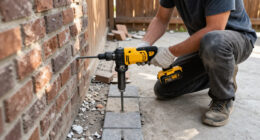
Repeated large holes in framing lumber can make higher performance useful for demanding jobs.
Large-diameter bits create more resistance than small twist bits.
Some mixing tasks strain a drill; check its instructions, and consider a dedicated mixer for frequent or demanding work.
Use suitable clutch settings, control the trigger and monitor the tool for overheating.
Comfort is part of performance
- More torque and speed for heavy drilling
- Can be larger and heavier
- May feel less comfortable overhead or in tight spaces
- Easier to hold and maneuver
- May suit routine repairs and small fasteners
- Can be a practical fit when heavy drilling is occasional
Compare the actual models
The guide provides no prices, measured tests or model-by-model comparison to establish a value winner.
| Before choosing | What to check |
|---|---|
| Your expected tasks | Large holes, repeated work or small fasteners |
| Handling | Size, weight and comfort for overhead work |
| Control | Torque, speed and clutch settings |
| Planned use | Manufacturer instructions for the drill and accessories |
Matching Drill Power to Home Projects
The purchase matters less as a contest over the biggest specification and more as a choice about comfort, control and the jobs ahead. A heavier drill can be worthwhile if it reduces time spent on repeated, difficult holes. But for routine household repairs, the additional capability may sit unused while the extra bulk is felt every time the tool is lifted or maneuvered.
The guide refers to National Institute for Occupational Safety and Health (NIOSH) guidance on selecting tools by matching size, weight and power to the application. That principle also has a practical home-use implication: fatigue can affect comfort and consistency during repeated work. A tool that is easier to hold may be a better fit than a more powerful one for tasks that do not need high output.
There is no single best choice for every household. People who tackle occasional repairs may reasonably prioritize a compact drill, while frequent renovators or users with demanding drilling needs may benefit from a more capable model. The guide does not provide prices, test results or a measured comparison of models, so it does not establish a specific value-for-money winner.
Products Worth Considering

Sonos Era 300 Wireless Smart Speaker with Dolby Atmos, Black

Bose Home Speaker 500 Smart Speaker with Alexa, Black

Ring Alarm 14-Piece Home Security Kit
As an affiliate, we earn on qualifying purchases.
Where Extra Torque Helps
The clearest case for more power is large-diameter drilling. Auger bits, self-feed bits and hole saws create more resistance than smaller twist bits. A higher-performance drill may help maintain power and speed when making multiple holes in framing lumber, a task the guide connects with electrical, plumbing, HVAC and general contracting work. For especially demanding drilling, it notes that a more powerful right-angle drill may be needed.
Mixing materials is another possible use. Drywall mud, thinset, mortar and concrete can place heavy demands on a drill motor. The guide says extra capacity can provide more headroom, but stresses that users must watch for overheating. It also warns that not every drill is designed for mixing and that a dedicated mixer may be a better fit for frequent or demanding use.
These examples describe circumstances where extra capability may help; they do not mean a flagship drill is necessary for every homeowner. The source material’s discussion of concrete and masonry work is incomplete, so it does not establish specific recommendations for those tasks.
““You’re paying for additional capability, and that doesn’t always translate into a better experience.””
— The tool-buying guide
Costs and Model Comparisons
The source material does not identify particular drill models, prices, measured performance tests or a specific homeowner’s project list. It therefore does not quantify how much time a flagship drill might save or how its purchase cost compares with a compact model. The guide’s discussion of concrete and masonry also ends before giving details, leaving its advice for those applications incomplete.
It is also unclear how much weight, size and performance vary among current brands and models. Buyers would need to check the specifications and instructions for the exact drill and accessories they are considering. Claims about productivity are presented as general guidance, not as results from a cited product test.
Choose for the Work Ahead
For a practical decision, list the jobs the drill will handle most often, including whether they involve large holes, repeated work overhead or mixing. Compare each candidate’s weight, size, torque, speed and clutch settings, rather than choosing by a single headline specification. Check the manufacturer’s instructions to confirm that the tool is intended for a planned application, and monitor it for overheating during demanding work.
If the expected work is mostly furniture assembly, pilot holes and small fasteners, a compact drill may be more comfortable. If heavy drilling is frequent, a higher-performance model may be worth the additional cost and bulk. The source provides no forthcoming product announcement or testing milestone; the remaining next step for buyers is matching a specific model to their actual tasks.
Key Questions
Is a high-performance cordless drill necessary for ordinary home repairs?
Usually, the guide says, routine work such as small holes, pilot holes and furniture assembly does not require maximum torque. A lighter compact drill may be easier to control and use.
When can a more powerful drill be useful?
Extra power can help with large auger bits, self-feed bits and hole saws, particularly when making repeated openings in framing lumber. It may also provide more capacity for some mixing tasks, though not every drill is built for that work.
What are the downsides of a flagship drill?
Higher-performance models can be larger and heavier because of their motors, gearboxes and batteries. That added bulk may be uncomfortable for overhead work or tight spaces, and excess torque can make small fastening jobs harder to control.
Can I use any cordless drill to mix mortar or concrete?
No. The guide says not every drill is designed for mixing, and the motor can overheat under heavy strain. Check the manufacturer’s instructions; for frequent or demanding mixing, a dedicated mixer may be more suitable.
Source: protoolreviews.com