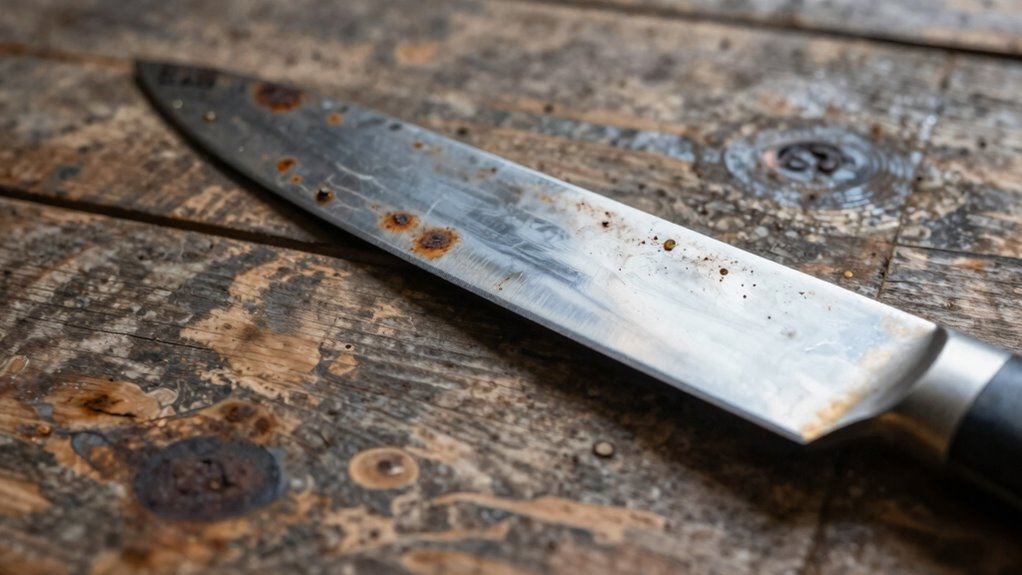

A dull blade is more dangerous because it forces you to apply more pressure, making slips and accidental cuts likely. Stronger force increases the risk of blades slipping or jerking unexpectedly, which can cause injuries. Dull blades also produce uneven cuts, causing materials to slip and leading to accidents. Keeping blades sharp and well-maintained reduces these hazards, making your work safer and more controlled. To learn how proper maintenance boosts safety, keep exploring this important topic.
Key Takeaways
- Dull blades require more force, increasing the risk of slips and accidental cuts.
- Excessive force with dull blades can cause unpredictable jerking or slipping.
- Dull blades reduce control, leading to uneven cuts and higher injury chances.
- Using dull blades elevates the risk of mishandling and accidents despite perceived safety.
- Proper maintenance keeps blades sharp, ensuring safer, more precise, and controlled cuts.

Many people assume that a dull blade is safer because it’s less likely to cut, but in reality, it’s more dangerous. When you neglect proper blade upkeep, you increase the risk of accidents rather than reduce them. Dull blades require more force to cut through materials, which often leads to slips and unexpected injuries. Instead of feeling safer with a dull blade, you’re actually putting yourself in danger because you might exert excessive pressure, causing the blade to jerk or slide unpredictably. This is why maintaining sharp blades is a vital safety measure you shouldn’t overlook.
Dull blades are more dangerous—they require more force, increasing slips and injuries. Keep blades sharp for safety and control.
Keeping your blades sharp isn’t just about efficiency; it’s about safety. Regular blade maintenance involves checking for dullness, chips, or damage and replacing or sharpening blades when necessary. This simple step ensures that your cuts are clean and controlled, minimizing the chance of slips that could lead to cuts or worse injuries. Safety precautions such as wearing protective gloves and eye gear become even more important when you handle blades, especially if they’re dull, because the risk of mishandling increases. When blades are sharp, you don’t need to apply excessive force, which reduces fatigue and the likelihood of losing control.
You also want to pay attention to the condition of the blade’s edge. A dull edge can cause uneven cuts, which might result in the material slipping unexpectedly. This can be dangerous, especially if you’re working with sharp or heavy tools. Proper blade upkeep extends beyond just sharpening; it includes cleaning blades regularly and storing them properly to prevent damage. Proper maintenance routines ensure that blades remain in optimal condition, preventing mishaps caused by dull or damaged edges. When blades are well-maintained, they perform better and safer, giving you more control over your work and reducing the chance of accidents.
Practicing safety precautions doesn’t mean you have to be overly cautious or hesitant. It’s about respecting the tool and understanding its proper use. Always inspect your blades before starting any project, ensuring they’re sharp and intact. Use the right technique and support your workpiece securely to prevent slips. Remember, a sharp blade offers better control and requires less force, making your work safer and more precise. By keeping your blades in top condition through consistent blade upkeep, you’re actively reducing hazards and protecting yourself. Safety isn’t just about protective gear—it’s also about how well you care for your tools and how vigilant you are during your work. When you prioritize blade upkeep and follow safety precautions, you create a safer workspace where accidents are less likely to happen.

Intelitopia Complete Knife Sharpening Stone Set – Dual Grit Whetstone 400/1000 3000/8000 Knife Sharpener with Leather Strop, Flattening Stone, Bamboo Base, 3 Non-slip Rubber Bases & Angle Guide
【Complete Knife Sharpening Stone Kit】You don't need to be a Pro to sharpen your blades, all you need…
As an affiliate, we earn on qualifying purchases.
As an affiliate, we earn on qualifying purchases.
Frequently Asked Questions
How Often Should I Sharpen My Blades for Safety?
You should sharpen your blades regularly—about every few weeks—depending on usage, to guarantee safe and efficient cutting. Proper blade maintenance is vital for safety precautions, preventing slips and accidents. Keep an eye on how the blade performs; if it starts to dull or snag, sharpen it immediately. Consistent maintenance reduces the risk of injury, making your work safer. Regular sharpening keeps your blades in prime condition, protecting you and extending their lifespan.
Can a Dull Blade Cause Long-Term Hand Injuries?
You might be surprised, but a dull blade can cause long-term hand injuries. When blades rust from corrosion or are mishandled, they increase the risk of slips and cuts. Repeated improper handling exacerbates this, leading to strain or even nerve damage over time. Always keep your blades sharp, clean, and properly stored to prevent accidents. It’s a small step that protects you from serious, lasting injuries.
What Are the Signs My Blade Needs Sharpening?
You’ll know your blade needs sharpening if it struggles to cut smoothly, tears or frays material, or requires more force than usual. Regular blade maintenance includes inspecting for dullness and using proper sharpening techniques, such as honing or grinding. If you notice these signs, sharpen your blade promptly to guarantee safety and efficiency, reducing the risk of accidents and long-term injuries. Proper care keeps your tools performing at their best.
Does Blade Material Affect How Quickly It Dulls?
Sure, blade material composition dramatically influences how quickly your tool dulls. If you chose a softer material, don’t expect impressive blade durability—your blade will dull faster, leaving you with a frustrating, useless edge. Harder materials, like high-carbon steel or ceramic, resist wear longer. So, if you want your blade to stay sharp and safe, pick a durable material. Otherwise, you’ll be constantly sharpening—welcome to the dull blade dilemma!
Are Safety Gloves Effective When Using Dull Blades?
Safety gloves are somewhat effective when using dull blades, but they can’t fully prevent accidents. Protective gear, like gloves, helps reduce cuts and injuries, but dull blades require more force, increasing the risk of slips. For better cutting precision and safety, it’s best to keep blades sharp. Sharp blades cut smoothly, lowering the likelihood of accidents and making your work safer and more efficient.

HEMUNC 6PCS oscillating Tool Scraper Blades Universal fit Multitool Scraper Blades, Compatible with Dewalt Dremel Rockwell Makita Bosch Fein Multimaster Milwaukee Porter Cable Ridgid Ryobi
✔Super Value Oscillating tool scraper blades Kit: Our oscillating scraper blade boasts a unique combination of three scraper…
As an affiliate, we earn on qualifying purchases.
As an affiliate, we earn on qualifying purchases.
Conclusion
So, next time you reach for that dull knife, just remember—you’re not just risking a little scrape, you’re inviting chaos. A dull blade sneaks and slips, turning your careful chop into a dangerous dance. Meanwhile, a sharp one acts like a well-trained ninja—precise, controlled, and safe. So, if safety’s your goal, sharpen up! Because nothing screams “fun” like a trip to the ER, all thanks to that lazy, dull blade pretending to be harmless.

Schwer ProGuard High Level Cut Resistant Work Gloves for Extreme Protection, ANSI A9 Cut Gloves with Reinforced Thumb, Non Slip, Breathable, Durable, Touch-screen, Black 1 Pair(L 3326
【High Level of Protection】The ProGuard ANSI A9 cut resistant work Gloves provide the top-tier protection, boasting the high…
As an affiliate, we earn on qualifying purchases.
As an affiliate, we earn on qualifying purchases.

Noverlife Hair Clipper Guard Blades Holder Case, Barber Guard Storage Bag for 20 Metal Blades Hard Storage Travel Case
【Separate Storage】– It features shock-absorbing foam dividers. With overall dimensions of 9.1×6.7×3.2inch / 23x17x8cm, safely store up to…
As an affiliate, we earn on qualifying purchases.
As an affiliate, we earn on qualifying purchases.