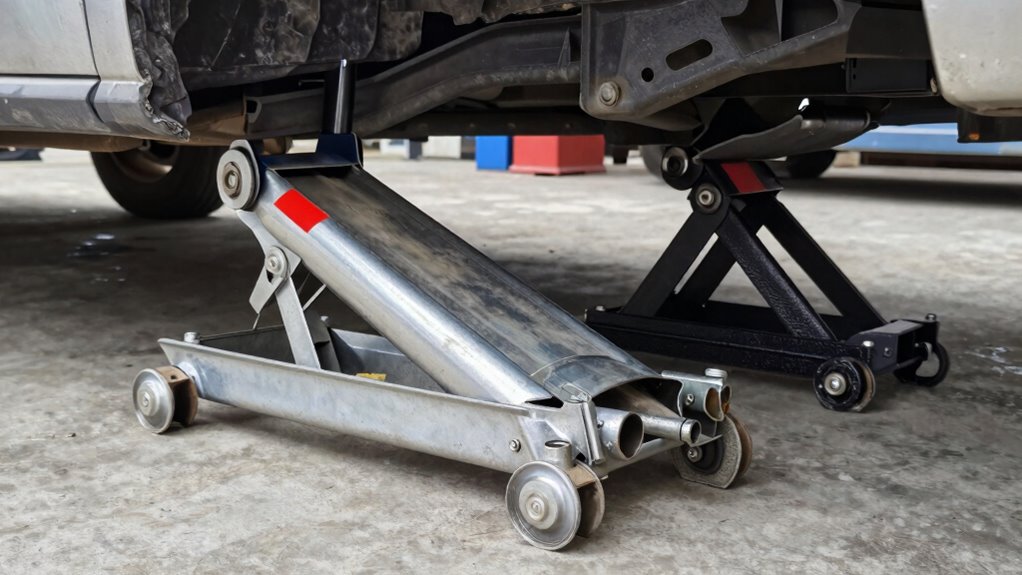

You need to use a hydraulic floor jack and jack stands together because relying solely on a jack is unsafe. The jack lifts the vehicle, but it’s not built for long-term support. Jack stands provide stable, secure support once you’ve lifted the vehicle to a safe height. If you skip this step, the vehicle could slip or fall, causing injury or damage. Knowing how these tools work as a system helps keep you safe and mechanics easier—continue to learn more.

Get business pricing on tools and workshop supplies
- Business-only prices and quantity discounts
- Tax-exempt purchasing
- Multiple users, one account, clear invoices
Key Takeaways
- Hydraulic jacks lift the vehicle but are not designed for long-term support, requiring jack stands for safety.
- Using both tools together ensures vehicle stability and prevents accidental drops during maintenance.
- Proper sequence—lifting with a jack, then placing stands—minimizes risk and maintains a secure work environment.
- Regular inspection of both jacks and stands ensures reliability and prevents equipment failure.
- Relying solely on a hydraulic jack increases safety hazards; jack stands provide essential support for safe vehicle maintenance.
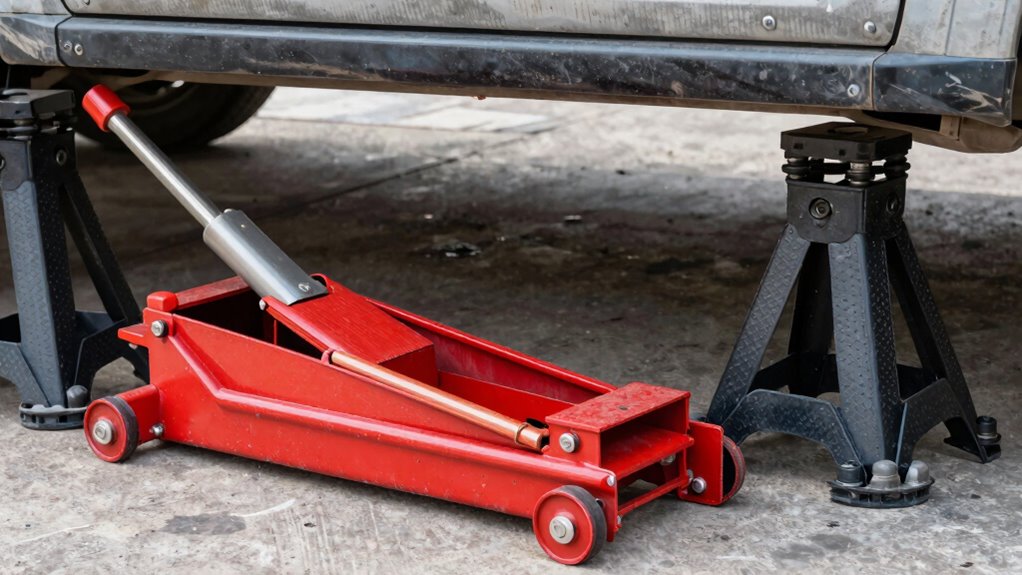
Ever wondered how to safely lift and support your vehicle during maintenance? It’s essential to understand that your floor jacks and jack stands must work as a system to guarantee vehicle safety. When you’re working under a car, you’re placing your trust in the equipment that holds it up, so it’s critical that both tools are used correctly and in tandem. A hydraulic mechanic’s best practice is to use a sturdy floor jack to lift the vehicle initially, then switch to jack stands for support. This approach minimizes risks and keeps you safe throughout the process.
Hydraulic mechanics have made lifting cars easier and more reliable, but they don’t eliminate the risks involved in vehicle maintenance. A hydraulic floor jack is designed to lift under load with minimal effort, but it’s not meant for long-term support. That’s where jack stands come into play. They’re built to hold the weight securely once the vehicle is elevated. If you rely solely on a hydraulic jack, you risk accidental lowering or failure, which could lead to serious injury or damage. Using a system where the jack lifts and the stands support is the safest method to prevent accidents.
Hydraulic jacks are for lifting, not supporting—always use jack stands for safety during maintenance.
The connection between the two tools is simple but essential. You lift with the hydraulic jack until the vehicle reaches a comfortable height, then carefully place the jack stands underneath solid lift points. These points are typically reinforced areas specified by the vehicle manufacturer. Once the stands are in position, you gently lower the jack to transfer the weight onto the stands. Never leave the jack in place alone because it’s designed for lifting, not for supporting weight long term. This sequence ensures that your work area remains stable and secure. Proper tool inspection is crucial to ensure all components are functioning correctly and safely. Regularly checking your lifting equipment helps prevent unexpected failures during maintenance. Additionally, understanding vehicle weight ratings is vital to select the appropriate jack stands for your vehicle’s safety. Proper equipment inspection is also essential to identify any signs of wear or damage that could compromise safety.
As an affiliate, we earn on qualifying purchases.
Frequently Asked Questions
Can a Floor Jack Be Used Alone Safely?
Using a floor jack alone isn’t safe because it lacks proper load distribution and stability. Always use safety gear like wheel chocks and jack stands for added security. The jack lifts the vehicle, but jack stands support the weight, preventing accidents. Relying solely on a jack risks collapse or slipping, endangering you. Working as a system guarantees safety and stability during maintenance or repairs.
How Do I Choose the Right Weight Capacity?
To choose the right weight capacity, you need to assess your vehicle’s weight, consider equipment maintenance, and think about storage considerations. Match the jack’s capacity to at least the vehicle’s weight, ensuring safety and durability. Always select equipment that exceeds your vehicle’s weight for added safety. Proper storage helps maintain your tools’ integrity and readiness. Remember, choosing the right capacity keeps your lifting safe, effective, and reliable for every job.
What Are Common Signs of Jack Stand Failure?
You should watch for signs like hydraulic leaks or structural cracks, which indicate jack stand failure. Hydraulic leaks can cause a sudden loss of support, risking your safety, while cracks weaken the stand’s integrity, making it prone to collapse. If you notice any fluid leaks or visible damage, stop using the jack stand immediately, and replace it. Always verify your equipment is in good condition before working underneath a vehicle.
How Often Should I Inspect My Jacks and Stands?
You should inspect your jacks and stands before every use—yes, every time! Maintenance routines keep them safe, so look for leaks, cracks, or rust. Storage tips? Keep them in a dry, clean spot to prevent corrosion. Regular checks guarantee they’ll work when you need them most, not just when your car’s hanging in the air. Stay vigilant, and your lifts will thank you with reliable performance.
Are There Specific Safety Precautions for Different Vehicle Types?
Yes, you should consider vehicle compatibility and safety gear when working with different vehicle types. For heavier trucks, use high-capacity jacks and stands designed for their weight. Always wear safety gear like gloves and eye protection. Confirm the jack’s lift points match your vehicle’s specifications, and double-check stability before working underneath. Different vehicles require tailored precautions to prevent accidents and ensure safe, effective lifting.
As an affiliate, we earn on qualifying purchases.
Conclusion
Remember, your floor jack and jack stands are like a tightrope walk—each one keeps the other from falling. When used together as a system, they create a sturdy bridge over the chasm of danger, ensuring your safety. Don’t let one piece be the loose plank that causes you to stumble. By treating them as a team, you’re crafting a safety net woven with strength and precision—because in this dance of weight and support, teamwork keeps you grounded.
car maintenance jack and stands set
As an affiliate, we earn on qualifying purchases.
As an affiliate, we earn on qualifying purchases.
heavy-duty automotive jack stands
As an affiliate, we earn on qualifying purchases.
As an affiliate, we earn on qualifying purchases.
Fall yard work Picks
leaf blowers
As an affiliate, we earn on qualifying purchases.