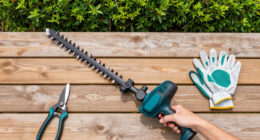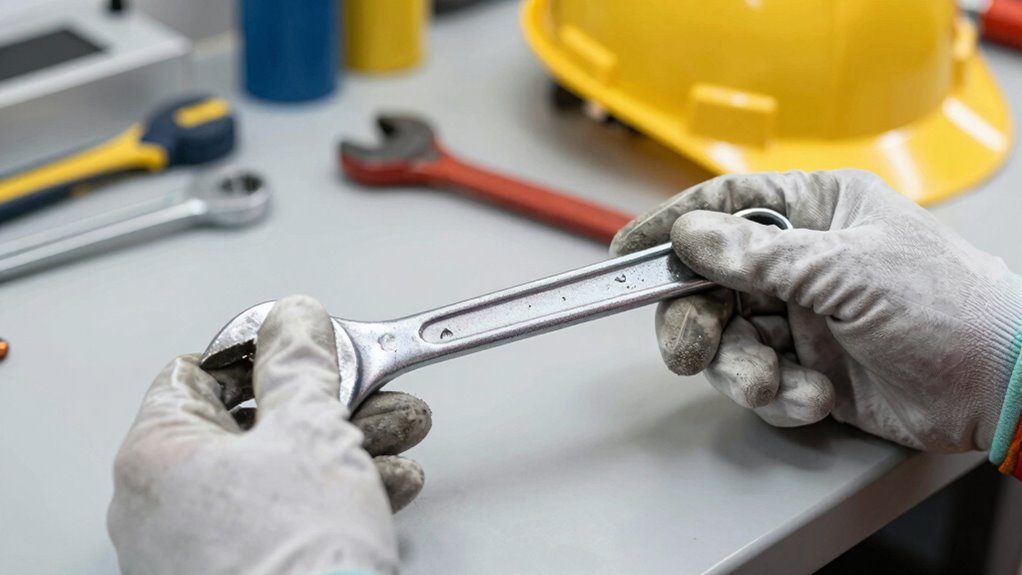
Before each use, make sure you wear proper safety gear like gloves and glasses to protect yourself. Check your tool with a prepared checklist: look for damage, test safety features, and inspect accessories for wear or looseness. Clean the tool and verify all parts are secure and functioning smoothly. If you follow these steps, you’ll prevent accidents and keep your tools in top shape. Keep going to discover more essential tips for safe and effective tool inspections.
Key Takeaways
- Wear appropriate safety gear to protect yourself during inspection and ensure a safety-first mindset.
- Use a checklist to examine the tool for visible damage, corrosion, and secure attachments.
- Test the tool’s operation and verify safety features are functional without bypassing safeguards.
- Inspect all accessories, blades, and fasteners for damage, sharpness, and proper installation.
- Clean the tool and perform preventive maintenance to detect issues early and prolong lifespan.
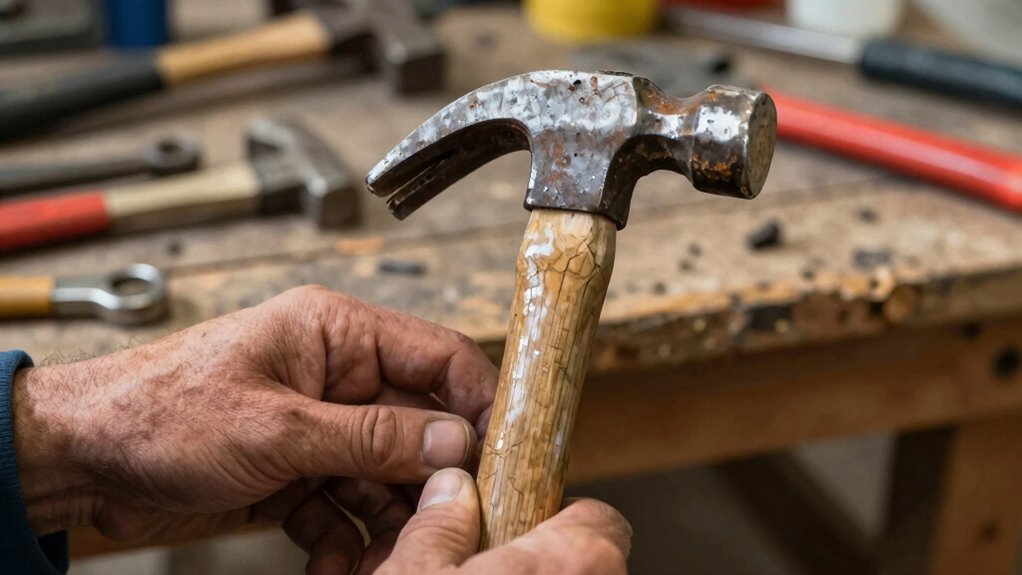
Before you start working with any tool, it’s essential to perform a thorough inspection to guarantee it’s safe and ready for use. This step helps prevent accidents and ensures your work proceeds smoothly. To do this effectively, you need to follow a systematic approach, starting with your safety gear. Always put on the appropriate safety gear—gloves, safety glasses, ear protection, or respirators—before handling the tool. Wearing the right safety gear protects you from potential hazards during inspection and use, and it sets a safety-first mindset.
Next, pull out your inspection checklist. A well-prepared checklist guides you through every critical aspect of the tool, making sure you don’t overlook anything. Begin by examining the physical condition of the tool. Check for visible damage such as cracks, chips, or corrosion. Look at the power cords or hoses for frays, cuts, or leaks, and ensure they’re securely attached. If you spot any damage, don’t use the tool until it’s repaired or replaced. Loose or damaged parts can cause malfunctions or injuries, so pay close attention here.
Move on to testing the functionality of the tool. Turn it on and listen for unusual noises, vibrations, or irregular operation. If the tool doesn’t run smoothly or makes strange sounds, it’s a sign that something’s wrong. Confirm that safety features like guards, switches, or emergency stops are in place and functioning properly. These features are there to protect you, so never bypass or disable them. For power tools, check the battery or plug connections—make sure they’re tight and free of damage. Regular inspections are crucial to maintaining safe and efficient operation over time. Additionally, inspecting the condition of safety features helps ensure they will operate correctly when needed. Performing these inspections regularly can also help identify potential issues early, preventing more costly repairs later.
Don’t forget to inspect the accessories and attachments. Ensure blades, bits, or other parts are sharp, correctly installed, and free of damage. Dull blades or worn-out attachments can cause accidents or reduce work quality. Also, verify that all fasteners are tight and secure. Loose components can cause the tool to malfunction or fall apart during use.
Finally, before you proceed, clean the tool if necessary. Dust, grease, or debris can interfere with operation or safety features. Regular preventive maintenance is vital to keep tools in optimal condition. Once all these steps are complete, and the tool passes your inspection checklist, you can confidently start your work. Taking these precautions each time you use a tool not only protects you but also prolongs the lifespan of your equipment. Remember, a quick, thorough inspection is always worth the time—it keeps you safe and your project on track.
electric drill safety inspection kit
As an affiliate, we earn on qualifying purchases.
As an affiliate, we earn on qualifying purchases.
Frequently Asked Questions
How Often Should Tools Be Inspected for Safety?
You should inspect your tools before every use to guarantee safety. Check tool calibration to confirm accuracy and look for any damage or wear. Proper storage conditions help prevent rust, corrosion, or deformation, so keep tools in a clean, dry place. Regular inspections catch potential hazards early, reducing accidents. By maintaining your tools properly and inspecting them consistently, you protect yourself and others from injuries caused by faulty equipment.
What Tools Require the Most Frequent Inspections?
You should inspect power tools, measuring instruments, and cutting tools most frequently, as they’re critical for safety and precision. Check for proper tool calibration and guarantee storage conditions haven’t compromised their integrity. Regular inspections catch wear and damage early, preventing accidents. For tools used daily, inspections should be more frequent, especially if storage conditions fluctuate or if the tool is exposed to harsh environments, to maintain safety and accuracy.
Can a Damaged Tool Be Safely Repaired or Should It Be Discarded?
A damaged tool is like a ticking time bomb—you shouldn’t gamble with safety. Generally, if the damage affects tool durability or safety, it’s best to discard it. Repair feasibility depends on the extent of the damage and whether essential parts can be restored without compromising integrity. Always assess whether repairs restore the tool’s strength or if replacement offers better safety and reliability, rather than risking accidents or further damage.
Are There Specific Inspection Checklists for Different Tool Types?
Yes, there are specific inspection checklists tailored for different tool types to guarantee safety and functionality. When inspecting, you should check tool calibration, ensuring measurements are accurate, and review inspection documentation for previous issues. These checklists help you systematically identify damage or wear. Regularly using them guarantees consistency, prevents accidents, and extends your tools’ lifespan by catching problems early before they cause failure or injury.
What Personal Protective Equipment Should Be Used During Inspection?
Ironically, inspecting tools without protective gear is like a chef tasting raw ingredients—dangerous and unwise. During inspection, you should wear gloves, safety goggles, and possibly a dust mask, depending on the tool. These protective gear items guarantee you follow proper inspection protocols, shielding you from sharp edges, debris, or chemical residues. Always prioritize your safety by donning the right personal protective equipment before starting any inspection.
tool inspection checklist printable
As an affiliate, we earn on qualifying purchases.
As an affiliate, we earn on qualifying purchases.
Conclusion
So, next time you reach for that trusty tool, remember: a quick inspection isn’t just a chore—it’s your ticket to avoiding disaster. Skipping this step might save seconds, but it risks turning your project into a comedy of errors. Treat your tools like friends—you wouldn’t ignore a friend in need, right? Stay vigilant, stay safe, and keep those tools in check. After all, a well-inspected tool is a safe tool—and that’s no joke.
As an affiliate, we earn on qualifying purchases.
tool maintenance and cleaning supplies
As an affiliate, we earn on qualifying purchases.
As an affiliate, we earn on qualifying purchases.