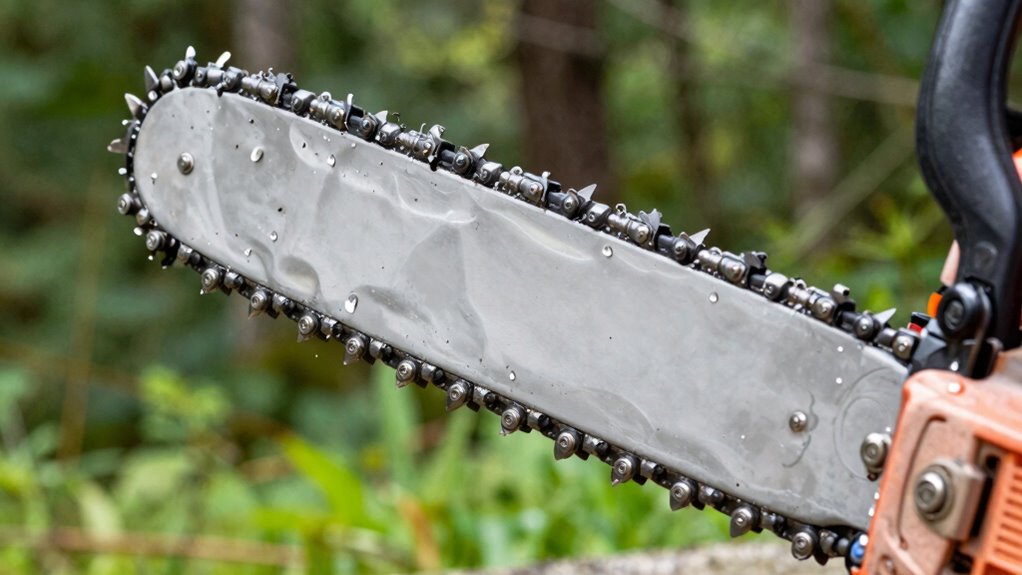

To maintain your chains for cleaner cuts, keep them well-lubricated with high-quality oil that coats all moving parts evenly, and check the oil reservoir often during use. Adjust the tension to guarantee it’s snug but not too tight, and sharpen the chain regularly to keep teeth sharp and aligned. Clean off debris after every cut to prevent buildup. Mastering these steps will help you achieve smoother, more precise cuts—continue to explore for detailed tips.

Get business pricing on tools and workshop supplies
- Business-only prices and quantity discounts
- Tax-exempt purchasing
- Multiple users, one account, clear invoices
Key Takeaways
- Regularly clean the chain and guide bar to remove debris and sap buildup for smoother cutting.
- Keep the chain properly lubricated with high-quality oil to reduce friction and prevent overheating.
- Maintain correct chain tension to ensure efficient cutting and prevent derailment or excessive wear.
- Frequently inspect and sharpen the chain to keep teeth sharp and cutting performance optimal.
- Replace damaged or excessively worn chains promptly to ensure cleaner cuts and safety.

Regularly maintaining your chains guarantees cleaner cuts and extends the lifespan of your equipment. One of the most critical aspects of proper chain maintenance is ensuring the chain is well-lubricated. Effective lubrication techniques reduce friction and prevent the chain from overheating, which can cause premature wear. You should apply a high-quality bar and chain oil before every use, making sure it coats all moving parts evenly. During operation, check the oil reservoir frequently and top it off as needed. If your chain is running dry, it won’t cut smoothly, and the teeth may dull faster. After cutting, it’s a good idea to wipe off excess oil and debris to keep the chain clean and free of dirt that can cause additional wear. Proper lubrication also helps prevent metal-on-metal contact, reducing the risk of damage to the chain and sprockets. Additionally, using the correct lubrication techniques ensures that the oil reaches all critical areas effectively.
Another essential part of chain maintenance is chain tension adjustment. Proper tension not only improves cutting efficiency but also prevents the chain from slipping or derailing during use. To adjust the tension correctly, turn off your equipment and loosen the chain brake if necessary. Check the chain’s slack by pulling it away from the guide bar; it should have a little give but not sag excessively. If it’s too loose, tighten the tension adjuster gradually, ensuring the chain remains snug against the guide bar but still moves freely when rotated by hand. Conversely, if the chain is too tight, it can cause excessive wear on the sprockets and motor. Regularly inspecting and adjusting the chain tension keeps the chain running smoothly and prevents unnecessary damage. Additionally, understanding the importance of chain wear indicators can help you determine when to replace the chain before it causes further issues. Maintaining the correct tension also helps ensure consistent cutting performance, which is vital for clean and precise results.
Maintaining your chains also involves inspecting for signs of wear or damage. Look for bent or broken teeth, rust, or excessive buildup of debris. Replace worn or damaged chains promptly to avoid compromising the quality of your cuts. Keeping the chain sharp is equally important; dull chains require more effort and produce rough cuts. Use a proper chain file or a sharpening tool to maintain the teeth’s sharpness regularly. When sharpening, file each tooth evenly and at the correct angle to ensure consistent cutting performance.
high quality chainsaw bar and chain oil
As an affiliate, we earn on qualifying purchases.
As an affiliate, we earn on qualifying purchases.
Frequently Asked Questions
How Often Should Chains Be Sharpened for Optimal Performance?
You should sharpen your chains whenever you notice chain fatigue or a decline in cutting performance, typically every few uses or after cutting through tough material. Use sharpening tools to maintain the proper edge and avoid over-sharpening, which can weaken the chain. Regular sharpening keeps the chain efficient, reduces strain on your saw, and ensures cleaner cuts. Check your chain frequently and sharpen promptly to maintain best performance.
What Type of Oil Is Best for Chain Lubrication?
You might think any oil works, but for chain safety and ideal lubrication techniques, using bar and chain oil is essential. It’s specially formulated to cling and reduce friction, preventing overheating and wear. If you skip this, your chain could seize or break, risking injury. For the best results, apply it consistently during operation, ensuring every link stays lubricated. Don’t compromise—choose the right oil for a safer, smoother cut every time.
Can Improper Tensioning Damage the Chain or Saw?
Yes, improper tensioning can damage your chain or saw. If the chain is too tight, it causes excessive wear and chain stretching, which can lead to broken links or a warped guide bar. If it’s too loose, it may derail or cause unsafe kickbacks. Always perform a proper tension adjustment, ensuring the chain moves smoothly without sagging or being overly tight. Regular maintenance prevents damage and extends your saw’s lifespan.
How Do Weather Conditions Affect Chain Maintenance?
Imagine your chainsaw as a dancer, and weather conditions as the stage’s atmosphere. Weather impact, like rain or humidity, can cause rust and dull the chain. Temperature effects, especially heat, can thin lubricant, leading to increased wear. Cold weather stiffens the chain, reducing cutting efficiency. To keep your dancer performing, clean and lubricate the chain regularly, adjust tension as needed, and store your saw in a controlled environment to combat weather’s effects.
Are There Eco-Friendly Options for Chain Cleaning?
Yes, there are eco-friendly options for chain cleaning. You can use biodegradable solvents and plant-based cleaners that effectively remove debris without harming the environment. These options are safe for your skin and work just as well as traditional chemicals. By choosing eco-friendly products, you help reduce pollution and protect nature while maintaining your chains in top condition for cleaner cuts.
As an affiliate, we earn on qualifying purchases.
Conclusion
Keeping your chains sharp and well-maintained is key to cleaner cuts and safer work. Did you know that dull chains can increase fuel consumption by up to 20% and cause more wear on your saw? Regular cleaning, proper lubrication, and timely sharpening not only extend your chain’s life but also improve cutting performance. Stay proactive with maintenance, and you’ll experience smoother cuts, less effort, and more efficient work every time.
As an affiliate, we earn on qualifying purchases.
As an affiliate, we earn on qualifying purchases.
Fall Picks
fall essentials
As an affiliate, we earn on qualifying purchases.
![Bukit Bintang Hicks Flat: DBKL Orders Cleanup After Viral Video Exposes Dirty Conditions [WATCH] - NST Online](https://tooltrekpro.com/wp-content/uploads/2026/08/bukit-bintang-hicks-flat-dbkl-orders-cleanup-after-viral-video-exposes-dirty-con-featured-560x300.jpg)