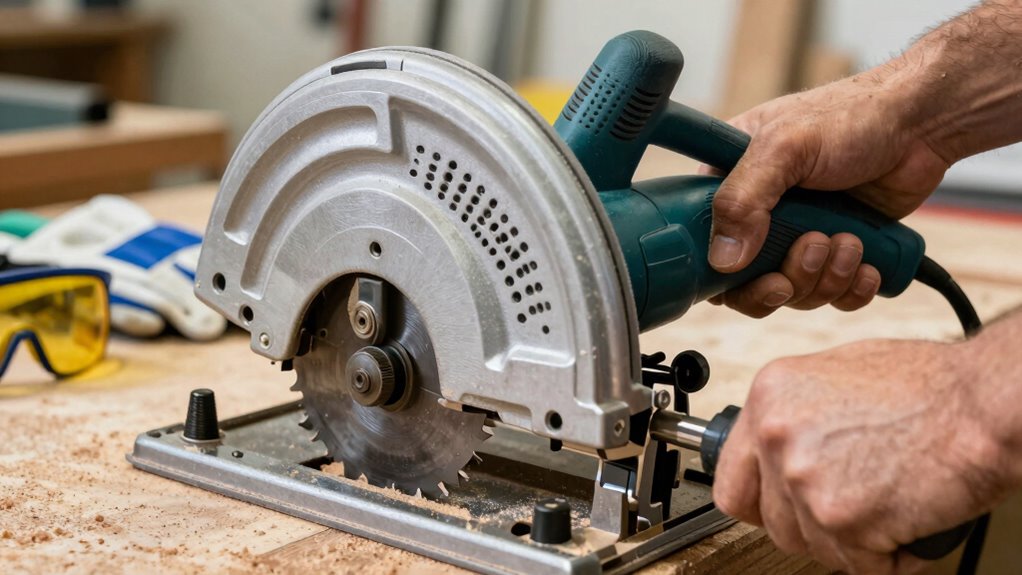

To work safely with worm drive and rear handle saws, always keep your blades sharp and well-maintained to guarantee clean cuts and reduce kickback risks. Wear proper safety gear like goggles, hearing protection, and sturdy boots, and clear your workspace of obstacles. Hold the saw firmly with both hands and follow the manufacturer’s procedures for safe operation. Regularly inspect and maintain your tools—if you keep safety top of mind, you’ll boost your control and confidence. More tips are just ahead.
Key Takeaways
- Always wear appropriate safety gear, including eye protection, hearing protection, and dust masks.
- Keep blades sharp, well-maintained, and properly installed to prevent kickback and ensure accurate cuts.
- Secure workpieces firmly with clamps and maintain a stable stance for better control.
- Use both hands to operate the saw, maintaining a firm grip and following manufacturer safety guidelines.
- Turn off and unplug the saw before inspecting or adjusting blades to avoid accidental injuries.

Working safely with worm drive and rear handle saws is vital to prevent accidents and guarantee precise cuts. These powerful tools can handle tough jobs, but they also pose significant risks if not used properly. To minimize these risks, you need to focus on proper blade maintenance and always wear the right safety gear. Making sure your blades are sharp and in good condition makes cutting smoother and reduces the chance of kickback or blade binding. Regularly inspect your blades for dullness, chips, or damage, and replace or sharpen them as needed. A well-maintained blade not only improves safety but also enhances your cutting accuracy.
Proper blade maintenance enhances safety and accuracy when using worm drive and rear handle saws.
Equally important is wearing appropriate safety gear. Eye protection is a must; goggles or safety glasses shield your eyes from flying debris, sawdust, or accidental splinters. Hearing protection is essential too, especially when working for extended periods, as saws can produce loud noise that damages your hearing over time. Gloves can offer some protection against minor cuts, but they might also interfere with your grip or get caught in the blade, so use them cautiously. A dust mask or respirator helps prevent inhaling sawdust, which can be harmful over time. Don’t underestimate the importance of sturdy work boots with good grip—these keep you stable on uneven surfaces and prevent slips.
When you start a cut, make sure your workspace is clear of obstacles, and secure the material firmly using clamps or a vice. This stability minimizes vibrations and keeps the saw from slipping, reducing the risk of accidents. Before powering up your saw, double-check that the blade cover is in place and that your safety gear is properly worn. Always hold the saw with both hands, maintaining a firm grip, and follow the manufacturer’s instructions for operation. Keep your fingers away from the blade path and never force the saw through a cut; let the blade do the work.
After finishing, turn off the saw and unplug it before inspecting the blade or making adjustments. Regularly clean your saw to remove dust and debris, which can interfere with its performance. Remember, blade maintenance is ongoing—dull or damaged blades increase the risk of accidents and poor cuts. By keeping your blades sharp and your safety gear in good condition, you create a safer working environment, allowing you to focus on your task with confidence. Safety isn’t just about avoiding injuries—it’s about working smarter and ensuring your project’s success. Proper blade condition is essential for maintaining safety and efficiency during your cuts. Additionally, understanding safety guidelines can significantly reduce the likelihood of mishaps during operation.
As an affiliate, we earn on qualifying purchases.
Frequently Asked Questions
What Are the Common Signs of Saw Blade Wear?
You’ll notice signs of saw blade wear when cuts become rough, uneven, or slower. Dull blades struggle with precision, and you might see burn marks or chipped edges. Regular blade maintenance helps spot these issues early. Also, if dust extraction becomes less effective, it could indicate dullness or debris buildup. Keep an eye on these signs to guarantee safe, efficient cutting and avoid accidents caused by worn blades.
How Often Should I Replace the Saw’s Safety Features?
You should replace your saw’s safety features whenever they show signs of damage or wear, rather than waiting for a specific timeframe. Regularly inspect your safety gear and verify it’s functioning properly. Remember, proper operator training emphasizes the importance of maintaining safety features, which can prevent accidents. Trust the signs your saw gives you—if safety components are compromised, prioritize replacing them to stay safe and effective during your work.
Can I Use a Worm Drive Saw for Cutting Metal?
You can use a worm drive saw for metal cutting, but only if it has the right blade compatibility. Look for blades specifically designed for metal cutting to guarantee safety and efficiency. Regular saw blades won’t handle metal well and could cause accidents or damage. Always check the manufacturer’s recommendations to confirm your saw is suitable for metal and use appropriate safety gear. Proper blade selection makes all the difference.
What Accessories Improve Safety When Using These Saws?
Using a blade guard and anti-kickback features greatly enhance safety with worm drive and rear handle saws. The blade guard shields your hands from accidental contact, while anti-kickback mechanisms prevent sudden, dangerous jerks during cuts. Always make sure these accessories are properly installed and functioning before starting. These safety accessories help you maintain control, reduce injury risk, and work more confidently with your saws.
How Do I Troubleshoot Motor Overheating Issues?
To troubleshoot motor overheating, first check if your saw has proper motor cooling. Make sure vents are clean and unobstructed, allowing airflow. Avoid overloading the saw; use overload prevention features if available, and don’t push the tool beyond its capacity. If overheating persists, let the saw cool down before reuse. Regular maintenance and correct usage help prevent overheating, guaranteeing your saw runs smoothly and safely.
As an affiliate, we earn on qualifying purchases.
Conclusion
By staying vigilant and respecting your saw’s power, you naturally create a safer workspace. Coincidentally, the more you prioritize safety, the more your skills improve—it’s a subtle reminder that caution and experience often go hand in hand. Remember, a little mindfulness can prevent accidents and turn your woodworking into a more enjoyable, confident craft. So, trust your instincts, keep safety at the forefront, and watch how smoothly your projects come together.
As an affiliate, we earn on qualifying purchases.
As an affiliate, we earn on qualifying purchases.