
To stop moisture from destroying your stored tools, start by thoroughly cleaning and drying them before storage. Use rust inhibitors or a light oil coating to protect the metal. Keep tools in airtight containers or storage areas with good ventilation, and add silica gel packs or a dehumidifier to control humidity levels. Regularly inspect your tools and storage spaces for signs of rust or moisture. Keep your environment dry and well-maintained—there’s more to guarantee your tools stay in top shape long-term.

Get tools and workshop supplies delivered free — and shop member deals
- Fast, free delivery on millions of items
- Access to Prime Big Deal Days deals on October 6–7
- Prime Video, Amazon Music and more included
Key Takeaways
- Use a dehumidifier to actively remove excess moisture from the storage environment.
- Store tools in airtight containers with silica gel packs to absorb humidity.
- Clean and thoroughly dry tools before storage to prevent rust formation.
- Ensure proper ventilation and air circulation in the storage area.
- Regularly inspect tools and storage spaces for signs of moisture and address issues promptly.

Have you ever opened your toolbox only to find rusted, corroded tools inside? It’s frustrating to see your investment wasted on tools that have fallen victim to moisture damage. Fortunately, you can prevent this by taking simple, effective steps for rust prevention. One of the most dependable methods is controlling the humidity levels where you store your tools. Moisture is a primary culprit in rust formation, so reducing humidity can considerably extend the life of your tools.
Controlling humidity is key to preventing rust and extending your tools’ lifespan.
Using a dehumidifier benefits your storage space in multiple ways. It actively pulls excess moisture from the air, creating a dry environment that discourages rust. When you operate a dehumidifier regularly, you’re not just protecting your tools — you’re also preventing mold growth, corrosion, and deterioration of other stored items. It’s a straightforward investment that offers long-term savings by avoiding costly replacements or repairs. Placing a dehumidifier in your garage, shed, or workshop guarantees a consistent environment, even during humid seasons or rainy days.
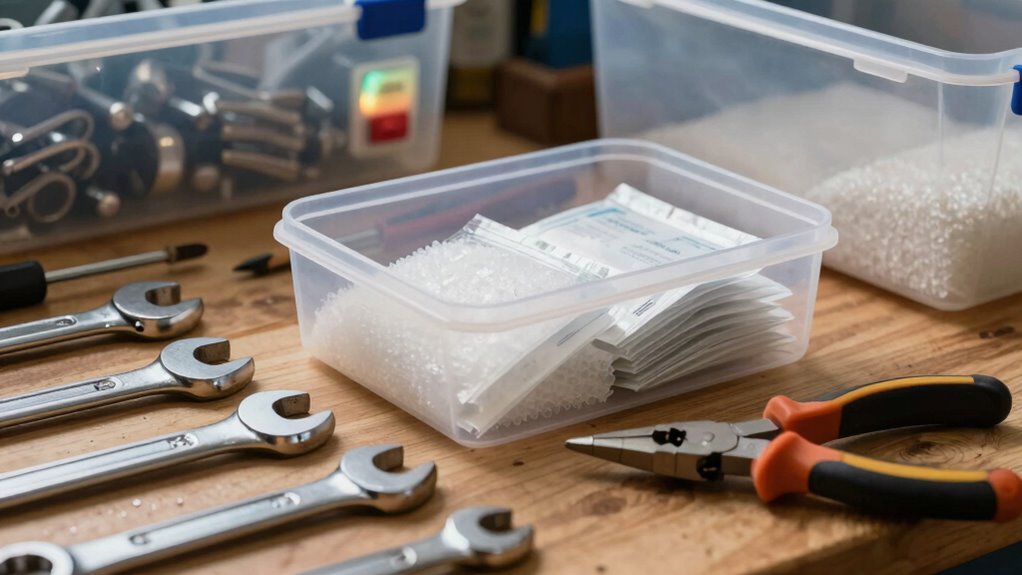
In addition to using a dehumidifier, it’s essential to keep your tools clean and dry before storing them. Wipe off any dirt, grease, or moisture, especially after use. Applying a light coat of oil or rust inhibitor on metal surfaces creates a protective barrier against moisture. Store tools in a dry, well-ventilated area, ideally in a toolbox with airtight compartments or in containers that prevent exposure to humidity. Consider adding silica gel packs or moisture-absorbing packets to your toolbox to further reduce humidity around your tools. Proper storage practices are crucial for maintaining your tools’ longevity and preventing moisture buildup. Regularly inspecting your storage environment helps identify humidity issues early and address them before damage occurs. Additionally, ensuring good ventilation can help reduce trapped moisture and improve overall air quality. Proper air circulation is especially important in enclosed spaces where humidity can quickly accumulate.
Regular maintenance also plays an important role in rust prevention. Check on your tools periodically, ensuring they remain dry and free of corrosion. If you notice any signs of rust, address it immediately with rust remover or fine steel wool before it spreads. Proper storage habits combined with controlling humidity through a dehumidifier benefits your tools by maintaining their condition and functionality. This proactive approach minimizes the risks of rust, corrosion, and damage caused by moisture. Additionally, understanding the importance of indoor air quality can help you better manage humidity levels and create a healthier environment for your stored items.
Ultimately, the key to stopping moisture from destroying stored tools is understanding that dry environments are essential. With the right setup—especially the use of a dehumidifier—you create a protective shield around your tools. This not only preserves their appearance but also ensures they’re ready to use when you need them. Protecting your tools from moisture damage takes some effort, but the benefits of rust prevention and the dehumidifier advantages make it well worth it. Keep your tools dry, and they’ll serve you well for years to come.
As an affiliate, we earn on qualifying purchases.
Frequently Asked Questions
Can Humidity Levels Be Permanently Controlled in Storage Areas?
Yes, you can permanently control humidity levels in storage areas with proper humidity control measures. Use dehumidifiers and moisture prevention techniques like sealing leaks and insulating walls. Regularly monitor humidity levels with a hygrometer to guarantee they stay within ideal ranges. Ventilation also helps maintain consistent moisture levels. By consistently managing humidity, you prevent moisture buildup, protecting your tools and ensuring they stay in good condition over time.
What Are the Best Portable Dehumidifiers for Tool Storage?
Did you know that portable dehumidifiers can reduce moisture levels by up to 50%? For tool storage, the best portable dehumidifiers focus on effective humidity control and quick tool drying. Compact models like the Eva-Dry Edv-1100 or Frigidaire FFAD7033R are excellent choices, offering easy mobility and reliable moisture removal. These units help prevent rust and corrosion, keeping your tools in top condition no matter where you store them.
How Often Should I Inspect Stored Tools for Moisture Damage?
You should inspect your stored tools at least once a month for moisture damage. Regular checks help you catch early signs of tool corrosion and guarantee moisture prevention measures are effective. Look for rust, discoloration, or dampness. Address any issues promptly by drying tools thoroughly and improving ventilation. Consistent inspections keep moisture levels low, protecting your tools from corrosion and extending their lifespan.
Are There Eco-Friendly Options to Prevent Moisture Buildup?
You can effectively shield your tools with eco-friendly desiccants and natural moisture barriers that act like gentle guardians, absorbing excess humidity without harming the environment. These green options, such as silica gel made from renewable sources or clay-based barriers, are safe and sustainable. By choosing natural moisture barriers, you create a breathable fortress around your tools, preventing rust and decay while nurturing eco-conscious habits.
How Does Temperature Fluctuation Affect Tool Moisture?
Temperature fluctuations cause moisture issues by leading to condensation formation on your tools, which promotes tool corrosion. When warm air cools, moisture condenses on metal surfaces, increasing the risk of rust. To prevent this, keep your storage environment stable with consistent temperatures and use moisture-absorbing products. Proper ventilation also helps reduce humidity, protecting your tools from rapid temperature changes and minimizing condensation that damages them over time.
silica gel packs for tool storage
As an affiliate, we earn on qualifying purchases.
As an affiliate, we earn on qualifying purchases.
Conclusion
By taking these simple steps, you gently guide your tools away from the silent threats of moisture. With a touch of vigilance and a dash of care, you create a sanctuary where your treasured tools can rest undisturbed, free from the subtle whispers of decay. Embracing these practices guarantees your collection remains resilient and ready for the tasks ahead, preserving their integrity and your peace of mind for years to come.
As an affiliate, we earn on qualifying purchases.
airtight toolbox with compartments
As an affiliate, we earn on qualifying purchases.
As an affiliate, we earn on qualifying purchases.
Fall Picks
fall essentials
As an affiliate, we earn on qualifying purchases.