
To protect your power tools during hot weather jobs, store them in shaded or insulated areas and use protective covers to prevent exposure to direct sunlight and extreme temperatures. Take regular breaks to let your tools cool down, especially if they’ve been working hard. Keep batteries cool and avoid leaving tools in hot vehicles. Regularly check for signs of heat damage to make sure they stay in top condition. Continue exploring for more effective tips to safeguard your tools.
Listen free for 30 days with Audible
Thousands of audiobooks and originals — cancel anytime.
As an affiliate, we earn on qualifying purchases.
Key Takeaways
- Use climate-resistant casings to shield tools from heat and sun exposure.
- Store batteries in cool, dry places and avoid leaving them in hot environments.
- Keep tools in shaded areas when not in use and take regular breaks to prevent overheating.
- Protect tools with covers or insulated cases to minimize heat damage during outdoor work.
- Regularly inspect tools for signs of heat damage and replace or repair as needed.
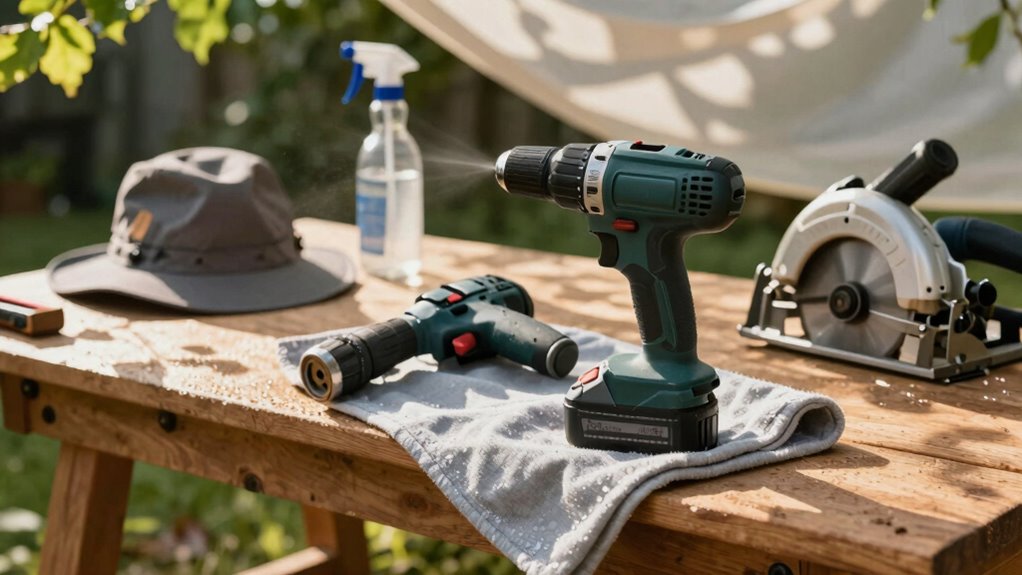
When the temperature rises, safeguarding your power tools becomes vital to guarantee they stay in top condition and work safely. Hot weather can quickly take a toll on your equipment, causing overheating, reduced performance, or even permanent damage. To keep your tools functioning at their best during scorching days, you need to pay close attention to their design and storage. Using tools with climate resistant casings can make a significant difference. These casings are built to withstand high temperatures and resist the effects of sun exposure, helping prevent warping, cracking, or deterioration. When you choose power tools equipped with climate resistant casings, you’re giving yourself an extra layer of protection, especially when working outdoors or in direct sunlight.
Protect your power tools with climate-resistant casings for optimal performance in hot weather.
Another critical aspect to evaluate is the impact of high temperatures on your tool’s batteries. Many power tools rely on temperature sensitive batteries, which can be vulnerable to overheating. Excessive heat causes these batteries to degrade faster and can even pose safety risks like swelling or, in rare cases, fires. To prevent this, always store your batteries in a cool, dry place when not in use. Avoid leaving them in hot vehicles or direct sunlight for extended periods. During work, if you notice batteries becoming hot while in use, stop and allow them to cool down before continuing. Some modern batteries are designed with built-in safety features that help manage heat, but it’s still up to you to handle them with care. Proper battery management can significantly extend their lifespan and safety during hot conditions. Additionally, applying climate resistant materials helps protect the overall durability of your tools in extreme environments.
In addition to choosing the right tools, you should also adjust your working habits during hot weather. Take frequent breaks to give your equipment a chance to cool down, especially if you notice it feeling unusually warm. Keep your tools in shaded areas when not in use, and avoid leaving them exposed to direct sunlight for long stretches. Regularly inspecting your tools for signs of heat damage, such as discoloration or warping, can help catch issues early before they lead to costly repairs. Using protective covers or storing your tools in insulated cases can also help reduce exposure to extreme temperatures. Additionally, understanding how climate resistant casings can extend the lifespan of your power tools is essential in hot conditions.
Ultimately, taking these precautions ensures your power tools remain reliable and safe during the hottest days. By investing in equipment with climate resistant casings and managing your batteries carefully, you protect your tools and your safety. Staying mindful of temperature effects and adapting your routine will help you complete your jobs efficiently, without the frustration of dealing with damaged or malfunctioning equipment caused by the heat.
climate resistant power tool casing
As an affiliate, we earn on qualifying purchases.
As an affiliate, we earn on qualifying purchases.
Frequently Asked Questions
How Often Should I Inspect Power Tools for Heat Damage?
You should inspect your power tools for heat damage daily during hot weather jobs. Regular tool maintenance helps prevent overheating and potential safety hazards. Pay close attention to unusual heat, strange noises, or vibrations, and always follow safety precautions. If you notice any signs of damage, stop using the tool immediately and perform necessary repairs. Consistent inspections guarantee your tools stay in good condition and reduce the risk of accidents on the job.
Can Storing Tools in a Shaded Area Prevent Overheating?
Storing your tools in a shaded area definitely helps prevent overheating, especially during hot weather jobs. Imagine wrapping your power tools in tool insulation, keeping them cooler and safer. Using storage containers that are ventilated and placed in shaded spots further shields them from direct sun, reducing the risk of heat damage. This simple step keeps your tools in top shape, ready to perform whenever you need them.
Are There Specific Cooling Methods for Power Tools After Use?
After using your power tools, you can cool them down by applying cooling gel packs to the exterior, especially around the motor area, to absorb excess heat. Additionally, use ventilation fans in your workspace to circulate air and help dissipate heat buildup. These methods prevent overheating, extend your tools’ lifespan, and guarantee safe operation. Always allow the tools to cool completely before storing or reusing to avoid damage.
What Signs Indicate a Power Tool Is Overheating?
Overheating can reduce your power tool’s battery life and compromise its performance. Signs include excessive heat coming from the tool, a burning smell, or the tool shutting down unexpectedly. If you notice these signs, stop using it immediately. Regular tool maintenance and allowing it to cool down prevent overheating. Keep an eye on temperature, and don’t push your tools beyond their limits, especially during hot weather.
Does Using a Fan Help Keep Tools Cool During Work?
Using a fan helps keep your tools cool during work. It provides effective ventilation techniques that improve airflow around the equipment, preventing overheating. Additionally, consider cooling accessories like fans designed for power tools or portable ventilation systems to maintain ideal temperatures. These measures reduce heat buildup, prolonging your tools’ lifespan and ensuring safe, efficient operation even during hot weather conditions.
As an affiliate, we earn on qualifying purchases.
Conclusion
Remember, taking simple steps to protect your power tools during hot weather isn’t just about preventing damage—it’s about ensuring safety and longevity. Some might think it’s unnecessary or time-consuming, but neglecting these precautions can lead to costly repairs or accidents. By storing tools properly, avoiding direct sunlight, and keeping them cool, you’ll save money and stay safe on the job. It’s a small effort that pays off big in the long run.
battery cooling storage for power tools
As an affiliate, we earn on qualifying purchases.
As an affiliate, we earn on qualifying purchases.
outdoor power tool storage shade
As an affiliate, we earn on qualifying purchases.
As an affiliate, we earn on qualifying purchases.
Flea & tick season Picks
flea and tick prevention
As an affiliate, we earn on qualifying purchases.