
TL;DR

Get business pricing on tools and workshop supplies
- Business-only prices and quantity discounts
- Tax-exempt purchasing
- Multiple users, one account, clear invoices
A House Beautiful report says experts advise against simply cutting down tree of heaven, because damaged roots and stumps can send up new shoots. Suggested approaches include treating a drilled stump or repeatedly cutting growth, but methods have trade-offs and identification matters because some native trees look similar.
Tree of heaven can produce new shoots after its trunk or roots are cut, so simply felling one may leave property owners with more growth to manage, according to a House Beautiful report citing an arborist and a horticulturist. The experts describe stump treatments and repeated cutting as possible control methods, while warning that the choice can affect nearby soil and planting plans.
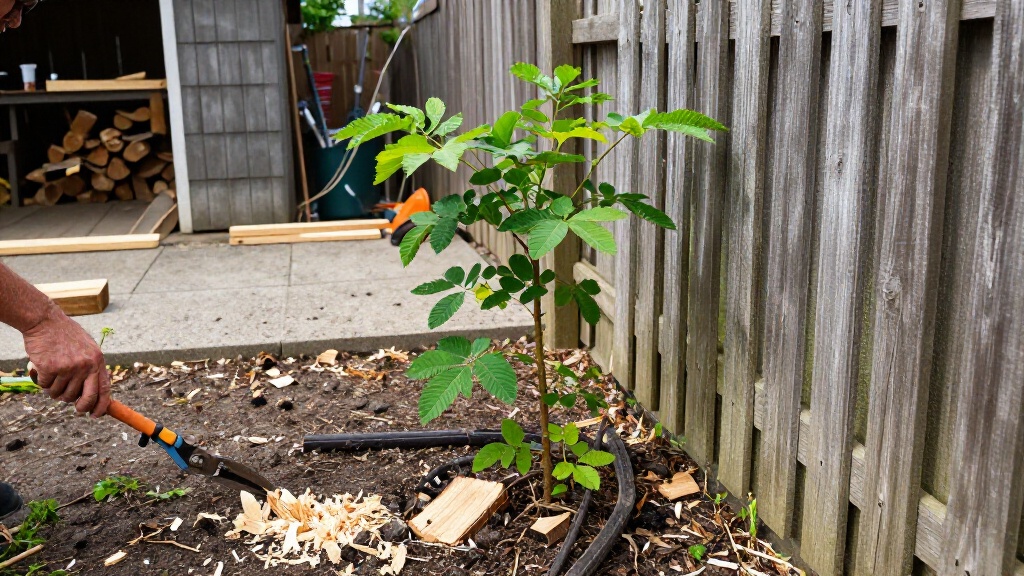
Logan Foltz, a certified arborist with Urban Arborists, told House Beautiful that cutting the tree or damaging its roots can prompt it to send up suckers that may grow into full-size trees. He described the species as difficult to control. The report says it can grow as much as 15 feet in its first year and produce thousands of seeds, though it does not give a specific measurement period or cite a study for those figures.
Foltz described cutting the tree close to the ground, drilling holes into the stump and filling them with rock salt as one approach. He said the treatment gradually dries the stump and connected root system, but can also make soil inhospitable to new plantings. Horticulturist and organic farmer Nathan Heinrich agreed with the method and recommended carrying it out in July or August, according to the report. He also suggested injecting repeated rounds of herbicide into holes and slits in a stump.
Another option Heinrich described is repeated cutting intended to use up the roots’ energy reserves. The report does not establish that any one approach will work in every setting or provide a product-specific herbicide protocol. It advises identifying the tree carefully before taking action: black walnut and some sumacs can resemble tree of heaven, and the report cautions that they are native or non-threatening lookalikes.
The Risks of Cutting It Back
Misidentifying the species or treating it without considering the site can create avoidable problems. According to House Beautiful, tree of heaven’s roots may spread up to 50 feet from the trunk and can damage hardscaping or pipes as they seek water. That is a potential concern for homes and yards, but the report does not say that every tree will reach pipes or cause damage.
The tree is also described as a host plant for the spotted lanternfly, an invasive insect that feeds on sap. The U.S. Department of Agriculture is cited in the report for the host-plant relationship. For property owners, this makes identification and a considered control plan relevant beyond the tree itself. The ecological impact also matters: Foltz recommends considering whether a native planting would better serve the site before deciding whether to retain a mature specimen.
tree of heaven identification field guide native lookalike trees
As an affiliate, we earn on qualifying purchases.
As an affiliate, we earn on qualifying purchases.
Why the Tree Spreads So Readily
Ailanthus altissima, commonly called tree of heaven, is native to China. Heinrich told House Beautiful that its ability to thrive across different climates and locations helped it spread from gardens in Philadelphia to the California coast. The report characterizes it as highly adaptable, but does not provide a map, survey or current count of its distribution.
Its seeds can sprout in small or disturbed spaces, according to the report, including cracks in sidewalks and gutters. Foltz said it can respond to cutting or root damage by producing new growth, while Heinrich described it as resilient. These traits help explain why removing the visible trunk alone may not resolve the problem. The source offers expert recommendations rather than a controlled comparison of removal methods.
“If the root system is damaged or the trunk is cut, the tree will respond by sending up suckers from the roots that will grow into new full-size trees.”
— Logan Foltz, certified arborist at Urban Arborists
tree stump herbicide applicator brush and stump treatment herbicide
As an affiliate, we earn on qualifying purchases.
As an affiliate, we earn on qualifying purchases.
Questions About Site-Specific Treatment
The report does not identify a universally effective removal method, provide comparative success rates or specify how long treatments may take. It also does not explain the best option for trees near pipes, buildings, gardens or other sensitive areas. Its rock-salt suggestion carries a stated drawback: soil may not support new plantings where it is used.
Herbicide use is mentioned, but the report does not name a product, dose or application instructions. It is also unclear whether local rules or site conditions change which methods are appropriate. The possibility of similar-looking native trees means the species should be confirmed before removal; the source does not provide a diagnostic service or detailed identification guide.
heavy duty pruning saw for cutting tree of heaven suckers
As an affiliate, we earn on qualifying purchases.
As an affiliate, we earn on qualifying purchases.
Confirm the Tree Before Acting
Property owners who suspect they have tree of heaven should first confirm the identification, particularly when the tree resembles a black walnut or sumac. The report’s guidance is to consider the tree’s location, surrounding plants and possible effects on soil and hardscaping before choosing a control approach. For a large tree or one close to structures, pipes or valuable plantings, consulting a qualified local arborist can help assess site-specific risks.
Any removal plan should account for the possibility of regrowth rather than ending with a cut trunk. The experts cited by House Beautiful describe stump treatment or repeated cutting as options, but the report does not set out a single next step for every property. The timing and result of treatment, and whether the tree should be retained in a particular setting, remain dependent on circumstances not detailed in the source.
native tree seedlings for replacing invasive tree of heaven
As an affiliate, we earn on qualifying purchases.
As an affiliate, we earn on qualifying purchases.
Key Questions
Why can’t I simply cut down a tree of heaven?
According to arborist Logan Foltz, a cut trunk or damaged roots can trigger suckers that grow into new trees. Cutting the visible trunk may not control the root system.
What removal methods do the experts describe?
The report describes drilling holes into a low-cut stump and filling them with rock salt, injecting repeated rounds of herbicide into the stump, or repeatedly cutting back new growth. Each method has limitations, and the source does not say one works in all situations.
Can rock salt affect other plants?
Yes. Foltz said rock salt can make the treated soil inhospitable to new plantings, so the report says it may be more suitable where property owners do not plan to grow other plants.
How can I tell tree of heaven from similar trees?
The report describes fern-like leaves with glandular teeth at their base and notes that female trees may have clusters of red, yellow or green seeds. Because black walnut and some sumacs can look similar, confirm the identification before removing a tree.
Why is tree of heaven linked to spotted lanternflies?
The report cites the U.S. Department of Agriculture for identifying tree of heaven as a host plant for spotted lanternflies. It does not provide further detail on local insect numbers or predict what a specific tree means for a property.
Source: rss
Halloween Picks
halloween
As an affiliate, we earn on qualifying purchases.