TL;DR

Get business pricing on tools and workshop supplies
- Business-only prices and quantity discounts
- Tax-exempt purchasing
- Multiple users, one account, clear invoices
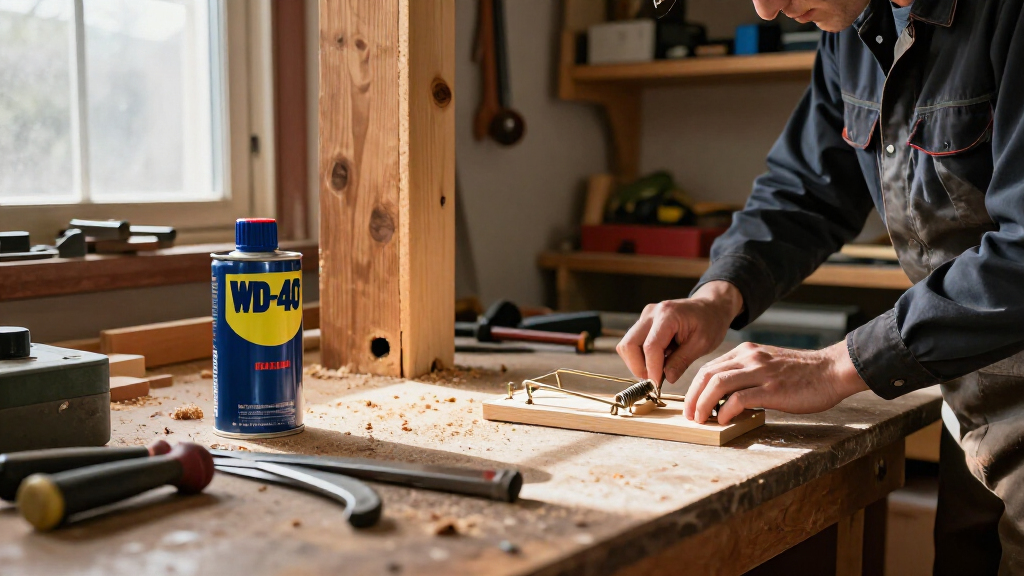
Pest control experts cited by Hunker say WD-40 is not a proven way to repel mice, and its odor is not a reliable barrier. They recommend sealing entry points, removing food and water sources, and seeking professional help when there are signs of an infestation or damage.
A Hunker report says WD-40 does not reliably repel mice, citing pest control experts who warn that spraying the flammable aerosol around a home is ineffective and may create fire and inhalation risks. The experts recommend preventing access to food and shelter and sealing gaps instead of relying on the lubricant as a barrier.
Josh Petro, operations manager at Truly Nolen Pest Control, told Hunker there is no reliable, evidence-based proof that WD-40 discourages mice or other rodents. He said spraying it around a home’s perimeter is unlikely to keep mice or rats out. The report attributes the idea to the assumption that rodents dislike the product’s strong petroleum or solvent smell; Petro said that odor eventually fades.
Petro also cited safety concerns. WD-40 contains petroleum-based hydrocarbons and is classified as a flammable aerosol, according to his comments in the report. Its vapors or mist can irritate the respiratory system and may cause dizziness or other nervous-system effects. Exposure can also irritate or dry the skin and eyes. The report says spraying it on doors and windows can leave sticky residue that collects dirt and debris.
Petro recommended exclusion and removing attractants as the safer do-it-yourself approach: close entry points, reduce access to food and water, and use traps if mice are already inside. Jim Fredericks, a board-certified entomologist and senior vice president of public affairs at the National Pest Management Association, advised sealing cracks and holes, repairing loose mortar and weather stripping, storing food in sealed containers, and keeping firewood away from the house.
Safer Steps to Keep Mice Out
The advice matters because a failed deterrent can leave rodents free to enter and cause problems. Fredericks told Hunker that rodents spread more than 35 diseases, including hantavirus, lymphocytic choriomeningitis and plague. He also said mice can chew wood and electrical wires, which can raise the risk of fire.
Those figures and risks are claims attributed to Fredericks in the report; they do not establish the level of risk in any particular home. The practical point is that homeowners should address entry routes and food sources rather than assume a strong smell will keep rodents away. If there are signs of activity or damage, a qualified pest control professional can help identify the extent of the problem and appropriate measures.
As an affiliate, we earn on qualifying purchases.
How the WD-40 Claim Spread
The report describes using WD-40 as a mouse repellent as a modern do-it-yourself myth. Petro said the claim may stem from rodents’ strong sense of smell and the assumption that they will avoid the product’s solvent odor. But the odor fades, and the report cites no evidence that WD-40 forms a lasting barrier against rodents.
The advice comes amid the expense of professional pest control. Hunker says visits average $100 to $300, though it does not specify the location, time period, or services included in that estimate. That cost can make a household product seem like a budget-friendly option, but the experts interviewed said WD-40 is neither a proven substitute nor a suitable perimeter treatment.
sealing gaps and entry points for mice
As an affiliate, we earn on qualifying purchases.
As an affiliate, we earn on qualifying purchases.
Limits of the Available Evidence
The report says experts found no reliable evidence that WD-40 repels rodents, but it does not describe a controlled test of the product. It also does not specify the publication date, the geographic scope of the pest control cost estimate, or the methods behind the figures Fredericks cited. The report does not establish how many mice are present in any particular home or whether a given infestation can be handled with traps alone.
Petro described peppermint essential oil as a natural option, but the report does not provide evidence or performance data showing how well it works. Homeowners should not treat it, or WD-40, as a replacement for closing entry points and addressing an active infestation.
rodent-proof food storage containers
As an affiliate, we earn on qualifying purchases.
As an affiliate, we earn on qualifying purchases.
When to Call Pest Control
Fredericks advised contacting a qualified pest control professional if mice are seen indoors or there are signs such as droppings, gnaw marks or dark grease marks along floors. Petro said professional help is the safer choice when rodents contaminate food, damage wiring or a structure, or when homemade treatments involve potentially hazardous chemicals. He also advised calling a professional if there are multiple mice or large amounts of droppings or damage.
For prevention, the experts’ next steps are to seal gaps, repair weather stripping and loose mortar, store food in sealed containers, and keep firewood away from the home. The report gives no timeline for follow-up research or further testing of WD-40 as a deterrent.
professional pest control services
As an affiliate, we earn on qualifying purchases.
As an affiliate, we earn on qualifying purchases.
Key Questions
Does WD-40 repel mice?
According to pest control experts quoted by Hunker, there is no reliable evidence that WD-40 repels mice or creates a lasting barrier around a home.
Is it safe to spray WD-40 around doors and windows?
Petro warned that WD-40 is a flammable aerosol and that its vapors or mist can irritate the respiratory system. The report also says it can leave sticky residue that collects dirt and debris.
What can I do to prevent mice from entering?
The experts recommend sealing cracks and holes, repairing loose mortar and weather stripping, reducing access to food and water, and storing food in sealed containers. Fredericks also advised keeping firewood at least 20 feet from the home and five feet off the ground.
When should I contact a pest control professional?
Contact a qualified professional if you see mice indoors, droppings, gnaw marks or grease marks, or find damage to wiring or structures. Petro also advised seeking help when there are multiple mice or substantial droppings or damage.
Source: rss
Fall yard work Picks
leaf blowers
As an affiliate, we earn on qualifying purchases.