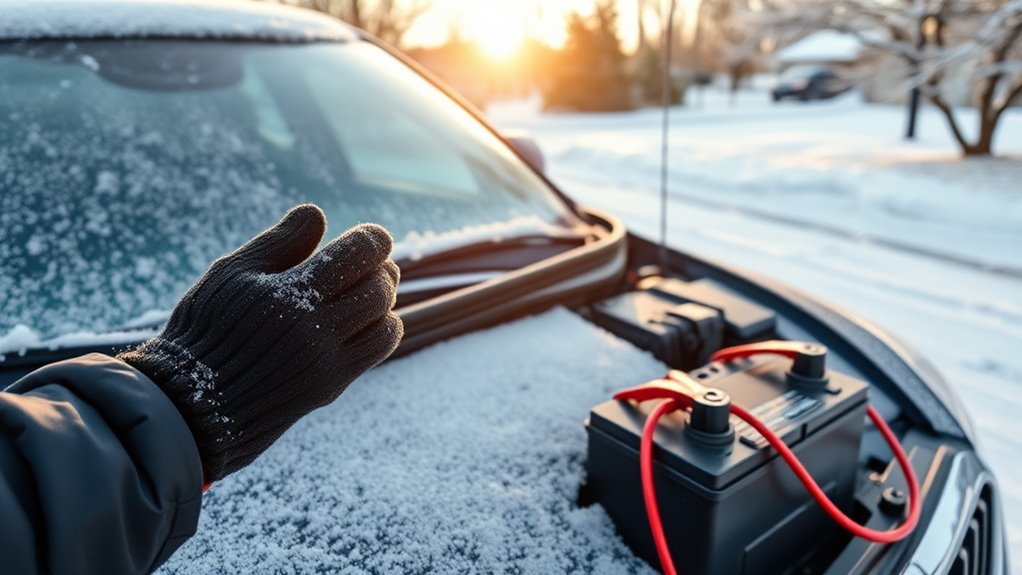

Before the big freeze, you should check and replace fluids like coolant, windshield washer, and oil, ensuring they’re suitable for winter. Inspect your battery’s health and charge it if needed, cleaning terminals for a reliable start. Make sure your tires have proper pressure and enough tread, and prepare your windshield with fresh wipers and washer fluid. Don’t forget to test lights and add emergency supplies; you’ll find more tips to keep your vehicle winter-ready below.

Get business pricing on tools and workshop supplies
- Business-only prices and quantity discounts
- Tax-exempt purchasing
- Multiple users, one account, clear invoices
Key Takeaways
- Check and replace fluids, including coolant and windshield washer, with winter-grade options to prevent freezing and engine issues.
- Inspect and charge the battery, clean terminals, and replace if over three years old for reliable cold starts.
- Maintain proper tire pressure, check tread depth, and replace worn tires for optimal traction on icy roads.
- Test windshield wipers, clean glass, and top off washer fluid with winter formula to ensure clear visibility.
- Pack emergency supplies like blankets, snacks, water, flashlight, and roadside tools for winter safety.
As an affiliate, we earn on qualifying purchases.
Checking and Replacing Your Vehicle’s Fluids

As winter approaches, it’s essential to check and substitute your vehicle’s fluids to ensure reliable performance and safety. Start by inspecting fluid levels—coolant, windshield washer fluid, transmission fluid, and brake fluid. Low or contaminated fluids can cause serious issues in cold weather. Pay special attention to oil quality; thick or degraded oil won’t circulate properly, risking engine damage. If your oil appears dark, gritty, or has metal particles, it’s time for a change. Use the manufacturer’s recommended fluids and consider switching to winter-grade options where applicable. Maintaining proper fluid levels and fresh oil helps prevent freezing, reduces engine wear, and ensures your vehicle runs smoothly through the cold months. Regular checks now can save you from costly repairs later. Proper maintenance with up-to-date fluids can significantly extend your vehicle’s lifespan and performance during winter, especially when considering the importance of engine health in cold conditions. Additionally, ensuring your fluids are properly rated for winter conditions can provide extra protection against the harsh elements. Incorporating fluid specifications that meet winter standards can further enhance your vehicle’s resilience against freezing temperatures. Routine fluid testing can help identify potential issues early, preventing breakdowns during winter travel.
As an affiliate, we earn on qualifying purchases.
Inspecting and Charging the Battery
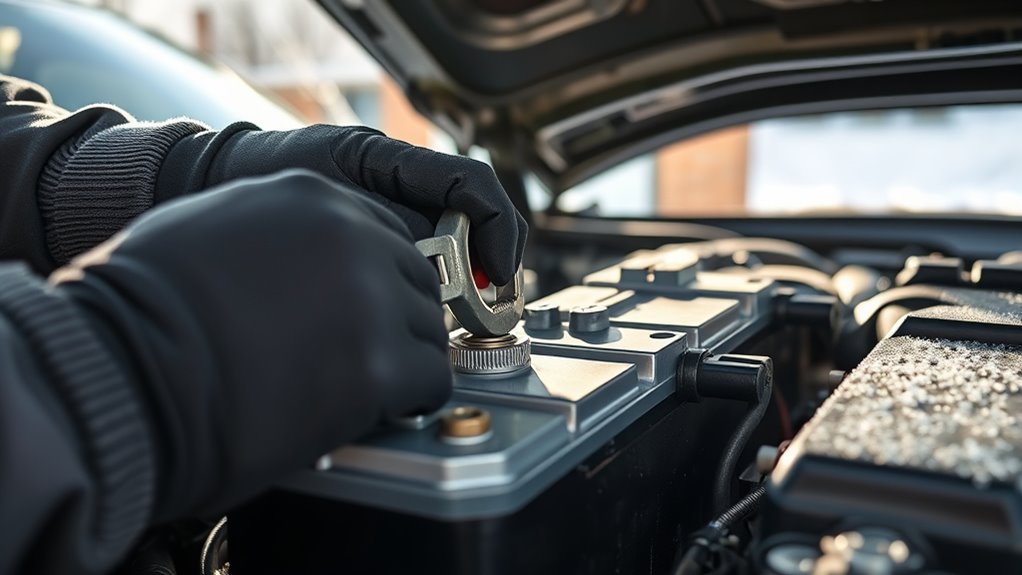
Start by checking your battery’s health to make sure it’s holding a proper charge and shows no signs of corrosion. If needed, clean the terminals and consider replacing an aging battery before winter’s cold hits. When charging, use the correct technique to prevent damage and guarantee your battery is ready for the cold weather ahead. Additionally, verifying your vehicle’s outdoor climate considerations can help ensure your car performs reliably in winter conditions. Being aware of toilet maintenance and repairs can also help prevent unexpected issues that might arise during the cold months when access to professional services could be limited. Incorporating sound design techniques can further optimize your vehicle’s audio systems for better clarity during winter drives. Properly preparing your vehicle for winter is essential to avoid free floating issues that can leave you stranded in severe weather. Conducting a thorough vehicle inspection ensures all critical components are functioning properly before the harsh conditions set in.
Battery Health Check
Before winter hits, it’s vital to check your vehicle’s battery health to guarantee reliable starts in cold weather. A healthy battery ensures your electrical system functions smoothly during freezing temperatures. Start by inspecting the terminals for corrosion and tightness; clean if needed. Test the voltage with a multimeter—anything below 12.6 volts indicates a weak battery. Also, consider a professional battery maintenance check if your battery is over three years old. Regularly maintaining your battery prevents unexpected failures. Here’s a quick overview:
| Inspection Step | Purpose |
|---|---|
| Terminal cleanliness | Prevents connection issues |
| Voltage measurement | Assesses charge level |
| Age assessment | Determines need for replacement |
Keeping your battery in top shape helps avoid dead starts and keeps your electrical system reliable through winter. Additionally, ensuring your vehicle’s smart maintenance tools are up to date can help monitor your battery health remotely, leveraging advanced diagnostic technology. Regularly checking your battery’s charge capacity also plays a crucial role in winter preparedness. To further optimize your vehicle’s winter readiness, consider reviewing your battery load test to ensure it can handle the demands of cold weather starting. Performing a battery capacity test periodically can provide a clear indication of your battery’s remaining lifespan and reliability.
Proper Charging Techniques
To make certain your battery remains dependable throughout winter, it’s vital to use proper charging techniques when inspecting and recharging it. Good battery maintenance ensures reliable starts in cold weather. Always prioritize charging safety by working in a dry, well-ventilated area and wearing protective gear. Here are key steps:
- Disconnect the battery before charging to prevent electrical damage.
- Use the correct charger settings for your battery type.
- Monitor the charging process to avoid overcharging.
- Check the battery’s voltage with a multimeter once charged, aiming for around 12.6 volts for a healthy battery.
- Regularly inspect your battery’s maintenance requirements to ensure optimal performance during winter months. Proper charging helps prevent electrical damage and extends the battery’s lifespan during cold seasons. Additionally, maintaining proper charge levels can improve overall battery health and reliability in harsh weather conditions.
Following these steps helps prolong your battery’s life, guarantees safety, and assures your vehicle starts smoothly during winter’s cold snaps. Proper charging is essential for dependable battery performance.
As an affiliate, we earn on qualifying purchases.
Examining and Topping Off Tire Pressure and Tread
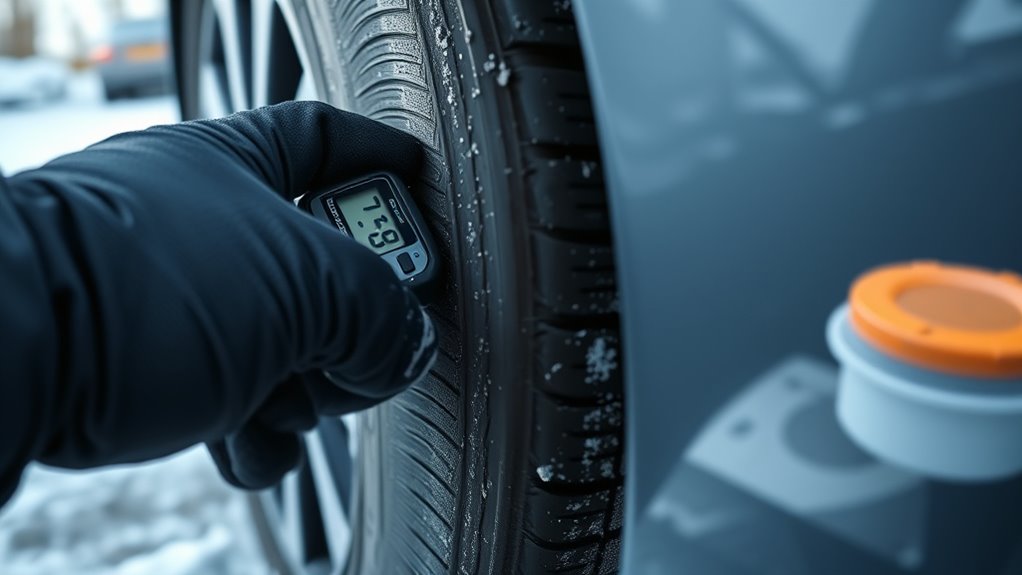
Make certain to check your tire pressure regularly to keep your vehicle handling safely on winter roads. It’s also important to assess the tread depth to ensure good traction, especially in snowy or icy conditions. Staying on top of these tire checks helps prevent accidents and keeps your driving smooth. Additionally, consulting your vehicle’s manual or a professional can provide tailored advice for optimal winter tire maintenance. Regularly inspecting your tires also reduces the risk of issues like uneven wear or potential blowouts during the colder months. Incorporating tire safety tips and energy-efficient technologies into your vehicle maintenance routine can further enhance safety and performance in winter conditions.
Check Tire Pressure Regularly
Regularly checking your tire pressure is essential for safe winter driving. Proper tire pressure guarantees your tires maintain ideal contact with the road, improving your winter grip and reducing the risk of accidents. Cold temperatures cause tire pressure to drop, so frequent checks are necessary. Using a reliable gauge ensures accurate readings, and understanding paint viscosity can help you better assess tire pressure needs, especially when adjusting for different winter conditions.
Remember these key points:
- Use a reliable gauge to measure tire pressure accurately.
- Check pressure when tires are cold for the most precise reading.
- Maintain pressure at the manufacturer’s recommended level.
- Adjust pressure as needed, especially before long drives in winter weather.
Maintaining correct tire pressure helps your tires perform better in winter conditions, giving you better traction and control. Regular checks ensure you’re prepared for the cold and help prevent costly breakdowns.
Assess Tire Tread Depth
Since tire tread depth directly affects your vehicle’s grip on icy or snowy roads, it’s essential to evaluate it regularly during winter. Check your tire tread with a simple coin test or a tread depth gauge—aim for at least 4/32 inch for safe winter driving. If the tread is worn down, your winter grip diminishes, increasing the risk of slipping. Don’t forget to examine all four tires, especially the front ones, which bear most of the steering load. Proper tire tread helps channel snow and water away, improving traction. If your treads are shallow, consider replacing tires before the worst weather hits. Maintaining adequate tire tread ensures you get the best grip possible, keeping you safer on icy roads and reducing the likelihood of accidents during winter. Using a quality airless paint sprayer can make quick work of painting projects in your garage or driveway, helping you prepare your vehicle storage area or shed efficiently.
emergency roadside kit for winter
As an affiliate, we earn on qualifying purchases.
As an affiliate, we earn on qualifying purchases.
Preparing Your Windshield and Wipers for Winter
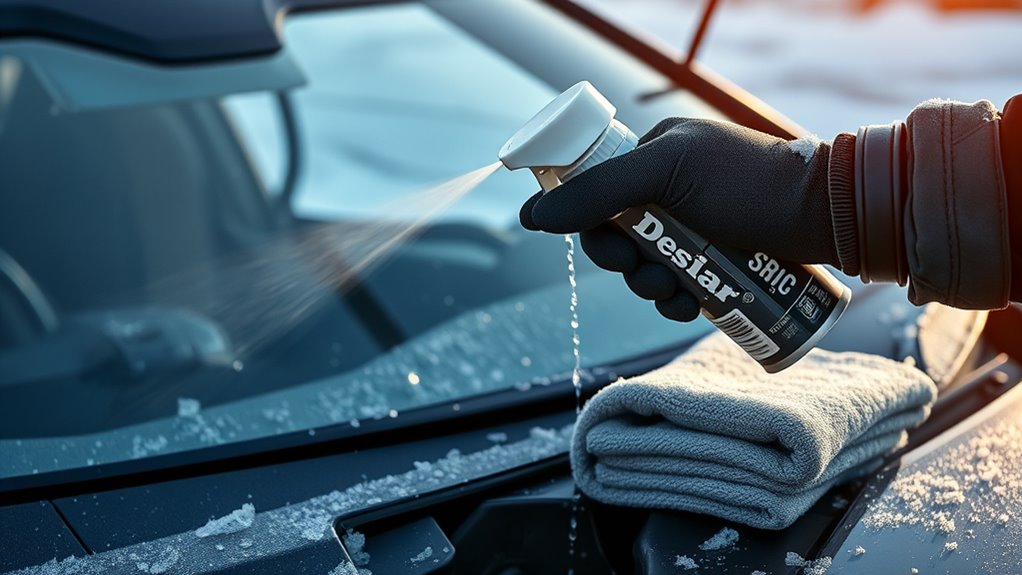
As winter approaches, it’s essential to make certain your windshield and wipers are ready to handle harsh conditions. Proper windshield maintenance ensures clear visibility during snow and ice. Start by inspecting your wipers for cracks or stiffness; if they streak or chatter, it’s time for wiper replacement. Keep your windshield clean and free of debris to prevent scratching and improve visibility. Consider applying a windshield treatment to repel snow and ice. Here are four key steps:
- Check your wiper blades for damage and replace if needed.
- Clean your windshield thoroughly with a glass cleaner.
- Top off your windshield washer fluid with a winter formula.
- Use a scraper to remove ice and snow before driving.
These simple steps help guarantee your view remains unobstructed, keeping you safer on winter roads.
Ensuring Proper Functioning of Lights and Visibility Aids
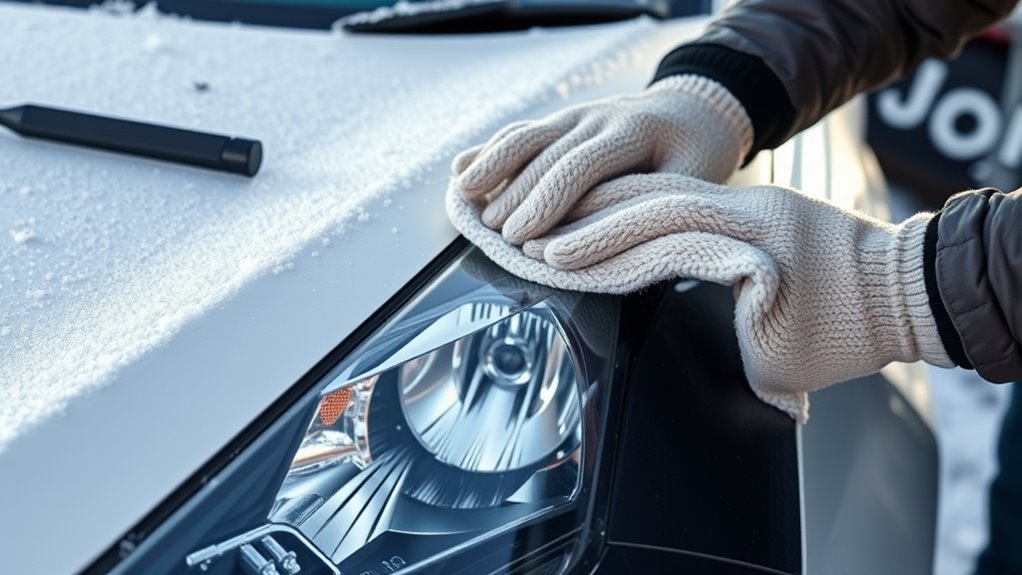
Ensuring your lights and visibility aids are functioning properly is crucial for safe winter driving. Check that your headlights, taillights, and turn signals work correctly, replacing any burnt-out bulbs with LED bulbs for brighter, more reliable illumination. Consider upgrading to LED bulbs, which last longer and provide better visibility in winter conditions. Don’t forget to test your fog lights—they’re essential for improving visibility during foggy or snowy weather. Clean all light covers to maximize brightness and remove dirt or snow buildup. Properly functioning lights help you see hazards early and ensure others can see you. Regularly inspecting and maintaining your lighting system prepares you for winter’s challenging conditions, reducing the risk of accidents and keeping your drive safe.
Testing and Replacing the Thermostat and Heating System
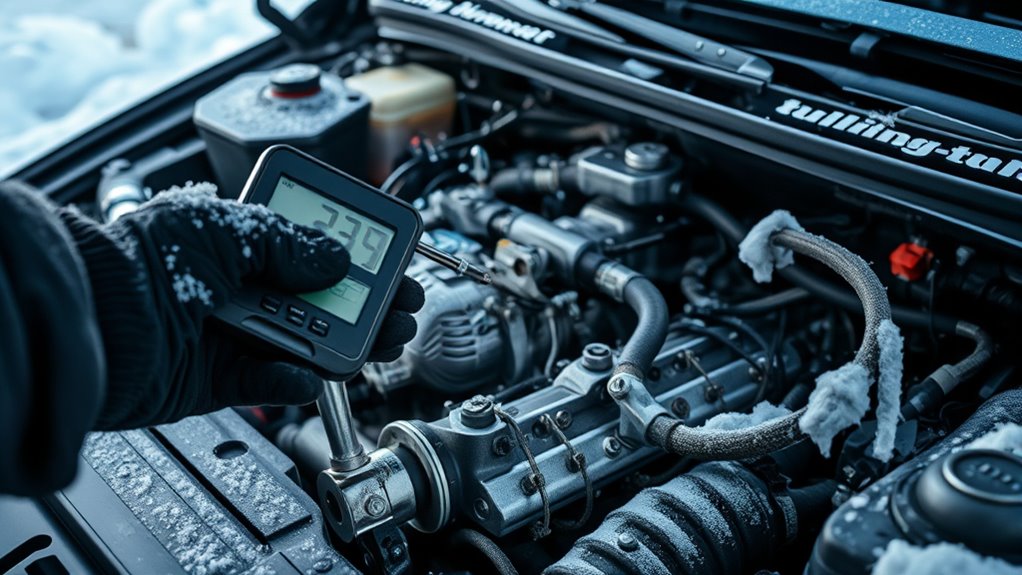
Testing and replacing your thermostat and heating system is essential to stay warm and safe during winter driving. Proper thermostat testing ensures your engine maintains ideal temperature, preventing overheating or freezing. If your heater isn’t producing warm air or takes too long to heat, heater system replacement might be necessary. To verify your thermostat works correctly, observe if the temperature gauge reaches normal levels quickly. Listen for unusual noises from the heater core or look for cold spots inside the vehicle. Consider these steps:
- Check the thermostat’s operation by monitoring engine temperature.
- Inspect for leaks or damage in the heater core.
- Test the heater’s airflow and temperature consistency.
- Replace the thermostat or heater system if problems persist.
These actions help ensure your heating system functions reliably during winter.
Adding Emergency Supplies and Winter Kits

Have you packed your vehicle with essential emergency supplies and winter kits? If not, now’s the time. Winter emergency kits and roadside supplies are critical for staying safe during unexpected breakdowns or severe weather. Your winter emergency kit should include items like blankets, warm clothing, non-perishable snacks, water, a flashlight, batteries, and a first aid kit. Don’t forget useful roadside supplies such as jumper cables, a tire inflator, a spare tire, and warning triangles. These essentials ensure you’re prepared for common winter hazards, like frozen pipes or flat tires. Keeping your vehicle stocked with these supplies can make all the difference in an emergency, helping you stay warm, hydrated, and safe until help arrives. Regularly check and update your supplies before winter hits.
Reviewing and Planning for Cold Weather Road Safety
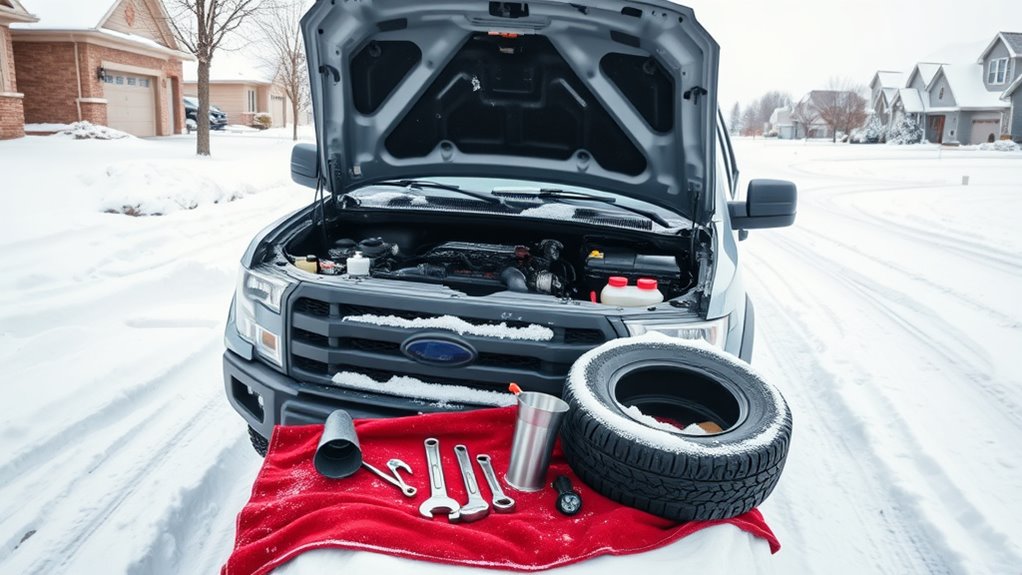
Once your vehicle is stocked with emergency supplies and winter kits, it’s important to review your plans for cold weather driving. Preparing for winter road conditions helps you stay safe and avoid surprises. Consider these key points:
Ensure your winter driving is safe by reviewing your plans and preparing your vehicle accordingly.
- Check weather forecasts before heading out to avoid unexpected snow or ice.
- Plan routes that are well-maintained and have good frost protection.
- Keep your tire pressure ideal for winter traction and control.
- Know how to handle frost buildup on windows and mirrors for clear visibility.
Frequently Asked Questions
How Often Should I Check My Vehicle’s Antifreeze Levels During Winter?
You should check your vehicle’s antifreeze levels at least once a month during winter. Perform antifreeze testing to guarantee the coolant maintains the proper freeze protection. If the antifreeze is low or deteriorating, consider replacing the coolant to prevent freezing and engine damage. Regular checks help you catch issues early, keeping your vehicle running smoothly and safely through the coldest months.
What Are the Signs My Battery Is Failing in Cold Weather?
Did you know that 50% of roadside breakdowns in winter are caused by battery failure? Your battery health is vital, especially in cold weather. Signs of a failing battery include slow engine cranking, dim lights, or electrical issues. Use a cold weather indicator to test your battery’s capacity. If any of these signs appear, it’s time to get your battery checked to avoid getting stranded in freezing temperatures.
How Can I Improve Traction on Icy Roads Besides Tire Maintenance?
To improve traction on icy roads, consider installing studded tires for better grip and safety. You can also use winter traction aids like tire chains or sandbags in your trunk to enhance stability. Drive slowly, avoid sudden movements, and keep your wheels straight when stopping or turning. These measures help maintain control, reducing the risk of slipping and ensuring safer driving in harsh winter conditions.
Are There Specific Windshield Treatments to Prevent Ice Buildup?
You can use windshield coatings or ice prevention sprays to keep ice buildup at bay. Apply a high-quality windshield coating before winter to create a hydrophobic barrier that repels water and ice. Alternatively, use ice prevention sprays designed to prevent frost and ice from sticking overnight. These products make it easier to clear your windshield in the morning, ensuring better visibility and safer driving during icy conditions.
What Are Essential Items to Include in a Winter Emergency Kit?
You should include essential items like warm winter clothing, gloves, and hats to stay protected. Keep a flashlight, extra batteries, and a first aid kit handy. Don’t forget to carry a blanket, non-perishable snacks, and water. Make sure your phone is charged, and have emergency contacts written down. Including these items guarantees you’re prepared for unexpected winter roadside emergencies, keeping you safe until help arrives.
Conclusion
Getting your vehicle winter-ready is like giving it a warm coat before the cold snap—protecting it from harsh conditions. By checking fluids, inspecting tires, and preparing emergency supplies, you’re ensuring safe travels through icy roads and snow drifts. Think of it as arming your car with a winter arsenal, so you can face the season confidently. With a little prep, you’ll cruise through winter’s chill like a knight through a snowstorm—ready for anything.
Fall yard work Picks
leaf blowers
As an affiliate, we earn on qualifying purchases.