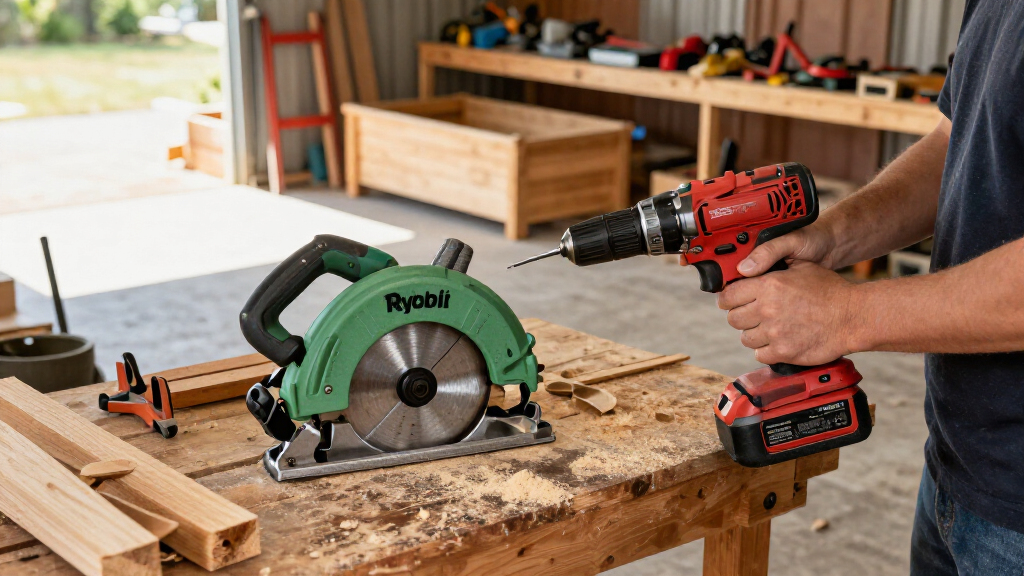

The best Ryobi and Milwaukee tools depend on whether you want a broad starter set, a focused tool, or a platform you can build on. My best overall pick is the RYOBI P1819 six-tool combo kit for its range of core tools in one purchase. The Milwaukee M18 Compact Drill Driver Kit is a strong choice for buyers prioritizing a drill, while Ryobi’s ONE+ HP brushless multi-tool kit stands out for buyers who want a ready-to-use specialist tool. The main tradeoffs are kit breadth versus individual-tool performance, and whether you want to commit to Ryobi ONE+ or Milwaukee M18 batteries. Read on for the full comparison and recommendations by buyer type.

Get business pricing on tools and workshop supplies
- Business-only prices and quantity discounts
- Tax-exempt purchasing
- Multiple users, one account, clear invoices
Complete the kit



Key Takeaways
- The P1819 kit is the broadest starting point in this lineup, while most other picks solve one specific task.
- Ryobi dominates the selection, especially for cutting, grinding, and oscillating tools; Milwaukee contributes a compact drill kit and a one-handed reciprocating saw.
- Brushless Ryobi HP multi-tools offer a different proposition from the standard multi-tools: buyers can choose a tool-only model, a battery-and-charger kit, or a simpler ONE+ option.
- The two reciprocating saws suit different handling preferences: Milwaukee’s Hackzall is a one-handed format, while Ryobi’s PCL515B is a conventional reciprocating saw.
- Battery compatibility should guide the choice: a bare tool is most compelling when you already own compatible batteries and a charger.


| Ryobi and Milwaukee tool | Voltage | Weight | Maximum speed | Model |
|---|---|---|---|---|
| RYOBI 18V ONE+ Cordless Multi- | 18 V | 0.9 kg | — | — |
| RYOBI ONE+ HP 18V Brushless Os | 18 V | 2.8 lb | 20,000 OPM | — |
| Milwaukee M18 18V Compact 1/2- | 18 V | 6.3 lb | 1,800 rpm | — |
| RYOBI PCL445B 18V Cordless 4-1 | 18 V | 5.6 lb | 9,000 rpm | — |
| RYOBI ONE+ HP 18V Brushless Co | 18 V | — | 19,500 rpm | — |
| Ryobi ONE+ 18V Cordless Oscill | 18V | 1.5 lb | — | PCL430B |
| RYOBI ONE+ HP 18V Brushless Co | 18V | — | 20,000 oscillations per minute | PBLMT50K1 |
| Milwaukee 2625-20 M18 18V Cord | 18V | 4 lb | — | 2625-20 |
| RYOBI P1819 18V ONE+ 6-Tool Li | 18V | — | — | P1819 |
| RYOBI ONE+ 18V Cordless Recipr | 18V | 4.2 lb | — | PCL515B |
| RYOBI ONE+ 18V Cordless 1/4-In | 18 V | 2 lb | 3,400 rpm | PCL235B |
More Details on Our Top Picks
RYOBI 18V ONE+ Cordless Multi-Tool (Bare Tool), RMT18-0
The RMT18-0 is a practical pick for homeowners who want one tool for small cuts and detail sanding without adding another battery platform. Its six-position speed selector gives more control across wood, drywall, metal, plastic, and composite, while the included blades and sanding pad let you start with several common tasks. The compact head and LED help when working in a cabinet or another dim, cramped spot. Compared with the brushless RYOBI ONE+ HP PBLMT51B, this model has a simpler setup and listed accessories, but it lacks the stated brushless motor and reduced-vibration feature. The main tradeoff is the bare-tool format: you need a compatible 18V battery and charger, and five sanding sheets will not last through many projects.
Pros:- Handles cutting and detail sanding across several material types
- Six speed settings provide flexibility for different tasks
- Includes plunge and flush-cut blades, a sanding pad, and a universal adaptor
- Compact head and LED work light suit tight or dim work areas
Cons:- Battery and charger are not included
- Only five sanding sheets are supplied
- Does not list the brushless motor or reduced-vibration features found on the PBLMT51B
Best for: RYOBI ONE+ owners who need an occasional-use cutter and detail sander for repairs, trim work, or small renovation tasks.
Not ideal for: Buyers without a compatible battery who want a ready-to-work kit, or frequent users who prefer the brushless motor and reduced-vibration features of the PBLMT51B.
- Voltage:18 V
- Speed range:10,000–20,000 rpm
- Speed settings:Six-position selector
- Weight:0.9 kg
- Dimensions:12.2 × 3.15 × 5.51 in
- Included accessories:Plunge and flush cutting blades, sanding pad, five sanding sheets, hex key, universal accessory adaptor
- Power format:Bare tool; lithium-ion battery required
Our verdict“Choose the RMT18-0 for versatile household cutting and sanding if you already own a RYOBI 18V battery.”
RYOBI ONE+ HP 18V Brushless Oscillating Multi-Tool (Tool Only), PBLMT51B
For buyers who use an oscillating tool regularly, the PBLMT51B earns its premium-style role through a brushless motor, tool-free accessory changes, and stated vibration reduction. Those details matter when jobs involve repeated blade swaps or longer stretches of cutting and scraping; the included pad also lets it serve as a detail sander. Its speed reaches 20,000 OPM, matching the listed maximum of the RMT18-0, but the PBLMT51B adds a more convenience-focused setup. The RMT18-0, by comparison, supplies a broader stated starter accessory bundle and a lighter listed weight. This model’s value depends on having a RYOBI 18V battery already: the tool-only package excludes both battery and charger. It is the stronger fit for recurring work, not the easiest entry point for a battery-platform newcomer.
Pros:- Brushless motor for a more feature-rich multi-tool setup
- Tool-free accessory changes speed up blade and attachment swaps
- Reduced vibration and an LED work light support comfort and visibility
- Included sanding pad and accessories allow detail sanding
Cons:- Battery and charger are sold separately
- The listed package does not specify as broad a starter blade set as the RMT18-0
- Its premium features may matter less to users who only need occasional cuts
Best for: RYOBI ONE+ users who frequently cut, scrape, or sand and want quick accessory swaps with a brushless motor.
Not ideal for: First-time cordless-tool buyers who need a complete kit, or occasional users who would rather start with the RMT18-0’s listed blades and lower-complexity feature set.
- Voltage:18 V
- Motor:Brushless
- Maximum speed:20,000 OPM
- Weight:2.8 lb
- Dimensions:11 × 6 × 6 in
- Accessory change:Tool-free
- Power format:Cordless tool only; battery and charger sold separately
Our verdict“Pick the PBLMT51B if you already own RYOBI 18V batteries and expect frequent multi-tool work.”
Milwaukee M18 18V Compact 1/2-Inch Cordless Drill Driver Kit, Model 2606-21CT
Unlike the RYOBI tools in this group that are sold bare, the Milwaukee 2606-21CT includes an M18 battery and hard case, making it the clearest ready-to-use choice here for drilling and driving. Its 500 in-lb torque rating and two speed settings cover routine fastening and drilling, while the fuel gauge shows remaining battery charge and overload protection adds a safeguard during demanding work. Compared with the RYOBI PCL445B angle grinder or PSBCS02B cut-off tool, this Milwaukee kit is aimed at general-purpose hole-making and fastening rather than cutting material. The included 1.5 Ah battery is a limitation for extended work, and the listed drilling capacities of 0.25 inches for both wood and metal are modest. Buyers needing larger holes or long runtimes should look beyond this compact kit.
Pros:- Includes an M18 lithium-ion battery and hard case
- Up to 500 in-lb of torque with two speed settings
- Fuel gauge helps track remaining charge
- Overload protection supports use under demanding loads
Cons:- Included battery capacity is 1.5 Ah, which may limit runtime
- Listed wood and metal drilling capacities are both 0.25 in
- At 6.3 lb, the listed weight is substantial for a compact drill
Best for: DIYers who need a general-purpose drill and driver with a battery and case included, especially those already building around Milwaukee M18 tools.
Not ideal for: Tradespeople who routinely drill large holes or need a higher-capacity battery for long work sessions.
- Voltage:18 V
- Maximum torque:500 in-lb
- Speed settings:Two
- Maximum speed:1,800 rpm
- Chuck size:1/2 in
- Included battery:1.5 Ah lithium-ion
- Included components:One battery, hard case, user manual
- Weight:6.3 lb
Our verdict“Choose this Milwaukee kit for routine drilling and fastening when you want a battery and case in the box.”
RYOBI PCL445B 18V Cordless 4-1/2-Inch Angle Grinder (Tool Only)
The PCL445B is the pick for jobs that call for a full-size 4-1/2-inch grinder rather than the smaller, more controlled cuts of the PSBCS02B. Its 9,000-rpm motor is aimed at grinding and material removal, and the die-cast metal gear case gives the tool a sturdier construction detail than the compact cut-off tool’s listed plastic and metal materials. A three-position side handle gives users a choice of grip as work angles change; the adjustable guard and onboard wrench storage also make setup less fussy. The tradeoff is size and battery demand: at 5.6 lb, it is less suited to delicate one-handed cuts than the 3-inch RYOBI cut-off tool. It is also a bare tool, so the battery and charger must be sourced separately.
Pros:- 9,000-rpm motor supports grinding and material removal
- Three-position side handle offers grip choices for different work angles
- Die-cast metal gear case is designed for durability
- Tool-free adjustable guard and onboard wrench storage aid setup
Cons:- Battery and charger are sold separately
- Its 5.6 lb weight is less suitable for delicate, prolonged one-handed work
- The 4-1/2-inch format is less compact than the PSBCS02B cut-off tool
Best for: RYOBI ONE+ owners handling grinding, cleanup, or material-removal work who want a larger 4-1/2-inch disc platform.
Not ideal for: Buyers making precise cuts in tight spaces, or anyone who needs a battery and charger included.
- Voltage:18 V
- Maximum speed:9,000 rpm
- Disc size:4-1/2 in
- Weight:5.6 lb
- Gear case:Die-cast metal
- Handle:Three-position side handle
- Power format:Tool only; battery and charger sold separately
Our verdict“Choose the PCL445B for broader grinding and removal tasks, not compact precision cutting.”
RYOBI ONE+ HP 18V Brushless Cordless Compact Cut-Off Tool, 3-Inch, Tool Only (PSBCS02B)
Where the PCL445B is built around a larger grinding disc, the PSBCS02B prioritizes access and control. Its 8.5-inch body, 3-inch wheels, and adjustable guard suit shorter cuts in metal, plastic, tile, PVC, or drywall, while the depth guide limits cuts to 0.62 inches. The brushless motor reaches 19,500 rpm, and the dual LEDs help illuminate the cut line; an electric brake stops the wheel quickly after release. Those features make it a more focused cutting choice than the PCL445B, not a substitute for a larger grinder when broad material removal is the job. The compact format also comes with boundaries: it accepts compatible 3-inch wheels only, and this tool-only version does not include a battery. Buyers should check their battery supply and wheel needs before choosing it.
Pros:- Compact 8.5-inch design supports access in tighter spaces
- Brushless motor reaches up to 19,500 rpm
- Adjustable guard and depth guide support controlled cuts
- Dual LEDs and electric quick-stop brake add visibility and control
Cons:- Battery is not included with the tool-only version
- Limited to compatible 3-inch wheels
- Maximum cutting depth is 0.62 in, limiting deeper-cut applications
Best for: RYOBI ONE+ owners who need controlled, shallow cuts in mixed materials and value a compact tool for tighter work areas.
Not ideal for: Users who need broad grinding or deeper cuts, or buyers who do not own a compatible 18V battery and 3-inch wheels.
- Voltage:18 V
- Motor:Brushless
- Maximum speed:19,500 rpm
- Wheel compatibility:3 in
- Maximum cutting depth:0.62 in
- Length:8.5 in
- Power format:Tool only; compatible RYOBI ONE+ 18V battery required
Our verdict“Choose the PSBCS02B for compact, controlled cuts; choose the PCL445B when grinding and broader material removal matter more.”
Ryobi ONE+ 18V Cordless Oscillating Multi-Tool (Tool Only)
The Ryobi ONE+ 18V Oscillating Multi-Tool is the straightforward pick for buyers who already own compatible batteries and want a tool for cutting, sanding, and scraping without buying a full kit. Its variable speed dial up to 20,000 OPM gives more control across different materials than a fixed-speed tool, while onboard accessory storage helps keep small attachments close by. Compared with the RYOBI ONE+ HP Brushless Multi-Tool Kit, this model skips the brushless motor, included battery, charger, and starter accessories, so it is a simpler add-on rather than a ready-to-work package. The ergonomic shape, low-vibration design, and lock-on button support controlled use, but the battery and charger are sold separately. I’d choose it for occasional repairs and detail work, not as the strongest choice for frequent, demanding cuts.
Pros:- Variable speed dial reaches 20,000 OPM for adjusting motion to the task.
- Supports cutting, sanding, and scraping with interchangeable accessories.
- Ergonomic design, low-vibration feature, and lock-on button aid controlled operation.
- Onboard accessory storage keeps attachments within reach.
Cons:- Battery and charger are not included.
- Lacks the brushless motor and ready-to-use kit contents of the RYOBI ONE+ HP kit.
- A 30-day limited warranty offers less coverage than many buyers may expect.
Best for: RYOBI ONE+ owners who need an affordable bare-tool addition for occasional trim cuts, sanding, and scraping.
Not ideal for: First-time cordless-tool buyers or frequent users who need a battery, charger, included accessories, or brushless performance in the box.
- Model:PCL430B
- Voltage:18V
- Power source:Battery powered
- Maximum oscillation rate:20,000 OPM
- Weight:1.5 lb
- Dimensions:12 × 3 × 6 in.
- Special features:Variable speed dial, low vibration, ergonomic design, lock-on button, onboard accessory storage
- Battery and charger:Sold separately
Our verdict“Choose this bare tool if you already have RYOBI ONE+ batteries and want a versatile multi-tool for intermittent home projects.”
RYOBI ONE+ HP 18V Brushless Cordless Multi-Tool Kit with 2.0 Ah Battery and Charger
For buyers starting without a compatible battery, the RYOBI ONE+ HP Brushless Multi-Tool Kit is the more complete choice than the bare-tool PCL430B: it includes a 2.0 Ah battery, charger, blades, sanding pad, and sandpaper. Its brushless motor and 3.6° oscillation angle are aimed at faster cutting, while the adjustable speed dial lets the tool move from more deliberate sanding to quicker material removal. Tool-free accessory changes make switching tasks less of a hassle, and the LED helps when working in dim corners. Compared with the Milwaukee M18 Hackzall, this Ryobi is built for a broader mix of detail work rather than one-handed reciprocating cuts. The tradeoff is the kit’s small-capacity 2.0 Ah battery, which may mean more charging during extended work, and it ties you to the ONE+ battery platform.
Pros:- Brushless motor and 3.6° oscillation angle support cutting performance.
- Includes a 2.0 Ah battery, charger, blades, sanding pad, and sandpaper.
- Tool-free accessory release speeds up changes between tasks.
- LED work light and slide-on switch are useful during detail work.
Cons:- The included 2.0 Ah battery has limited capacity for prolonged, demanding work.
- Works within the RYOBI 18V ONE+ battery platform.
- The kit is less suited to one-handed rough cutting than the Milwaukee M18 Hackzall.
Best for: DIYers who want a brushless oscillating tool with a starter battery, charger, and accessories for mixed cutting and sanding jobs.
Not ideal for: People who already have a higher-capacity ONE+ battery and prefer a bare tool, or users who need a dedicated one-handed saw for rough cuts.
- Model:PBLMT50K1
- Voltage:18V
- Motor:Brushless
- Maximum speed:20,000 oscillations per minute
- Oscillation angle:3.6°
- Included battery:2.0 Ah lithium-ion
- Included components:Multi-tool, battery, charger, plunge-cut blade, flush-cut blade, sanding pad, sandpaper
- Platform:RYOBI 18V ONE+
Our verdict“Pick this kit if you want a brushless multi-tool and the basic battery, charger, and accessories to start using it right away.”
Milwaukee 2625-20 M18 18V Cordless One-Handed Hackzall Reciprocating Saw (Tool Only)
The Milwaukee M18 Hackzall earns its place for cuts where a full-size reciprocating saw is awkward: overhead work, tight access, or tasks that benefit from a one-handed grip. Its compact form, anti-vibration system, and built-in LED support steadier handling, while the tool-free QUIK-LOK clamp makes blade changes quicker. Compared with the RYOBI PCL515B Reciprocating Saw, the Hackzall trades some cutting reach and stroke length for easier maneuvering; the Ryobi has a longer 1-inch stroke and higher maximum speed, making it the more suitable option when cutting pace matters more than compact control. Milwaukee’s 3/4-inch stroke can slow work through thicker material, and this is a bare tool with no battery. I’d favor it for access and handling, not as a substitute for a larger saw on repeated heavy cuts.
Pros:- Compact one-handed design suits tight spaces and overhead work.
- Anti-vibration system is designed to reduce fatigue and improve control.
- Tool-free QUIK-LOK blade clamp simplifies blade changes.
- Built-in LED illuminates the cutting area.
Cons:- Battery is not included.
- The 3/4-inch stroke is shorter than the RYOBI PCL515B’s 1-inch stroke and may limit cutting speed.
- Less suited to sustained heavy cutting than a larger reciprocating saw.
Best for: Milwaukee M18 owners who need a compact saw for overhead cuts, tight spaces, and one-handed work.
Not ideal for: Buyers prioritizing faster cuts through thicker material, or anyone without an M18 battery who wants a complete kit.
- Model:2625-20
- Voltage:18V
- Motor speed:0–3,000 strokes per minute
- Stroke length:3/4 in.
- Blade clamp:QUIK-LOK, tool-free
- Compatible battery:Milwaukee M18 lithium-ion
- Weight:4 lb
- Dimensions:13.39 × 3.23 × 7.2 in.
Our verdict“Choose the Hackzall if access and one-handed control matter more to you than the longer stroke of the RYOBI PCL515B.”
RYOBI P1819 18V ONE+ 6-Tool Lithium-Ion Combo Kit
The RYOBI P1819 six-tool kit is the broadest starting point in this group: it bundles a drill/driver, impact driver, reciprocating saw, circular saw, multi-tool, and worklight, plus batteries, charger, bag, and accessories. That range helps a new homeowner handle varied projects without choosing each tool separately. Its two included batteries also make it more immediately useful than the bare-tool Ryobi multi-tool and reciprocating saw elsewhere in this roundup. The drill provides up to 500 in-lbs of torque, and the impact driver reaches up to 1,800 in-lbs with 3,200 IPM. The tradeoff is breadth over specialization: the circular saw’s listed cut depth is up to 1-9/16 inches, and the included batteries are limited to 4.0 Ah and 1.5 Ah. Buyers with several tools already may prefer a focused upgrade such as the brushless RYOBI multi-tool kit.
Pros:- Six tools cover drilling, fastening, cutting, multi-tool work, and job lighting.
- Includes two batteries, a charger, a carrying bag, and accessories.
- Drill/driver delivers up to 500 in-lbs of torque.
- Impact driver reaches up to 1,800 in-lbs of torque and 3,200 IPM.
Cons:- The included batteries are limited to 4.0 Ah and 1.5 Ah capacities.
- Circular saw cutting depth is listed at up to 1-9/16 inches.
- A broad starter set may be less useful than a focused brushless tool for buyers who already own a collection.
Best for: New homeowners and DIYers building a first cordless tool collection for repairs, basic cutting, fastening, and lighting.
Not ideal for: Experienced users who already own several cordless tools or need specialized, high-capacity equipment for sustained heavy-duty work.
- Model:P1819
- Voltage:18V
- Battery type:Lithium-ion
- Batteries included:Two: 4.0 Ah and 1.5 Ah
- Included tools:Drill/driver, impact driver, reciprocating saw, circular saw, multi-tool, LED worklight
- Drill/driver torque:Up to 500 in-lbs
- Impact driver torque and speed:Up to 1,800 in-lbs; up to 3,200 IPM
- Circular saw cutting depth:Up to 1-9/16 in.
- Other included components:Charger, bag, accessories
Our verdict“Choose this kit to build a versatile RYOBI cordless setup in one purchase, but skip it if you already have most of the tools.”
RYOBI ONE+ 18V Cordless Reciprocating Saw, 3,400 SPM, 1 in. Stroke Length, Tool Only (PCL515B)
The RYOBI PCL515B Reciprocating Saw is the more direct choice for general cutting when reach and stroke matter more than the Milwaukee Hackzall’s compact one-handed format. It delivers up to 3,400 SPM with a 1-inch stroke, giving it a longer cutting stroke than the Milwaukee 2625-20’s 3/4 inch. That distinction favors the Ryobi for routine material removal, while the Hackzall remains easier to place in cramped or overhead positions. The included 6-inch blade means a compatible battery is the main missing piece, but this is still a bare tool, so it is not ready to run out of the box. At 4.2 pounds, it is manageable for a cordless saw, though its larger 16-inch body is less compact than Milwaukee’s. I’d choose it for varied household cutting, not for buyers who need a complete kit or a short-bodied saw.
Pros:- Variable speed reaches up to 3,400 SPM.
- The 1-inch stroke is longer than the Milwaukee M18 Hackzall’s 3/4-inch stroke.
- Includes a 6-inch high-speed steel blade.
- Works with the RYOBI ONE+ 18V battery platform.
Cons:- Battery and charger are not included.
- Its 16-inch body is less compact than the Milwaukee Hackzall for confined work.
- The listed warranty is limited to 30 days.
Best for: RYOBI ONE+ owners who want a general-purpose reciprocating saw for household repairs, pruning, and material removal.
Not ideal for: Buyers who need a battery and charger included, or who prioritize compact one-handed handling for overhead and tight-space cuts.
- Model:PCL515B
- Voltage:18V
- Speed:Variable, up to 3,400 SPM
- Stroke length:1 in.
- Included blade:6 in. high-speed steel
- Weight:4.2 lb
- Dimensions:16 × 3 × 7 in.
- Battery:Not included
- Warranty:30-day limited warranty
Our verdict“Pick the PCL515B for a longer-stroke general-purpose saw if you already own RYOBI ONE+ batteries and do not need a compact one-handed design.”
RYOBI ONE+ 18V Cordless 1/4-Inch Impact Driver, Tool Only (PCL235B)
The RYOBI PCL235B is a practical pick for driving screws and other fasteners, with up to 1,800 in-lb of torque in a compact, 2-pound tool. Its built-in LED helps illuminate work in dim corners, while the 1/4-inch chuck is suited to driver bits rather than the broader drilling tasks handled by the Milwaukee M18 Compact Drill Driver. That distinction makes this a better fit for repeated fastening than as a single tool for every job. The tradeoff is its single speed, which offers less control than a variable-speed option, and the tool-only package requires a compatible RYOBI 18V battery and charger. For buyers already on the ONE+ platform, it adds a focused fastening tool without the bulk of a larger drill.
Pros:- Up to 1,800 in-lb of torque for driving fasteners
- Compact 2-pound design is easier to handle overhead
- Built-in LED helps light up dim work areas
- Uses the RYOBI ONE+ 18V battery platform
Cons:- Battery and charger are not included
- Single-speed operation gives less speed control
- The 1/4-inch driver chuck is less suited to general drilling than the Milwaukee M18 Compact Drill Driver
Best for: RYOBI ONE+ owners who regularly drive screws or fasteners and want a lightweight, dedicated impact driver.
Not ideal for: First-time cordless-tool buyers without a compatible 18V battery, or anyone who needs variable speed and a tool for drilling as well as fastening.
- Model:PCL235B
- Tool type:1/4-inch impact driver
- Power source:Battery powered
- Voltage:18 V
- Maximum torque:1,800 in-lb
- Maximum speed:3,400 rpm
- Impact rate:0–3,400 IPM
- Weight:2 lb
- Battery included:No
Our verdict“Choose this compact impact driver for routine fastening if you already own RYOBI ONE+ batteries; skip it if you need a battery included or one tool for both drilling and driving.”
How We Picked
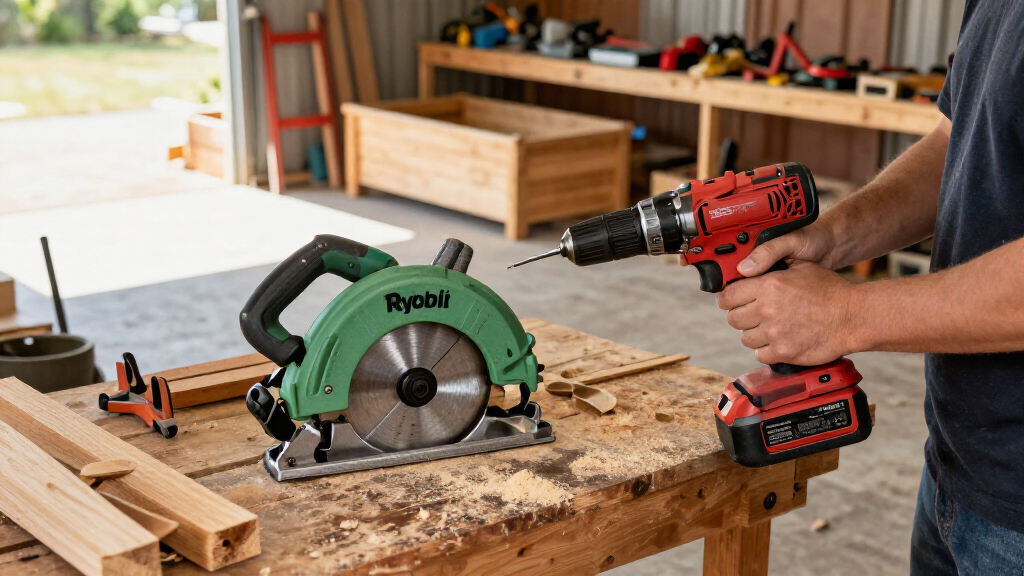
I compared the 11 listed tools by the job each is built to do, usability, platform fit, and how much capability a buyer gets without duplicating tools. The lineup includes combo kits, drill and impact tools, multi-tools, and several types of cutting tools, so I judged each against its intended role rather than treating unlike tools as direct performance rivals. Brushless designs, tool format, and whether a battery and charger are included all affect the tool’s practical fit.
The ranking favors versatility and usefulness to the widest range of buyers near the top, while focused tools rank higher for buyers with a clear task or an established battery platform. I also weighed meaningful drawbacks: a kit may include tools a buyer will not use, and a bare tool can require an additional battery investment. Because this selection has many Ryobi options and only two Milwaukee models, I present platform differences clearly rather than implying the brands are evenly represented.
Factors to Consider When Choosing Best Ryobi And Milwaukee Tools
Before choosing from this list, match the tool to the work you expect to do and the batteries you already own. A smart purchase is not always the one with the most tools or the highest specification; it is the one that fits your projects without creating avoidable overlap.
Choose a battery platform before adding bare tools
Ryobi ONE+ and Milwaukee M18 are separate battery systems, so tools from one platform do not share packs with the other. If you already own several batteries and a charger, staying on that platform can make a bare tool a practical addition. If you are starting from zero, compare a kit that includes the battery and charger against the cost and inconvenience of assembling those pieces separately. Avoid buying across both platforms for occasional jobs unless a specific tool’s format or capability justifies it. For a mixed-brand household, label batteries and chargers clearly to prevent confusion. The strongest choice here depends as much on your existing equipment as on the tool itself.
Buy for the work pattern, not the tool count
A six-tool combo kit can cover a wide range of home tasks, but its value depends on whether you will use the tools it includes. A focused drill, impact driver, or saw may suit you better if your current kit already covers the basics. List the jobs you expect to handle over the next year, then separate frequent tasks from one-off repairs. For occasional specialty work, borrowing or renting may make more sense than adding a tool and battery to your storage. Combo kits also require room for several tools and accessories. Prioritize tools that remove a recurring bottleneck rather than collecting capabilities you rarely need.
Know the difference between multi-tool formats and tiers
Oscillating multi-tools can handle varied detail work, but models in this roundup differ by brushless design, kit contents, and place in the ONE+ lineup. A kit with a battery and charger is easier for a new platform buyer to put to work, while a tool-only model makes more sense when compatible packs are already on hand. Brushless construction may appeal to buyers who expect frequent use, but it does not automatically make a tool the right choice for every occasional repair. Compare the exact model and included accessories before treating similarly named tools as interchangeable. A common mistake is paying for a kit’s convenience when you already own what it bundles, or choosing bare tool without the battery needed to run it.
Match saw style to access and control
A one-handed reciprocating saw and a conventional reciprocating saw are not simply two versions of the same purchase. The Hackzall format is aimed at jobs where compact handling and one-handed access matter, while Ryobi’s PCL515B is the conventional option in this selection. Think about where cuts happen: overhead work, tight spaces, and demolition tasks can call for different handling than general cutting around a home. Check blade compatibility and the material you expect to cut before buying, since the right blade affects results as much as the saw category. Do not choose by speed figures alone; control, reach, and the ability to brace the workpiece matter on real tasks. If you mainly need trimming or detail cuts, a multi-tool may be a better fit than either saw.
Decide when brushless or specialty tools justify a place
Brushless tools and dedicated grinders or cut-off tools make the most sense when their specific jobs appear often enough to warrant another tool. A brushless option can be attractive for repeated work, but casual users may get more benefit from a versatile kit or a simpler tool they will actually reach for. The 4-1/2-inch angle grinder and 3-inch cut-off tool serve different cutting and grinding needs; do not assume the smaller format replaces a full-size grinder. Check the accessory type, material, and cut size required for your projects before settling on either. Also account for protective equipment and safe workholding, particularly for abrasive cutting. If your tasks are varied and infrequent, versatility may matter more than buying a specialist tool for each job.
Account for batteries, storage, and future additions
A cordless tool’s practical usefulness depends on more than the tool itself: batteries, chargers, blades, discs, and storage all shape the ownership experience. One battery may be enough for light occasional work, while a busy project schedule can make a spare pack useful. Check whether the listed product is tool-only or includes a battery and charger, and do not infer kit contents from a similar model name. Before expanding a platform, consider which tools you are likely to add next and whether the available lineup supports those jobs. Keep batteries stored and charged according to the manufacturer’s instructions, and use accessories rated for the tool. This small planning step can prevent an attractive bare-tool purchase from becoming an incomplete setup.
Frequently Asked Questions
Should I choose Ryobi ONE+ or Milwaukee M18 for this lineup?
Choose based on the tools you need and the batteries you already own, not the brand name alone. This roundup has many more Ryobi options, including a broad combo kit and several focused cutting and multi-tool choices. Milwaukee’s two entries offer a compact drill kit and a one-handed Hackzall format. If you already have batteries in one system, adding compatible tools is usually the simpler path. Starting from scratch, compare the exact kit contents and the future tools you expect to need before committing.
Is the Ryobi six-tool combo kit a better first purchase than buying individual tools?
It can be a convenient start if you need several of the included tool types and want one kit to cover varied household tasks. It is less compelling if you already own the basics or have only one immediate job in mind. Think through which tools you expect to use regularly, rather than counting the number included. A focused purchase can leave you with fewer unused tools and a clearer path to the right battery setup. Check the kit’s exact contents before comparing it with separate tools.
Do I need a battery and charger if I buy a tool-only model?
Yes, a compatible battery and charger are needed to use a tool-only cordless model, unless you already own them. The Ryobi bare tools in this roundup make the most sense for buyers with ONE+ batteries, while the Milwaukee Hackzall is an M18 tool-only option. Do not assume a battery from one brand or platform will work with another. If you are new to a platform, compare the included-battery kits with the bare tool plus the equipment you still need. Confirm the precise model listing, since similar tool names can have different package contents.
Which tool is the better choice for cutting in tight spaces: the Hackzall or Ryobi PCL515B?
The Milwaukee Hackzall is the more direct fit when you specifically want a one-handed reciprocating saw format. Ryobi’s PCL515B is the conventional reciprocating saw option in this roundup, which may suit broader cutting tasks better. Neither choice is automatically right for every tight-space cut; access, ability to steady the workpiece, blade selection, and user control all matter. For fine trimming or cuts where a reciprocating blade is unwieldy, consider whether a multi-tool is more suitable. Match the saw to the material and work area rather than selecting by brand or speed alone.
Should I buy the brushless Ryobi multi-tool kit or a tool-only multi-tool?
The kit is the simpler route if you need a battery and charger for the Ryobi ONE+ platform. A tool-only brushless model may be a better fit if you already have compatible batteries and want to avoid duplicating equipment. The lineup also includes standard ONE+ multi-tool options, so occasional users may prefer a simpler setup over paying for a brushless model they will rarely use. Compare the exact model number and included accessories; similar names do not guarantee identical packages. Decide based on how often you expect to use the tool and whether convenience or avoiding duplicate batteries matters more.
Conclusion
For the broadest start, I recommend the RYOBI P1819 six-tool combo kit as best overall, especially for a household that needs several core tools at once. My best value pick is the standard Ryobi ONE+ cordless multi-tool for buyers who already own compatible batteries and want a versatile tool without a bundled battery. For best premium, choose the Ryobi ONE+ HP brushless multi-tool kit if you want a brushless specialist and need the included battery and charger. Beginners who want to start with a single familiar job should look at the Milwaukee M18 Compact Drill Driver Kit, rather than committing to a large set they may not use. For specific needs, pick the Hackzall for one-handed reciprocating cuts, the Ryobi PCL515B for a conventional reciprocating saw, or a Ryobi grinder or cut-off tool for the matching abrasive-work task. The right choice comes down to your battery platform, the work you do most, and whether you need a broad kit or one tool for a defined job.