
Woodworking hand tools cover a wide range — chisels, block planes, pull saws, carving sets — and the right pick depends entirely on the work you do at the bench. For general furniture and joinery work, the Jorgensen No.102 Low Angle Block Plane earns the top spot because it handles edge trimming, end grain, and fine smoothing with one adjustable tool. If your focus is carving and detail work, the SakerNeo 25-Piece Carving Kit offers far more blade variety, while the HURRICANE 4-Piece Chisel Set is the smarter buy for mortising and general chop work. The main tradeoff in this category is versatility versus specialization: single tools like planes and saws do a few jobs exceptionally well, while kits cover many tasks at a shallower level. Keep reading for the full breakdown of all 11 options and which one fits your projects.

Get business pricing on tools and workshop supplies
- Business-only prices and quantity discounts
- Tax-exempt purchasing
- Multiple users, one account, clear invoices
Complete the kit


Key Takeaways
- The Jorgensen No.102 low angle block plane is the most versatile single tool in the lineup, covering trimming, end grain, and smoothing — a better first purchase than any multi-tool kit.
- Carving kits trade depth for breadth: the SakerNeo 25-piece set wins on variety, but its individual tools feel lighter and less refined than dedicated chisels like the HURRICANE set.
- Three 6-inch Japanese pull saws made the list, and they are not interchangeable — the RUITOOL Ryoba suits flush cuts and joinery, while the finer 14/17 TPI model favors cleaner detail cuts in thinner stock.
- Compact tools punch above their size: the Jorgensen No.101 mini planer and POWERTEC chisel plane outperform expectations on small surfaces but cannot replace full-size planes on broad faces.
- Steel quality and blade adjustability separated the top picks more than accessory counts — tools with hardened, replaceable, or adjustable cutters ranked higher than sets built around raw volume.
| 10pcs Professional Wood Carving Chisel Set |  | Best Budget Starter Chisel Set | Number of Pieces: 10 | Blade Material: High carbon steel | Alloy: Chrome vanadium steel | VIEW LATEST PRICE | See Our Full Breakdown |
| Jorgensen No.102 Wood Planer, Low Angle Block Plane |  | Best Overall Hand Plane | Plane Type: Low angle block plane | Blade Material: O1 tool steel | Body Material: Ductile iron | VIEW LATEST PRICE | See Our Full Breakdown |
| Jorgensen No.101 Mini Wood Planer |  | Best Compact Detail Plane | Plane Type: Mini hand planer | Blade Material: O1 tool steel | Body Material: Ductile iron | VIEW LATEST PRICE | See Our Full Breakdown |
| HURRICANE 4 Piece Wood Chisel Set |  | Best Value Bench Chisels | Set Size: 4 pieces | Included Sizes: 1/4″, 1/2″, 3/4″, 1″ | Blade Material: CR-V steel, drop forged | VIEW LATEST PRICE | See Our Full Breakdown |
| SakerNeo 25-Piece Wood Carving Kit with Leather Storage Bag |  | Best All-in-One Carving Kit | Number of Items: 25 | Blade Material: Stainless steel | Handle Material: Walnut | VIEW LATEST PRICE | See Our Full Breakdown |
| General Tools Scratch Awl Tool with Hardwood Handle – Alloy Steel Blade |  | Best Layout and Marking Pick | Overall Length: 6.5 inches | Blade Length: 3.5 inches | Handle Material: Hardwood | VIEW LATEST PRICE | See Our Full Breakdown |
| Saker Chamfer Plane – Woodworking Edge Corner Flattening Tool with Auxiliary Locator and 6 Cutter Heads |  | Best for Edge Chamfering | Number of Cutter Heads: 6 | Blade Material: Carbon Steel | Adjustable Depth: Yes | VIEW LATEST PRICE | See Our Full Breakdown |
| Frocopo Hand Saw Woodworking Tools, 6-Inch Pull Saw with Double-Edge Blade | 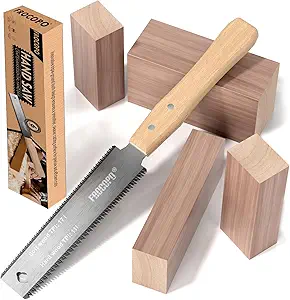 | Best Lightweight Pull Saw | Blade Length: 6 inches | Teeth per Inch: 11/17 TPI | Blade Material: SK5 steel | VIEW LATEST PRICE | See Our Full Breakdown |
| POWERTEC Chisel Plane with Flat Blade – Compact Edge Trimming Tool for Woodworking, Includes Wrench |  | Best Premium Detail Tool | Blade Material: High-carbon SKD11 tool steel | Blade Hardness: 58–62 HRC | Handle: Resin-infused maple | VIEW LATEST PRICE | See Our Full Breakdown |
| RUITOOL Japanese Hand Saw 6 Inch Double Edge Ryoba Pull Saw for Flush Cuts |  | Best for Flush Cuts | Blade Length: 6 inches | Blade Material: SK5 Steel | Handle Material: Beechwood | VIEW LATEST PRICE | See Our Full Breakdown |
| Japanese Pull Saw 6 Inch, SK5 Double Edge 14/17 TPI for Woodworking |  | Best for Fine Joinery | Blade Length: 6 inches | Tooth Density: 14 TPI (rip side) / 17 TPI (crosscut side) | Blade Material: SK5 steel | VIEW LATEST PRICE | See Our Full Breakdown |
| woodworking hand tool | Blade Material |
|---|---|
| 10pcs Professional Wood Carvin | High carbon steel |
| Jorgensen No.102 Wood Planer | O1 tool steel |
| Jorgensen No.101 Mini Wood Pla | O1 tool steel |
| HURRICANE 4 Piece Wood Chisel | CR-V steel, drop forged |
| SakerNeo 25-Piece Wood Carving | Stainless steel |
| General Tools Scratch Awl Tool | Alloy Steel |
| Saker Chamfer Plane | Carbon Steel |
| Frocopo Hand Saw Woodworking T | SK5 steel |
| POWERTEC Chisel Plane with Fla | High-carbon SKD11 tool steel |
| RUITOOL Japanese Hand Saw 6 In | SK5 Steel |
| Japanese Pull Saw 6 Inch | SK5 steel |
More Details on Our Top Picks
10pcs Professional Wood Carving Chisel Set
This 10-piece carbon steel carving set earns its spot as the most affordable entry point into carving, covering the common chisel shapes a newcomer needs before committing to pricier tools. The heat-treated blades hold an edge reasonably well for basswood, pine, and similar soft projects, though they will need more frequent honing than the O1 tool steel found in the Jorgensen No.102 Block Plane. Compared with the HURRICANE 4 Piece Chisel Set, you get carving profiles like gouges and V-tools rather than straight bench chisels, which makes this the better pick for sculptural work and the HURRICANE the better pick for joinery. The tradeoff is fit and finish: wooden handles can loosen or split over time, and there is no storage case, so the blades are vulnerable to chipping in a drawer.
Pros:- Heat-treated carbon steel blades hold a workable edge for hobby carving
- Ten profiles give beginners a chance to learn which shapes they actually use
- Ergonomic wooden handles suit long hand-carving sessions
- Wide variety of common chisel tips in one affordable package
Cons:- Wooden handles are less durable than composite or metal alternatives
- No storage case included, leaving blades exposed to damage
- Limited to basic chisel types with no specialty profiles for advanced carving
Best for: Beginner carvers who want to try relief carving or whittling without investing in premium tools
Not ideal for: Woodworkers focused on furniture joinery and chopping mortises — these are carving profiles, not heavy bench chisels
- Number of Pieces:10
- Blade Material:High carbon steel
- Alloy:Chrome vanadium steel
- Handle:Wooden, ergonomic
- Set Includes:10 carving chisels
- Skill Level:Beginner to advanced
Our verdict“A low-risk way for a new carver to sample the craft before spending more on dedicated tools.”
Jorgensen No.102 Wood Planer, Low Angle Block Plane
If one tool anchors this list, it is the Jorgensen No.102, because a low-angle block plane is the tool woodworkers reach for on nearly every project — trimming end grain, shooting miters, breaking edges, and fine-tuning joinery. The O1 tool steel blade takes a sharper edge than the carbon steel in the 10-piece carving set and holds it noticeably longer, while the dual-iron body construction feels solid in a way that cheap stamped planes never do. Its adjustable cutting depth lets you take whisper-thin shavings for final fitting, something the smaller Jorgensen No.101 Mini can’t match on wider surfaces. The real tradeoff versus the 25-piece SakerNeo kit is coverage: this is a single, specialized tool, not a starter set, and the blade arrives sharp enough to demand careful, deliberate handling.
Pros:- O1 tool steel blade achieves and holds a finer edge than carbon steel alternatives
- Ductile iron body and stainless parts built for years of heavy-duty use
- Adjustable cutting depth handles everything from rough trimming to polished finishes
- Low-angle design excels at end grain and difficult figure
Cons:- Factory-sharp blade requires careful handling and safe storage habits
- Higher investment than a basic chisel set for hobbyists who only plane occasionally
Best for: Intermediate and professional woodworkers who need one reliable plane for edge work, end grain, and joinery fitting
Not ideal for: Complete beginners who need a broad starter toolkit before adding a single-purpose precision tool
- Plane Type:Low angle block plane
- Blade Material:O1 tool steel
- Body Material:Ductile iron
- Lever Cap Material:Zinc alloy
- Other Components:Stainless steel
- Cutting Depth:Adjustable
- Applications:Woodworking, DIY, crafts
Our verdict“The single most useful hand tool on this list for anyone serious about fine woodworking.”
Jorgensen No.101 Mini Wood Planer
Where the Jorgensen No.102 is the workhorse, the No.101 Mini is the specialist for tight spots and fine detail — trimming small components, deburring edges, and cleaning up spots a full-size block plane can’t reach. It shares the same O1 tool steel blade and ductile iron build as its bigger sibling, so edge quality is not sacrificed for size, and the adjustable blade keeps it versatile for trimming, polishing, and cut-off work. Compared with the POWERTEC Chisel Plane elsewhere in this roundup, the No.101 offers more control on contoured surfaces thanks to its palm-friendly footprint. The honest tradeoff is capacity: it is limited to small tasks, and anyone planing wider boards will find it underpowered for the job.
Pros:- Same O1 tool steel blade quality as larger Jorgensen planes in a palm-sized body
- Adjustable cutting depth for controlled, fine trimming
- Highly portable and comfortable for extended detail work
- Ductile iron construction far outlasts stamped-steel mini planes
Cons:- Restricted to small woodworking tasks by its compact sole size
- Very sharp blade demands careful handling and storage
Best for: Model makers, box builders, and detail-oriented woodworkers who work on small-scale pieces
Not ideal for: Anyone flattening boards or trimming wide panels — the mini sole is too small for reference surfaces
- Plane Type:Mini hand planer
- Blade Material:O1 tool steel
- Body Material:Ductile iron
- Lever Cap Material:Zinc alloy
- Cutting Depth:Adjustable
- Use Cases:Trimming, polishing, deburring, cutting
Our verdict“A precision niche tool that complements, rather than replaces, a full-size block plane.”
HURRICANE 4 Piece Wood Chisel Set
For general woodworking, the HURRICANE 4-piece set is the best value in this lineup because it delivers the four chisel widths that handle the majority of everyday tasks: 1/4″, 1/2″, 3/4″, and 1″. The drop-forged CR-V steel blades with a 25° beveled edge chop cleanly through soft, hard, and laminated woods, making this a bench-work companion rather than a carving kit like the 10-piece carbon steel set. Two thoughtful touches separate it from cheaper imports: high-impact PVC handles that survive mallet strikes, and included blade guards that protect edges — something the 10-piece carving set lacks entirely. The tradeoff is scope: four sizes cover the basics but not everything, and serious mortise work will eventually demand wider or paring chisels.
Pros:- Drop-forged CR-V steel blades with sharp, long-lasting beveled edges
- High-impact PVC handles stand up to mallet work
- Safety blade guards included for storage and transport
- Four core widths handle most joinery and general tasks
Cons:- Woodworking only — not suitable for metal, plastic, or masonry
- Four sizes may leave gaps for projects needing very wide or very narrow chisels
Best for: DIYers and hobbyists who need dependable bench chisels for joinery, hinge fitting, and general shop tasks
Not ideal for: Wood carvers seeking gouges and sculptural profiles — these are straight-edge bench chisels only
- Set Size:4 pieces
- Included Sizes:1/4″, 1/2″, 3/4″, 1″
- Blade Material:CR-V steel, drop forged
- Blade Edge:Beveled 25°
- Handle Material:High-impact PVC
- Safety Features:Blade guards included
- Suitable Materials:Soft, hard, and laminated woods
Our verdict“The smartest chisel buy on this list for general shop work, as long as you’re chopping joints rather than carving figures.”
SakerNeo 25-Piece Wood Carving Kit with Leather Storage Bag
The SakerNeo 25-piece kit is the most complete carving package here, bundling gouges, knives, a hammer, a scriber, sharpening stone, polishing paste, leather strop, and safety gloves into one leather roll. Compared with the 10-piece carbon steel set, the upgrade is twofold: stainless steel blades that resist corrosion, and walnut handles that feel substantially better in hand. It also solves the storage problem the budget set ignores — the leather roll keeps edges protected and organized, and the included sharpening gear means blades stay usable long-term instead of degrading after a few sessions. The tradeoff is complexity: 25 pieces is overkill for a weekend whittler, and beginners may feel obligated to master tools they’ll rarely touch. It also requires genuine safety discipline given the number of exposed edges.
Pros:- Complete 25-piece selection covers whittling, relief carving, and detail work
- Stainless steel blades with corrosion resistance and comfortable walnut handles
- Leather storage roll keeps tools organized and edges protected
- Includes safety gloves, sharpening stone, and strop for blade maintenance
Cons:- Tool variety can overwhelm beginners who only need a few basic shapes
- Numerous sharp tools demand consistent safety precautions and secure storage
- Higher cost than a basic chisel set, paying for pieces you may not use
Best for: Dedicated hobbyists and spoon carvers who want a complete, organized carving workshop in a single purchase
Not ideal for: Casual DIYers who just need to trim edges or chop joints — a plane or bench chisel set serves them far better
- Number of Items:25
- Blade Material:Stainless steel
- Handle Material:Walnut
- Storage:Leather roll bag
- Includes:Gouges, chisels, knives, scriber, hammer, sharpening stone, polishing paste, leather strop, safety gloves
- Warranty:1 year
- Applications:Whittling, relief carving, detail woodworking
Our verdict“The one-buy solution for someone committed to carving as an ongoing hobby rather than an occasional task.”
General Tools Scratch Awl Tool with Hardwood Handle – Alloy Steel Blade
Every woodworking bench needs a marking tool, and this scratch awl is the simplest item on this list — which is exactly its strength. Where the Saker Chamfer Plane removes material, this tool prepares the work: scribing layout lines, marking joinery, and starting screw holes so bits don’t wander. The alloy steel blade holds a point through heavy daily marking, and the contoured hardwood handle gives better control than the plastic grips on cheaper awls. Compared with the Frocopo Chisel Plane, it costs a fraction of the price and covers a completely different job — one cuts, one marks. The tradeoff is narrow capability: it won’t scribe hard surfaces like a carbide marker, and there’s no case or accessory included. This pick makes the most sense for woodworkers building a foundational layout kit on a budget.
Pros:- Durable alloy steel blade holds its point through heavy marking
- Contoured hardwood handle offers a comfortable, controlled grip
- Versatile for scribing, layout, and starting drill holes
Cons:- Limited to wood and soft materials; struggles on harder surfaces
- No storage case or included accessories
Best for: Woodworkers and DIYers setting up a basic bench kit who need reliable layout and marking tools
Not ideal for: Anyone working with hardened metals or stone — the alloy steel point is limited to wood and soft materials
- Overall Length:6.5 inches
- Blade Length:3.5 inches
- Handle Material:Hardwood
- Blade Material:Alloy Steel
- Primary Use:Scribing, layout, piercing
- Accessories Included:None
Our verdict“A low-cost, dependable marking tool that belongs on every bench, as long as your work stays within wood and soft materials.”
Saker Chamfer Plane – Woodworking Edge Corner Flattening Tool with Auxiliary Locator and 6 Cutter Heads
Chamfering edges with a standard block plane like the Jorgensen No.102 takes skill and a steady hand; the Saker Chamfer Plane makes the same result repeatable. The included auxiliary locator guides the tool along the edge, so beginners get consistent 45-degree chamfers without the practice curve a hand plane demands. With six replaceable cutter heads and adjustable depth, it handles everything from breaking an edge to cutting a visible decorative chamfer — more versatility than the Frocopo Chisel Plane, which is aimed at small detail trimming rather than edge profiles. The tradeoff is refinement: the cut quality won’t match a tuned hand plane, and dialing in the depth setting takes some trial and error out of the box. This option stands out for speed and consistency over traditional technique.
Pros:- Auxiliary locator delivers consistent results with minimal skill
- Six cutter heads cover a range of edge profiles
- Adjustable cutting depth adds versatility
- Simple to disassemble for blade changes
Cons:- Depth adjustments take practice to set precisely
- Woodworking only; no use beyond edge work
Best for: Beginners and DIY furniture makers who want quick, consistent chamfered edges without mastering a hand plane
Not ideal for: Traditionalists chasing glass-smooth hand-planed edges — the cut quality falls short of a tuned block plane
- Number of Cutter Heads:6
- Blade Material:Carbon Steel
- Adjustable Depth:Yes
- Auxiliary Locator:Included
- Color:Black
- Primary Use:Edge trimming and chamfering
Our verdict“If you value repeatable chamfers over traditional hand-planing skill, this tool gets there faster than a block plane ever will.”
Frocopo Hand Saw Woodworking Tools, 6-Inch Pull Saw with Double-Edge Blade
At just 2.82 ounces, this Frocopo pull saw is the featherweight of the saw category here, and that changes how it feels in use — long trimming sessions produce far less fatigue than heavier Western-style saws. The double-edged SK5 blade pairs 11 TPI coarse teeth for ripping with 17 TPI fine teeth for crosscuts, mirroring the dual-purpose approach of the RUITOOL Japanese Pull Saw. Where the RUITOOL leans into flush cutting with its tooth geometry, the Frocopo leans into comfort and value, with an ergonomic wooden handle and a lifetime warranty backing it up. The compromises are real, though: a 6-inch blade limits you to smaller stock, there’s no protective sheath for drawer storage, and the handle shape won’t suit every hand size. This model is better suited to hobbyists doing detail joinery than anyone breaking down lumber.
Pros:- Coarse and fine teeth on one blade handle both rip and crosscuts
- Ultra-light 2.82 oz build reduces hand fatigue
- SK5 steel blade balances sharpness and flexibility
- Lifetime warranty adds long-term assurance
Cons:- 6-inch blade restricts it to small projects
- No protective sheath or storage case included
Best for: Hobbyists and model makers doing light joinery who want a comfortable, low-fatigue saw for small stock
Not ideal for: Carpenters cutting larger boards — the 6-inch blade can’t handle bigger workpieces efficiently
- Blade Length:6 inches
- Teeth per Inch:11/17 TPI
- Blade Material:SK5 steel
- Handle Material:Wood
- Weight:2.82 ounces
- Blade Type:Double-edged
Our verdict“A comfortable, dual-toothed saw for small-scale work, provided your projects stay within a 6-inch cutting capacity.”
POWERTEC Chisel Plane with Flat Blade – Compact Edge Trimming Tool for Woodworking, Includes Wrench
This is the most refined small tool in this lineup. The SKD11 high-carbon steel blade hardened to 58–62 HRC holds its edge noticeably longer than the carbon steel cutters in the Saker Chamfer Plane, and the machined aluminum body feels like a tool built to outlast its owner. Its specialty is cleanup work where nothing else fits: trimming proud plugs, scraping dried glue, and flushing small edges in corners a block plane like the Jorgensen No.102 can’t reach. The resin-infused maple handle adds comfort during fiddly, repetitive passes. Two honest tradeoffs: it’s a detail tool, full stop — no surface leveling or heavy material removal — and the blade requires manual alignment at setup, so expect some fiddling before the first cut. Compared with carving chisel sets, it trades versatility for precision in one narrow role.
Pros:- SKD11 tool steel at 58–62 HRC holds an edge far longer than carbon steel alternatives
- Compact size reaches spots block planes can’t
- Ergonomic resin-infused maple handle suits repetitive detail work
- Replaceable blades extend the tool’s working life
Cons:- Strictly a small-trimming tool; unsuited to larger leveling work
- Blade alignment requires manual setup out of the box
Best for: Serious woodworkers and professionals who need a precision cleanup tool for plugs, glue, and tight-spot trimming
Not ideal for: Beginners expecting an all-purpose plane — it can’t level surfaces or remove meaningful material
- Blade Material:High-carbon SKD11 tool steel
- Blade Hardness:58–62 HRC
- Handle:Resin-infused maple
- Body:Machined aluminum
- Included Accessories:Wrench
- Primary Use:Plug trimming, glue cleanup, fine edge work
Our verdict“A premium, specialized cleanup tool worth the spend only if fine detail work is a regular part of your woodworking.”
RUITOOL Japanese Hand Saw 6 Inch Double Edge Ryoba Pull Saw for Flush Cuts
Where the Frocopo prioritizes lightweight comfort, the RUITOOL Ryoba prioritizes cut precision. Its SK5 blade is hardened to HRC60–63, and the tooth geometry is split deliberately: 17 TPI for hardwood, 14 TPI for softwood, so each side of the blade is purpose-built rather than generic. That’s what makes it the standout choice for flush cuts — trimming dowels, pins, and protruding tenons flush without gouging the surrounding surface, something a coarse-toothed Western saw struggles to do cleanly. The beechwood handle keeps the overall weight near 0.11 kg, though some users add grip tape for longer sessions. The limitations mirror its rivals: it’s a woodworking-only tool, not built for heavy-duty demolition or thick stock, and flush-cutting precision demands a light touch. This pick makes the most sense for finish carpentry and joinery where clean cuts matter more than speed.
Pros:- Dedicated hardwood and softwood tooth patterns on one blade
- HRC60-63 hardened SK5 steel holds sharpness through fine work
- Compact 6-inch blade offers excellent control for flush cuts
- Pull-stroke design produces clean, splinter-free finish cuts
Cons:- Not suited to heavy-duty or thick-stock cutting
- Beechwood handle may need added grip for extended sessions
Best for: Finish carpenters and joinery-focused woodworkers who regularly trim dowels, pins, and tenons flush
Not ideal for: Anyone needing a general-purpose or heavy-duty saw — this blade is too fine for rough framing work
- Blade Length:6 inches
- Blade Material:SK5 Steel
- Handle Material:Beechwood
- Tooth Count:17 TPI (hardwood), 14 TPI (softwood)
- Hardness:HRC60-63
- Weight:0.11 kg
- Number of Edges:2 (double edge)
Our verdict“The go-to choice when flush-cut precision is the priority, though it should supplement rather than replace a full-size saw.”
Japanese Pull Saw 6 Inch, SK5 Double Edge 14/17 TPI for Woodworking
Within a lineup full of chisels and planes, this 6-inch Japanese pull saw earns its spot as the go-to choice for fine joinery and delicate trim work. The double-edged SK5 blade splits duties between 14 TPI for faster rip cuts and 17 TPI for cleaner crosscuts, so one tool covers both sides of a tenon or dovetail without swapping saws. The pull-cut action puts tension on the blade during the stroke, which means thinner steel, narrower kerfs, and straighter lines than a typical Western push saw can manage.
Compared with the RUITOOL 6-inch Ryoba, this model leans harder toward precision than versatility, with slightly finer tooth geometry that suits detailed joints over rough flush cutting. Similarly, where the Frocopo pull saw targets general purpose trimming, this one rewards woodworkers who care about surface finish. The tradeoff is real: the blade is delicate, and heavy-handed technique will bind or kink it.
Pros:- Dual tooth density (14/17 TPI) handles both rip and crosscut work in one tool
- SK5 steel holds an edge well and resists dulling in hardwood
- Pull-cut design delivers a narrow kerf and excellent control for tight joinery
- Lightweight build with a wooden handle that suits prolonged detail work
Cons:- Thin blade binds or bends if the user pushes too hard, demanding technique
- 6-inch capacity limits it to small workpieces and light-duty projects
- Replacement blades can be harder to source than standard Western saws
Best for: Hobbyists and furniture makers who cut dovetails, tenons, and small joints by hand and value a clean kerf over speed
Not ideal for: Beginners with no pull-saw experience or anyone needing to rip thick stock — the thin blade demands a light touch and punishes forceful strokes
- Blade Length:6 inches
- Tooth Density:14 TPI (rip side) / 17 TPI (crosscut side)
- Blade Material:SK5 steel
- Cutting Action:Pull-cut (Japanese style)
- Edge Configuration:Double-edged double-edge design
- Handle:Wood
- Best Applications:Joinery, trimming, small woodworking projects
Our verdict“This is the saw for woodworkers whose projects live or die on clean joints — buy it for dovetails and trim, not for breaking down lumber.”

How We Picked
My ranking logic starts with build quality and steel, because a hand tool is only as good as its edge. I favored carbon and hardened alloy steels, adjustable cutters, and bodies machined to sit flat — features that determine whether a tool holds its setting after repeated sharpening. Versatility came next: a plane that handles end grain, edge work, and smoothing ranked higher than one locked into a single task, which is why adjustable block planes sit above fixed-blade specialty tools.
From there I weighed usability for different skill levels — tools that cut predictably out of the box scored better for beginners, while models requiring tuning and honing were judged on their ceiling, not their first cut. Finally, I considered value as a system: kits were compared against buying dedicated tools separately, and single-purpose tools had to justify their slot by doing one job better than any multi-tool alternative. That combination of criteria explains the ordering — refinement and range at the top, budget-friendly breadth in the middle, and niche specialists filling specific roles.
Factors to Consider When Choosing Woodworking Hand Tools
Choosing woodworking hand tools is less about buying the most pieces and more about matching tools to the joints, surfaces, and details you actually cut. These are the factors that shaped my rankings — and the ones most buyers get wrong on their first purchase.Blade Steel and Edge Retention
The single biggest predictor of long-term satisfaction is what the cutter is made from. Carbon steel and hardened alloys take a sharper edge than cheap stainless, but they demand slightly more care — wipe blades after use and a light oil coating prevents rust, which is a fair trade for tools that hold an edge through a full project. Softer steel dulls mid-task and forces constant honing, which is where most budget sets quietly cost you time. When comparing sets, check whether blades can be sharpened repeatedly or are effectively disposable once dull. A tool with replaceable cutters, like the swappable heads on a chamfer plane, shifts maintenance from sharpening skill to simple swapping. Buyers who skip this consideration often end up replacing an entire kit within a year.
Adjustability and Tuning Tolerance
Planes are judged by how precisely you can set the blade, and that separates a refined tool from a frustrating one. Look for depth adjustment and lateral blade control — a plane with coarse-only adjustment forces you to compensate with technique, which beginners rarely have yet. Low angle blades around 12–15 degrees excel on end grain and tricky figures where standard angles tear out. New planes almost always benefit from honing the blade before first use, even quality ones, so factor that prep time into your expectations. A common mistake is assuming an expensive plane cuts perfectly from the box; the other extreme — assuming cheap planes are unusable — is equally wrong, since many can be tuned flat with sandpaper and a flat surface. Your patience for tuning should guide your budget.
Kit Size Versus Actual Project Needs
Big carving and chisel sets look like a bargain until you notice that most projects use the same three profiles. A 25-piece carving kit makes sense for spoon carving, relief work, and decorative detail — tasks that genuinely need varied sweeps. For joinery, mortising, and general shop work, a well-made four-chisel set in the common widths will outperform a bargain dozen-piece set with sloppy grinds. Ask what you’ll cut in the next six months, not what looks complete on a pegboard. Also consider handle ergonomics: carving requires hours of grip comfort, so contoured handles matter far more there than for occasional paring cuts. The pattern across this roundup was clear — quality per tool beats quantity in the case.
Pull Saws: Tooth Geometry and Plate Thickness
Japanese pull saws cut on the pull stroke, which lets the blade be thinner than Western push saws and leaves narrower kerfs — but tooth count changes everything. Coarser teeth (around 14 TPI) rip and cut faster in thicker stock, while finer pitches (17 TPI and up) produce cleaner crosscuts and finish work in thin material. Double-edge blades give you both in one tool, at the cost of a blade that’s flexible and can kink if you force it. Beginners often press too hard; let the saw’s own weight do the work and the cut stays straight. Replacement blade availability matters too, since these blades cannot realistically be filed like traditional Western saw teeth. If you’ll make flush cuts against a surface, confirm the saw has a flexible plate designed for it.
Tool Weight, Size, and Bench Context
A tool that feels nimble in a hardware aisle can feel exhausting after an hour of planing. Full-size block planes give you mass that helps carry a cut through resistant grain, while mini planes shine in tight spots like trim ends and small boxes — they’re complements, not substitutes. Weight is a feature, not a spec to minimize: heavier plane bodies dampen chatter, while lightweight carving tools reduce hand fatigue during fine detail work. Think about your typical workpiece size too; small-scale hobbyists get real value from compact tools, while furniture builders will hit their limits quickly. Handle shape matters as much as overall weight for anything you grip continuously. Match the tool’s scale to your projects rather than assuming one size serves all benches.
Maintenance Commitment and Long-Term Cost
Hand tools last decades, but only with a sharpening plan. Before buying anything with an edge, decide whether you’ll maintain it with water stones, diamond plates, or sandpaper — the tool choice matters less than having a repeatable sharpening method. Cast iron plane bodies need rust protection in humid shops; leather tool rolls, like the one included with higher-end carving kits, keep blades separated and dry. Budget buyers should also price replacement blades where available, since a mid-priced tool with cheap consumables can cost more over five years than a premium tool with durable steel. The cheapest tools often cannot be economically maintained at all, which converts a low purchase price into a recurring expense. Plan for the tool’s whole life, not just checkout.
Frequently Asked Questions
Should I buy a multi-piece carving set or dedicated individual chisels?
It depends on what you’re cutting. Carving sets with many profiles reward decorative work — relief carving, spoons, figures — where varied sweeps and gouges genuinely get used. Dedicated bench chisels, like a solid four-piece set in standard widths, are the better investment for joinery, mortising, and paring because each tool is built heavier, holds an edge longer, and can take mallet strikes without loosening. A useful rule: if you can name the specific cut each tool would make in your next project, the set earns its spot. If you can’t, start with individual tools and expand later. Buyers who start with a large set often find eight of the pieces never leave the roll.
Is a low angle block plane actually worth it over a standard block plane?
For most woodworkers, yes — the low angle blade, typically set around 12 degrees for a cutting angle in the high 30s, slices end grain and figured wood with noticeably less tear-out than a standard 45-degree bed. That matters because end grain is exactly where cheap planes crush fibers instead of cutting them. The tradeoff is that low angle planes can be slightly more aggressive on straight-grained face work, where a higher pitch leaves a smoother surface. If you trim panels, doors, or joints regularly, the low angle version is the more useful single plane. Woodworkers who mostly smooth flat faces may eventually want a smoother plane anyway, which the block plane never fully replaces.
Do Japanese pull saws really outperform Western push saws for beginners?
For most beginners, pull saws are more forgiving because the blade is under tension during the cut, so it can be thinner and still stay straight — you get a narrower kerf and less binding. The technique is different: you pull to cut and use almost no downward pressure, which takes an hour or two of practice to trust. Western push saws cut faster in thick stock and their blades can be traditionally filed, but they demand a straighter stroke to avoid buckling. The double-edge Ryoba style gives you rip teeth on one side and crosscut on the other, effectively two saws in one lightweight tool. The main compromise is blade fragility — force a pull saw and it can kink, and replacement blades are a recurring cost.
What’s the minimum set of hand tools to start woodworking seriously?
A surprisingly short list covers most work: one good block plane, two or three bench chisels in common widths, a double-edge pull saw, a marking knife or scratch awl, and a combination square for layout. That’s roughly the spine of this roundup’s top picks, and it handles trimming, joinery, cutting, and layout — the four operations nearly every project requires. Resist buying specialty tools like chamfer planes or chisel planes early; they refine work you can already do with the basics, so they’re upgrades rather than foundations. Spend your budget on the chisels and plane first, since edge quality affects every cut you make. Add tools as specific projects demand them, not before.
How much does a mini or compact plane actually replace a full-size plane?
Less than the marketing suggests, but more than you might expect for small work. A mini plane excels at trimming end grain on narrow stock, easing edges on small boxes, and fitting into spots a full-size plane can’t reach — and on those tasks it’s genuinely better than its big sibling. Where it falls short is anything with surface area: a short sole bridging a broad board follows hollows and bumps instead of flattening them, so it can’t smooth a panel or true an edge on wider lumber. Compact chisel planes face the same limit; they’re precision trimmers, not surfacers. If your work is small-scale, a mini plane may be your only plane. If you build furniture, treat it as a complement and buy the full-size tool first.
Conclusion
Matching the right tool to your bench comes down to what you cut most. For best overall, the Jorgensen No.102 Low Angle Block Plane is the pick I’d put in anyone’s hands first — it covers trimming, end grain, and smoothing in one adjustable, durable tool. The best value award goes to the HURRICANE 4-Piece Chisel Set, which delivers genuine joinery capability without kit-set compromises. For beginners, the 10-piece Professional Carving Chisel Set offers an affordable, low-risk entry into shaping wood and learning tool control. The best premium option is the SakerNeo 25-Piece Carving Kit with its leather roll and broad blade selection — a serious gift-worthy set for committed carvers. Specific needs round out the list: the RUITOOL Ryoba Pull Saw for joinery and flush cuts, the Jorgensen No.101 Mini Planer for small-scale work, and the General Tools Scratch Awl as the inexpensive layout tool every bench should have. Buy for the projects on your bench today, add specialists later, and every one of these picks will still be earning its keep years from now.
Fall yard work Picks
leaf blowers
As an affiliate, we earn on qualifying purchases.