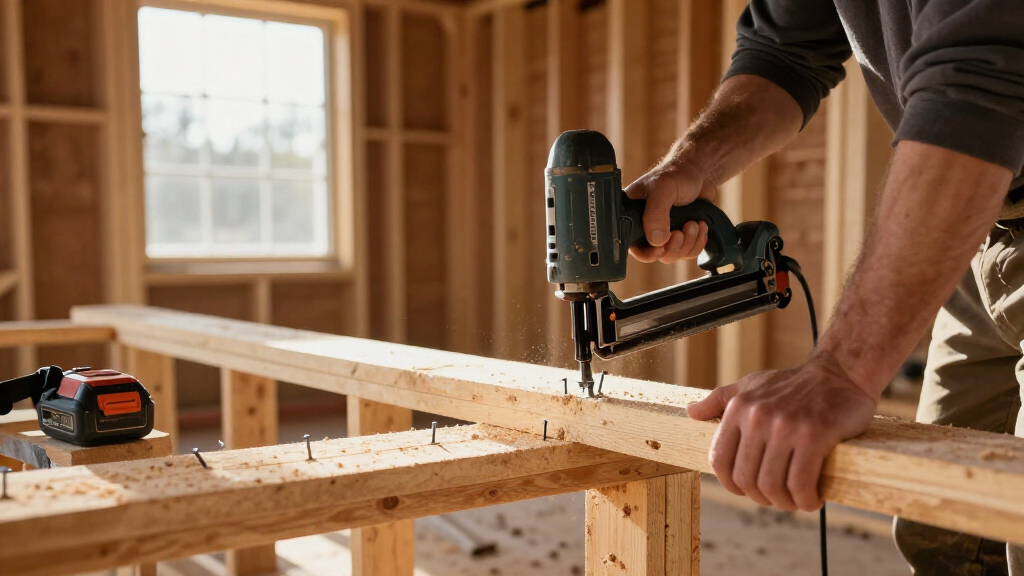

Cordless framing nailers have finally matched pneumatic performance for most framing work, but the gap between a great one and a frustrating one comes down to driving power, weight, and how each brand handles nail angle and fastener type. The DEWALT DCN930P1 earns my best overall pick for its consistent driving power, brushless efficiency, and complete kit value with a 5.0Ah battery and charger included. If you prefer paper tape collation and a slightly lighter platform, the Metabo HPT NR1890DCA is a standout alternative, while the Ridgid ONE+ HP AirStrike is the easiest entry point for homeowners already in that battery ecosystem. The main tradeoff you’ll face is between 30° paper tape and 21° plastic strip guns, plus tool-only versus kit pricing. Keep reading for the full breakdown.

Get business pricing on tools and workshop supplies
- Business-only prices and quantity discounts
- Tax-exempt purchasing
- Multiple users, one account, clear invoices
Complete the kit

Key Takeaways
- Full kits (FLEX, DEWALT, Metabo HPT, Makita XNB03M1) cost more upfront but avoid the hidden expense of a battery and charger, which can add substantially to bare-tool pricing.
- 30° paper tape guns dominated the top of the comparison because paper collation leaves less jobsite debris and handles off-angle driving better than 21° plastic strip nails.
- Tool-only models like the Ryobi ONE+ HP and Craftsman V20 options make sense only if you already own batteries in that platform — buying in from scratch erases their value advantage.
- Brushless motors appeared on every top-ranked pick; the few brushed alternatives struggled with consistent sink on engineered lumber and dense framing members.
- Weight differences of nearly a pound between models mattered more than expected for overhead work — the Makita XNB07Z and Ryobi were noticeably easier to run horizontally despite lower power ceilings.


| cordless framing nailer | Voltage | Nail Angle | Motor | Battery |
|---|---|---|---|---|
| FLEX 24V Brushless 30° Cordles | 24V | 30° | — | 5.0Ah lithium-ion (included) |
| Metabo HPT 18V Cordless Paper | 18V | 30° | — | 4.0Ah lithium-ion (included) |
| Makita XNB07Z 18V LXT Brushles | 18V | 30° clipped head | Brushless | LXT lithium-ion (not included) |
| FLEX 24V Brushless 21° Framing | 24V | 21° | Brushless | 5.0Ah lithium-ion (included) |
| 20V 21° Cordless Framing Naile | 20V | — | — | — |
| ONE+ HP 18V Brushless Cordless | 18V | 30° | Brushless | Sold separately |
| CRAFTSMAN V20 Brushless Cordle | — | — | Brushless | — |
| CRAFTSMAN V20 Cordless 21° Fra | — | 21° | — | — |
| DEWALT 20V MAX 30° Cordless Br | 20V MAX | 30°, paper collated | Brushless | 1 x 5.0Ah lithium-ion included |
| 20-Volt 30° Cordless Framing N | 20V | 30° | Not specified (not brushless) | — |
| Metabo HPT NR1890DRA 18V Cordl | 18V | 21° | Brushless, air spring drive | — |
| Makita XNB03M1 18V LXT Brushle | 18V LXT | 21° plastic collated, full round head | Brushless | 18V LXT Lithium-Ion 4.0Ah (BL1840B) |
More Details on Our Top Picks
FLEX 24V Brushless 30° Cordless Framing Nailer Kit (FX4351B-1C)
This FLEX 30° kit stands out as the most complete package in the lineup: 1,100 nails per charge, a 5.0Ah battery and 160W fast charger included, and zero ramp-up time before the first drive. Compared with the Metabo HPT NR1890DCA, which manages roughly 500 nails per charge from its 4.0Ah battery, the FLEX effectively doubles your runtime between swaps — a real difference on sheathing days. The power adjustment dial and dual LED worklights make depth control and low-light work easier than on bare-tool alternatives like the Makita XNB07Z, which ships without battery or charger at all. The tradeoff: you’re locked into the FLEX 24V platform, and the 5-year warranty requires registration within 30 days, so set a reminder when it arrives.
Pros:- Up to 1,100 nails per single 5.0Ah charge — best runtime in this batch
- Battery and 160W fast charger included, ready to work out of the bag
- Zero ramp-up time with up to 3 nails per second
- Dry-fire lockout and tool-free depth dial protect work and speed setup
Cons:- Battery system is proprietary to the FLEX 24V platform
- Full 5-year warranty only applies if registered within 30 days of purchase
Best for: Pro framers and serious DIYers who want a full kit with class-leading runtime and no compressor to drag around
Not ideal for: Anyone already invested in another battery platform — the FLEX 24V ecosystem is small and the tool won’t share batteries
- Model:FX4351B-1C
- Voltage:24V
- Battery:5.0Ah lithium-ion (included)
- Charger:160W fast charger (included)
- Nail Angle:30°
- Fastener Capacity:2 in. to 3-1/2 in.
- Driving Speed:Up to 3 nails per second
- Nails per Charge:Up to 1,100
- Warranty:5-year limited with registration; 3-year without
Our verdict“If you want one kit that nails runtime, speed, and included accessories without compromise, this is the one to buy.”
Metabo HPT 18V Cordless Paper Tape Framing Nailer Kit, 30° (NR1890DCA)
The NR1890DCA earns its spot on the strength of its air spring drive system — the same drive feel Metabo HPT built its pneumatic reputation on — paired with a lifetime tool body warranty that nothing else in this roundup matches. Where the FLEX FX4351B-1C doubles its runtime, the Metabo counters with a lighter 8.2 lbs tool (before battery) and paper tape collation, which leaves less debris on the job site than plastic strip nails. Brush fire at three nails per second with no ramp-up keeps pace with the FLEX in speed. The honest tradeoff is runtime: at roughly 500 nails per charge, heavy framers will swap batteries more often, so a second battery is worth budgeting for.
Pros:- Air spring drive system delivers pneumatic-like driving performance
- Lifetime tool body warranty — unmatched in this lineup
- Lighter at 8.2 lbs without battery than most 18V rivals
- Paper tape collation leaves less plastic debris behind
Cons:- Only about 500 nails per charge — half the FLEX kit’s runtime
- At 8.2 lbs before the battery, still tiring for all-day overhead work
Best for: Framers coming from pneumatic tools who want a familiar drive feel and a lifetime body warranty
Not ideal for: High-volume sheathing crews — 500 nails per charge means frequent battery swaps compared with FLEX or Makita
- Model:NR1890DCA
- Voltage:18V
- Nail Angle:30°
- Nail Type:Paper tape collated
- Nail Length:2 in. to 3-1/2 in.
- Firing Rate:Up to 3 nails per second
- Battery:4.0Ah lithium-ion (included)
- Capacity per Charge:Up to 500 nails
- Warranty:Lifetime tool body warranty
Our verdict“This pick makes the most sense for framers who prioritize drive quality and long-term warranty coverage over maximum runtime.”
Makita XNB07Z 18V LXT Brushless Cordless 30° Clipped Head Framing Nailer (Tool Only)
For anyone already running Makita 18V LXT batteries, this tool-only model is the smart money play: skip the battery markup, pair it with packs you already own, and get up to 1,000 nails per charge — double the Metabo NR1890DCA’s runtime. The brushless motor is tuned for dense engineered lumber like LVL, where cheaper cordless nailers can leave proud nails, and the anti-dry fire mechanism saves both fasteners and your work surface. The costs are real, though: at 11.9 lbs with battery it’s the heaviest tool here, and the clipped head format may not satisfy jobsite specs that call for full round heads. Compared with the Metabo HPT NR1890DRA 21° kit, you’re trading included accessories for raw driving power.
Pros:- Brushless motor drives clipped head nails into dense engineered lumber
- Up to 1,000 nails per single charge
- Tool-less depth adjustment for flush or countersunk nailing
- Anti-dry fire mechanism prevents blank drives
Cons:- Battery and charger sold separately
- Heaviest option here at 11.9 lbs with battery
Best for: Makita LXT platform owners who need serious power into engineered lumber and already have batteries
Not ideal for: First-time cordless buyers with no Makita batteries — after adding battery and charger, the value advantage disappears
- Voltage:18V
- Battery:LXT lithium-ion (not included)
- Motor:Brushless
- Nail Angle:30° clipped head
- Max Nail Length:3-1/2 in.
- Magazine Capacity:58 nails
- Nails per Charge:Up to 1,000
- Weight:11.9 lbs with battery
Our verdict“Existing LXT users get pro-grade power into tough lumber here; everyone else should price out a full kit first.”
FLEX 24V Brushless 21° Framing Nailer Kit (FX4351A-1C)
This is the FX4351B-1C’s sibling with one meaningful difference: it fires 21° plastic strip, full round head nails instead of 30° paper tape. That matters if your plans, inspections, or personal preference call for full round heads, which many pros consider stronger in shear. Everything else carries over — 1,100 nails per charge, 3 nails per second with zero ramp-up, depth dial, LED worklights, dry-fire lockout, and the full kit with 5.0Ah battery and 160W fast charger. Against the CRAFTSMAN V20 21° bare tool, the FLEX wins on runtime and included accessories. The catch is shared, too: 21° collation is bulkier to load, nails cost a bit more in some regions, and the same 30-day warranty registration rule applies.
Pros:- Full round head 21° fasteners for maximum holding strength
- Up to 1,100 nails per single 5.0Ah charge
- Zero ramp-up time at up to 3 nails per second
- Complete kit with battery, fast charger, and rafter hook
Cons:- 21° collation is bulkier and fastener availability varies by region
- Full 5-year warranty requires 30-day registration
Best for: Framers who specifically need full round head 21° fasteners for code or holding-strength reasons, with a complete kit
Not ideal for: Users who prefer 30° fasteners for their higher nail count per strip — get the FX4351B-1C instead
- Model:FX4351A-1C
- Voltage:24V
- Motor:Brushless
- Nail Angle:21°
- Driving Speed:Up to 3 nails per second
- Nails per Charge:Up to 1,100 (with 5.0Ah battery)
- Battery:5.0Ah lithium-ion (included)
- Charger:160W fast charger (included)
- Warranty:5-year limited with registration; 3-year without
Our verdict“Choose this over the 30° FLEX only if your work demands full round head nails — otherwise the two are nearly identical performers.”
20V 21° Cordless Framing Nailer (Tool Only)
This is the cheapest entry point into cordless framing in the batch — as long as you already own a compatible 20V battery and charger. As a bare tool, it makes sense purely as an add-on for someone whose existing platform it matches, similar in spirit to the tool-only Makita XNB07Z but at a far lower commitment level. What you give up is everything the premium kits include: no battery, no charger, no fast charger, and no documented runtime or driving-speed figures to compare against the FLEX or Metabo kits. If you’re starting from zero, the math rarely works — after buying batteries, a Metabo HPT NR1890DCA kit with its included 4.0Ah pack and lifetime warranty is the stronger value.
Pros:- Lowest-cost way to add cordless framing capability
- Cordless design eliminates hoses and compressor setup
- 21° full round head fastener compatibility
- Light on accessories you don’t need if you already own the platform
Cons:- Battery and charger are not included
- No published runtime or performance specs to compare against rivals
Best for: Buyers who already own the matching 20V battery platform and want a framing nailer at the lowest possible added cost
Not ideal for: Anyone starting a tool collection from scratch — battery and charger purchases erase the price advantage quickly
- Voltage:20V
- Nailer Angle:21°
- Power Source:Cordless (battery platform)
- Included Components:Tool only — no battery or charger
Our verdict“A reasonable add-on for matching-platform owners only — everyone else gets more tool per dollar from a complete kit.”
ONE+ HP 18V Brushless Cordless AirStrike 30° Framing Nailer (Tool Only)
This Ryobi stands out for buyers already invested in the ONE+ 18V platform, because the tool-only price buys into a battery system shared with dozens of other tools. The 750 nails per charge rating on a 4.0 Ah battery is competitive with dedicated pro brands like Metabo HPT, and the dual sequential and contact actuation modes match what the DEWALT DCN930P1 offers for speed work. Compared with the Makita XNB07Z, the AirStrike adds an air fill valve for cold-weather stiction relief — a genuine jobsite nicety. The tradeoff is straightforward: if you don’t own Ryobi batteries, the real cost climbs once you add a charger and pack, and Ryobi’s framing heritage doesn’t carry the same jobsite reputation as DEWALT or FLEX.
Pros:- No compressor, hose, or gas cartridge required
- Both sequential and contact actuation drive modes
- Tool-free depth adjustment speeds setup between materials
- Rafter hook and air fill valve add genuine jobsite convenience
Cons:- Battery and charger sold separately, raising the true cost for newcomers
- Ryobi’s build doesn’t match pro-line durability under daily framing abuse
Best for: Homeowners and remodelers who already own Ryobi ONE+ batteries and want a framing nailer without buying a new ecosystem
Not ideal for: Full-time framers who need the durability and support network of a pro-grade brand like DEWALT or Metabo HPT
- Voltage:18V
- Motor:Brushless
- Nail angle:30°
- Maximum nail length:3-1/2 in.
- Drive modes:Single sequential and contact actuation
- Depth adjustment:Tool-free
- Nails per charge:Up to 750 with a 4.0 Ah battery
- Battery:Sold separately
Our verdict“The obvious choice if your garage already holds ONE+ batteries; skip it if you’d be buying into the platform just for this one tool.”
CRAFTSMAN V20 Brushless Cordless 30° Framing Nailer (Tool Only, CMCN630PTB)
Craftsman’s V20 framing nailer makes the most sense for value-focused buyers who want a brushless motor without paying DEWALT or FLEX kit prices. The rapid sequential firing mode keeps pace on repetitive sheathing work, and the lightweight, balanced build with rubber overmold is noticeably easier to handle overhead than the nearly 10-pound DEWALT DCN930P1. A thoughtful jam indicator alerts you to motor stalls before you burn through fasteners — something the bare-bones generic 20V 30° tool-only alternative lacks entirely. The compromises: this is a tool-only listing, the VERSATRACK storage system costs extra, and Craftsman’s 30° platform has fewer nail options on shelves than the ubiquitous DEWALT-compatible paper collated strips.
Pros:- Brushless motor delivers more runtime and consistent driving power
- Lightweight, balanced design reduces fatigue during overhead work
- Jam indicator warns of motor stalls before fasteners are wasted
- Tool-free depth adjustment for quick material changes
Cons:- Tool-only listing means added battery and charger cost
- VERSATRACK storage system and clip sold separately
Best for: DIYers and part-time builders on a V20 battery budget who want brushless performance at a lower entry cost
Not ideal for: Production framers who need maximum driving power and ecosystem depth — the V20 line is lighter-duty than FLEX 24V or DEWALT 20V MAX
- Motor:Brushless
- Battery system:CRAFTSMAN V20
- Nailer angle:30°
- Depth adjustment:Tool-free
- Firing mode:Rapid sequential
- Handle:Rubber overmolded
- Rafter hook:Adjustable
- Storage compatibility:VERSATRACK (sold separately)
- Included:Tool only
Our verdict“A smart value play for casual framing duty if you’re already in — or starting — the V20 ecosystem, but pros should look to FLEX or DEWALT.”
CRAFTSMAN V20 Cordless 21° Framing Nailer (Bare Tool, CMCN621PLB)
This Craftsman fills a specific slot: buyers who need full round-head nails, which many building codes and inspectors prefer over clipped heads. It drives up to 3-1/4 inch nails into laminated veneer lumber, which is harder to sink than standard SPF framing lumber — a claim the lighter-duty generic 20V tools don’t make. Compared with the FLEX 24V 21° kit or the Makita XNB03M1, this model skips the brushless motor, so expect shorter runtime per charge and a bit less driving consistency in dense material. Still, it undercuts both of those kits considerably once you factor in that FLEX and Makita include batteries and this doesn’t — which is exactly the tradeoff to weigh.
Pros:- Full round-head 21° nails satisfy stricter fastener codes
- Drives up to 3-1/4 in. nails into laminated veneer lumber
- Cordless design eliminates compressors, hoses, and gas cartridges
- Tool-free depth adjustment and rafter hook included
Cons:- Brushed motor means less runtime and more maintenance than brushless rivals
- Battery, charger, and VERSATRACK accessories all sold separately
Best for: Budget-conscious builders in code jurisdictions requiring round-head nails who already own V20 batteries
Not ideal for: Buyers starting from zero — adding a battery, charger, and VERSATRACK clip erodes the price advantage over a complete FLEX or Metabo HPT 21° kit
- Power source:Cordless (V20)
- Nail angle:21°
- Maximum nail length:3-1/4 in.
- Depth adjustment:Tool-free
- Nail type:Round head, drives into LVL
- Included:Framing nailer only
- Battery and charger:Sold separately
- VERSATRACK compatibility:Compatible; clip and accessories sold separately
Our verdict“A sensible round-head choice for V20 loyalists; anyone buying batteries from scratch gets more tool by stepping up to FLEX or Metabo HPT.”
DEWALT 20V MAX 30° Cordless Brushless Framing Nailer Kit (DCN930P1) with 5.0Ah Battery and Charger
This is the pick for buyers who want to open the box and start framing — unlike the tool-only Ryobi, Craftsman, and generic listings here, the DCN930P1 ships with a 5.0Ah battery and charger. Its standout feature is the flywheel that stays active for 6 seconds after you release the trigger, which translates directly into faster sheathing and subfloor rhythms because the tool doesn’t spool up between every shot. Productivity is quantified: up to 530 sq. ft. of subflooring or 100 ft. of wall per charge, ahead of the Ryobi’s raw nail count in practical coverage. The cost is weight — at nearly 10 pounds it’s heavier than the Craftsman V20 30° — and the paper collated nails it requires are less common at local suppliers than plastic or wire collated strips.
Pros:- Kit includes 5.0Ah battery and charger — no hidden costs
- 6-second flywheel cooldown keeps firing cadence fast
- Up to 530 sq. ft. of subflooring per charge for high-volume days
- Brushless motor with established DEWALT parts and service network
Cons:- Nearly 10 pounds — the heaviest feel in this group for overhead work
- Paper collated nails can be harder to source than plastic or wire collated
Best for: Contractors and serious DIYers who want a ready-to-work kit with pro-grade productivity and service support
Not ideal for: Buyers who mainly work in tight overhead positions or already own another 20V brand’s batteries and don’t want DEWALT’s premium kit pricing
- Manufacturer:Stanley Black & Decker
- Part number:DCN930P1
- Voltage:20V MAX
- Motor:Brushless
- Nail angle:30°, paper collated
- Battery:1 x 5.0Ah lithium-ion included
- Flywheel:Stays active 6 seconds after trigger release
- Productivity:Up to 530 sq. ft. subflooring or 100 ft. wall per charge
- Weight:9.98 lb
Our verdict“If you frame for a living and want everything in one box, this is the kit that justifies its price; casual users can save with a tool-only option.”
20-Volt 30° Cordless Framing Nailer (Tool Only)
This no-frills tool-only nailer is the lowest-barrier way into cordless framing on this list, provided you already own a compatible 20V battery. There’s no brushless motor, no jam indicator like the Craftsman CMCN630PTB, no flywheel trick like the DEWALT DCN930P1, and no published productivity figures — what you get is basic 30° nail-driving without a compressor. For occasional deck repairs or shed builds, that’s genuinely enough. For anything repeated or structural, the absence of documented driving power and runtime data is a real risk: you’re trusting the tool to sink 3-inch nails into dense lumber with no spec sheet backing it up. Compared with the Ryobi ONE+ AirStrike, this gives up the dual drive modes and air fill valve in exchange for a lower sticker.
Pros:- Lowest-cost entry into cordless framing
- No compressor or hose to drag around
- Accepts standard 30° framing nails
Cons:- Battery and charger not included
- No brushless motor, drive modes, or documented runtime and productivity specs
Best for: Occasional DIYers who already own the matching 20V battery and just need rare framing capability
Not ideal for: Anyone doing regular or structural framing — the lack of a brushless motor, drive-mode options, and published specs makes it a gamble under real workloads
- Voltage:20V
- Nail angle:30°
- Power source:Cordless battery
- Motor:Not specified (not brushless)
- Included:Tool only
- Battery and charger:Sold separately
Our verdict“Acceptable for rare, light framing tasks on a tight budget; frequent users should pay more for the Craftsman or Ryobi.”
Metabo HPT NR1890DRA 18V Cordless 21° Framing Nailer Kit
What sets the NR1890DRA apart in this lineup is its air spring drive system, which delivers a full 120 joules of drive energy — enough to sink 3-1/2-inch nails into engineered lumber and other dense materials where lesser cordless nailers start leaving proud nail heads. Compared with the Makita XNB03M1, it’s noticeably lighter at the tool itself and comes with a lifetime tool body warranty, which speaks to Metabo HPT’s confidence in the build. The tradeoff is runtime: roughly 500 nails per charge versus the Makita’s headline figure, so heavy framers will want a second battery. Like the FLEX 24V 21° kit, it’s a complete package with battery and charger included, but its 21° full round head format and hard-material punch give it a more specific job site personality.
Pros:- Air spring drive delivers 120 joules for reliable penetration into hard materials
- Tool-less depth adjustment plus bump and sequential firing modes
- Lifetime tool body warranty backs the build long-term
- Complete kit includes 4.0Ah battery — no compressor or hoses to manage
Cons:- 8.4 lbs before the battery is added, making it front-heavy during long sessions
- Runtime tops out around 500 nails per charge, well short of competitors’ figures
Best for: Framers and remodelers who regularly drive long nails into LVL, engineered lumber, or other dense materials and want warranty-backed durability
Not ideal for: High-volume production framers who fire thousands of nails a day — the ~500-nail-per-charge runtime will force frequent battery swaps
- Model:NR1890DRA
- Voltage:18V
- Nail Angle:21°
- Drive Energy:120 joules
- Maximum Nail Length:3-1/2 inches
- Motor:Brushless, air spring drive
- Nails per Charge:Up to 500
- Firing Modes:Bump and sequential
- Warranty:Lifetime tool body warranty
Our verdict“This pick makes the most sense for pros who prioritize raw driving power into tough lumber over maximum shots per charge.”
Makita XNB03M1 18V LXT Brushless Cordless 21° Full Round Head 3-1/2″ Framing Nailer Kit (4.0Ah Battery)
The XNB03M1 earns its place as the endurance pick, delivering pneumatic-like power into dense engineered lumber while accepting the full range of 21° plastic collated nails from .113 to .148 diameter — flexibility the CRAFTSMAN V20 21° nailer can’t match at its price point. Its standout number is runtime: up to 1,000 nails per charge, roughly double the Metabo HPT NR1890DRA, which means fewer battery swaps in the middle of a wall build. Details like the anti-dry fire mechanism and tool-less depth adjustment translate directly to fewer marred boards and less wasted fasteners. The honest catch is that the 1,000-nail figure assumes a 6.0Ah battery, while the kit ships with a 4.0Ah — real-world runtime lands somewhere in between. And at 11.9 lbs with battery, it’s a shoulder-killer for overhead work.
Pros:- Up to 1,000 nails per charge for long uninterrupted work sessions
- Accepts a wide nail range (.113 to .148 diameter, 2″ to 3-1/2″ lengths)
- Anti-dry fire mechanism protects the work surface and prevents blank drives
- Brushless motor with pneumatic-like power into dense engineered lumber
Cons:- Runtime claims are based on a 6.0Ah battery, but the kit only includes a 4.0Ah
- At 11.9 lbs with battery, it’s heavy for overhead and precision positioning work
Best for: Contractors already in the Makita 18V LXT ecosystem who frame walls and decks all day and want the fewest charging interruptions
Not ideal for: Anyone doing frequent overhead or single-handed nailing — 11.9 lbs with battery fatigues the arms fast compared with lighter options like the Ryobi ONE+ HP
- Voltage:18V LXT
- Battery:18V LXT Lithium-Ion 4.0Ah (BL1840B)
- Nail Angle:21° plastic collated, full round head
- Nail Length:2″ to 3-1/2″
- Nail Diameter:.113 to .148 in
- Nail Capacity:41 nails
- Weight:11.9 lbs with battery
- Firing Modes:Sequential / bump fire
- Motor:Brushless
Our verdict“This option stands out for all-day framers who value maximum nails per charge and broad fastener compatibility — just plan on buying a bigger battery to get the full runtime.”
How We Picked
I evaluated these cordless framing nailers against the factors that actually decide a purchase: driving consistency in dimensional lumber and engineered wood, ergonomics and weight during sustained overhead use, nail angle and collation type (30° paper tape versus 21° plastic strip), fastener capacity and availability, and total cost of ownership — meaning battery platform, kit contents, and long-term maintenance. Tools were ranked higher when they balanced raw power with everyday usability rather than excelling at only one.
The ranking logic favors complete kits and proven brushless platforms at the top, since those models offer the best real-world value for working framers. Mid-tier picks trade some power or battery maturity for lower cost or ecosystem convenience, and the budget tool-only models sit lower because they assume you already own compatible batteries. Nail angle also shaped placement: 30° paper tape guns generally ranked above 21° plastic strip guns because of cleaner jobsites and better fastener availability in most regions, though builders who need full round head nails for code inspections should weigh that requirement heavily.
| cordless framing nailer | Motor |
|---|---|
| FLEX 24V Brushless 30° Cordles | — |
| Metabo HPT 18V Cordless Paper | — |
| Makita XNB07Z 18V LXT Brushles | Brushless |
| FLEX 24V Brushless 21° Framing | Brushless |
| 20V 21° Cordless Framing Naile | — |
| ONE+ HP 18V Brushless Cordless | Brushless |
| CRAFTSMAN V20 Brushless Cordle | Brushless |
| CRAFTSMAN V20 Cordless 21° Fra | — |
| DEWALT 20V MAX 30° Cordless Br | Brushless |
| 20-Volt 30° Cordless Framing N | Not specified (not brushless) |
| Metabo HPT NR1890DRA 18V Cordl | Brushless, air spring drive |
| Makita XNB03M1 18V LXT Brushle | Brushless |
Factors to Consider When Choosing Cordless Framing Nailers
Before committing to one of these nailers, step back and think about the work you actually do and the batteries you already own. The biggest mistakes buyers make in this category aren’t about power — they’re about platform lock-in, fastener availability, and overbuying capacity they’ll never use.Nail Angle and Collation Type
The 30° versus 21° choice affects more than magazine shape. 30° paper tape guns accept clipped or offset head nails, produce minimal jobsite debris because the paper fragments on firing, and fasteners are stocked widely at most supply houses. 21° plastic strip guns fire full round head nails, which some building codes and engineered lumber manufacturers require for shear strength — check your local requirements before assuming a clipped head is acceptable. Plastic strips also shed shards that end up everywhere on a deck or subfloor. If you frame for inspection in strict jurisdictions, the 21° models in this lineup are your safest legal choice regardless of convenience.
Battery Platform Lock-In
The single most expensive mistake in cordless framing nailers is buying a bare tool when you own zero batteries in that ecosystem. A tool-only purchase only saves money if you already have compatible packs and a charger; otherwise you’re paying kit prices piecemeal with none of the bundle discount. Before choosing, inventory your existing tools — a homeowner with a full Ridgid ONE+ collection gets far more value from the AirStrike than from a nominally better DEWALT that requires starting a new battery line. Pros should also weigh whether the platform supports higher-capacity batteries, since framing nailers drain packs faster than drills and benefit from 5.0Ah or larger cells.
Driving Power and Depth Consistency
Manufacturer power claims are nearly useless without context. What matters is whether the tool sinks nails flush in LVL headers, dense Southern Yellow Pine, and wet lumber without a second tap or manual setting. Brushless models in this roundup handle these materials far more reliably than brushed designs, which tend to struggle exactly when you can least afford it — flush-mounting hardware on a beam, for example. Look for tool-free depth adjustment too, because constantly fiddling with it eats productivity. A common mistake is buying based on maximum nail length (3-1/2 inches) when most framing work uses 3-inch and shorter nails; power at typical lengths matters more than the ceiling.
Weight, Balance, and Overhead Work
Framing nailers live in your hands for hours, and cordless models carry battery weight that pneumatics don’t. A pound of difference feels like five by mid-afternoon when you’re sheeting a roof or nailing off studs overhead. Pay attention to where the weight sits — a bottom-heavy tool with the battery behind the handle is more balanced for horizontal nailing, while top-heavy magazine designs fatigue wrists faster. If most of your work is production framing, prioritize the heavier, more powerful guns. If you’re a remodeler doing occasional framing between other tasks, the lighter models like the Ryobi or Craftsman V20 are genuinely more appropriate, not just cheaper.
Jam Clearance and Maintenance
Every nailer jams eventually; what separates good designs is how fast you recover. Look for tool-free jam clearance and open-nose designs that let you pull a stuck nail without disassembly. Paper tape guns jam less frequently than plastic strip models because the collation material is more forgiving of humidity and rough handling — a real factor if fasteners sit in a truck bed through seasons. Also consider whether the tool offers dry-fire lockout, which prevents driving the last nail holder and damaging the workpiece. Maintenance on cordless guns is lighter than pneumatics (no oil, no compressor), but a stuck driver blade with a buried battery compartment can turn a two-minute fix into a thirty-minute one.
Kit Versus Bare Tool Math
Do the full math before clicking buy. A bare tool plus one battery plus a charger almost always exceeds the cost of a manufacturer’s kit, and kits often bundle the higher-capacity battery you’d want anyway. The DEWALT, FLEX, Makita XNB03M1, and Metabo HPT kits in this lineup all include meaningful battery and charger value. The exception is the platform-lock-in scenario: if you already own three chargers and six batteries, a bare tool is pure savings. One warning — the cheapest listings are sometimes older stock with outdated battery technology; a kit with a modern high-output cell will outperform a discount kit with legacy packs even from the same brand.
Frequently Asked Questions
Can a cordless framing nailer really replace a pneumatic one?
For most framing tasks — walls, sheathing, decks, and general carpentry — yes, and the top cordless models now sink nails with consistency that rivals compressed air. The honest exceptions are sustained production work like truss plants or large-scale sheathing where a compressor still cycles faster without battery swaps, and extreme-density materials where the best pneumatic guns hold a slight power edge. Cordless guns also eliminate hose tripping hazards, compressor maintenance, and startup time on small jobs, which is why many crews now run one pneumatic for heavy days and cordless for everything else. If you frame occasionally or work solo, cordless is the better default in 2026.
Is 30° or 21° better for my framing work?
Start with your building code and inspector, because some jurisdictions require full round head nails — which means 21° plastic strip guns like the Makita XNB03M1, Metabo HPT NR1890DRA, or Craftsman V20 21° model. If code allows clipped or offset heads, 30° paper tape guns are generally more convenient: the paper collation produces almost no debris, magazines hold more nails, and fastener selection at supply houses is broader in most regions. Paper tape also handles humid jobsite conditions better than plastic strips, which can become brittle in cold weather. The practical difference in holding power between the two nail types is minor for typical framing; the real decision factors are code compliance and fastener availability where you buy.
How many nails can I drive per battery charge?
Expect roughly several hundred to over a thousand nails per charge depending on nail length, lumber density, and battery capacity — a 5.0Ah pack driving 3-1/4 inch nails into dense material will drain noticeably faster than a light-duty session with 2-3/8 inch nails. Brushless models consistently outperform brushed ones here, often by a wide margin, which is part of why they dominate the top of this roundup. For a full framing day, plan on two batteries minimum, rotating one on the charger. Framing nailers don’t drain packs as fast as you might fear compared to circular saws, but a single battery will leave you waiting eventually.
Is the Ryobi ONE+ HP AirStrike good enough for actual framing, or just DIY projects?
It straddles the line honestly. The AirStrike handles occasional framing, deck building, shed construction, and fence work well, and the brushless motor sinks nails reliably in typical dimensional lumber. Where it falls short of pro-grade guns like the DEWALT or Metabo HPT is in dense engineered lumber and all-day production cycles — you’ll see more occasional drives needing a second tap in LVL or wet pressure-treated stock. If you already own ONE+ batteries, it’s an outstanding value with zero ecosystem cost. A professional framer running it eight hours a day will find its limits; a serious homeowner or part-time remodeler almost certainly won’t.
Should I buy a kit or a bare tool if I’m starting from scratch?
Starting from scratch, buy the kit — the math is rarely close. A bare tool plus one battery plus a charger typically costs more than the bundled kit, and kits usually include the higher-capacity battery (like the 5.0Ah packs with DEWALT and FLEX) that a framing nailer actually needs rather than the entry-level cell you’d cheap out on buying separately. Bare tools only make sense when you already own multiple batteries and a charger in that platform. One more consideration: if you’re starting a battery collection anyway, choose the platform based on your future tool purchases — a framing nailer is often the gateway to a whole cordless lineup, and ecosystem quality (tool selection, battery innovation, warranty) should influence the decision more than any single tool’s features.
Conclusion
The right pick here depends less on spec sheets and more on who you are and what batteries you already own. For the best overall balance of power, ergonomics, and kit value, the DEWALT DCN930P1 is the safest recommendation for working professionals and serious builders. If you want pro performance with a different feel, the FLEX 24V 30° kit brings serious power and fast charging, and the Metabo HPT NR1890DCA appeals to paper tape loyalists who value a lighter, refined platform.
For best premium, the Makita XNB03M1 kit delivers full round head capability with the polish Makita is known for — the right call where code demands round heads. For best value, the Ridgid ONE+ HP AirStrike is unbeatable if you’re already in that ecosystem, and the Craftsman V20 models offer a similar play for V20 owners. For beginners and occasional framers, those lighter consumer-platform guns avoid the cost and weight of pro tools you won’t fully utilize. And for the specific need of code-required full round head nails on a budget, the Metabo HPT NR1890DRA or the 21° Craftsman get the job done without the premium price. Match the tool to your platform and your workload, and any of these will outperform the compressor-and-hose routine it replaces.
Fall Picks
fall essentials
As an affiliate, we earn on qualifying purchases.