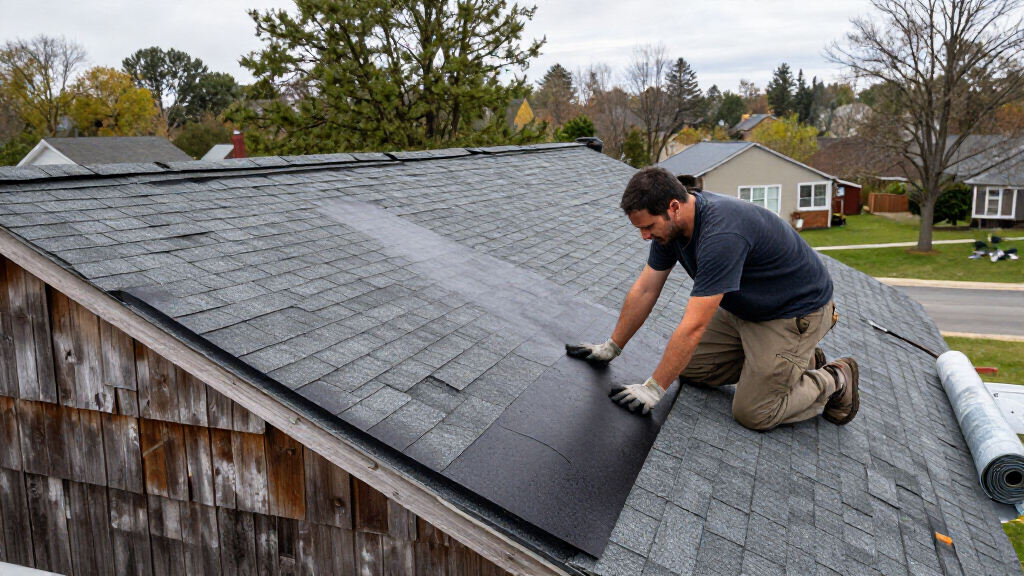

For a balanced choice among the best ice and water shields, I’d start with Henry Blueskin PE200HT, a high-temperature option for roofs where heat compatibility matters. FT Synthetics Platinum HT-B stands out for its specified 41-mil thickness, while Grace Select offers a smaller-format roll that may suit targeted repairs. The main tradeoffs are full-roof coverage versus patch-sized quantities, temperature requirements, and how much product a project needs. No single roll size or membrane suits every roof, so check the roof system and installation requirements before buying. Read on for the full comparison and guidance on matching a shield to your project.

Get business pricing on tools and workshop supplies
- Business-only prices and quantity discounts
- Tax-exempt purchasing
- Multiple users, one account, clear invoices
Complete the kit



Key Takeaways
- High-temperature use is a clear point of difference: Henry Blueskin PE200HT and FT Synthetics Platinum HT-B identify high-temperature suitability in their names, making them natural options to investigate for heat-exposed roof assemblies.
- Roll size changes the buying decision: full-size formats such as Grace Select’s 195-square-foot roll fit larger coverage needs better than BXI’s 13-inch-wide, 8.2-foot roll, which is geared toward small areas.
- Thickness is specified for only some picks: FT Synthetics Platinum HT-B lists a 41-mil thickness, giving buyers a concrete specification to compare against project requirements; the other listed product names do not provide the same detail.
- Pack quantity can outweigh unit convenience: HydroShield’s pallet of 30 is a bulk format, while its one-square roll is a different purchasing route; buyers should match the package to measured coverage and avoid ordering by name alone.
- Product category labels are not interchangeable: the lineup includes self-adhering underlayments, waterproofing membranes, and compact rolls, so confirm intended roofing use, compatibility, and installation instructions before treating a product as a direct substitute.
| Grip-Rite ShingleLayment HT Self-Adhering Synthetic Roofing Underlayment, 3 ft x 67 ft |  | Best for Slip-Resistant Installation | Manufacturer: Grip-Rite | Model: SL2SQHT | Material: Polypropylene | VIEW LATEST PRICE | See Our Full Breakdown |
| Henry Blueskin PE200HT High-Temperature Roof Underlayment, 3 ft x 65 ft |  | Best for High-Heat Roofing | Brand: Henry | Model: HE200HT916 | Material: Rubberized asphalt compound | VIEW LATEST PRICE | See Our Full Breakdown |
| DuPont Tyvek Protec PSU Peel-and-Stick Roofing Underlayment, Single Roll |  | Best for Broad Roofing Compatibility | Manufacturer: DuPont | Model: D15572172 | Roll dimensions: 3 ft x 67 ft | VIEW LATEST PRICE | See Our Full Breakdown |
| BXI SBS Modified Bitumen Waterproofing Membrane Roll, 13 in x 8.2 ft |  | Best for Small, Irregular Repair Areas | Brand: BXI | Material: SBS polymer-modified bitumen | Roll size: 13 in x 8.2 ft | VIEW LATEST PRICE | See Our Full Breakdown |
| FT Synthetics Platinum HT-B Self-Adhering Roofing Underlayment, 41 mil, 36 in. x 67 ft. |  | Best for Butyl Adhesion and Warm Roof Assemblies | Material: 100% butyl | Thickness: 41 mil | Roll dimensions: 36 in. x 67 ft. | VIEW LATEST PRICE | See Our Full Breakdown |
| MFM Ultra HT Wind & Water Seal Roofing Underlayment |  | Best for High-Temperature Roofing | Thickness: 45 mils | Material: Cross-laminated polymer film with rubberized asphalt adhesive | Maximum temperature: 250°F | VIEW LATEST PRICE | See Our Full Breakdown |
| GOOFCXO Self-Adhesive Waterproof Roofing Membrane Roll, 39 in x 16.4 ft |  | Best for Small Repairs and Mixed Roof Surfaces | Dimensions: 39 in x 16.4 ft | Coverage: 53.5 sq ft | Thickness: 1.5 mm | VIEW LATEST PRICE | See Our Full Breakdown |
| HydroShield Self-Adhering Ice & Water Shield Underlayment – 1.95 sq ft per roll, Pallet of 30 |  | Best for Bulk Roofing Projects | Roll width: 36 inches | Roll lengths: 33 ft or 65 ft | Coverage per roll: 100 sq ft for 33 ft roll; 195 sq ft for 65 ft roll | VIEW LATEST PRICE | See Our Full Breakdown |
| HydroShield Self-Adhering Ice and Water Shield Underlayment, 1-Square Roll | | Best for Standard Single-Roll Jobs | Roll width: 36 inches | Roll length: 33 feet | Coverage: 100 square feet | VIEW LATEST PRICE | See Our Full Breakdown |
| Grace Self-Adhering Ice and Water Shield Roof Underlayment (36 in x 75 ft – 35 Rolls) |  | Best for Re-Roofing Compatibility | Roll dimensions: 36 inches x 75 feet | Package quantity: 35 rolls | Manufacturer: Grace | VIEW LATEST PRICE | See Our Full Breakdown |
| MFM IB3 IceBuster Self-Adhering Underlayment, 3 ft x 65 ft |  | Best for Tough, High-Risk Roof Areas | Dimensions: 3 ft x 65 ft | Coverage: 195 sq ft (1.95 squares) | Roll weight: 65 lb | VIEW LATEST PRICE | See Our Full Breakdown |
| Grace Select Self-Adhering Roofing Underlayment, 36 in. x 195 sq. ft. |  | Best Lightweight Pick | Roll dimensions: 36 in. x 65 ft | Coverage: 195 sq ft | Thickness: 25 mil | VIEW LATEST PRICE | See Our Full Breakdown |
| ice and water shield | Coverage | Material | Thickness |
|---|---|---|---|
| Grip-Rite ShingleLayment HT Se | 201 sq. ft. | Polypropylene | — |
| Henry Blueskin PE200HT High-Te | 195 sq. ft. | Rubberized asphalt compound | — |
| DuPont Tyvek Protec PSU Peel-a | 200 sq. ft. (2 squares) | — | — |
| BXI SBS Modified Bitumen Water | 8.86 sq. ft. | SBS polymer-modified bitumen | 1/8 in |
| FT Synthetics Platinum HT-B Se | 200 sq. ft. | 100% butyl | 41 mil |
| MFM Ultra HT Wind & Water Seal | — | Cross-laminated polymer film with rubberized asphalt adhesive | 45 mils |
| GOOFCXO Self-Adhesive Waterpro | 53.5 sq ft | Polyethylene, geotextile fabric, and polymer adhesive film | 1.5 mm |
| HydroShield Self-Adhering Ice | — | — | — |
| HydroShield Self-Adhering Ice | 100 square feet | — | — |
| Grace Self-Adhering Ice and Wa | — | — | — |
| MFM IB3 IceBuster Self-Adherin | 195 sq ft (1.95 squares) | Mesh, asphalt, and granules | 50 mil |
| Grace Select Self-Adhering Roo | 195 sq ft | Butyl | 25 mil |
More Details on Our Top Picks
Grip-Rite ShingleLayment HT Self-Adhering Synthetic Roofing Underlayment, 3 ft x 67 ft
Grip-Rite earns this spot for buyers who want an ice-and-snow barrier with slip-resistant surfaces on both sides. Its self-adhering, self-sealing installation avoids a separate adhesive, while the treated surface allows up to 180 days of UV exposure during a prolonged project. Compared with Henry Blueskin PE200HT, this roll is lighter at 28 pounds, which may be easier to handle, but Henry specifies a higher service temperature of 260°F for demanding metal or tile applications. Grip-Rite is a more straightforward fit when traction and manageable handling matter more than a stated high-temperature rating. Its coverage is 201 square feet, though the supplied details do not list a service-temperature limit or warranty, so buyers with those requirements should check the product documentation before choosing it.
Pros:- Self-adhering, self-sealing design avoids a separate adhesive
- Slip-resistant top and base surfaces support safer handling
- UV treatment allows up to 180 days of exposure
- Provides ice and snow barrier protection across 201 square feet
Cons:- No maximum service temperature is provided in the supplied specifications
- No warranty details are provided
- The 3-foot roll format may require more seams than wider materials
Best for: Roofers and homeowners installing a self-adhered underlayment who value slip-resistant handling and need up to 201 square feet per roll.
Not ideal for: Buyers specifying an underlayment for especially hot metal roofs who need a published service-temperature rating, or projects requiring a documented warranty.
- Manufacturer:Grip-Rite
- Model:SL2SQHT
- Material:Polypropylene
- Roll size:3 ft x 67 ft
- Coverage:201 sq. ft.
- Weight:28 lb
- Installation:Self-adhering and self-sealing
- UV exposure:Up to 180 days
Our verdict“Choose Grip-Rite when slip-resistant handling and a self-sealing installation matter more than a published high-temperature rating.”
Henry Blueskin PE200HT High-Temperature Roof Underlayment, 3 ft x 65 ft
For roofs where heat exposure is the main concern, Henry Blueskin PE200HT stands out with a stated service temperature up to 260°F. That rating makes it a more clearly specified choice beneath metal or tile than Grip-Rite ShingleLayment HT, whose supplied details do not include a temperature limit. The rubberized asphalt membrane self-adheres and is designed to seal around fastener penetrations, helping defend the deck against ice dams and wind-driven rain. The tradeoff is substantial handling weight: at 51 pounds, this is the heaviest-feeling choice among the first three rolls listed here, compared with DuPont Tyvek Protec PSU at 43.7 pounds. Its 195-square-foot coverage is also slightly lower than those alternatives. It is a focused roof underlayment, not a general-purpose waterproofing membrane.
Pros:- Rated for service temperatures up to 260°F
- Self-adhered installation requires no separate adhesive
- Helps protect against ice dams and wind-driven rain
- Designed to self-seal around fastener penetrations
Cons:- The 51-pound roll can be cumbersome to lift and position
- Coverage is 195 square feet, less than Grip-Rite and DuPont by the listed figures
- Intended for sloped roofs rather than general-purpose waterproofing
Best for: Roofing crews and property owners installing metal or tile on sloped roofs who need a specified high-temperature membrane and fastener sealing.
Not ideal for: Solo installers or buyers seeking a lighter roll, broader non-roof uses, or more coverage per roll than the 195 square feet provided.
- Brand:Henry
- Model:HE200HT916
- Material:Rubberized asphalt compound
- Dimensions:3 ft x 65 ft
- Coverage:195 sq. ft.
- Service temperature:Up to 260°F
- Weight:51 lb
- Warranty:12-month limited warranty
Our verdict“Pick Henry Blueskin PE200HT for a sloped roof exposed to high temperatures when its heavy roll is manageable for the installation crew.”
DuPont Tyvek Protec PSU Peel-and-Stick Roofing Underlayment, Single Roll
DuPont Tyvek Protec PSU suits projects where one underlayment needs to work beneath several roof coverings. Its listed compatibility spans asphalt shingles, concrete tile, metal panels, shakes, and primed cedar shakes, giving it a wider stated material range than Henry Blueskin PE200HT’s general sloped-roof description. The peel-and-stick adhesive helps seal around fasteners in vulnerable areas such as eaves and valleys, while its slip-resistant surface supports roof work. A 30-year limited warranty and approvals including ASTM D1970 and Miami-Dade add documented qualifications absent from Grip-Rite’s supplied details. That breadth comes with installation limits: the stated application temperature is 40°F–120°F, and UV exposure is capped at 180 days. At 43.7 pounds, it is also not a lightweight roll.
Pros:- Compatible with several roofing materials, including metal, tile, shingles, and shakes
- Adhesive helps seal around fasteners in eaves and valleys
- Slip-resistant walking surface
- Lists ASTM D1970, FBC, HVHZ, and Miami-Dade approvals
Cons:- Installation temperature is limited to 40°F–120°F
- UV exposure limit is 180 days
- At 43.7 pounds, the roll is heavier than Grip-Rite’s 28-pound roll
Best for: Contractors working across multiple roof-covering types who want specified compatibility, code-related approvals, and a stated limited warranty.
Not ideal for: Crews installing outside the 40°F–120°F application range, or buyers who need more than 180 days of uncovered UV exposure.
- Manufacturer:DuPont
- Model:D15572172
- Roll dimensions:3 ft x 67 ft
- Coverage:200 sq. ft. (2 squares)
- Roof slope:2:12 and higher
- Installation temperature:40°F–120°F
- Maximum service temperature under metal roofing:240°F
- UV exposure limit:180 days
- Warranty:30-year limited warranty
Our verdict“Choose DuPont Tyvek Protec PSU when material compatibility and documented approvals outweigh its installation-temperature and UV limits.”
BXI SBS Modified Bitumen Waterproofing Membrane Roll, 13 in x 8.2 ft
BXI fills a different role from the full-width roof rolls: its 13-inch-wide, 8.2-foot roll is suited to targeted waterproofing around small or awkward areas rather than covering broad roof sections. The flexible SBS-modified bitumen can conform to corners and curves, and the product lists torch heating or waterproof glue as application methods. Its self-healing feature is intended to help seal minor damage, a useful distinction from the full-roof peel-and-stick products such as DuPont Tyvek Protec PSU. That versatility has limits for an ice-and-water-shield buyer: coverage is only 8.86 square feet, and torch application requires heating equipment and care. The description also notes an asphalt odor. I would treat it as a specialty patching membrane, not a direct substitute for a large-format underlayment roll.
Pros:- Flexible membrane can conform to corners and curved surfaces
- Self-healing feature helps seal minor damage
- Can be cut to fit small repair areas
- Rated for use at temperatures as low as -4°F
Cons:- Only 8.86 square feet of coverage per roll
- Torch application requires heating equipment and careful handling
- Product description notes an asphalt odor
Best for: Repair-minded buyers waterproofing small roof details, corners, or curved surfaces who can use torch equipment or suitable waterproof glue.
Not ideal for: Anyone covering eaves or large roof areas who needs broad coverage from a self-adhering roll without torch equipment.
- Brand:BXI
- Material:SBS polymer-modified bitumen
- Roll size:13 in x 8.2 ft
- Coverage:8.86 sq. ft.
- Thickness:1/8 in
- Weight:6.83 lb
- Application methods:Torch heating or waterproof glue
- Minimum temperature:-20°C (-4°F)
Our verdict“Choose BXI for small, shaped waterproofing repairs, not as the primary ice-and-water shield for a large roof.”
FT Synthetics Platinum HT-B Self-Adhering Roofing Underlayment, 41 mil, 36 in. x 67 ft.
FT Synthetics Platinum HT-B is the standout for buyers prioritizing a butyl membrane with high-temperature stability. Its stated maximum temperature stability of 265°F exceeds Henry Blueskin PE200HT’s 260°F service-temperature figure, although the two products use different stated temperature measures and should not be treated as identical ratings. The 41-mil membrane, nail-sealable surface, and watertight laps target the vulnerable points where fasteners and seams can admit water. A split release liner is intended to make placement easier, while compatibility includes metal, shingles, EPDM, and TPO. Compared with DuPont Tyvek Protec PSU, this product has a lower listed adhesion temperature of 32°F but does not provide the same range of listed roofing materials. Its 180-day UV limit also calls for timely roof covering.
Pros:- 100% butyl membrane with stated temperature stability up to 265°F
- Nail-sealable surface and watertight laps address common leak paths
- Split release liner is designed to assist placement
- Listed compatibility includes metal, shingles, EPDM, and TPO
Cons:- Requires a roof deck suitable for self-adhering application
- UV resistance is limited to 180 days
- The supplied data does not list approvals or installation-temperature range beyond adhesion down to 32°F
Best for: Roofing professionals selecting a butyl-based self-adhered membrane for compatible steep-slope assemblies, especially where high heat and sealed laps matter.
Not ideal for: Buyers whose roof deck is unsuitable for self-adhering membranes, or projects likely to remain exposed beyond 180 days.
- Material:100% butyl
- Thickness:41 mil
- Roll dimensions:36 in. x 67 ft.
- Coverage:200 sq. ft.
- Roll weight:40 lb
- Adhesion temperature:Down to 32°F
- Maximum temperature stability:265°F
- UV resistance:180 days
- Warranty:Limited lifetime
Our verdict“Choose Platinum HT-B when a butyl membrane, sealed laps, and high heat tolerance fit the roof assembly and installation schedule.”
MFM Ultra HT Wind & Water Seal Roofing Underlayment
The MFM Ultra HT is the clearest fit here for roofs where heat tolerance and traction both matter. Its 250°F maximum temperature suits asphalt-shingle and metal-roof applications that may run hot, while the non-slip polymer surface offers better footing during installation than a smooth membrane. Like the HydroShield rolls, it uses self-adhering material that seals around fasteners to help block water entry; unlike those options, its stated temperature ceiling is higher.
The tradeoff is a tighter installation schedule: the deck must be above 50°F, and the membrane needs roof covering within 90 days. That makes it less forgiving for cold-weather work or projects likely to sit exposed. I’d choose it over GOOFCXO for a main roofing underlayment, but not when low-temperature installation is the priority.
Pros:- Rated for temperatures up to 250°F, above the stated limit for the HydroShield options.
- Self-adhering material seals around fasteners to help limit water penetration.
- Non-slip polymer film provides traction during roof work.
- Flexible construction accommodates roof expansion and contraction.
Cons:- Installation requires temperatures above 50°F.
- Must be covered within 90 days after application.
Best for: Roofers installing metal or asphalt-shingle roofs in warm conditions who want a high heat limit and a grippy work surface.
Not ideal for: Crews working in temperatures of 50°F or below, or projects that may remain uncovered longer than 90 days.
- Thickness:45 mils
- Material:Cross-laminated polymer film with rubberized asphalt adhesive
- Maximum temperature:250°F
- Minimum installation temperature:Above 50°F
- Color:White
- Item weight:55 pounds
- Coverage requirement:Must be covered within 90 days
- Warranty:10-year limited warranty
Our verdict“Choose MFM Ultra HT for heat-exposed metal or shingle roofs when the job can meet its warm-weather installation and 90-day covering requirements.”
GOOFCXO Self-Adhesive Waterproof Roofing Membrane Roll, 39 in x 16.4 ft
For a localized repair rather than a full roof installation, the GOOFCXO membrane is the most manageable choice in this group. Its 39-inch-by-16.4-foot roll covers 53.5 square feet, a smaller quantity than either HydroShield roll, which can limit leftover material on patch jobs. The peel-and-stick application also needs no heating device, unlike systems that require heat during installation.
Its listed uses include metal and plastic panels as well as porch and other roofs, giving it broader surface flexibility than HydroShield’s stated shingle-roof focus. But the provided specifications do not give a service-temperature range, slope requirement, or fire classification, so I would not treat it as a specification-for-specification substitute for the approved HydroShield products on a regulated roof assembly. Adhesion also depends on a clean application surface.
Pros:- Smaller roll size is practical for repairs that do not need a full-roof quantity.
- Peel-and-stick installation requires no heating device.
- Listed for several surface types, including metal and plastic panels.
- Layered polyethylene, geotextile, and polymer construction is designed to remain flexible as surfaces move.
Cons:- The surface must be clean for reliable adhesion.
- The supplied product data does not state a fire classification or roofing approvals.
- No service-temperature range or roof-slope limit is specified in the product data.
Best for: DIYers and repair crews patching a limited area on a clean metal, plastic, porch, or similar roof surface.
Not ideal for: Buyers covering a large shingle roof or needing documented fire ratings, approvals, or a stated service-temperature range.
- Dimensions:39 in x 16.4 ft
- Coverage:53.5 sq ft
- Thickness:1.5 mm
- Material:Polyethylene, geotextile fabric, and polymer adhesive film
- Color:Grey
- Installation:Self-adhesive; no heating device required
- Recommended uses:Thermal insulation and sound insulation
- Model number:USC13-40893
Our verdict“Pick GOOFCXO for small, mixed-surface repairs where easy peel-and-stick application matters more than documented roof-system ratings.”
HydroShield Self-Adhering Ice & Water Shield Underlayment – 1.95 sq ft per roll, Pallet of 30
The strongest reason to choose this HydroShield pallet is project-scale supply: the listed configuration includes 30 rolls of 65-foot material, each covering 195 square feet. That is more suited to repeat installation across a large roof than the single 100-square-foot HydroShield roll. Its split-back liner can also make positioning and peeling easier as crews work across the roof, while fastener-sealing adhesive helps guard against water entry.
It shares the HydroShield line’s stated operating range of -40°F to 200°F and Class A fire resistance, but its exposure window is limited to 60 days. The product information also lists two roll lengths and pallet quantities, so buyers should confirm the exact configuration before ordering; the title’s per-roll coverage conflicts with the detailed roll-size specifications. Compared with MFM Ultra HT, its maximum stated temperature is lower, though its cold-weather range is explicitly specified.
Pros:- Pallet quantities support larger projects with matching material on hand.
- Self-adhering layer seals around nails and fasteners.
- Split-back release liner supports easier handling during installation.
- Stated -40°F to 200°F service range and Class A fire resistance.
Cons:- Must be covered within 60 days of UV exposure.
- Requires a roof slope of 2:12 or greater.
- Product title and detailed specifications give conflicting coverage information, so the roll configuration needs verification.
Best for: Roofing contractors or property teams buying multiple matching rolls for a large shingle-roof project with a slope of at least 2:12.
Not ideal for: Small repair jobs, buyers needing a longer uncovered period, or anyone who cannot verify the intended pallet and roll configuration before purchase.
- Roll width:36 inches
- Roll lengths:33 ft or 65 ft
- Coverage per roll:100 sq ft for 33 ft roll; 195 sq ft for 65 ft roll
- Pallet quantity:42 rolls of 33 ft or 30 rolls of 65 ft
- Service temperature range:-40°F to 200°F
- Roof slope requirement:2:12 or greater
- UV exposure limit:60 days
- Approvals:Florida Building Code; Miami-Dade County NOA 16-0607.08; TDI listed
Our verdict“Choose the HydroShield pallet for large qualifying roofs when bulk supply is useful and you can confirm roll coverage before ordering.”
HydroShield Self-Adhering Ice and Water Shield Underlayment, 1-Square Roll
This one-square HydroShield roll is a practical match for a smaller roof section or a project where a full pallet would be excessive. Its 100-square-foot coverage is clearly stated, and the sand-based surface adds footing during installation—a useful distinction from MFM Ultra HT’s polymer-film surface. Both products use self-adhering construction and seal around fasteners, but HydroShield supplies more explicit roof-system data, including Class A fire resistance and named standards and approvals.
The limits are straightforward: it is specified for slopes of 2:12 or greater and permits only 60 days of UV exposure. That calls for prompt roof covering, not an extended staging period. The 35-pound roll may also be less convenient to handle than GOOFCXO’s smaller repair roll. I’d favor this option over the bulk HydroShield pallet when the job needs one standard roll rather than a large quantity.
Pros:- One 100-square-foot roll is suited to smaller jobs than the HydroShield pallet.
- Sand-based surface provides grip during installation.
- Split-back release liner supports easier handling and application.
- Class A fire resistance and multiple listed standards and approvals.
Cons:- UV exposure is limited to 60 days.
- Specified for roof slopes of 2:12 or greater.
- At 35 pounds, the roll is less convenient for a small patch than GOOFCXO’s shorter roll.
Best for: Roofers handling a modest shingle-roof section who want a single 100-square-foot roll with stated fire classification and approvals.
Not ideal for: Projects on roofs below a 2:12 slope, jobs likely to remain exposed beyond 60 days, or repairs needing only a small patch quantity.
- Roll width:36 inches
- Roll length:33 feet
- Coverage:100 square feet
- Weight:35 pounds
- Roof slope:2:12 or greater
- UV exposure limit:60 days
- Service temperature:-40°F to 200°F
- Fire resistance and standards:Class A; ASTM D1970; ICC-ESR-1930; ASTM E108 / UL 790
Our verdict“Choose this HydroShield roll for a modest roof section when its 2:12 slope requirement and 60-day exposure limit fit the schedule.”
Grace Self-Adhering Ice and Water Shield Roof Underlayment (36 in x 75 ft – 35 Rolls)
The Grace underlayment stands apart for a specific re-roofing advantage: it is described as not adhering to the underside of existing roofing, which can help when a roof is covered again later. Its aggressive rubberized asphalt adhesive forms a watertight seal, and the ripcord split release is intended to simplify placement. Compared with HydroShield’s single roll, this listing is a much larger package, so it makes more sense for a substantial project than a small repair.
The stated compatibility with most roof coverings, including shingles, tile, and metal, gives it broad application, but the product data does not provide a service-temperature range, UV exposure limit, or named approvals. Those gaps make it harder to compare on documented performance against HydroShield or MFM Ultra HT. The deck also needs to be clean and dry, and the large roll format can be cumbersome to position.
Pros:- Designed for re-roofing without adhering to the underside of existing roofing.
- Aggressive rubberized asphalt adhesive forms a watertight seal.
- Ripcord split release supports easier on-site application.
- Listed as suitable for shingles, tile, and metal coverings.
Cons:- Requires a clean, dry deck for proper adhesion.
- Large roll package can be cumbersome to handle.
- The supplied specifications do not state a service-temperature range, UV exposure limit, or named approvals.
Best for: Roofing crews planning a larger re-roofing project across common roof coverings and seeking an underlayment designed not to bond to the old roofing underside.
Not ideal for: Small repair buyers, installers needing a specified temperature or UV exposure rating, or crews working with a wet or dirty roof deck.
- Roll dimensions:36 inches x 75 feet
- Package quantity:35 rolls
- Manufacturer:Grace
- Part number:652
- Color:Black
- Item weight:34 pounds
- Product dimensions:16 x 12 x 6 inches
- Adhesive and backing:Rubberized asphalt adhesive with high-density polyethylene film
Our verdict“Choose Grace for a larger re-roofing job where compatibility with existing roofing is the priority and the deck is clean and dry.”
MFM IB3 IceBuster Self-Adhering Underlayment, 3 ft x 65 ft
The MFM IB3 IceBuster is the stronger fit when added membrane thickness and a mineral-granule surface matter more than easy handling. At 50 mils, it is twice as thick as Grace Select’s 25-mil membrane, a useful distinction for roofers protecting vulnerable eaves, valleys, and penetrations. Its mesh-reinforced, rubberized asphalt construction self-adheres and seals around common fasteners, helping limit leak paths beneath the finished roofing. The 195-square-foot roll also covers the same area as Grace Select, but weighs 65 pounds compared with 33, so moving and positioning it takes more effort. Installation has firm limits: the roof slope must be at least 2 inches per foot, and the temperature must be above 40°F. I’d choose it for demanding details, not for cold-weather work or crews prioritizing a lightweight roll.
Pros:- 50-mil thickness offers a heavier membrane than Grace Select’s 25-mil option
- Self-adhering construction seals around common fasteners
- Mineral-granule surface suits use beneath shingles and other roofing
- Listed compliance includes ASTM D 1970 and multiple regional approvals
Cons:- Installation requires temperatures above 40°F
- Requires a minimum roof slope of 2 inches per foot
- At 65 pounds per roll, it is substantially heavier than Grace Select
Best for: Roofing crews protecting eaves, valleys, and roof penetrations who want a thicker, granule-surfaced membrane and can install above 40°F.
Not ideal for: DIY installers working in cool conditions or on roofs below a 2-in-12 slope, and crews who need a lightweight roll that is easier to handle.
- Dimensions:3 ft x 65 ft
- Coverage:195 sq ft (1.95 squares)
- Roll weight:65 lb
- Item weight:59 lb
- Thickness:50 mil
- Material:Mesh, asphalt, and granules
- Minimum installation slope:2 in per foot
- Installation temperature:Above 40°F
- Code compliance:ASTM D 1970; Florida Building Code FL#11842.1; Miami-Dade County Approved; ICC-ES ESR-1737; LA County; California; Texas Department of Insurance
Our verdict“Choose IceBuster for thicker protection on vulnerable roof details when the installation conditions meet its temperature and slope limits.”
Grace Select Self-Adhering Roofing Underlayment, 36 in. x 195 sq. ft.
Grace Select makes sense for installers who want a full 195-square-foot roll without the heft of MFM IB3 IceBuster. At 33 pounds, it is 32 pounds lighter than the MFM roll, making it easier to carry and position on a roof. Its self-adhesive butyl membrane is designed to seal around roofing nails, while the slip-resistant surface helps with footing during application. It also protects against wind, rain, and ice dams beneath most roofing materials. The tradeoff is thickness: at 25 mils, it is notably thinner than IceBuster’s 50-mil membrane, so buyers seeking the heavier build should favor MFM. Grace Select also allows only up to 30 days of UV exposure, which calls for coordinating installation with the roofing schedule.
Pros:- 33-pound roll is easier to carry and position than MFM IB3 IceBuster
- Slip-resistant surface supports steadier installation
- Self-adhesive membrane is designed to seal around roofing nails
- Provides 195 sq ft of coverage per roll
Cons:- 25-mil thickness is less than half of MFM IB3 IceBuster’s 50 mils
- UV exposure is limited to up to 30 days
- Requires a self-adhesive installation rather than a mechanically fastened method
Best for: Roofing installers and DIYers who want a lighter, easier-to-handle full-coverage roll and can cover the membrane within its UV exposure window.
Not ideal for: Buyers prioritizing a thicker membrane like MFM IB3 IceBuster, or projects where the underlayment may remain exposed to sunlight for more than 30 days.
- Roll dimensions:36 in. x 65 ft
- Coverage:195 sq ft
- Thickness:25 mil
- Weight:33 lb
- Material:Butyl
- Installation type:Self-adhesive
- UV exposure:Up to 30 days
- Model number:5003200
Our verdict“Pick Grace Select when lighter handling and a slip-resistant surface matter more than the thicker construction of MFM IB3 IceBuster.”

How We Picked
I organized the ranking around the decisions that most affect an ice-and-water-shield purchase: intended roofing use, stated temperature suitability, available roll or package format, and the clarity of product specifications. I also weighed how practical each option appears for its likely project scale, from broad roof coverage to localized work. Product names and supplied specifications are not enough to establish compatibility with every roof assembly, so I avoid treating similar labels as proof of identical performance.
The order favors options with a clearer match to common roofing needs and more decision-useful details, then separates specialty and compact formats from full-size rolls. High-temperature labeling and explicit thickness information help distinguish products where those characteristics are stated. Smaller rolls and bulk packs can be useful, but they rank lower for general use because their package format narrows the buyer pool. Before installation, I’d check current manufacturer documentation, local code requirements, roof-system compatibility, and application instructions.
Factors to Consider When Choosing Best Ice And Water Shields
Choosing a shield is not just a matter of picking a familiar brand or the largest roll. I’d first match the product to the roof assembly and project scope, then check the details that can affect installation and coverage.
Match Temperature Suitability to the Roof Assembly
Roof surfaces can experience different heat conditions depending on roof design, ventilation, color, and the materials installed above the underlayment. A product labeled for high-temperature use may be a better candidate where the assembly calls for that characteristic, but the label alone does not confirm compatibility with every roofing material. Check the membrane maker’s technical documentation and the roofing manufacturer’s requirements together. Do not infer a temperature limit from a product name if the specification is not provided. A mismatch can affect the suitability of the whole roof assembly, not just the underlayment. If the project has unusual heat exposure, confirm the approved system with the roofing manufacturer or installer before ordering.
Calculate Coverage Before Comparing Roll Formats
Measure the areas that actually need protection, including overlaps and any extra material required by the installation instructions. Nominal roll dimensions do not always equal the usable area after overlaps, cuts, or detailing. A compact roll may make sense for a repair or narrow section, but it can create excess seams and handling work across a broad roof. A large roll reduces the number of packages for a bigger job, though it may leave more unused material if the scope is small. Compare net coverage per package rather than relying on labels such as “one square.” Confirm whether that term refers to a defined coverage area or a package description, and verify the current product listing.
Check the Roof System and Substrate Requirements
Self-adhering membranes rely on the specified surface preparation and application conditions, so the substrate matters as much as the membrane itself. Look for instructions covering acceptable deck materials, primer use, surface dryness, temperature during application, and storage. Do not assume that two peel-and-stick products can be layered together or substituted without checking compatibility. The chosen underlayment also needs to work with the roof covering and any other membranes in the assembly. For replacement work, identify what is already installed before adding a new layer. When documentation is unclear, ask the manufacturer or a qualified roofer rather than guessing at a product pairing.
Treat Thickness and Other Specifications as Evidence, Not a Verdict
A stated thickness gives buyers one concrete point of comparison, but it cannot describe every part of a membrane’s performance or installation behavior. Compare the full technical data sheet, including the intended use and any listed physical properties, instead of choosing by one number. If a product listing omits a specification, do not assume it matches a competing product. Ask for the manufacturer’s current documentation before making a decision that depends on that detail. This is especially useful when a contractor’s specification names a particular product or performance characteristic. A clear match to the roof requirement matters more than a single attractive spec.
Choose Package Size for the Work, Not Just the Project Label
Bulk packaging can be convenient for repeat work or a large roof, but it can be a poor fit for a small repair if unused rolls cannot be stored or returned. Small packages lower the amount of material bought at once, though they may require more joins and more time to place over a large area. Confirm the number of rolls, total coverage, and whether the package includes the same product variant you intended to order. Listings can present a single roll, a multi-roll case, or a pallet under similar product names. Check dimensions and quantities on the current listing and compare them with your measured needs. Plan for cuts and overlaps without ordering so much that leftover material becomes a disposal problem.
Frequently Asked Questions
Can I use any self-adhering underlayment as an ice and water shield?
No. Product names can describe overlapping categories, but that does not make every self-adhering underlayment suitable for every ice-barrier application. Check the manufacturer’s stated intended use, technical data, and installation instructions for the exact product. Then compare those requirements with local codes and the roof design. If the project specification calls for a particular type of membrane, do not substitute based only on a similar label. Ask the roofing manufacturer or installer when the product’s role is unclear.
How do I decide between a full-size roll and a small-format roll?
Start with the measured area, then account for overlaps, cuts, and the layout required by the manufacturer. A full-size roll is generally easier to plan for broad coverage because it reduces the number of packages and seams. A compact roll may be more practical for a repair or a limited detail where a large roll would leave substantial unused material. Compare total usable coverage rather than the package name, and verify the actual roll dimensions. If the work spans several roof sections, ask the installer to estimate material needs before purchasing.
Should I choose a high-temperature product for every roof?
Not automatically. High-temperature labeling is relevant when the roof assembly or roofing manufacturer calls for that property, but it does not replace checking compatibility with the other materials. Review the roof system requirements and the membrane’s technical documentation before choosing. Other factors, such as deck preparation and application conditions, still affect whether the product is a fit. If you cannot confirm the needed temperature characteristics, get guidance from the roofing manufacturer or a qualified roofer rather than relying on a product title.
Is a thicker membrane always the better choice?
No. Thickness can help with comparison, but a single measurement does not establish that a membrane is better suited to a particular roof. Check the complete set of specifications and confirm that the product meets the project’s stated requirements. A thicker option may not be the right match if it is incompatible with the roof covering, substrate, or installation method. Also compare package size and handling needs, since a product that suits the roof on paper still has to be practical to install. Use manufacturer data and project specifications as the deciding references.
What should I verify before buying a multi-roll or pallet package?
Confirm the exact product variant, roll dimensions, quantity, and total coverage in the package. Then compare that figure with the measured project area after allowing for overlaps and cuts. Check whether the package is sold as a pallet, a case, or individual rolls, since similar listings can make quantities easy to misread. Think about delivery access and where the rolls will be stored before they are installed. If the job is small or the schedule is uncertain, a bulk package may leave more leftover material than a single-roll option.
Conclusion
For the best overall starting point, I’d compare Henry Blueskin PE200HT against the roof assembly’s requirements, especially where high-temperature suitability is called for. Best for a specified thickness is FT Synthetics Platinum HT-B, whose listed 41-mil detail gives buyers a concrete spec to investigate. For a smaller job, Grace Select or the compact BXI roll may be easier to match to limited coverage, while HydroShield’s pallet format is more suited to buyers with a defined bulk need. Best for beginners is not a universal product: I’d recommend choosing the option with the clearest manufacturer instructions and a package size that matches the measured area, then confirming compatibility with a roofer. For a specific high-temperature requirement, focus on products labeled for that use and verify the technical documentation before purchase. The safest choice is the one that fits the roof system, project quantity, and installation instructions—not simply the one with the broadest-sounding name.