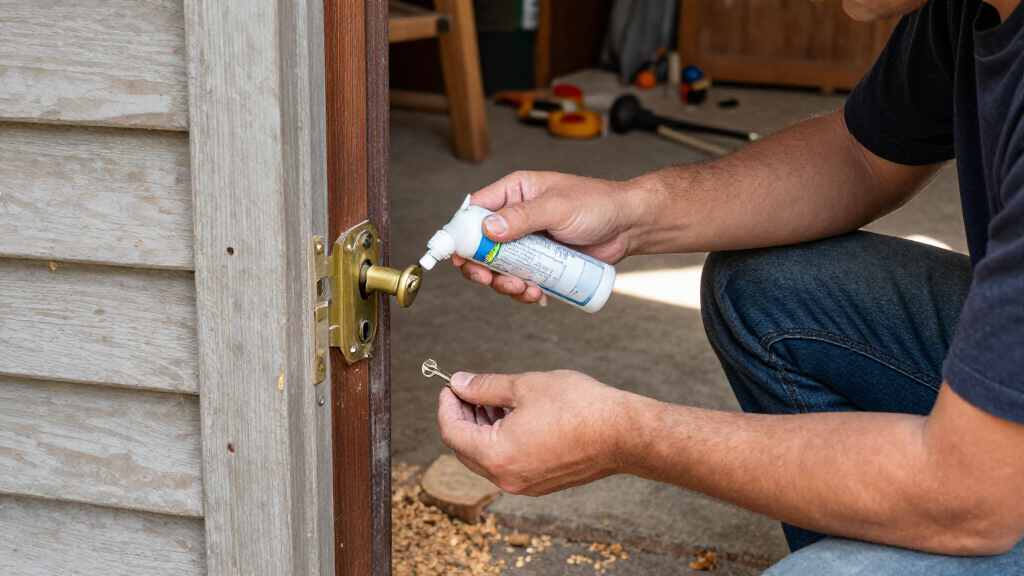

Sticking locks are frustrating, but the wrong lubricant can make them worse by attracting dust or gumming up internal pins. For most homeowners seeking a reliable fix, the 3-IN-ONE Lock Dry Lube Spray stands out as the best overall choice because it repels moisture without leaving a sticky residue. If you prefer a traditional approach for older brass mechanisms, the AGS Lock-Ease Graphite Lock Lubricant Spray offers excellent penetration, though it can be messy. The main tradeoff in this category is between cleanliness and longevity; dry lubricants stay cleaner but may need more frequent reapplication, while oil-based products last longer but attract grime over time. Continue reading to see which of these 13 options fits your specific hardware and maintenance preferences.

Get business pricing on tools and workshop supplies
- Business-only prices and quantity discounts
- Tax-exempt purchasing
- Multiple users, one account, clear invoices
Complete the kit



Key Takeaways
- Dry lubricants like PTFE-based sprays outperform graphite for modern cylinder locks by reducing friction without accumulating debris.
- Oil-based lubricants are superior for high-usage commercial hinges but require regular cleaning to prevent gumming in tight lock mechanisms.
- Precision applicators, such as needle oilers and fine straws, are critical for getting lubricant onto internal pins rather than just the exterior keyway.
- Graphite remains the best choice for cold climates or locks exposed to rain because it does not freeze or wash away like some silicone blends.
- Multi-use general lubricants often contain solvents that can damage plastic internal components, making dedicated lock lubricants a safer long-term investment.
| BTAS Door Hinge and Lock Lubricant Oil, 1 oz |  | Best for Precise, Small-Scale Application | Product type: Liquid lubricant oil | Volume: 1 fl oz (30 mL) | Material: Mineral oil | VIEW LATEST PRICE | See Our Full Breakdown |
| 3-IN-ONE Lock Dry Lube Spray, 2.5 oz |  | Best for a Dust-Repelling Dry Finish | Brand: WD-40 | Model: 12007 | Form: Spray | VIEW LATEST PRICE | See Our Full Breakdown |
| 3-IN-ONE Lock Dry Lube, 2.5 oz |  | Best for Stuck Locks and Narrow Access | Container: Can | Form: Spray | Volume: 2.5 fl oz | VIEW LATEST PRICE | See Our Full Breakdown |
| WD-40 Specialist Dry Lube, 12.1 oz | 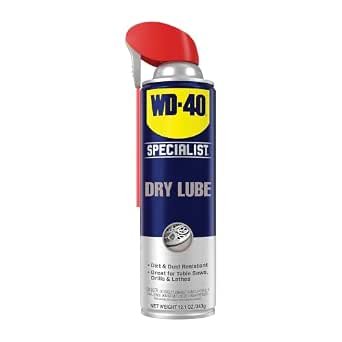 | Best for High-Volume Dry Lubrication | Container: Can | Form: Spray | Volume: 12.1 oz | VIEW LATEST PRICE | See Our Full Breakdown |
| ABUS PS88 Lock Lubricating Spray, 50 ml |  | Best for Lock-Focused, Propellant-Free Use | Model: PS88 | Volume: 50 ml (1.69 fl oz) | Container: Can | VIEW LATEST PRICE | See Our Full Breakdown |
| AGS Lock-Ease Graphite Lock Lubricant Spray, 3 oz |  | Best for Dust-Prone Environments | Brand: AGS | Form: Aerosol spray | Unit Count: 3 oz | VIEW LATEST PRICE | See Our Full Breakdown |
| Houdini Lock Lube, 11 oz, Set of 2 |  | Best Multi-Pack Value | Brand: FranGoo | Container type: Can | Item form: Liquid | VIEW LATEST PRICE | See Our Full Breakdown |
| LiquidFix Door, Lock & Hinge Lubricant, 4 oz Dropper with 0.5 oz Needle Oiler |  | Best for Precision Application | Brand: LIQUIDFIX | Included Components: 4 oz dropper bottle, 0.5 oz needle oiler | Total Liquid Volume: 4.5 fluid ounces | VIEW LATEST PRICE | See Our Full Breakdown |
| Houdini Lock Lube Professional Lubricant Spray, 11 oz |  | Best for Electronic and Sensitive Locks | Container Type: Can | Form: Spray | Liquid Volume: 11 fluid ounces | VIEW LATEST PRICE | See Our Full Breakdown |
| Hillman 703185 Graphite Lock Lubricant, 3 g |  | Best Compact Pocket Solution | Container Type: Tube | Material: Graphite | Compatible Material: Metal | VIEW LATEST PRICE | See Our Full Breakdown |
| WD-40 Specialist Silicone Lubricant, 13.3 oz |  | Best for Multi-Surface Applications | Brand: WD-40 Specialist | Form: Spray | Volume: 13.3 fl oz | VIEW LATEST PRICE | See Our Full Breakdown |
| AGS Company Mr. Zip Extra Fine Dry Graphite Lubricant, 1.76 oz |  | Best for Dust-Resistant Lock Maintenance | Brand: AGS Rust Solutions | Form: Powder | Liquid Volume: 1.76 fluid ounces | VIEW LATEST PRICE | See Our Full Breakdown |
| Qucship Door Hinge Lubricant Kit, 5 fl oz |  | Best for Extreme Weather Resistance | Brand: Qucship | Item form: Liquid | Total volume: 5 fl oz | VIEW LATEST PRICE | See Our Full Breakdown |
| door lock lubricant | Form | Material | Compatible material | Brand |
|---|---|---|---|---|
| BTAS Door Hinge and Lock Lubri | — | Mineral oil | Metal | — |
| 3-IN-ONE Lock Dry Lube Spray | Spray | Polytetrafluoroethylene (PTFE) | — | WD-40 |
| 3-IN-ONE Lock Dry Lube | Spray | Heptane | — | — |
| WD-40 Specialist Dry Lube | Spray | — | Metal | — |
| ABUS PS88 Lock Lubricating Spr | Spray | — | Metal | — |
| AGS Lock-Ease Graphite Lock Lu | Aerosol spray | — | — | AGS |
| Houdini Lock Lube | — | Polytetrafluoroethylene | — | FranGoo |
| LiquidFix Door | Liquid | — | Metal | LIQUIDFIX |
| Houdini Lock Lube Professional | Spray | Composite | Metal | — |
| Hillman 703185 Graphite Lock L | — | Graphite | Metal | — |
| WD-40 Specialist Silicone Lubr | Spray | — | — | WD-40 Specialist |
| AGS Company Mr. Zip Extra Fine | Powder | Plastic | — | AGS Rust Solutions |
| Qucship Door Hinge Lubricant K | — | Polytetrafluoroethylene | Metal | Qucship |
More Details on Our Top Picks
BTAS Door Hinge and Lock Lubricant Oil, 1 oz
The needle spout and low-viscosity mineral oil make this a practical choice when I want to target a single lock cylinder or hinge without spraying the surrounding area. Unlike 3-IN-ONE Lock Dry Lube Spray, BTAS leaves an oil-based lubricant rather than a dry film, which may suit metal parts where a wet lubricant is preferred. The formula is also described as providing rust and wear protection, and its listed uses extend to tools and other metal-on-metal parts. The tradeoff is the small 1 oz bottle: it is better for occasional household touch-ups than treating many locks or maintaining equipment regularly. I would also plan to wipe away excess oil, so application takes a little cleanup.
Pros:- Needle spout helps direct oil into small lock and hinge areas.
- Low-viscosity mineral oil is intended for metal-on-metal moving parts.
- Product description states that it helps protect against rust and wear.
- Can also be used on listed items such as tools, drawers, and bicycle components.
Cons:- The 1 oz volume may run out quickly with frequent or broad use.
- Excess oil should be wiped away after application.
- Wet oil does not offer the residue-free dry finish described for 3-IN-ONE Lock Dry Lube Spray.
Best for: Homeowners who want to apply lubricant precisely to an occasional sticky lock or squeaky hinge, with one small bottle for other metal parts.
Not ideal for: People maintaining many locks or seeking a dry, dust-repelling finish; the bottle is small and the oil may need to be wiped from surrounding surfaces.
- Product type:Liquid lubricant oil
- Volume:1 fl oz (30 mL)
- Material:Mineral oil
- Viscosity:Low; SAE 0W
- Flash point:200 °C
- Compatible material:Metal
- Container:Bottle with needle spout
- Model number:OIL-01
Our verdict“I would choose BTAS for occasional, carefully targeted lubrication of household locks and hinges, but not for a large maintenance routine or a dry finish.”
3-IN-ONE Lock Dry Lube Spray, 2.5 oz
A PTFE-based dry film is the main reason I would pick this for locks exposed to dust: the product description says its residue-free finish helps repel dirt while reducing friction. Compared with the oil-based BTAS Door Hinge and Lock Lubricant Oil, this spray is aimed at buyers who want lubrication without leaving an oily surface. It is listed for locks, hinges, and padlocks across home, automotive, commercial, and marine settings, giving it broader stated use than a lock-only spray. The 2.5 oz aerosol is compact, but it will not suit someone who wants a larger supply for repeated jobs. Its listed 0W SAE J300 viscosity grade is also an unclear detail for a lock lubricant, so I would focus on the stated PTFE dry-film use rather than that grade.
Pros:- PTFE formula is described as leaving a residue-free dry finish.
- Dry finish helps repel dirt and dust around locks.
- Listed for locks, hinges, and padlocks.
- Stated uses include home, automotive, commercial, and marine settings.
Cons:- The 2.5 oz can may be limiting for frequent or widespread maintenance.
- Spray application may be less precise than BTAS’s needle-spout bottle.
- The listed 0W SAE J300 viscosity grade is unclear for this lock-lubricant use.
Best for: People with dusty entryways, workshops, or padlocks who want a compact spray that leaves a dry, dirt-repelling finish.
Not ideal for: Buyers who need a large-volume can or prefer a precisely placed drop of wet oil, as this is a small aerosol dry lubricant.
- Brand:WD-40
- Model:12007
- Form:Spray
- Volume:2.5 fl oz
- Material:Polytetrafluoroethylene (PTFE)
- Recommended uses:Automotive, marine, and commercial
- Specific use:Cleaning, lubricating, and protecting locks
Our verdict“I would choose this 3-IN-ONE spray for a small set of locks where a dry, dust-repelling PTFE finish matters more than pinpoint liquid application.”
3-IN-ONE Lock Dry Lube, 2.5 oz
Penetration and application flexibility set this 3-IN-ONE apart: its quick-drying spray is described as reaching into stuck mechanisms, while the attachable straw can direct it into a narrow keyway. That makes it a stronger fit for a jammed padlock or hard-to-reach mechanism than BTAS Door Hinge and Lock Lubricant Oil, whose needle spout is precise but whose product description centers on general metal lubrication. The spray is also listed for home, automotive, marine, and commercial use, and leaves a corrosion-protective film. The tradeoffs are the aerosol format and its material exclusions: it is not suitable for clear polycarbonate or polystyrene. Without the straw, the wider spray pattern can spread beyond a small lock, so I would use the included attachment for targeted work.
Pros:- Quick-drying formula is described as penetrating lock mechanisms.
- Attachable straw helps target narrow mechanisms.
- Leaves a corrosion-protective film according to the product description.
- Listed for home, automotive, marine, commercial, and padlock use.
Cons:- The broader spray pattern can be imprecise without the straw.
- Not suitable for clear polycarbonate or polystyrene.
- Aerosol application offers less drop-by-drop control than BTAS’s needle bottle.
Best for: People trying to loosen a sticking padlock or reach a recessed lock mechanism with a directed spray.
Not ideal for: Buyers who need a non-aerosol or drop-by-drop application, or who plan to use lubricant near clear polycarbonate or polystyrene.
- Container:Can
- Form:Spray
- Volume:2.5 fl oz
- Viscosity:Low
- Material:Heptane
- Compatible materials:Metal, wood, and most plastics; excludes clear polycarbonate and polystyrene
- Recommended uses:Marine, automotive, commercial, home, and padlock mechanisms
- Application feature:Attachable straw and wider spray pattern
Our verdict“I would pick this for a stuck or hard-to-reach lock when directed aerosol penetration is more useful than the precise oil delivery of BTAS.”
WD-40 Specialist Dry Lube, 12.1 oz
The 12.1 oz can gives this dry lubricant a different job from the smaller lock-focused sprays: it makes more sense for maintaining several locks alongside tracks, tools, and machinery. Its clean, dry film is described as resisting dust and dirt while reducing friction and wear, a useful contrast with BTAS Door Hinge and Lock Lubricant Oil, which leaves an oil-based lubricant and comes in a 1 oz bottle. WD-40 Specialist is listed for metal and named metals including aluminum, nickel, and stainless steel, with corrosion protection also stated. The limitation is its broader maintenance focus: the product data does not describe lock-specific penetration features or a needle applicator. I would skip it for anyone seeking a wet lubricant or highly controlled delivery into one small keyway.
Pros:- 12.1 oz volume suits repeated maintenance better than 2.5 oz lock sprays.
- Dry film is described as resisting dirt and dust.
- Designed to reduce friction and wear on moving parts.
- Product description states that it helps protect metal parts from corrosion.
Cons:- Dry-film lubrication may not fit applications where a wet lubricant is preferred.
- Its listed uses are broader maintenance tasks rather than lock-specific mechanisms.
- The supplied product data does not list a precision straw or needle applicator.
Best for: Property managers, workshop owners, or homeowners maintaining multiple metal locks and other moving parts who want a larger-volume dry spray.
Not ideal for: Someone treating one small lock who needs pinpoint application, or a buyer specifically seeking a wet lubricant for metal parts.
- Container:Can
- Form:Spray
- Volume:12.1 oz
- Compatible material:Metal
- Named compatible materials:Aluminum, nickel, and stainless steel
- Recommended uses:Automotive, industrial, machinery maintenance, and tools
- Number of items:1
Our verdict“I would choose WD-40 Specialist Dry Lube for repeated dry lubrication across multiple metal items, not for a single lock needing precise treatment.”
ABUS PS88 Lock Lubricating Spray, 50 ml
Lock-specific use and no propellant gas give the ABUS PS88 a distinct place in this lineup. It is intended for keyholes, padlocks, tools, and car locks, and the low-viscosity spray is described as loosening sticking mechanisms while helping protect metal from corrosion, moisture, and freezing. Compared with the broader-use WD-40 Specialist Dry Lube, PS88 is more directly focused on locks and small metal mechanisms; its 50 ml container is also easier to keep with lock-maintenance supplies than a large shop can. The tradeoff is narrow scope: the product is designed primarily for locks and metal components, not a general-purpose lubricant for many household moving parts. Its small volume may also be limiting for anyone maintaining a large group of locks.
Pros:- Designed for keyholes, padlocks, tools, and car locks.
- Low-viscosity formula is intended to loosen sticking mechanisms.
- Product description states protection against corrosion, moisture, and freezing.
- Contains no propellant gas.
Cons:- Primarily intended for locks and metal components rather than broad household lubrication.
- The 50 ml volume may be insufficient for frequent treatment of many locks.
- Unlike WD-40 Specialist Dry Lube, it is not presented as a larger-volume option for machinery and tracks.
Best for: Drivers, property owners, and padlock users who want a compact, lock-focused spray with no propellant gas.
Not ideal for: People seeking one lubricant for broad household or workshop use, or maintaining many locks with a single small container.
- Model:PS88
- Volume:50 ml (1.69 fl oz)
- Container:Can
- Form:Spray
- Viscosity:Low
- Compatible material:Metal
- SAE J300 viscosity grade:15W
- Propellant gas:None
Our verdict“I would choose ABUS PS88 for compact, lock-centered maintenance, especially where its propellant-free formula and stated moisture protection fit the job.”
AGS Lock-Ease Graphite Lock Lubricant Spray, 3 oz
This dry graphite spray stands out because its water-free film does not attract dust or grime, a common issue with oil-based alternatives. Unlike the WD-40 Specialist Dry Lube, which uses a different carrier, the AGS formula creates a barrier that specifically combats freezing and moisture buildup in exterior locks. It is an excellent choice for homeowners dealing with sticky keyways in harsh weather conditions. However, the packaging is confusing; the unit count says 3 ounces, but the liquid volume is listed as 1 fluid ounce, which might make you feel short-changed on product quantity. Compared to the Hillman Graphite Lock Lubricant, this spray covers a wider area but lacks the precise tip needed for very narrow keyholes.
Pros:- Dry graphite film repels dust and grime effectively
- Protects against freezing, moisture, and rust
- Versatile for hinges and delicate mechanisms
Cons:- Confusing labeling regarding volume vs. unit count
- Spray application is less precise than tube options
Best for: Homeowners with exterior deadbolts or padlocks exposed to dust, rain, or freezing temperatures.
Not ideal for: Users who need precise application inside a tight keyhole, as the spray pattern can be too broad.
- Brand:AGS
- Form:Aerosol spray
- Unit Count:3 oz
- Liquid Volume:1 fluid ounce
- Item Weight:5 ounces
- Container Type:Can
- Recommended Use:Automotive
Our verdict“A robust choice for weather-exposed locks that need protection from the elements rather than precision tuning.”
Houdini Lock Lube, 11 oz, Set of 2
Buying two containers at once makes this Houdini Lock Lube set a practical option for those maintaining multiple properties or frequently used entryways. The liquid formula helps maintain smooth operation and protects against rust, similar to the 3-IN-ONE Lock Dry Lube, but comes in a larger 11-ounce size. The primary drawback is the lack of specific compatibility details; without knowing if it works on electronic locks or specific plastics, you risk using it on incompatible hardware. Compared to the LiquidFix Door, Lock & Hinge Lubricant, this Houdini set offers more volume but lacks the dual applicator design that allows for both broad coverage and pinpoint accuracy.
Pros:- Generous 22-ounce total volume in two cans
- Effective for general rust protection and smoothness
- Convenient for bulk maintenance tasks
Cons:- Vague compatibility information for specific lock types
- Lacks specialized applicators for tight spaces
Best for: Property managers or landlords who need to service multiple locks quickly and cost-effectively.
Not ideal for: Users with specialized electronic locks who require verified dielectric safety specifications.
- Brand:FranGoo
- Container type:Can
- Item form:Liquid
- Volume per container:11 fluid ounces
- Unit count:22 ounces
- Number of items:2
- Material:Polytetrafluoroethylene
Our verdict“A high-volume solution for routine maintenance where quantity and general protection matter more than specialized features.”
LiquidFix Door, Lock & Hinge Lubricant, 4 oz Dropper with 0.5 oz Needle Oiler
This kit shines because of its dual-applicator system, offering a dropper for general use and a needle oiler for tight spots. While the AGS Lock-Ease Graphite Lock Lubricant Spray covers broad areas, the LiquidFix needle allows you to target specific pins inside a lock cylinder without overspray. The formula remains fluid down to -55°F, making it reliable in extreme cold, whereas some graphite powders might clump. However, the total volume is small at 4.5 ounces, meaning you will need to reorder frequently if you have many hinges to treat. It is ideal for those who value control over coverage area, particularly for sliding tracks and interior hardware.
Pros:- Needle oiler allows for pinpoint accuracy in tight spaces
- Remains fluid in extreme cold temperatures down to -55°F
- Reduces squeaks and friction on various hardware types
Cons:- Small total volume requires frequent replacement
- Dropper bottle is less precise than the included needle
Best for: DIY enthusiasts who need precise control for interior hinges, sliding tracks, and intricate lock mechanisms.
Not ideal for: Users needing to lubricate many exterior locks at once, as the small volume runs out quickly.
- Brand:LIQUIDFIX
- Included Components:4 oz dropper bottle, 0.5 oz needle oiler
- Total Liquid Volume:4.5 fluid ounces
- Item Weight:5.44 ounces
- Form:Liquid
- Compatible Material:Metal
- Recommended Uses:Car doors, door hinges, locks, sliding tracks
Our verdict“The go-to choice for detailed maintenance tasks where getting lubricant exactly where it is needed is critical.”
Houdini Lock Lube Professional Lubricant Spray, 11 oz
The dielectric formula of this professional spray makes it uniquely suitable for use around electronics, a feature most competitors lack. Unlike the Hillman Graphite Lock Lubricant, which uses conductive graphite, this Houdini version contains no oil, grease, or silicone, reducing the risk of damaging sensitive components. It displaces moisture and frees frozen locks, performing similarly to the WD-40 Specialist Dry Lube but with the added safety profile for electrical switches. The main limitation is that it is sold as a single can, so you do not get the multi-pack convenience of the standard Houdini set. This is a specialized tool for modern homes with smart locks or electronic entry systems.
Pros:- Dielectric formula is safe for use around electronics
- Contains no oil, grease, graphite, or silicone
- Effectively displaces moisture and frees frozen locks
Cons:- Sold as a single unit, lacking bulk value
- Compatibility listed primarily for metal materials
Best for: Tech-savvy homeowners with smart locks, electronic keypads, or sensitive mechanical components.
Not ideal for: Users looking for a bulk purchase option, as it is only available in a single 11-ounce can.
- Container Type:Can
- Form:Spray
- Liquid Volume:11 fluid ounces
- Item Weight:11.84 ounces
- Viscosity:Low to medium
- Compatible Material:Metal
- Material:Composite
- Unit Count:11 ounces
Our verdict“A specialized lubricant designed to protect and maintain electronic locks without risking electrical damage.”
Hillman 703185 Graphite Lock Lubricant, 3 g
This tiny tube is perfect for keeping in a glovebox or keychain because its precision tip fits directly into key slots. Unlike the bulky cans from AGS or Houdini, the Hillman powder applies exactly where needed with zero overspray, making it ideal for quick fixes on the go. It leaves no sticky residue, which is a significant advantage over liquid lubricants that can gum up over time. The obvious tradeoff is the minuscule 3-gram quantity; it is not intended for heavy maintenance or multiple locks. Compared to the LiquidFix Door, Lock & Hinge Lubricant, this is far less versatile but far more convenient for a single, immediate repair.
Pros:- Extremely portable and easy to store in a pocket
- Precision tip ensures no waste or overspray
- Dry powder leaves no sticky residue behind
Cons:- Very small 3 g capacity limits usage
- Only suitable for keyed lock mechanisms
Best for: Drivers and travelers who need a portable solution for a suddenly stiff car or house lock.
Not ideal for: Homeowners planning to lubricate all the hinges and locks in a house, as the supply is too small.
- Container Type:Tube
- Material:Graphite
- Compatible Material:Metal
- Net Weight:3 g
- Item Weight:9.07 g
Our verdict“An emergency repair tool for stiff keys that prioritizes portability and precision over volume or versatility.”
WD-40 Specialist Silicone Lubricant, 13.3 oz
This option stands out for its versatility across materials, making it a strong contender for households with mixed hardware. Unlike the AGS Company Mr. Zip, which is strictly a dry graphite powder best for internal lock mechanisms, the WD-40 Specialist Silicone Lubricant is a low-viscosity spray that works on rubber seals, vinyl tracks, and plastic components. This broad compatibility means I can use it on sliding glass doors and window channels where graphite might cause buildup or staining. However, because it is a silicone-based spray, it may attract more dust than the Qucship Door Hinge Lubricant Kit, which uses rust inhibitors in a liquid form. It dries clear and non-sticky, which is a significant advantage over oil-based lubricants that leave greasy residues. If you need one product to handle exterior weather seals and interior moving parts, this is the more practical choice. Yet, for precise internal lock lubrication, the targeted application of a needle oiler might still be preferable.
Pros:- Safe for use on rubber, vinyl, and plastic without causing degradation.
- Dries to a clear finish that resists sticky residue and dirt accumulation.
- Large 13.3 oz can offers substantial coverage for multiple household projects.
- Low-viscosity formula penetrates tight spaces in tracks and cables.
Cons:- Silicone base may not be ideal for high-precision internal lock cylinders.
- Lacks specific drying time guidance, requiring user experimentation.
- Spray format can be messy if not used with a straw applicator.
Best for: Homeowners maintaining sliding doors, window tracks, and rubber seals alongside basic lock hardware.
Not ideal for: Purists who require a dry, dust-repellent film exclusively for internal pin tumbler locks.
- Brand:WD-40 Specialist
- Form:Spray
- Volume:13.3 fl oz
- Viscosity:Low
- Compatible Materials:Metal, rubber, vinyl, plastic
- Container Type:Can
- Model Number:30105
Our verdict“Choose this if you need a single, safe lubricant for diverse household materials beyond just metal locks.”
AGS Company Mr. Zip Extra Fine Dry Graphite Lubricant, 1.76 oz
The AGS Company Mr. Zip earns its place for its dry film technology, which actively repels dust and dirt rather than trapping it. This is a critical advantage over the WD-40 Specialist Silicone Lubricant, which, while versatile, can still accumulate debris in high-friction areas like window tracks. For lock cylinders specifically, a dry lubricant is often superior because it prevents the gunk buildup that jams pins over time. Compared to the Qucship Door Hinge Lubricant Kit, which relies on liquid flow to displace rust, graphite works by creating a low-friction surface without wetting the metal. The main tradeoff is the powder format, which can be messy and difficult to control compared to a precision needle applicator. The small 1.76 oz bottle is compact but may run out quickly if you are lubricating an entire home’s hardware. It is the go-to for sensitive internal mechanisms where cleanliness is paramount.
Pros:- Dry film effectively repels dust, dirt, and contaminants.
- Ideal for internal lock mechanisms where oil buildup is problematic.
- Compact bottle is highly portable for quick touch-ups.
- Reduces friction without leaving a wet or sticky residue.
Cons:- Powder application can be messy and less precise than liquid droppers.
- Small volume means frequent replacements for heavy users.
- Not suitable for rubber, vinyl, or plastic parts.
Best for: Locksmiths and homeowners prioritizing clean, dry lubrication for internal lock cylinders and safes.
Not ideal for: Users who dislike powder mess or need to lubricate rubber and plastic components.
- Brand:AGS Rust Solutions
- Form:Powder
- Liquid Volume:1.76 fluid ounces
- Item Weight:2.56 ounces
- Material:Plastic
- Specific Uses:Locks, hinges, fishing reels, bikes
- Container Type:Bottle
Our verdict“This is the superior choice for keeping lock internals clean and free from dust-induced jams.”
Qucship Door Hinge Lubricant Kit, 5 fl oz
This kit is engineered for extreme temperature stability, with a stated freezing point of -55°F, making it far more reliable in harsh climates than standard sprays. While the WD-40 Specialist is great for general surfaces, the Qucship Door Hinge Lubricant Kit includes specific rust inhibitors and PTFE (Teflon) to protect metal parts from corrosion and wear over time. The inclusion of a needle bottle alongside the twist-spout bottle offers precision that the AGS Company Mr. Zip powder lacks, allowing for targeted application inside tight lock cylinders. However, its compatibility is strictly limited to metal, so it cannot be used on the rubber seals or vinyl tracks that the WD-40 handles. It is a robust, long-term solution for squeaky hinges and rusty locks in garages or outdoor gates, but it lacks the multi-surface flexibility of silicone-based alternatives.
Pros:- Withstands extreme cold with a -55°F freezing point.
- Includes rust inhibitors and PTFE for long-term metal protection.
- Dual-bottle kit offers both broad coverage and needle precision.
- Effectively quiets squeaks in hinges and sliding mechanisms.
Cons:- Compatible only with metal; unsafe for rubber or plastic.
- Duration of protection is not specified in product details.
- Liquid format may attract dust if not wiped clean after application.
Best for: Users in cold climates or those maintaining outdoor metal hardware prone to rust and corrosion.
Not ideal for: Anyone needing to lubricate plastic, rubber, or vinyl components like window seals.
- Brand:Qucship
- Item form:Liquid
- Total volume:5 fl oz
- Viscosity:5W
- Freezing point:-55°F
- Flash point:93 °C
- Compatible material:Metal
- Material:Polytetrafluoroethylene
Our verdict“Select this for durable, rust-resistant lubrication of metal hardware in challenging environments.”

How We Picked
I evaluated these lubricants based on their ability to penetrate tight keyways without leaving a residue that attracts dust. The primary filter was viscosity and formulation; I prioritized products designed specifically for lock mechanisms over general-purpose oils that might clog pins. I also considered the applicator design, as a product that is difficult to aim is ineffective for internal lock components regardless of its chemical quality.
Ranking further depended on weather resistance and longevity. Products that maintained smoothness in humid or cold conditions received higher marks. I compared user feedback on ease of use versus messiness, favoring options that offered a balance of clean application and effective friction reduction. This approach highlights which products solve the root cause of sticking locks rather than just masking the symptom temporarily.
Factors to Consider When Choosing Best Door Lock Lubricants
Choosing the right lubricant depends heavily on your lock type, local climate, and how much maintenance you are willing to perform. Here are the key factors to weigh before making a purchase.Dry vs. Wet Lubricants
The most common mistake is using a standard wet oil on a complex pin-tumbler lock. Dry lubricants, such as PTFE or graphite, leave a thin, slippery film that does not attract dust or lint, keeping the internal mechanism clean for longer. In contrast, wet lubricants like silicone or mineral oil provide deeper penetration for rusty or heavily used hinges but can eventually gum up if debris accumulates. For interior residential locks, dry options are almost always better. For exterior gates or high-friction hinges, a wet lubricant may offer better protection against corrosion and wear. Understanding this distinction prevents the cycle of lubricating, cleaning, and re-lubricating that plagues many homeowners.
The Case Against WD-40 Standard Formula
Many people reach for the classic blue-and-yellow can of WD-40 for any squeak, but this is often a poor choice for locks. The standard WD-40 formula is primarily a solvent and water displacer, not a long-term lubricant. It evaporates quickly, leaving little to no lasting lubrication, and can strip away existing factory grease from lock pins. This often leads to locks becoming stickier after a few months as dust binds to the residual solvent film. If you want to use a WD-40 brand product, look specifically for their Specialist Dry Lube or Lock Lubricant lines, which are formulated with different additives designed to reduce friction rather than just displace moisture.
Precision Applicators Matter
A lubricant is only as good as your ability to get it where it needs to go. Lock mechanisms have tight tolerances, and spraying from a distance wastes product and creates mess. Look for products with fine-straw nozzles, needle oilers, or dropper tips that allow you to insert the tip directly into the keyway or hinge pin gap. The BTAS Door Hinge and Lock Lubricant Oil and LiquidFix examples in this list excel here because their packaging is designed for controlled delivery. A messy application can lead to lubricant seeping onto your door frame or carpet, creating stains that are difficult to remove.
Climate and Exposure Considerations
Your local environment dictates which lubricant will survive the year. In humid or rainy climates, water-soluble lubricants will wash out quickly, requiring frequent reapplication. Graphite is naturally hydrophobic and performs well in wet conditions, making it a favorite for exterior locks. In cold climates, some silicone sprays can stiffen or freeze, impeding the lock’s movement. Dry PTFE-based lubricants generally maintain consistent viscosity across a wider temperature range. If you live in an area with extreme weather swings, prioritize products marketed as all-weather or freeze-resistant to avoid mid-winter lock failures.
Safety and Material Compatibility
Modern locks often contain plastic internal components, especially in smart lock housings or lower-cost residential deadbolts. Some aggressive solvents found in general-purpose lubricants can degrade these plastics over time, causing cracks or brittleness. Always check the label for plastic-safe certification if your lock has non-metal parts. Additionally, if you use a lock in a food preparation area or near children, consider non-toxic or food-grade lubricants. While rare in standard hardware stores, these options exist for specific high-safety applications. For standard brass or steel locks, most commercial lubricants are safe, but avoiding petroleum distillates can reduce indoor air quality concerns in poorly ventilated spaces.
Frequently Asked Questions
Can I use cooking oil or Vaseline on my door lock?
No, you should never use cooking oil or petroleum jelly (Vaseline) on a door lock. These substances are too viscous and do not evaporate, meaning they will quickly attract dust, hair, and lint. Over time, this mixture turns into a thick, gritty paste that jams the pins and springs inside the lock cylinder. While it might feel smooth initially, it will likely cause the lock to fail completely within a few months, requiring professional servicing or replacement. Always stick to lubricants specifically formulated for mechanical locks.
How often should I lubricate my door locks?
For most residential interior locks, lubricating once every 12 to 18 months is sufficient. Exterior locks and those exposed to rain, snow, or high humidity may require attention every 6 to 12 months. High-traffic commercial doors or gates might need monthly checks. The best indicator is performance; if the key feels stiff, sticks, or requires extra force to turn, it is time to lubricate. Preventative maintenance is easier and cheaper than dealing with a seized lock during an emergency.
Is graphite or silicone better for lock lubrication?
Graphite is generally better for exterior locks and older mechanisms because it is a dry solid lubricant that does not attract dust or wash away in rain. It also performs well in cold temperatures. Silicone is a liquid lubricant that offers excellent water displacement and smoothness, making it ideal for metal-on-metal hinges and weatherstripping. However, silicone can attract dust in the tight tolerances of a pin-tumbler lock, eventually causing gumming. For the lock cylinder itself, dry PTFE or graphite is usually preferred over silicone to keep the internal pins clean.
Why is my lock still sticking after I lubricated it?
If your lock remains stiff after lubrication, the issue is likely physical damage or severe debris buildup rather than friction. The key may be bent, the pins may be worn or broken, or the lock cylinder may be misaligned with the strike plate. Lubricant cannot fix mechanical breakage or misalignment. Additionally, if you used the wrong type of lubricant (like standard WD-40 or oil), it may have created a sticky residue. In these cases, you may need to disassemble and clean the lock or replace the cylinder entirely.
Can lubricating a lock damage the security features?
Proper lubrication does not damage security features; it actually preserves them. High-security locks rely on precise pin alignment, and dry lubricants reduce wear on these pins, maintaining their shape and function longer. However, using a thick, dirty lubricant can fill the gaps between pins, potentially allowing the lock to be picked more easily by reducing the feedback a picker feels. Using a clean, dry lubricant ensures the mechanism operates smoothly without compromising the tight tolerances required for high-security protection. Always use products designed for high-precision mechanical systems.
Conclusion
Choosing the right door lock lubricant comes down to matching the product’s formulation to your specific lock type and environment. For the best overall performance in modern residential locks, the 3-IN-ONE Lock Dry Lube Spray provides a clean, long-lasting solution that minimizes mess. If you are on a tight budget and need a simple fix for a single sticking door, the Hillman 703185 Graphite Lock Lubricant is a solid, no-frills option. For those dealing with exterior locks in harsh weather, the AGS Lock-Ease Graphite Lock Lubricant Spray offers superior moisture resistance. Beginners who want to avoid overspraying should opt for the LiquidFix Door, Lock & Hinge Lubricant with its precise dropper applicator. Finally, for heavy-duty commercial use or high-friction hinges, the WD-40 Specialist Silicone Lubricant delivers the durability needed for constant movement. Select the option that aligns with your maintenance schedule and environmental conditions to keep your locks functioning smoothly for years.